Reading comprehension Middle Sounds Worksheets for Ages 4-7
3 filtered results
-
From - To
Enhance your child's reading skills with our engaging Middle Sounds Worksheets designed specifically for ages 4-7. These worksheets focus on developing reading comprehension by emphasizing the middle sounds within words. Each activity encourages young learners to identify, connect, and apply their understanding of phonetics, which is crucial for their literacy journey. With colorful illustrations and age-appropriate challenges, children will enjoy practicing their skills while building confidence. Ideal for classroom or home use, these worksheets make learning fun and effective, setting a strong foundation for future reading proficiency. Explore our collection today to support your child's early literacy development!
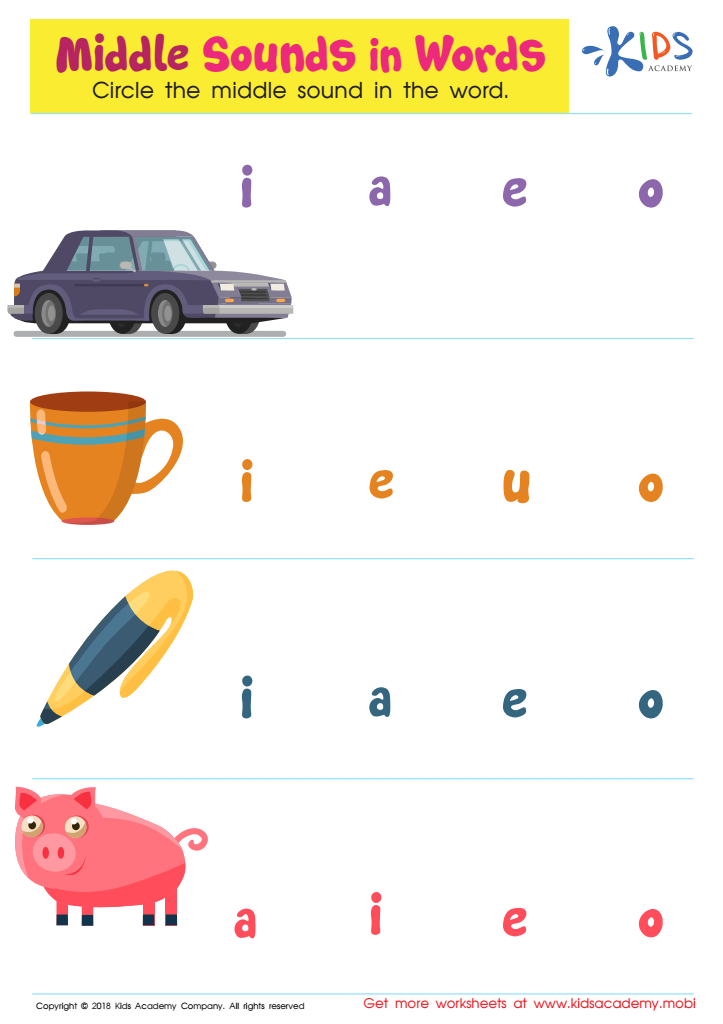
Middle Sounds in Words Worksheet
 Assign to My Students
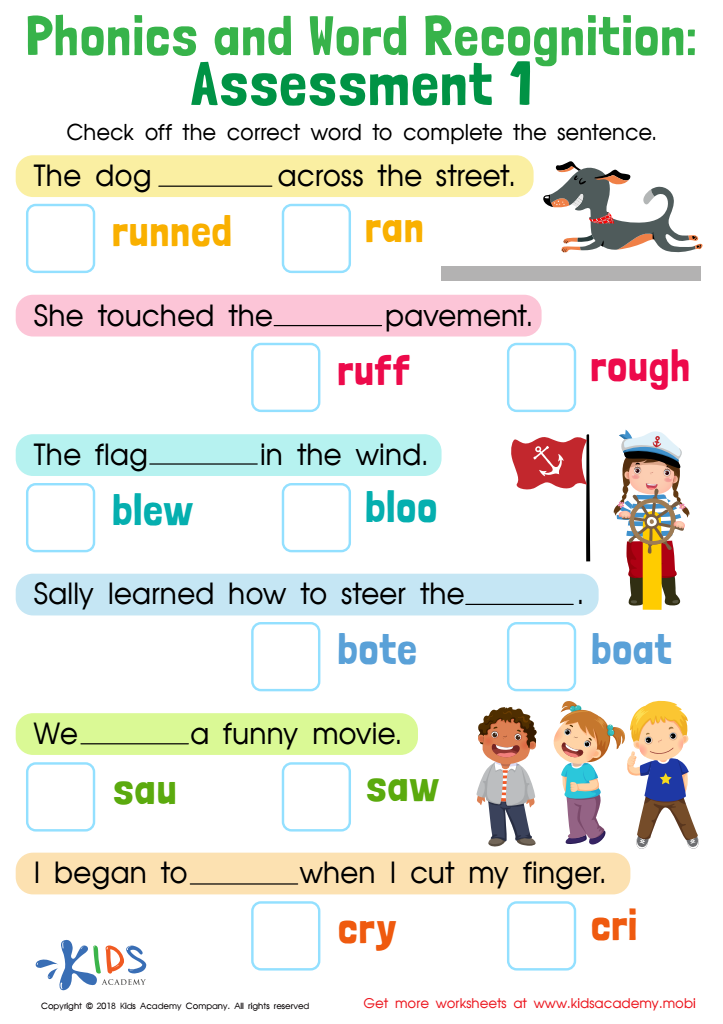
Phonics and Word Recognition: Assessment 1 Worksheet
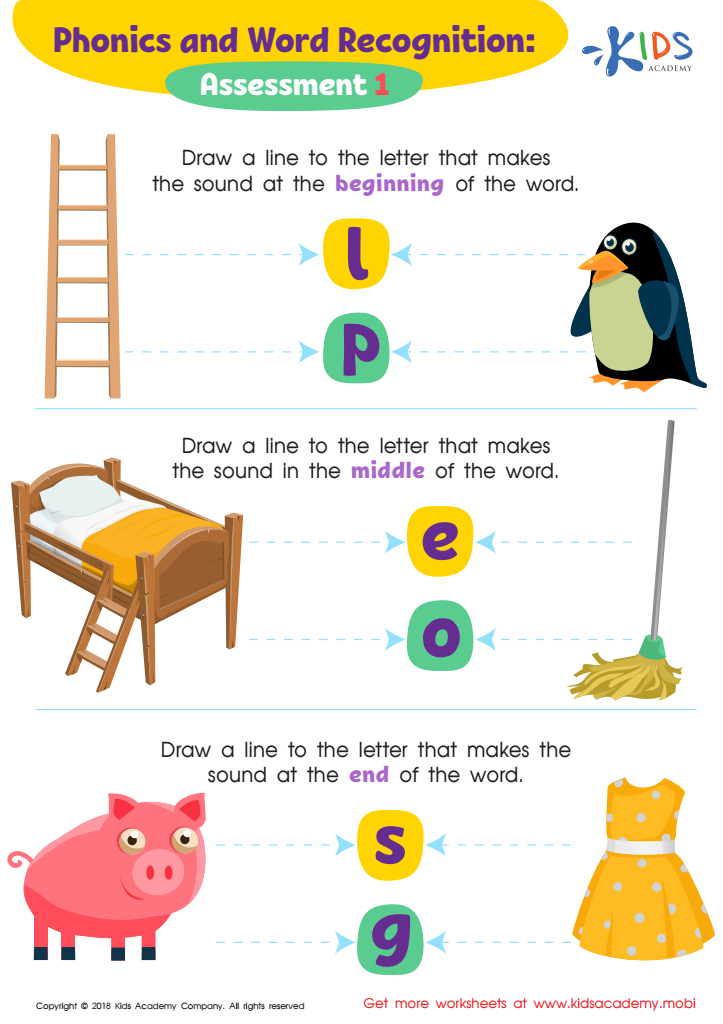
Phonics and Word Recognition: Assessment 1 ELA Worksheet





Reading comprehension, particularly understanding middle sounds, is fundamental for children aged 4-7 as it forms a crucial aspect of their literacy development. At this stage, children are refining their phonemic awareness, which is the ability to identify, understand, and manipulate sounds within words. Middle sounds often pose difficulties for young learners and can affect their overall reading skills.
By focusing on middle sounds, parents and teachers can help children improve their decoding and word recognition abilities, enhancing their fluency and overall comprehension. When children master these sounds, they become more confident readers, making it easier for them to grasp complex texts as they progress.
Additionally, fostering a strong foundation in listening and phonetic skills benefits cognitive development. Recognizing middle sounds aids in spelling and vocabulary acquisition, further enriching a child's language development. Moreover, comprehension isn't just about reading; it involves understanding context and meaning. Engaged learners who analyze sounds tend to develop better critical thinking skills, setting them up for academic success.
Ultimately, prioritizing middle sounds in reading comprehension nurtures lifelong literacy skills, promotes a love for reading, and lays the groundwork for future learning, making it an essential concern for both parents and educators.








