Rhyme recognition Rhyming Worksheets for Ages 4-7
3 filtered results
-
From - To
Unlock the joy of learning with our Rhyme Recognition Worksheets designed for children aged 4-7! These interactive and engaging worksheets help young learners develop crucial language skills while having fun. As children explore the world of rhymes through colorful illustrations and captivating activities, they enhance their phonemic awareness and vocabulary. Each worksheet fosters creativity and critical thinking, making it easy for educators and parents to incorporate rhyme recognition into their teaching routines. Perfect for preschool and early elementary classrooms, our resources provide the foundation for successful reading and writing. Start your child's rhyming journey today and watch their confidence grow!
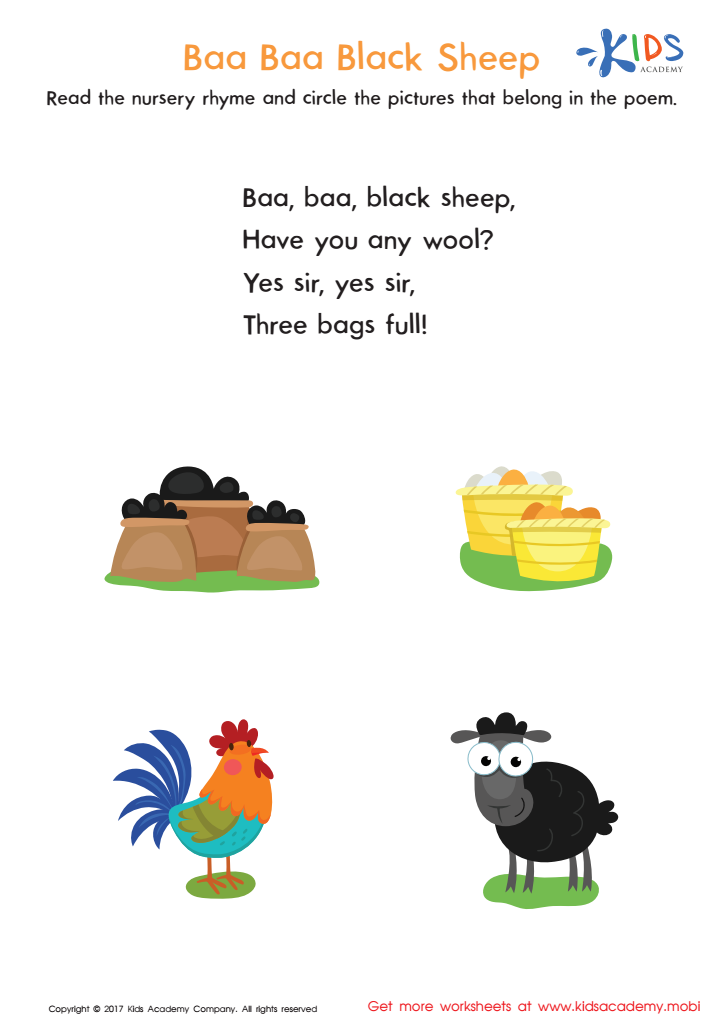
Baa Baa Black Sheep Printable
 Assign to My Students
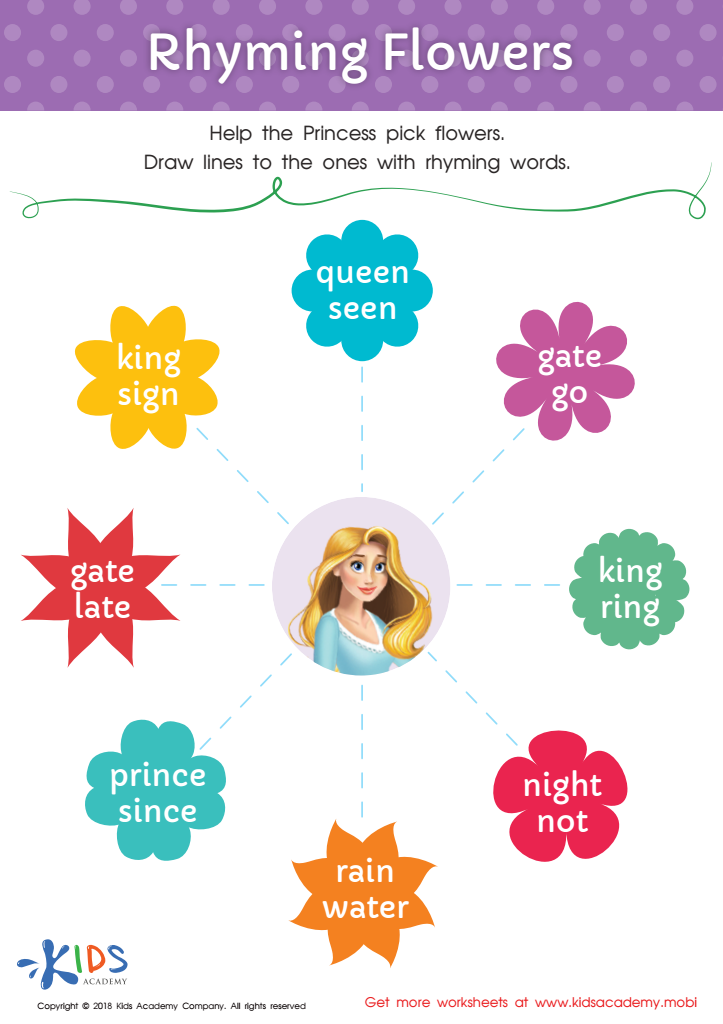
Rhyming Flowers Worksheet
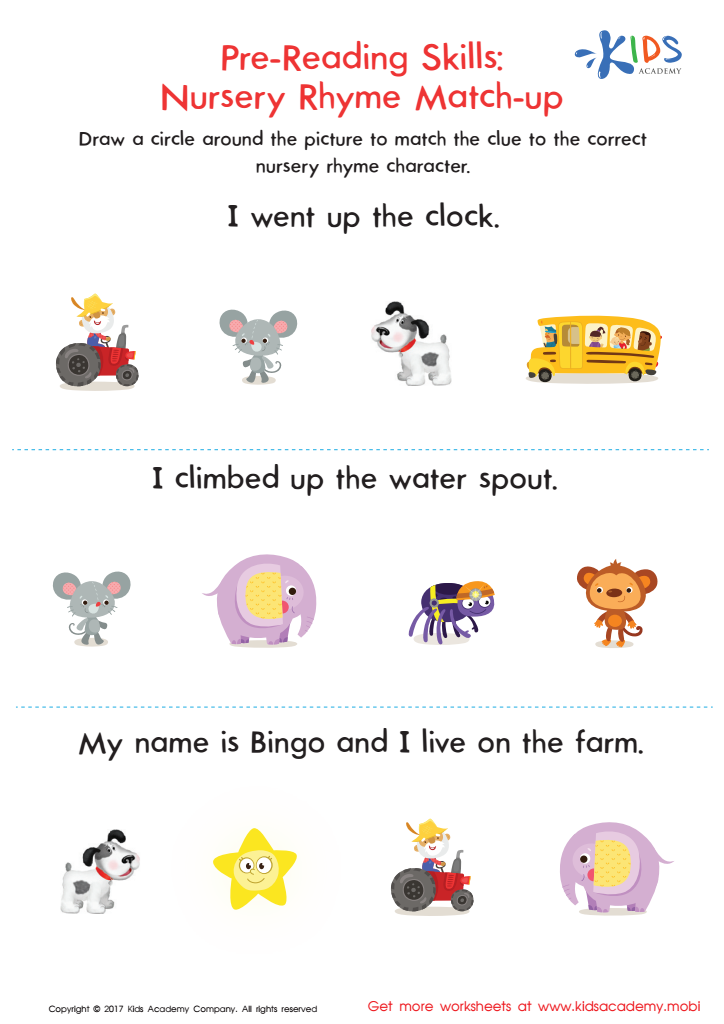
Nursery Rhyme Match–Up Worksheet







Rhyme recognition is a vital component of early literacy development for children aged 4 to 7. Parents and teachers should prioritize it because it lays the foundation for phonemic awareness, which is critical for reading skills. When children engage with rhymes, they become attuned to the sounds within words, helping them distinguish and manipulate phonemes. This skill is essential for decoding, as it enhances their ability to sound out unfamiliar words.
Moreover, rhyming activities are not just fun; they foster vocabulary expansion and comprehension. As children learn to recognize rhymes, they encounter new words within a context, making it easier to grasp meanings. This exploration boosts their overall language skills and confidence in communication.
In addition, rhyme recognition promotes memory retention and listening skills. Rhyming games and songs capture children's attention and stimulate their brains, making learning enjoyable and effective. Collaborative activities involving rhyming can also strengthen social skills as children share and create together.
In summary, practicing rhyme recognition nurtures essential cognitive and linguistic abilities, preparing young learners for successful reading experiences and lifelong love for literature. Hence, parents and teachers should actively incorporate rhyming into their daily routines with children.







