Rhyming skills Rhyming Worksheets for Ages 4-7
3 filtered results
-
From - To
Introducing our engaging “Rhyming Skills Rhyming Worksheets” designed for children aged 4-7! These colorful, interactive worksheets help young learners recognize and generate rhyming words, enhancing their phonemic awareness, a critical step for reading development. Through fun activities like matching, coloring, and tracing, kids practice essential skills in a playful way, keeping them excited and motivated. Perfect for home or classroom use, our expertly crafted resources support early literacy, making reading a joyful, confident endeavor. Get ready to explore the world of rhyme and give your little ones a solid foundation in language learning!
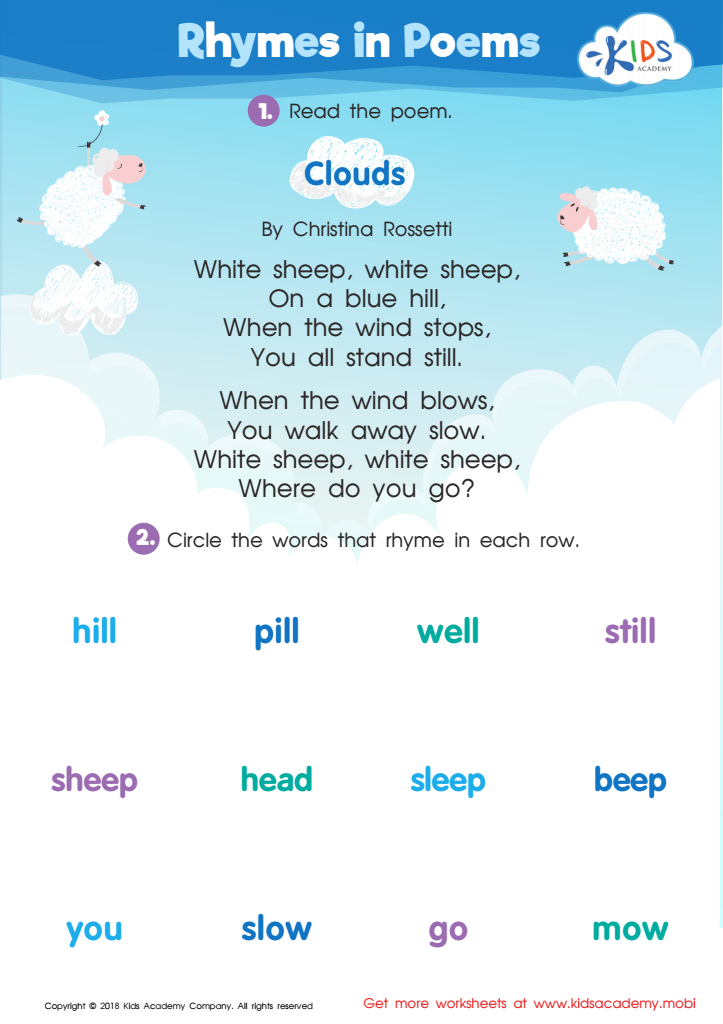
Rhymes in Poems Worksheet
 Assign to My Students
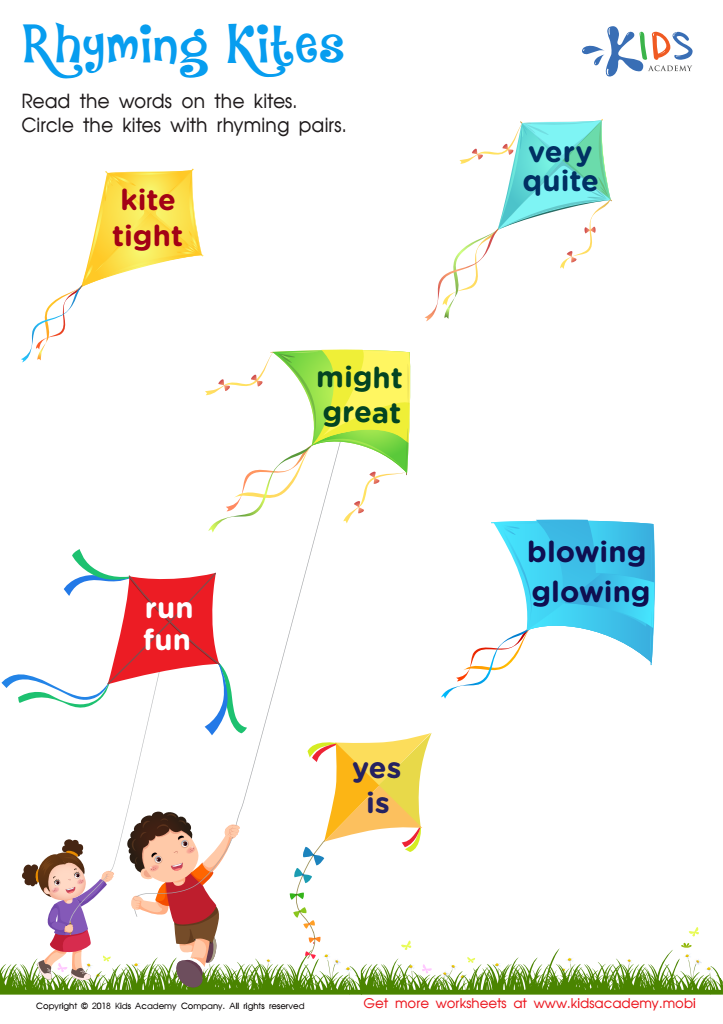
Rhyming Kites Worksheet
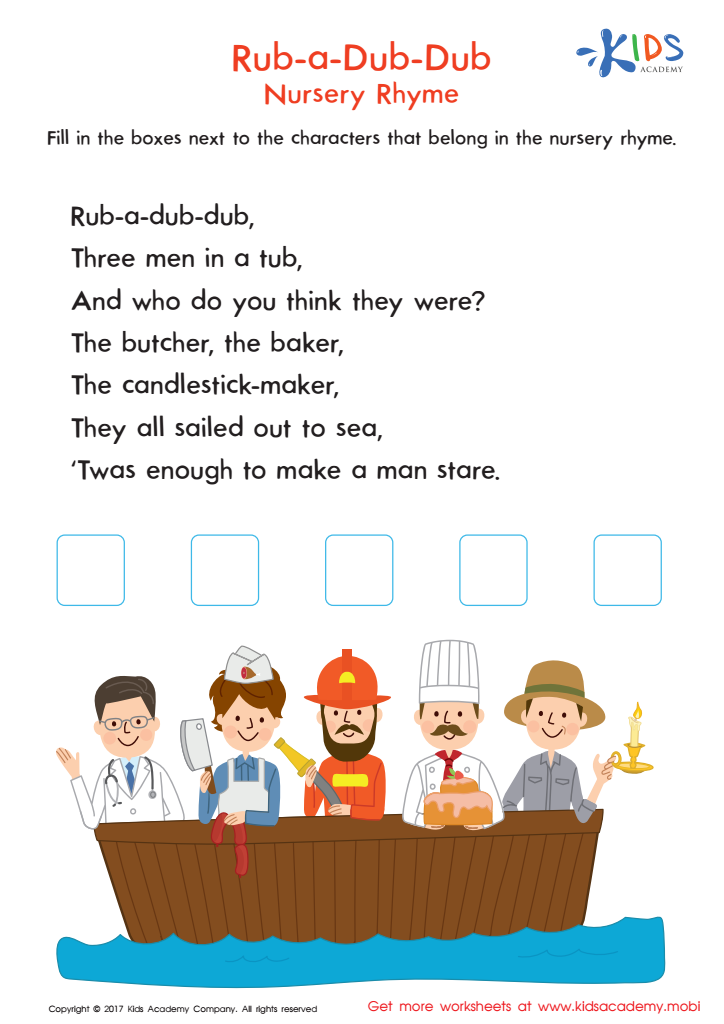
Rub a Dub Dub Printable







Rhyming is a fundamental skill that lays the groundwork for early literacy and reading proficiency in young children, particularly those aged 4-7. Parents and teachers should care about fostering rhyming skills because they play a crucial role in developing phonemic awareness—the ability to hear, identify, and manipulate individual sounds in words. This is a foundational step for learning to read.
When children engage with rhymes, they become better at recognizing patterns in sounds and words, which helps them decode new words more easily. Rhyming activities like singing songs, reading nursery rhymes, and playing rhyming games also enrich a child's vocabulary and comprehension. They learn that words are made up of different sound patterns, making it easier for them to guess the meaning of new words based on familiar sounds.
Beyond language skills, rhyming texts and songs capture children's attention with their musicality and rhythm, making learning enjoyable and engaging. This positive reinforcement fosters a love of reading and learning, setting up children for academic success. Moreover, being proficient in rhyming enhances children's speaking, listening, and memory skills.
In summary, developing rhyming skills is crucial because it provides a solid foundation for reading and language development, keeps learning enjoyable, and builds skills that are essential for future academic growth.







