Shape Recognition Tracing Lines and Curves Worksheets for Ages 4-7
3 filtered results
-
From - To
Discover our engaging Shape Recognition Tracing Lines and Curves Worksheets designed specifically for ages 4-7! These printable activities help young learners develop essential skills by applying fun and interactive tracing exercises focused on shapes. As children trace lines and curves, they enhance their fine motor skills and hand-eye coordination while recognizing various shapes. Each worksheet fosters creativity and reinforces learning through vibrant visuals and captivating designs, making education enjoyable. Perfect for homeschoolers or classroom settings, our resources help prepare children for future academic success. Explore today and watch your little ones thrive in their journey towards shape recognition and motor skills development!

Find the Curved Lines! Worksheet
 Assign to My Students
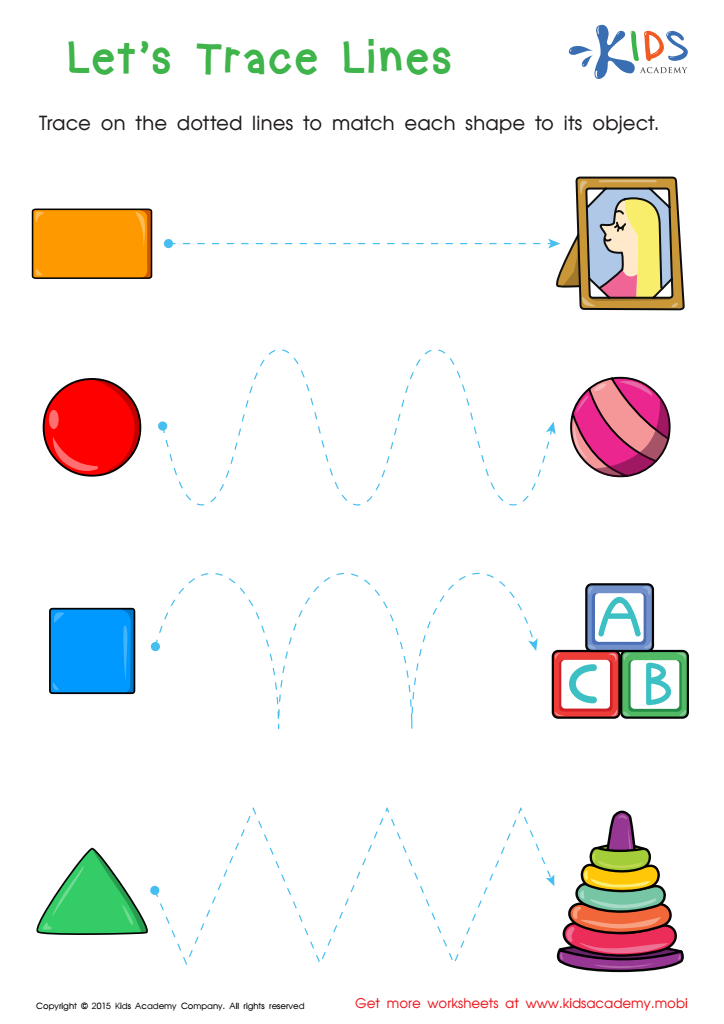
First Words: Let's Trace Lines Worksheet
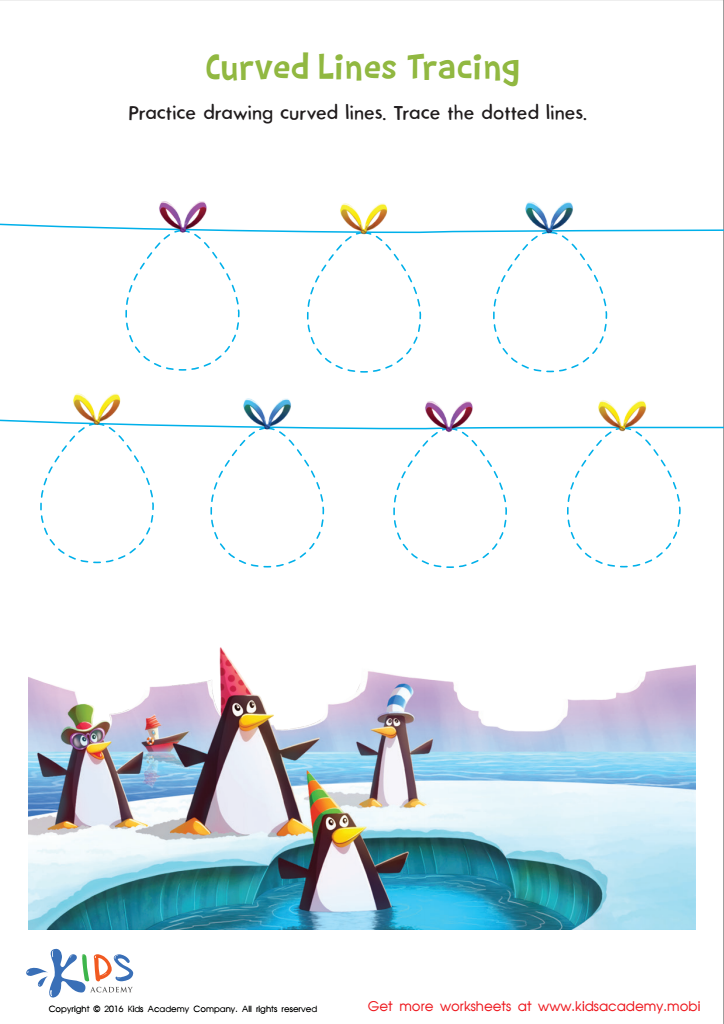
Curved Lines Tracing Worksheet




Shape recognition and the ability to trace lines and curves are critical developmental milestones for children aged 4-7. First, these skills serve as foundational elements in early mathematics, aiding children in identifying shapes, understanding spatial relationships, and developing geometry concepts. When children can distinguish between shapes and trace them, they start recognizing their properties, which fosters analytical thinking.
Moreover, tracing lines and curves enhances fine motor skills and hand-eye coordination, essential for various daily activities, including writing. Strong motor skills improve a child’s ability to hold a pencil properly and gain confidence in their writing abilities, impacting their academic performance.
In addition, shape recognition engages cognitive development, as it involves visual processing and memory retention. As children identify and classify shapes, they learn to categorize and make connections, skills beneficial in problem-solving and critical thinking later in life.
Lastly, these activities can promote creativity and self-expression. By experimenting with different shapes and designs while tracing, children can engage their imaginations, which enhances their creative thinking skills. Parents and teachers should prioritize these activities as they not only support academic growth but also contribute holistically to children's cognitive, physical, and emotional development.








