
Spelling practice Two Letter Phonics Worksheets for Ages 4-7
7 filtered results
Difficulty Level
Grade
Age
-
From - To
Subject
Activity
Standards
Boost your child's spelling skills with our Two Letter Phonics Worksheets, designed specifically for ages 4-7. These engaging and interactive worksheets help young learners master the essentials of spelling by focusing on two-letter phonics blends. Each activity encourages children to identify and write common two-letter combinations, promoting early literacy in a fun, age-appropriate manner. Our resources foster confidence in spelling and reading crucial starting points, ensuring a strong foundation for future learning. Perfect for home or classroom use, these worksheets are ideal for reinforcing phonics concepts while keeping children excited about learning. Download now and watch your child thrive!
Favorites
With answer key
Interactive
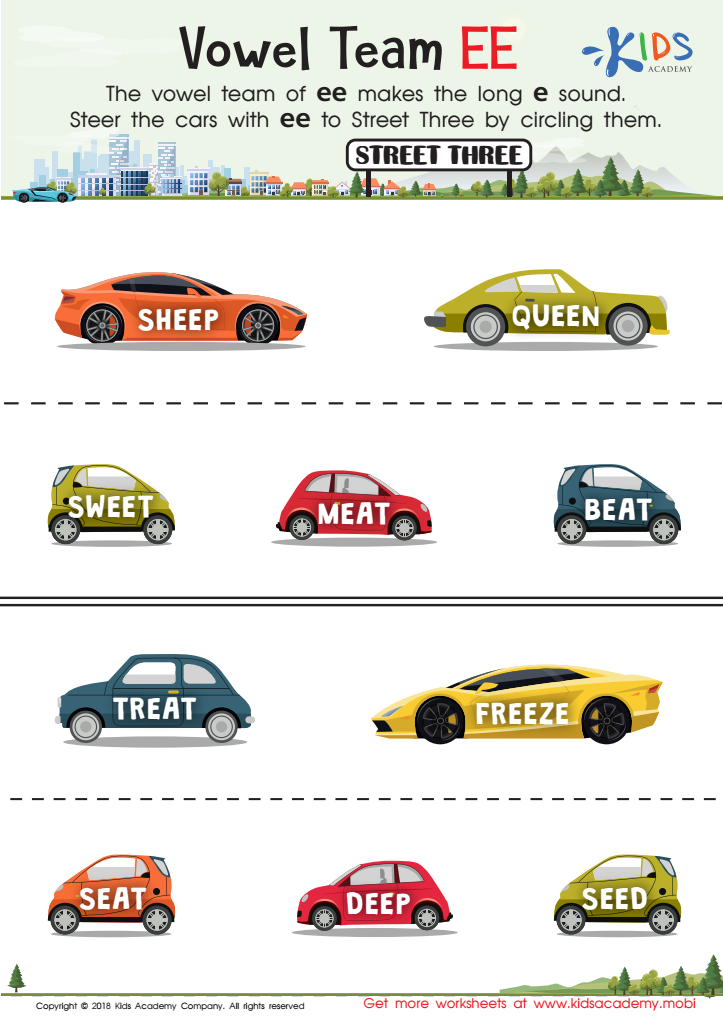
Vowel team ee Worksheet
Revised:
Kids will have a blast steering cars with the -ee digraph towards Street Three! This fast-paced worksheet reinforces that -ee makes the long -e sound while boosting fine motor skills. Kids will love the bright colors and stay engaged with this fun printable. Get ready for hours of off-road excitement!
 Assign to My Students
Vowel team ee Worksheet
Worksheet
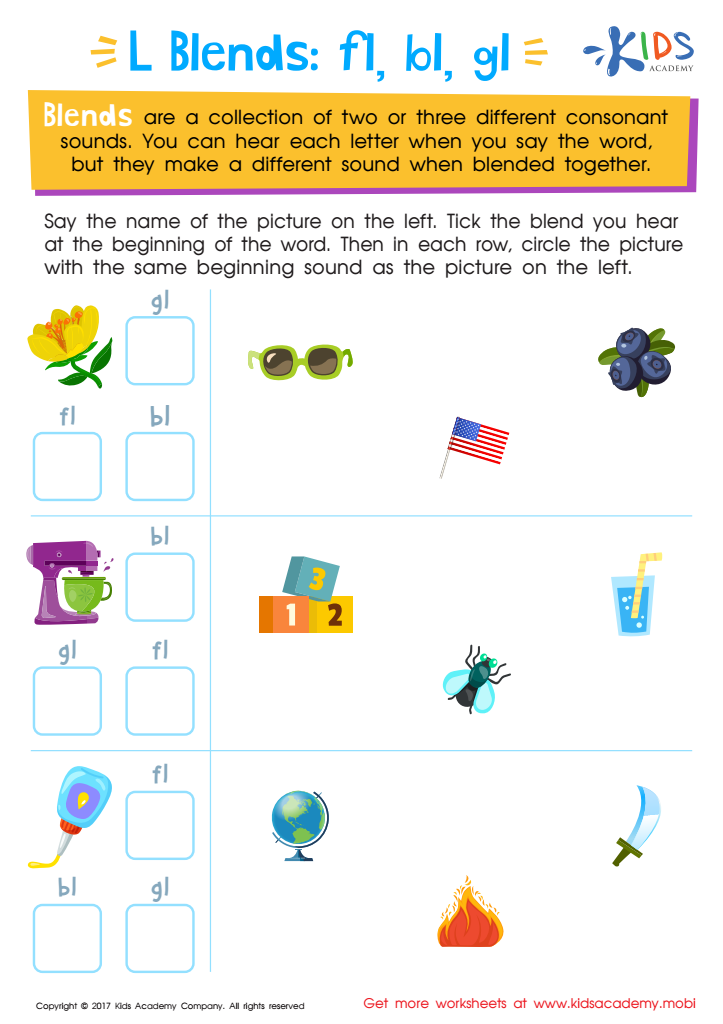
Blending Consonants: "Fl", "Bl" and "Gl" Printable
Help your child master consonant blends Fl, Bl, and Gl with this printable worksheet. Find words associated with the pictures and learn to better understand the difference between consonant blends. Vibrant images motivate and aid in learning. Download now for improved phonics success!
Blending Consonants: "Fl", "Bl" and "Gl" Printable
Worksheet
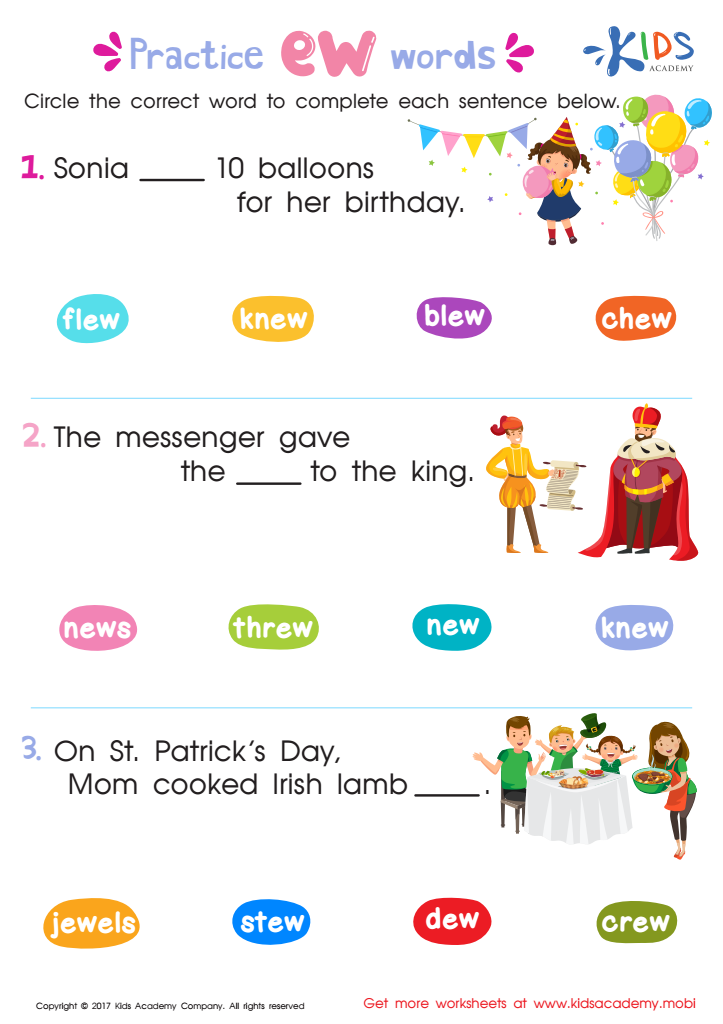
EW Words Worksheet
Practice the diphthong ew and boost your child's vocabulary with this fun ew words worksheet! Filled with illustrations, it will help your child hone their reading and spelling skills. Plus, the tricky words will make it both enjoyable and rewarding!
EW Words Worksheet
Worksheet
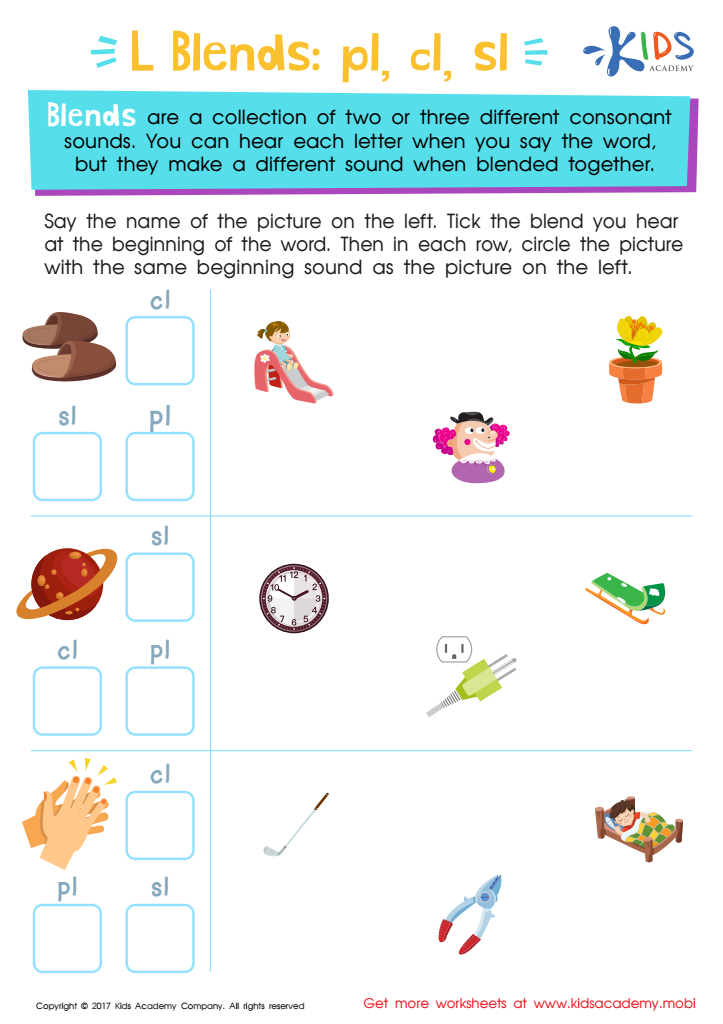
L Blends: "Pl", "Cl" and "Sl" Printable
This printable worksheet will help your child recognize and identify the Pl, Cl, and Sl consonant blends, sound them out, and identify them in print. Improve your child's reading and writing skills with fun and colorful phonics practice!
L Blends: "Pl", "Cl" and "Sl" Printable
Worksheet
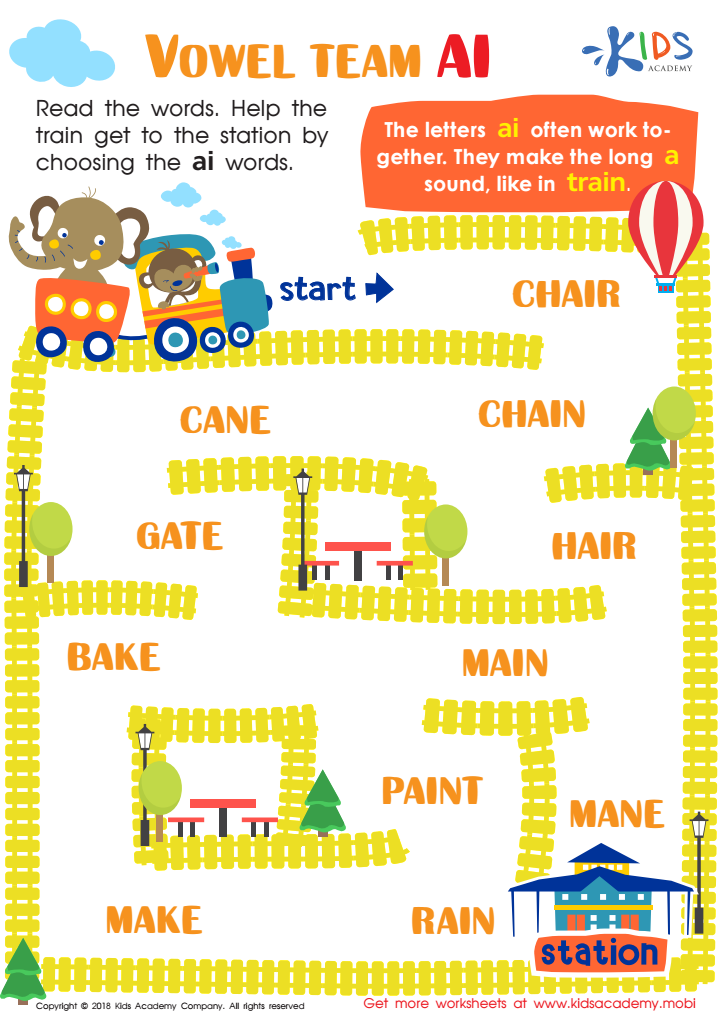
Vowel team ai Worksheet
Kids will have a blast learning about the -ai digraph with this fun worksheet. They'll read words with it and practice their motor skills as they help the animal duo get back to the train station. With success, they'll smile and enjoy the activity!
Vowel team ai Worksheet
Worksheet
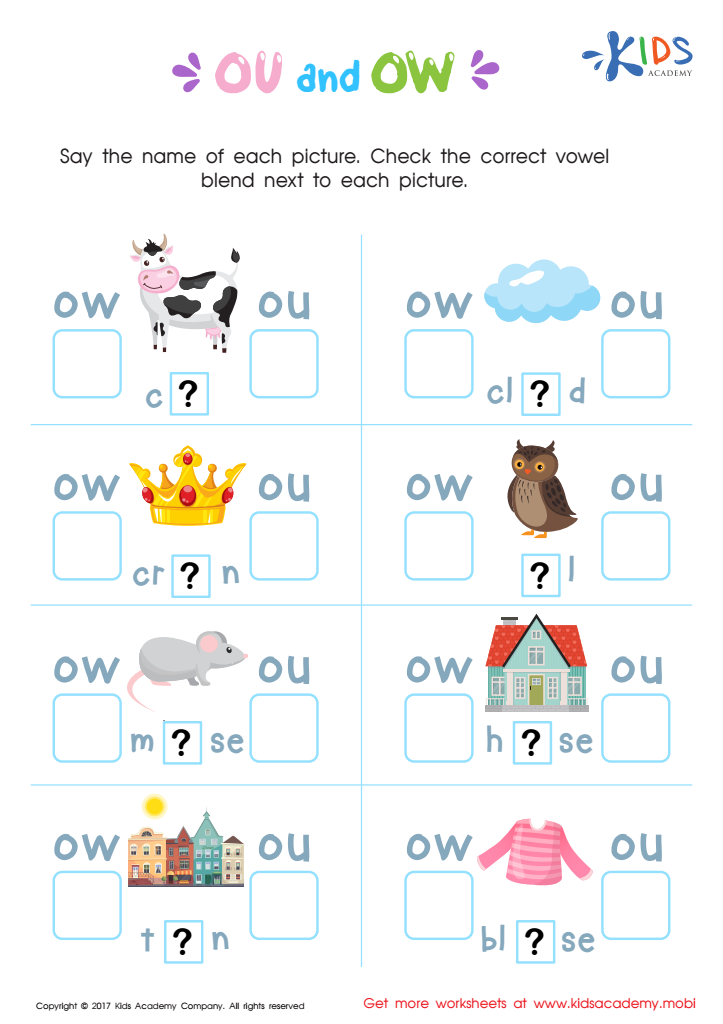
OU and OW Words Worksheet
Enhance your child's reading and spelling with this ou and ow words worksheet! Fun pictures and common words make mastering the diphthongs ou and ow easy and enjoyable.
OU and OW Words Worksheet
Worksheet
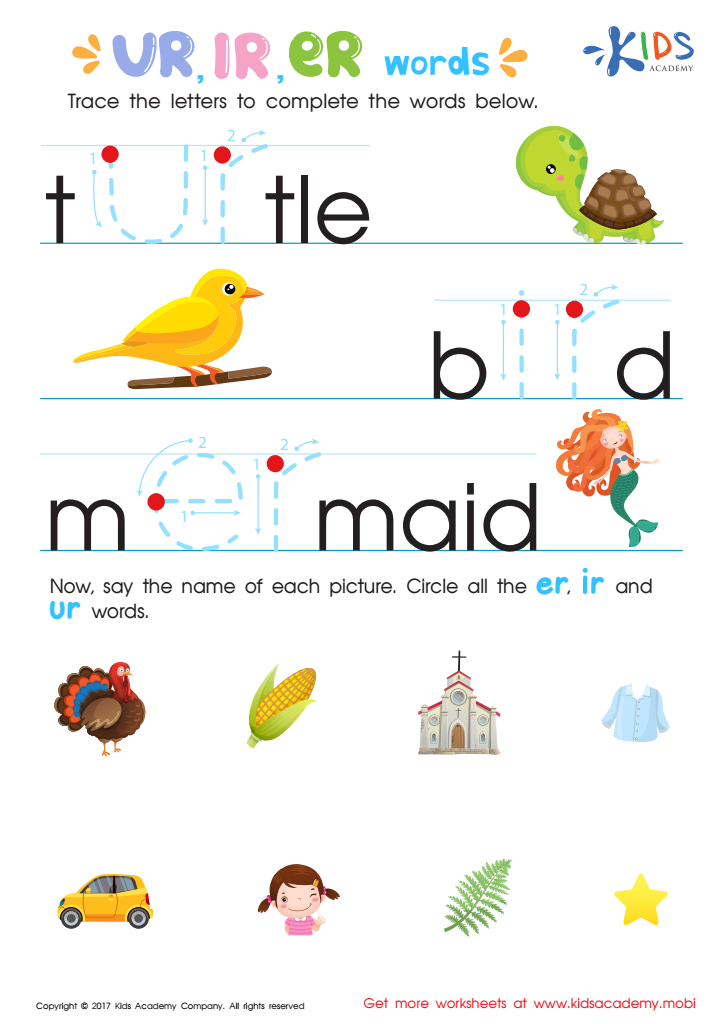
IR UR ER Words Worksheet
Trouble spelling words with the same initial vowel sound? Our worksheet is here to help! With its exercises to help your child learn to read and spell turtle, bird, and mermaid, it'll make differentiating these tricky digraphs a snap.
IR UR ER Words Worksheet
Worksheet
Join Kids Academy for Free
Who is primarily going to use this learning content?



Spelling practice involving two-letter phonics is essential for children aged 4-7, as it forms the foundation for reading and writing skills. At this early age, children are developing their phonetic awareness, which is crucial for decoding words. Two-letter phonics introduces children to the basic sounds of letters and how they blend to create simple words, enabling them to understand the mechanics of language.
Teachers and parents should care about this practice because it bolsters literacy development, setting the stage for future learning. When children can confidently recognize and spell two-letter phonetic combinations, they build their vocabulary and reading fluency, progressing towards more complex words. This practice also enhances memory and cognitive skills as children visualize letters and sounds.
Moreover, early spelling practice fosters a sense of accomplishment, reinforcing motivation and self-esteem. It aids in classroom participation, reducing anxiety when encountering new words. Consistent two-letter phonics practice at home and school encourages collaboration between parents and educators, creating a supportive learning environment. As literacy skills are linked to academic success, investing time in spelling practice at this age is crucial for developing confident, capable readers and writers. In essence, nurturing these early skills sets children on a positive educational trajectory.







