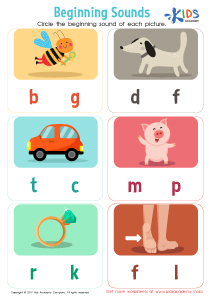
Vocabulary expansion Two Letter Phonics Worksheets for Ages 4-7
5 filtered results
-
From - To
Expand your child's vocabulary with our Two Letter Phonics Worksheets, crafted for ages 4-7. These expertly designed resources strengthen early literacy skills by focusing on simple, essential two-letter sounds. Each worksheet promotes phonics recognition, pronunciation practice, and reading confidence. Engaging activities make learning fun and effective, catering perfectly to young learners. Bolster their foundation in language by helping them identify, pronounce, and understand key phonetic pairings. Visit our page and equip your child with the tools to excel in their reading and vocabulary journey, building a solid linguistic base for future academic success.
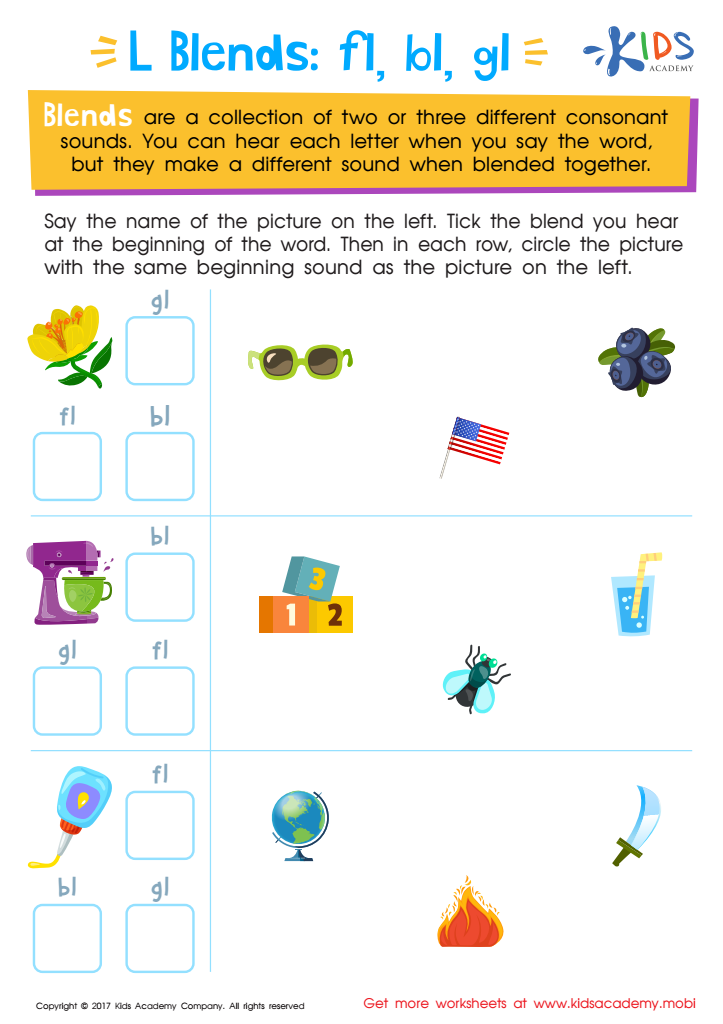
Blending Consonants: "Fl", "Bl" and "Gl" Printable
 Assign to My Students
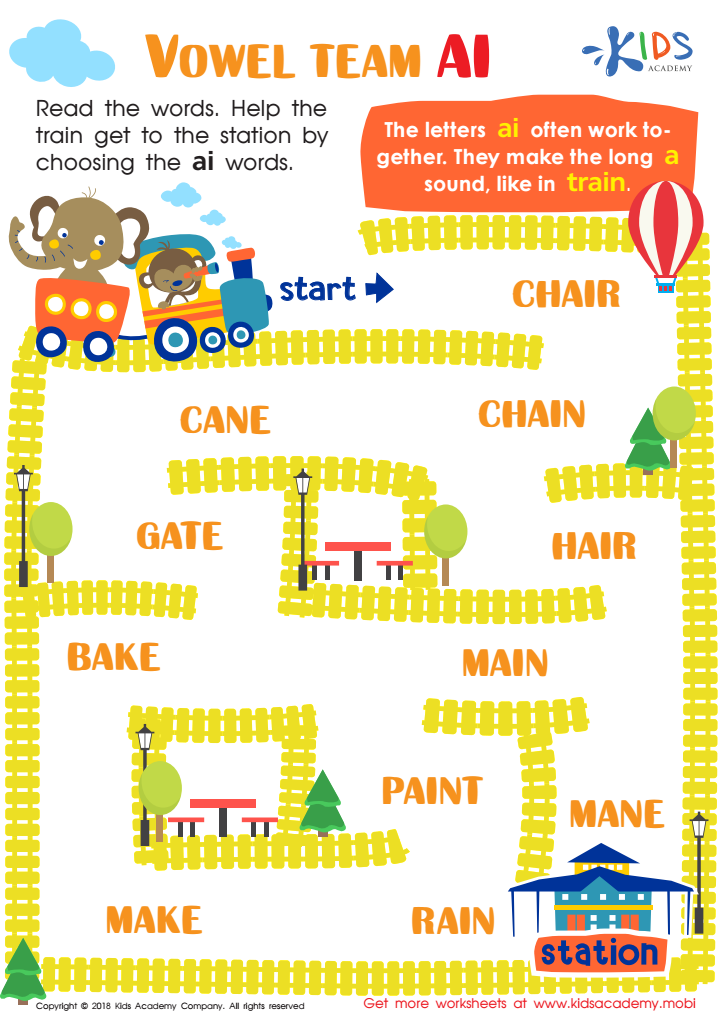
Vowel team ai Worksheet
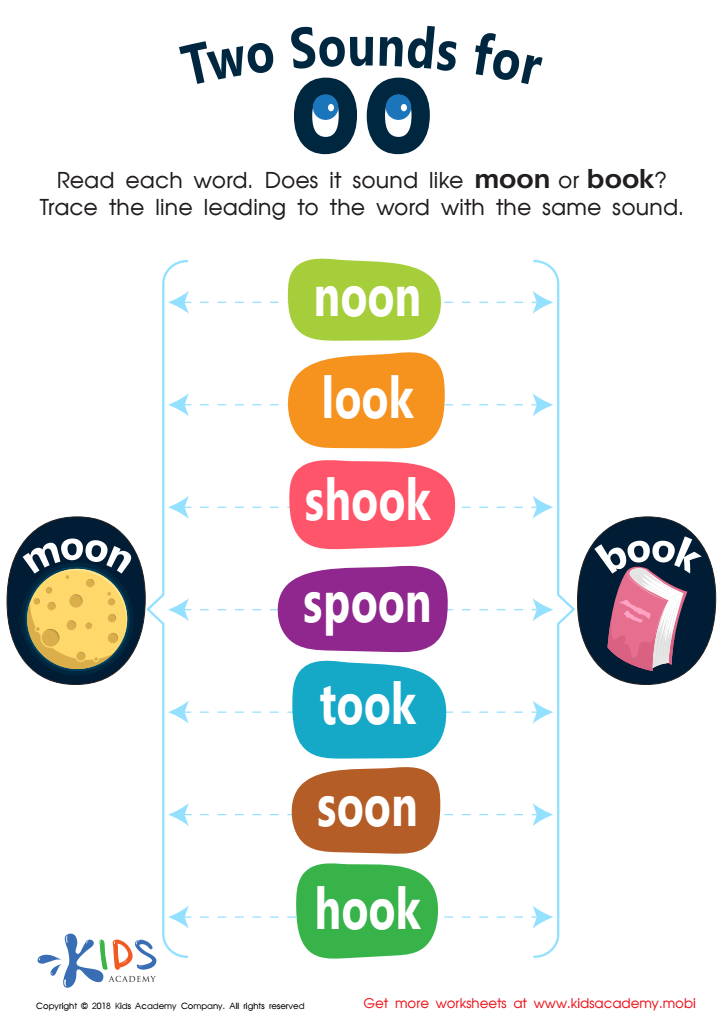
Two Sounds for OO Worksheet
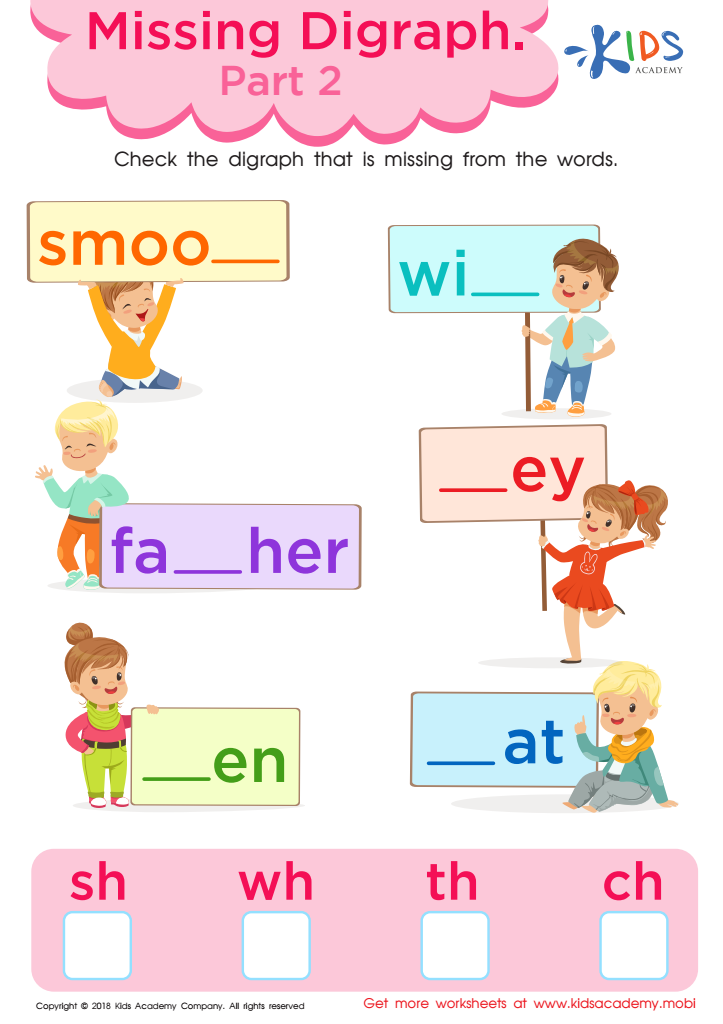
Missing Digraph: Part 2 Worksheet
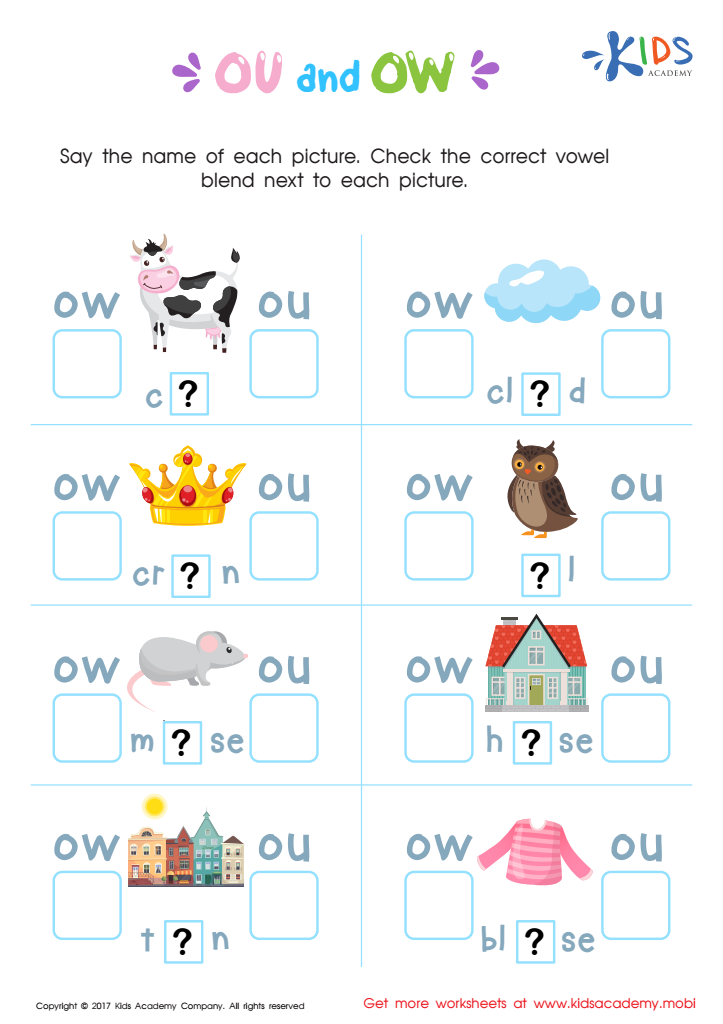
OU and OW Words Worksheet



Vocabulary expansion through two-letter phonics for children ages 4-7 plays a crucial role in early childhood literacy and overall cognitive development. During these formative years, young minds are extraordinarily receptive to learning new words and sounds. Expanding their vocabulary with simple two-letter phonics like "at," "an," and "it" sets a fundamental building block for more complex reading and comprehension skills later.
First, grasping two-letter phonics helps children decode words more easily, supporting smoother transitions to three-letter words and beyond. This sequential learning process enhances their confidence and early reading enjoyment, encouraging a lifelong love for reading. Building a solid vocabulary at a young age can also bolster a child's ability to communicate effectively, both verbally and in writing.
Additionally, vocabulary acquisition is directly linked to academic success. A strong foundation in phonics has been shown to improve reading comprehension and fluency, which contributes to higher performance in subjects across the board. Finally, understanding and using words effectively allows children to express themselves creatively and engage more meaningfully with the world around them.
By focusing on vocabulary expansion through two-letter phonics, parents and teachers can offer kids a head start in language mastery, equipping them with tools essential for social interaction, critical thinking, and future learning endeavors.