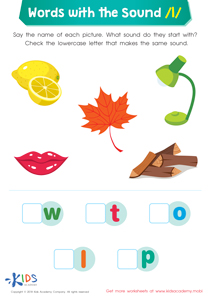
Uppercase identification Uppercase Letters Worksheets for Ages 4-7
5 filtered results
-
From - To
Ensure your child masters uppercase letters with our engaging Uppercase Identification Uppercase Letters Worksheets, designed for ages 4-7. At Kids Academy, our expertly crafted worksheets facilitate learning through fun activities, enhancing letter recognition and reading readiness. With colorful illustrations and interactive exercises, children build confidence in identifying each unique uppercase letter. Through tracing, matching, and creative drills, young learners sharpen their alphabet knowledge. Ideal for preschool and kindergarten students, our worksheets provide an excellent foundation for literacy skills. Equip your child with the essential tools for academic success with Kids Academy’s Uppercase Identification Uppercase Letters Worksheets. Start their learning journey today!
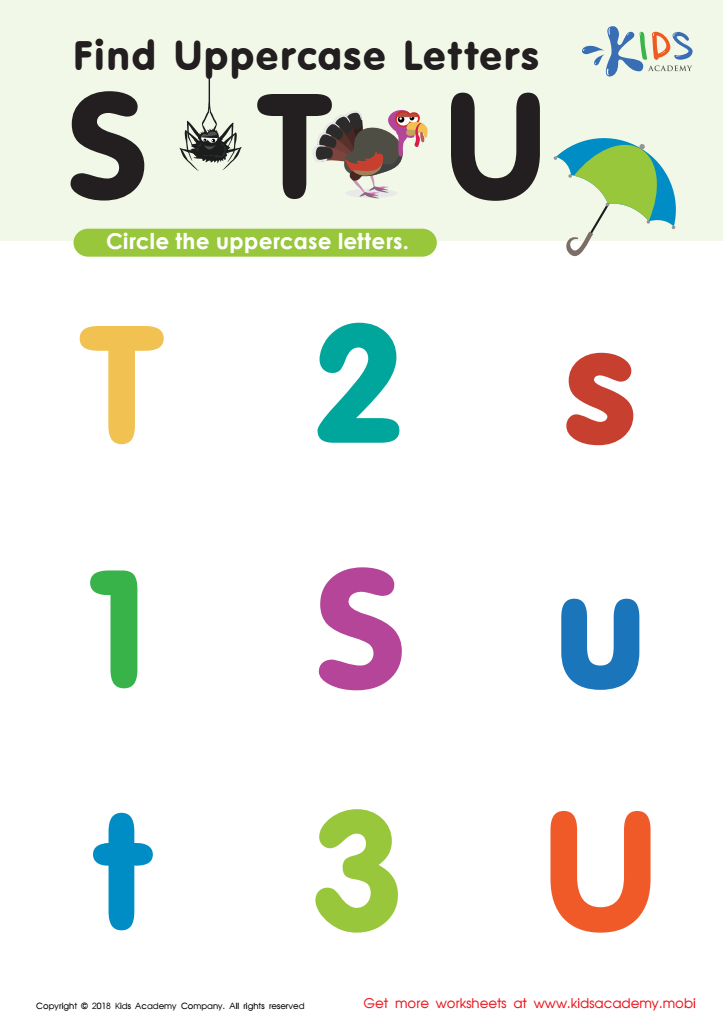
Find Uppercase Letters Worksheet
 Assign to My Students
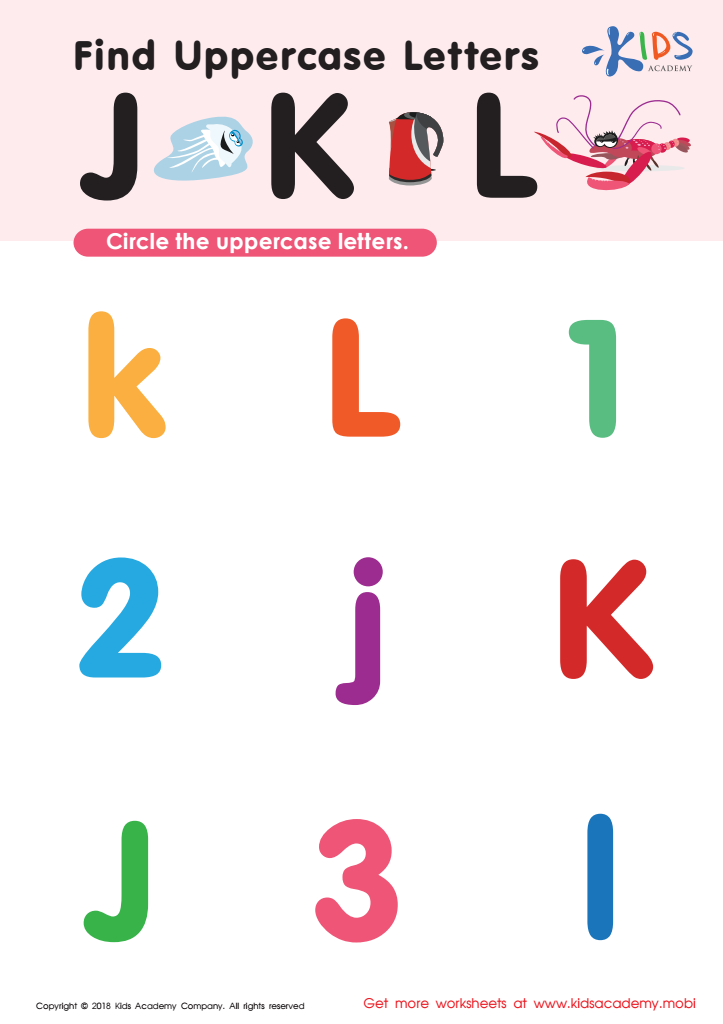
Find Uppercase Letters J, K, and L Worksheet
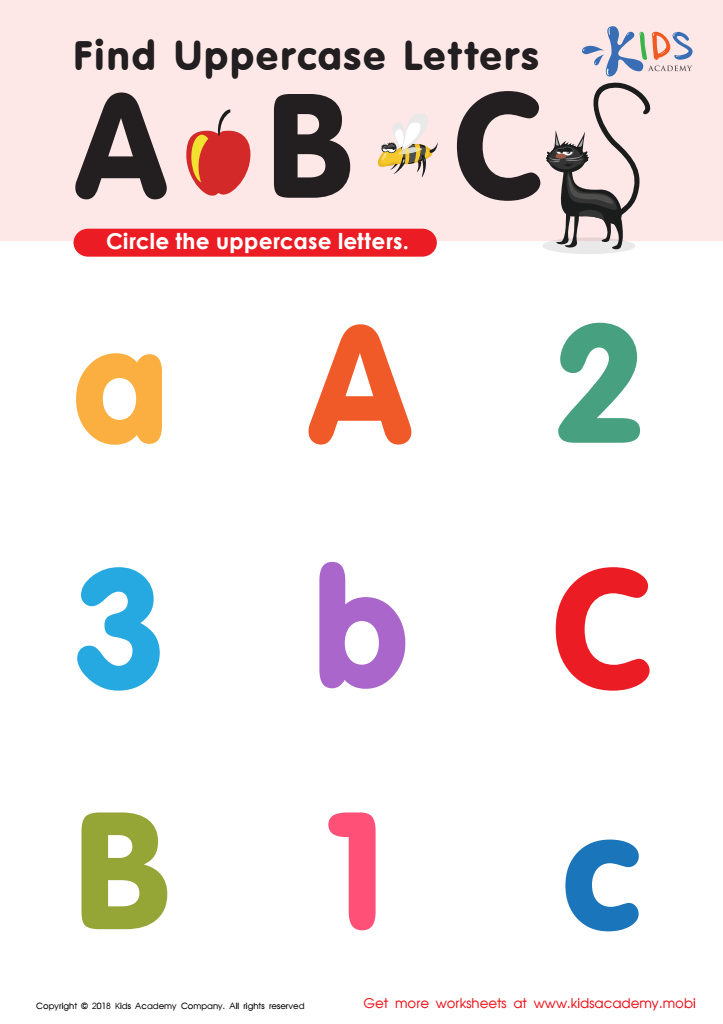
Find Uppercase Letters A, B, and C Worksheet
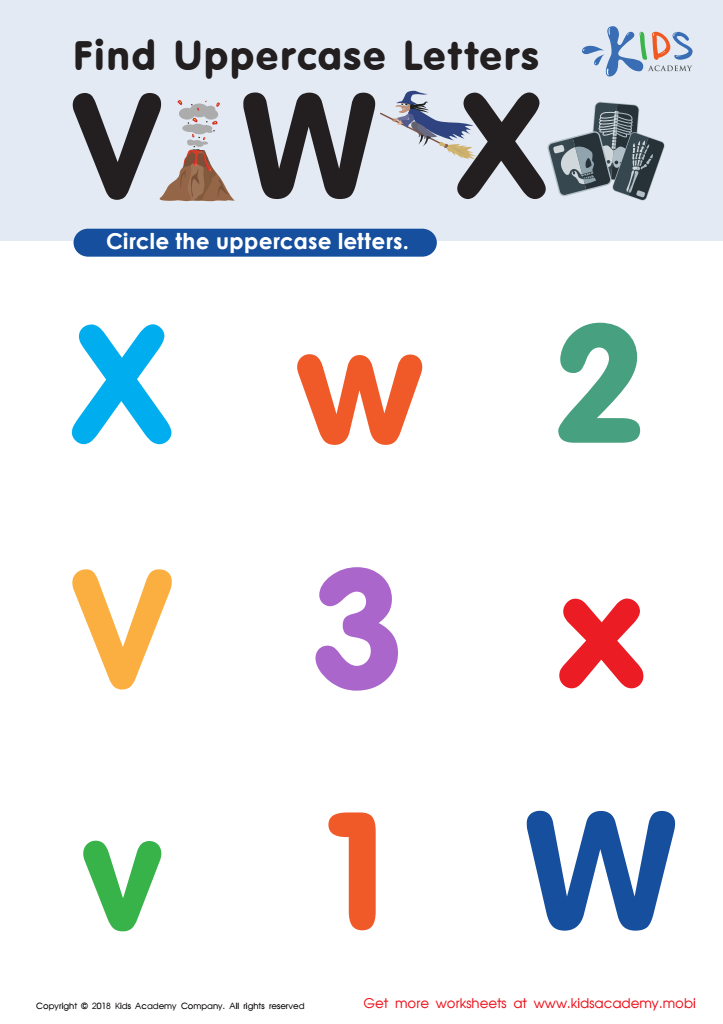
Find Uppercase Letters V, W, X Worksheet
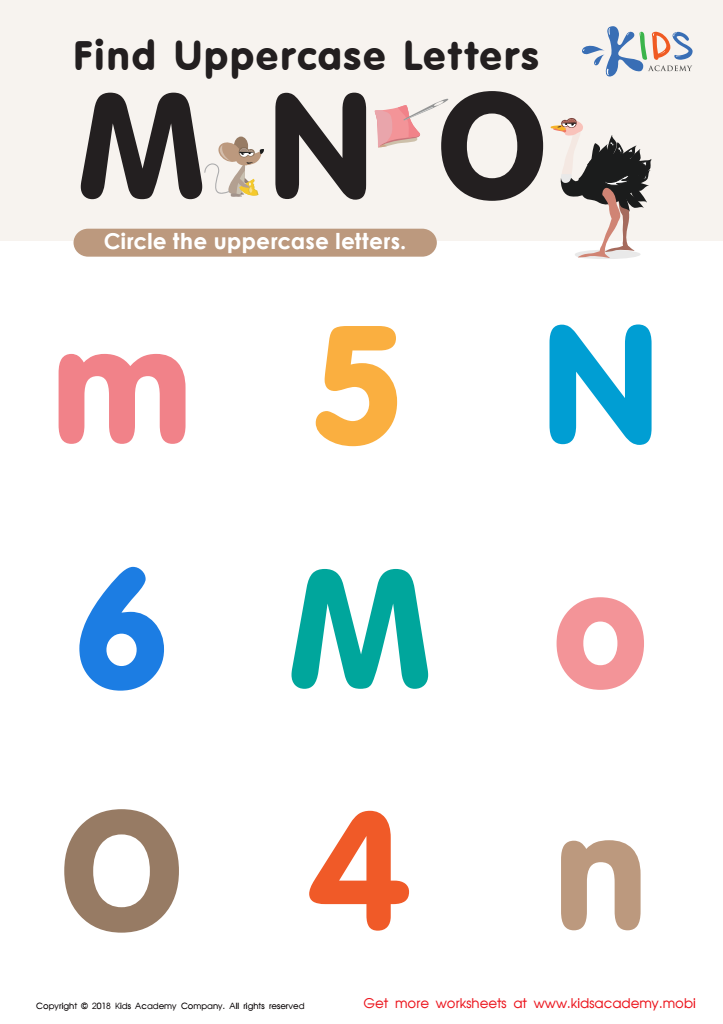
Find Uppercase Letters M, N, and O Worksheet








Understanding and identifying uppercase letters is fundamental for children aged 4-7 as it serves as the foundation of early literacy skills essential for successful learning. Parents and teachers should emphasize uppercase letter recognition because it profoundly impacts a child’s ability to read and write. At this age, children are developing critical brain functions related to memory and visual recognition. By mastering uppercase letters, children establish the building blocks for recognizing and understanding lowercase letters, since uppercase forms are often visually simpler and more distinct from one another.
Uppercase letters also serve as the starting point for phonetic awareness. Knowing them enables children to start associating letters with sounds, facilitating the process of decoding words. This association is vital for developing reading fluency and comprehension. In early childhood, many environmental print materials—like signs, posters, and books—frequently use uppercase letters, making their recognition useful beyond formal learning settings, reinforcing literacy in everyday contexts.
Additionally, when children gain confidence in identifying uppercase letters, their writing skills also improve, leading to better fine motor coordination. This success encourages a positive attitude toward learning, setting up children for academic success throughout their schooling. By investing time and resources in teaching uppercase letter identification, parents and teachers support children’s holistic cognitive development and position them for continued academic progress.