Long vowel recognition Vowels and Consonants Worksheets for Ages 4-7
3 filtered results
-
From - To
Enhance your child's literacy skills with our engaging "Long Vowel Recognition Vowels and Consonants Worksheets" designed for ages 4-7! These printable worksheets offer age-appropriate exercises that focus on identifying and working with long vowels in a fun and interactive way. Through a variety of activities, including matching, filling in the blanks, and visual aids, young learners will build a strong foundation in phonics. Our materials not only promote long vowel recognition but also foster a love for reading and language. Enrich your child's early education experience and watch them thrive in their learning journey with these essential worksheets!
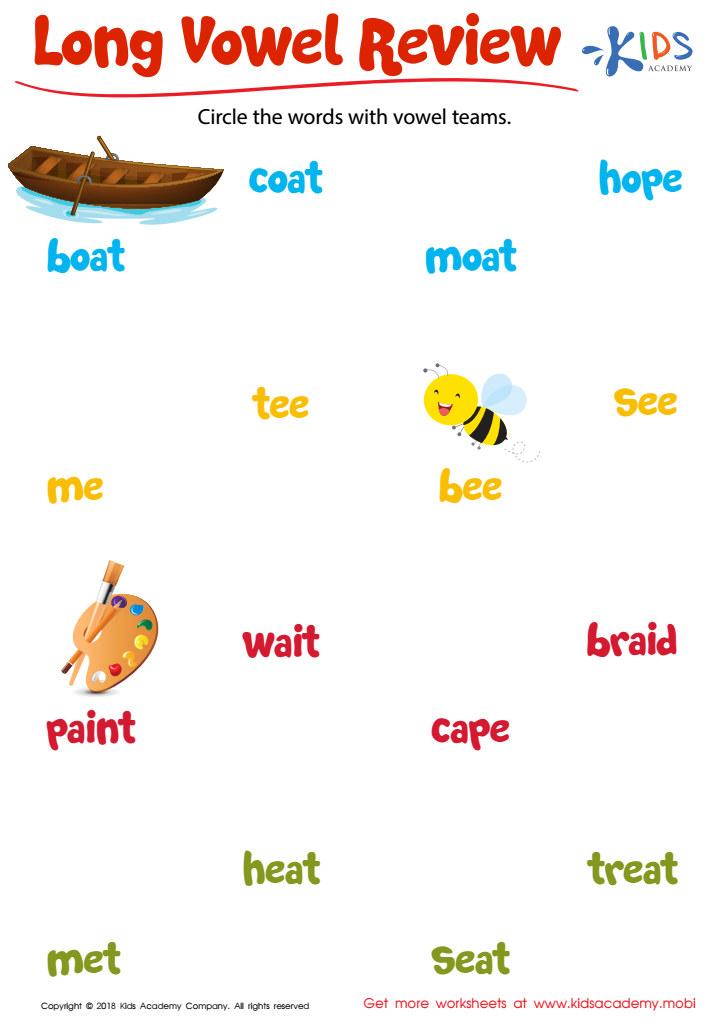
Long Vowel Review Worksheet
 Assign to My Students
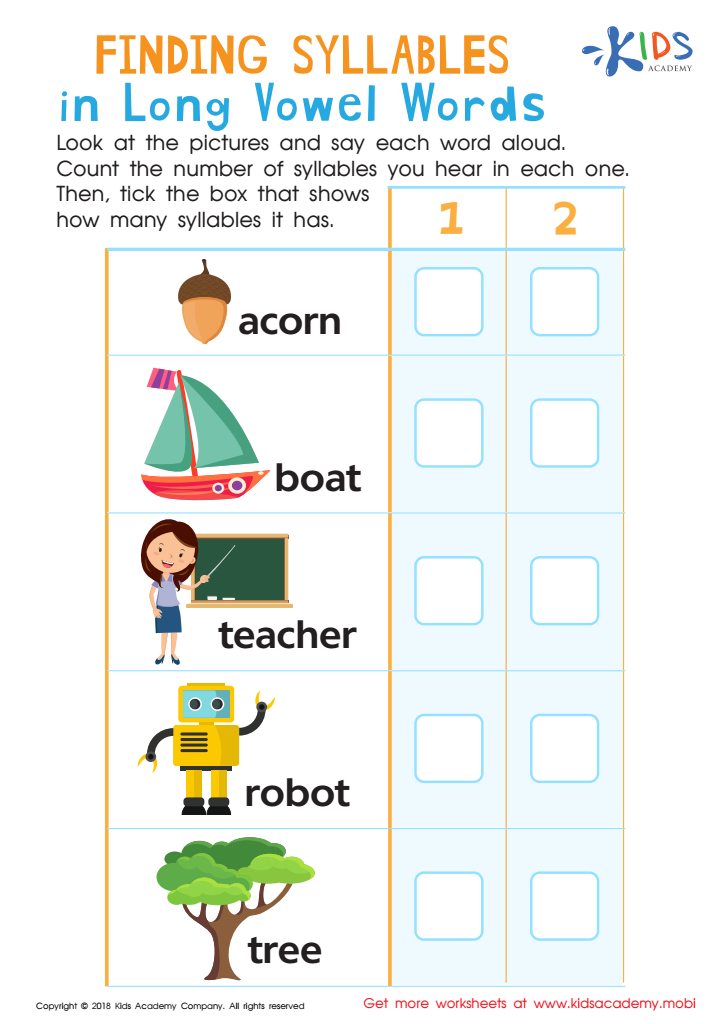
Finding Syllables in Long Vowel Words Worksheet
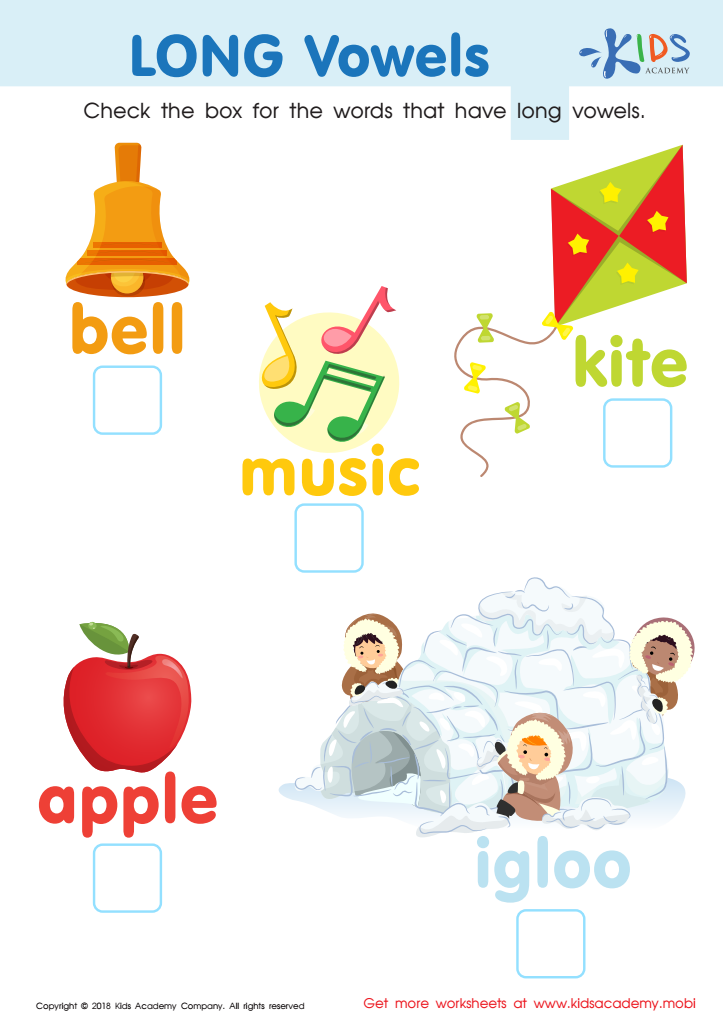
long vowels Worksheet



Long vowel recognition is a crucial aspect of literacy development for children ages 4-7, as it lays the foundation for reading and writing skills. Understanding long vowels—those that sound like their name (e.g., ‘a’ in “cake” or ‘e’ in “me”)—enables young learners to decode words more effectively. This skill enriches their vocabulary and helps them with spelling as they begin to write, promoting clear communication.
Parents and teachers should prioritize long vowel recognition in early education because familiarity with both vowels and consonants creates a balanced understanding of word structure. Children learn that vowel sounds can vary within different contexts, enhancing their phonetic awareness. This understanding fosters improved reading fluency and comprehension, allowing children to derive meaning from texts more easily.
Moreover, recognizing long vowels assists children in transitioning from simple phonetic reading to more complex word patterns, preparing them for future academic success. By nurturing these skills early, educators and parents equip children with essential tools for effective learning. Ultimately, fostering long vowel recognition is not just about teaching letters and sounds; it cultivates a lifelong love for reading and an eagerness to explore written language.







