
Addition up to 5 Worksheets for Ages 4-7
4 filtered results
Difficulty Level
Grade
Age
-
From - To
Subject
Activity
Standards
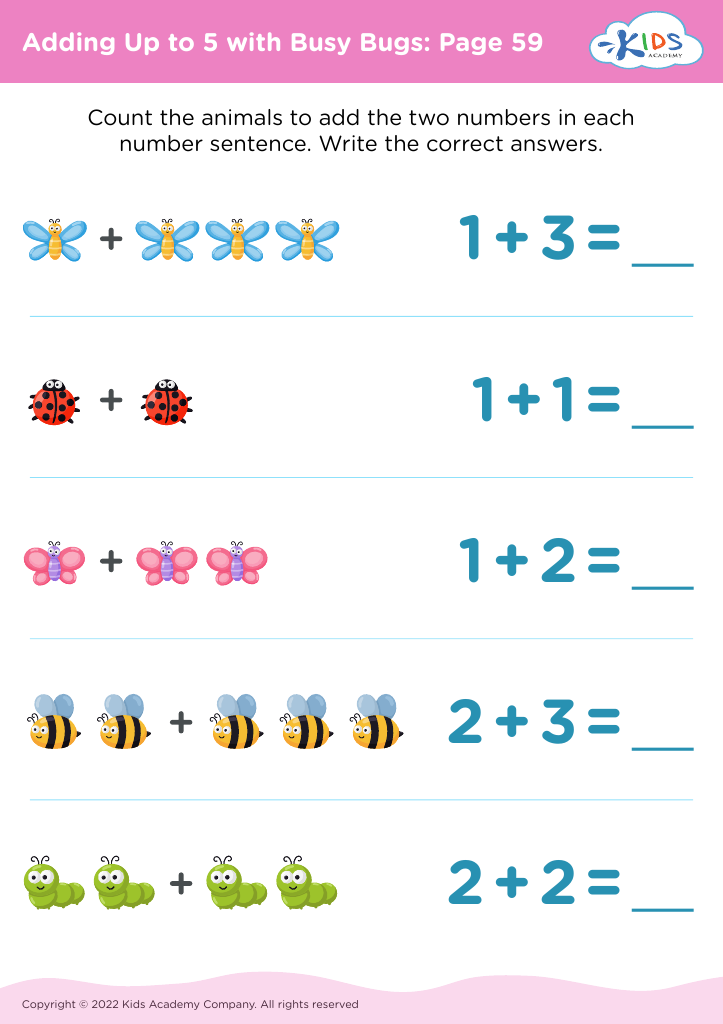
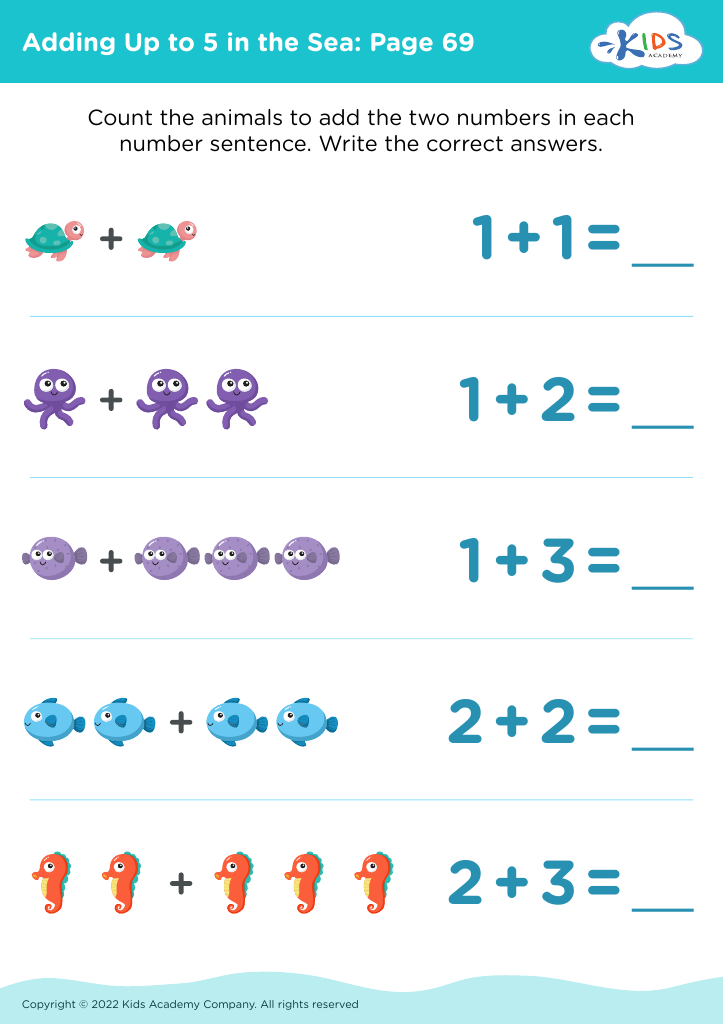
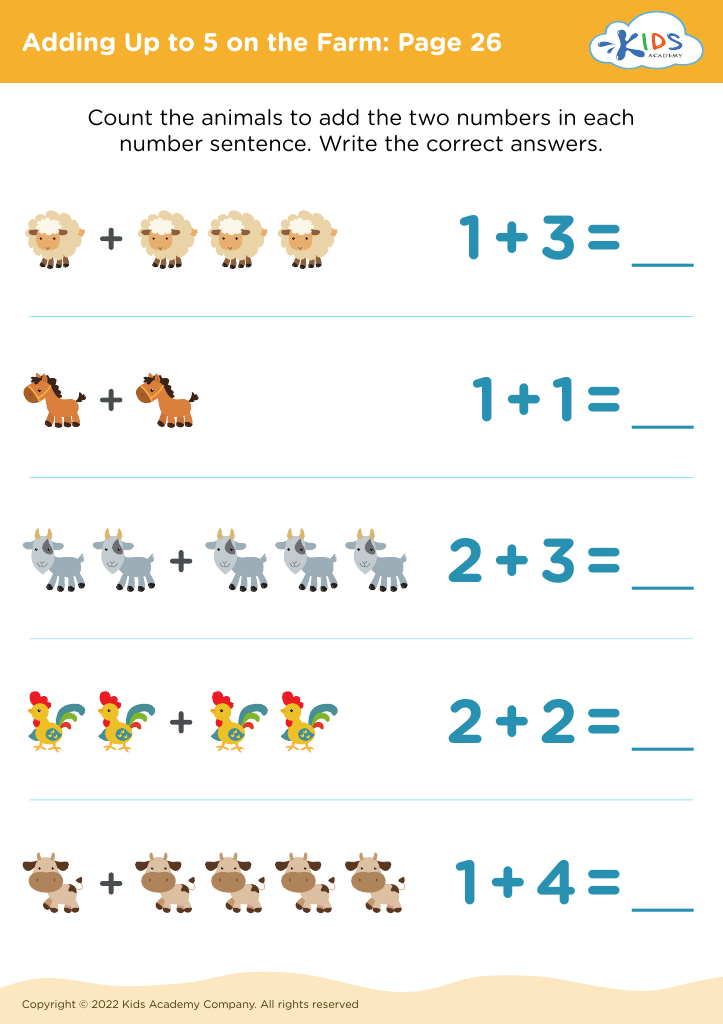
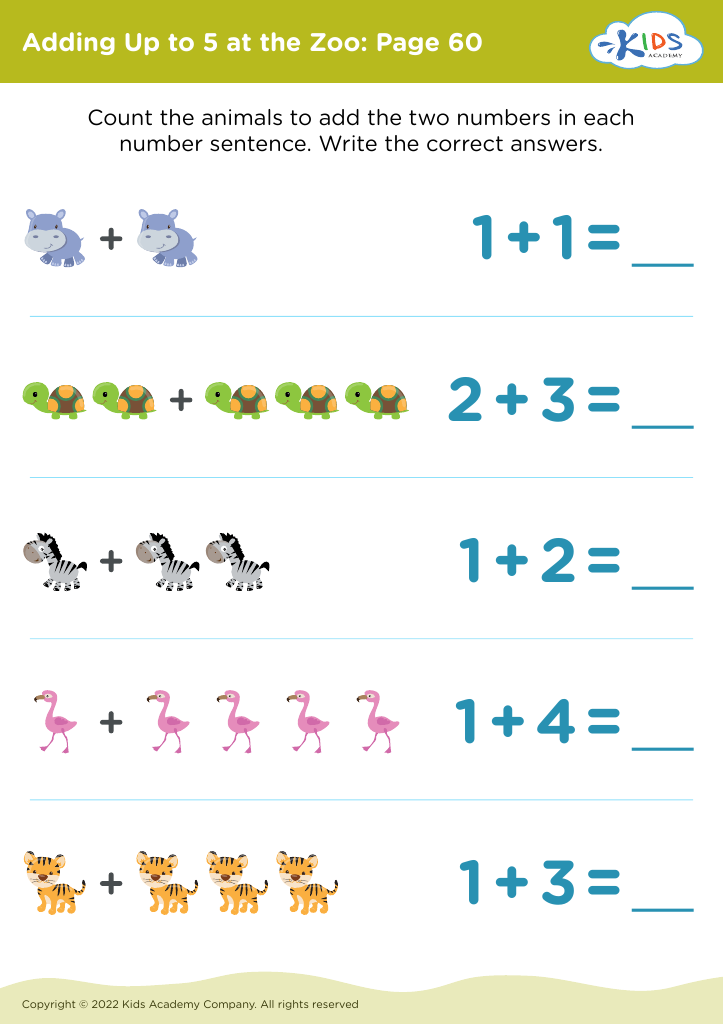
Discover a fun and effective way to introduce addition with our "Addition Up to 5 Worksheets" designed for children ages 4-7. Perfectly tailored to engage young learners, these worksheets feature colorful illustrations and interactive exercises to make learning enjoyable. Kids will practice adding numbers one through five through a variety of activities including counting objects, completing number sentences, and drawing circles. Each worksheet promotes essential math skills while fostering excitement and confidence in budding mathematicians. Download now and help your child lay a solid foundation in addition, preparing them for future math success in an entertaining way!
Favorites
With answer key
Interactive
Join Kids Academy for Free
Who is primarily going to use this learning content?








Understanding addition up to 5 is a foundational math skill for children aged 4-7 that serves as the building block for future mathematical concepts. At this early stage, children are not only learning to add numbers but also developing critical thinking and problem-solving abilities. By mastering this skill, children enhance their number sense, which is essential for understanding larger concepts like subtraction, multiplication, and eventually more complex mathematics.
Parents and teachers should care because early exposure to mathematical concepts fosters a positive attitude towards math and builds confidence. When children successfully engage with addition up to 5, they experience a sense of achievement that encourages further exploration in mathematics. This positive reinforcement is crucial for maintaining motivation and interest in learning.
Additionally, teaching addition using engaging methods—such as games, visuals, and hands-on activities—helps children retain information better. Parents and teachers play a key role in creating a supportive learning environment where mistakes are viewed as part of the learning process. By nurturing these early math skills, we pave the way for lifelong mathematical understanding and competence, setting the stage for academic success in all subjects.








