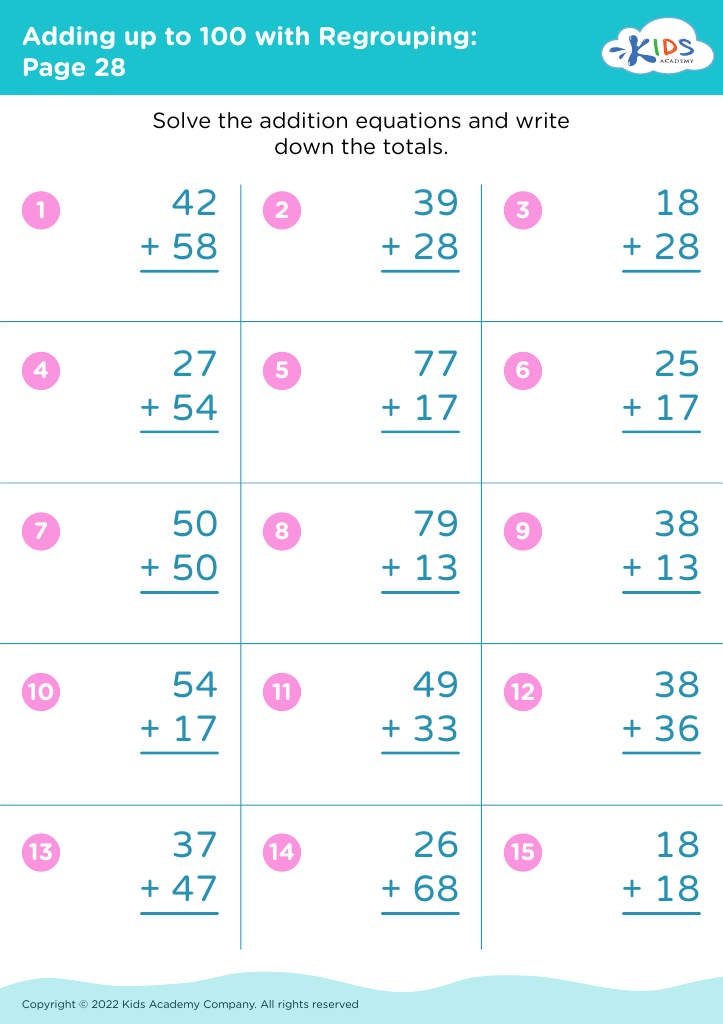








Parents and teachers should prioritize basic arithmetic skills in children aged 4-7 because this foundational knowledge is crucial for later academic success and real-life problem-solving. Arithmetic, including addition, subtraction, counting, and recognizing numbers, builds a child's understanding of how to manipulate quantities and recognize numerical patterns. Developing these skills early enhances cognitive abilities, critical thinking, and logical reasoning.
Early mastery of arithmetic fosters confidence and a positive attitude towards mathematics, reducing anxiety and ensuring that children are prepared for more complex mathematical concepts as they advance in school. Moreover, arithmetic skills are integral to everyday tasks, such as telling time, handling money, and measurements in cooking or construction, making them essential for functional literacy.
Furthermore, research shows a strong correlation between early math skills and future academic performance, not only in mathematics but also in other subjects like reading and science. Engaging young learners with fun and interactive math activities makes learning enjoyable and relevant, nurturing a lifelong appreciation for the subject. Therefore, the foundation built from ages 4-7 paves the way for continuous educational growth, equipping children with the necessary tools for both academic and pragmatic challenges in their future endeavors.








