Basic geometry Worksheets for Ages 4-7
4 filtered results
-
From - To
Explore our engaging Basic Geometry Worksheets designed specifically for children aged 4-7! These worksheets introduce young learners to foundational geometric concepts such as shapes, lines, and spatial awareness through fun and interactive activities. Featuring colorful visuals and age-appropriate exercises, your child will develop essential skills while enjoying the learning process. Perfect for home or classroom use, our worksheets foster creativity and critical thinking, making geometry accessible and enjoyable for early learners. Encourage your child’s mathematical confidence with our thoughtfully crafted resources. Start exploring the world of shapes today and watch your little one thrive in their understanding of basic geometry!
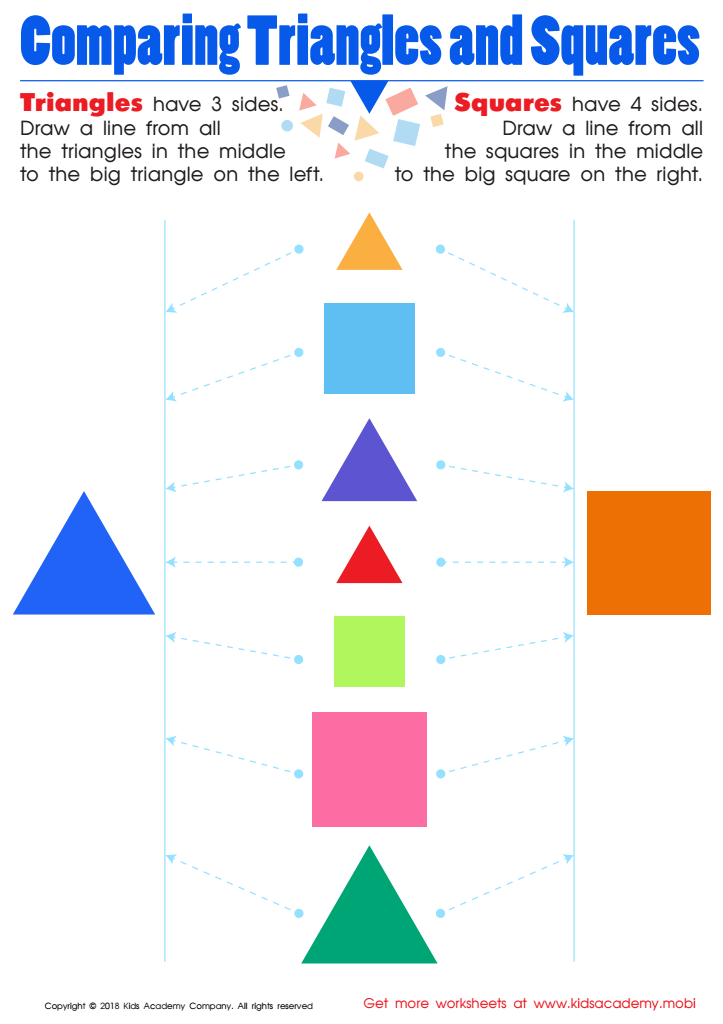
Comparing Triangles Squares Worksheet
 Assign to My Students
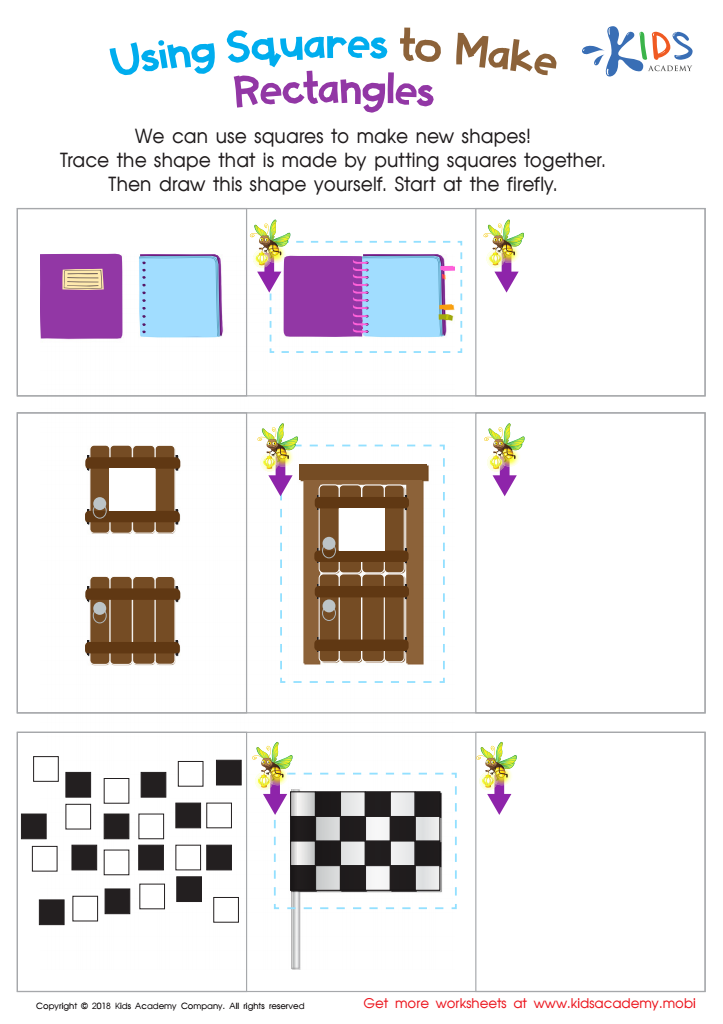
Using Squares to Make Rectangles Worksheet
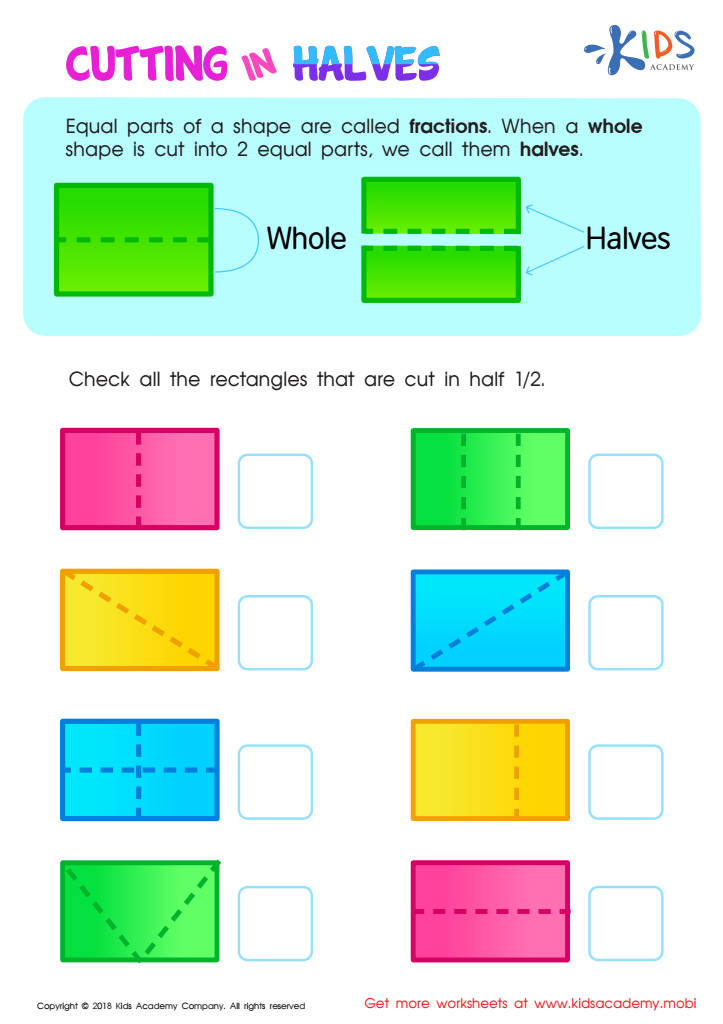
Cutting in Halves Worksheet
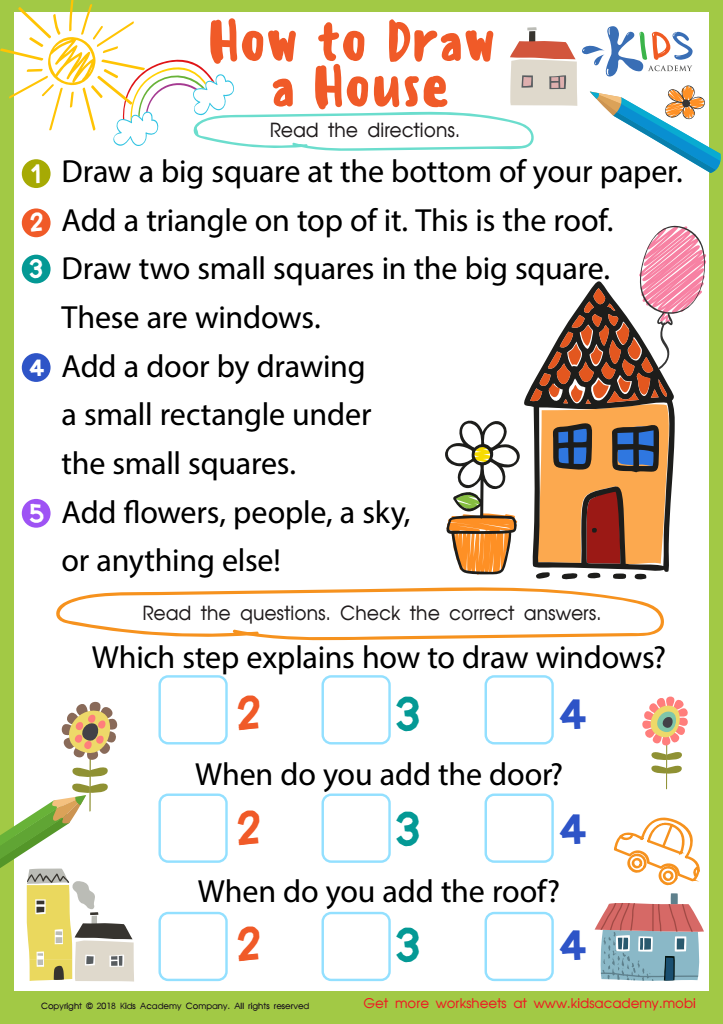
How to Draw House Worksheet






Basic geometry is essential for children ages 4-7 because it forms a foundational part of their cognitive development. At this age, children begin to understand shapes, sizes, and spatial relationships, which are crucial skills for everyday life and future learning. Engaging with basic geometric concepts helps children develop critical thinking and problem-solving abilities, enabling them to recognize patterns and categorize objects.
Moreover, early exposure to geometry significantly benefits mathematical understanding later on. When children learn to identify and manipulate shapes—such as circles, squares, and triangles—they develop spatial reasoning, which is vital for more complex mathematical concepts. Such skills transcend math and are applicable in areas like art, architecture, and engineering.
Geometry activities can be fun and interactive, fostering a love for learning through play. Games involving shapes or spatial puzzles encourage collaboration and communication among peers. Parents and teachers can encourage curiosity and exploration by integrating geometry into everyday experiences, such as cooking or measuring objects around the home.
Overall, understanding basic geometry nurtures essential life skills, enhances confidence in problem-solving, and lays the groundwork for a strong mathematical foundation, making it crucial for both educators and parents to prioritize during these formative years.








