
Basic Mathematics Worksheets for Ages 4-7
8 filtered results
Difficulty Level
Grade
Age
-
From - To
Subject
Activity
Standards
Explore our collection of Basic Mathematics Worksheets designed specifically for children aged 4-7! These engaging and interactive worksheets are perfect for young learners to develop essential math skills in a fun way. Our resources include activities focused on number recognition, counting, addition, and subtraction, tailored to suit early learners at different proficiency levels. Each worksheet is crafted to foster curiosity and boost confidence in math, supporting a solid foundation for future learning. With colorful illustrations and diverse formats, children will enjoy practicing basic mathematics while enhancing their problem-solving abilities. Perfect for home or classroom use, start building math skills today!
Favorites
With answer key
Interactive
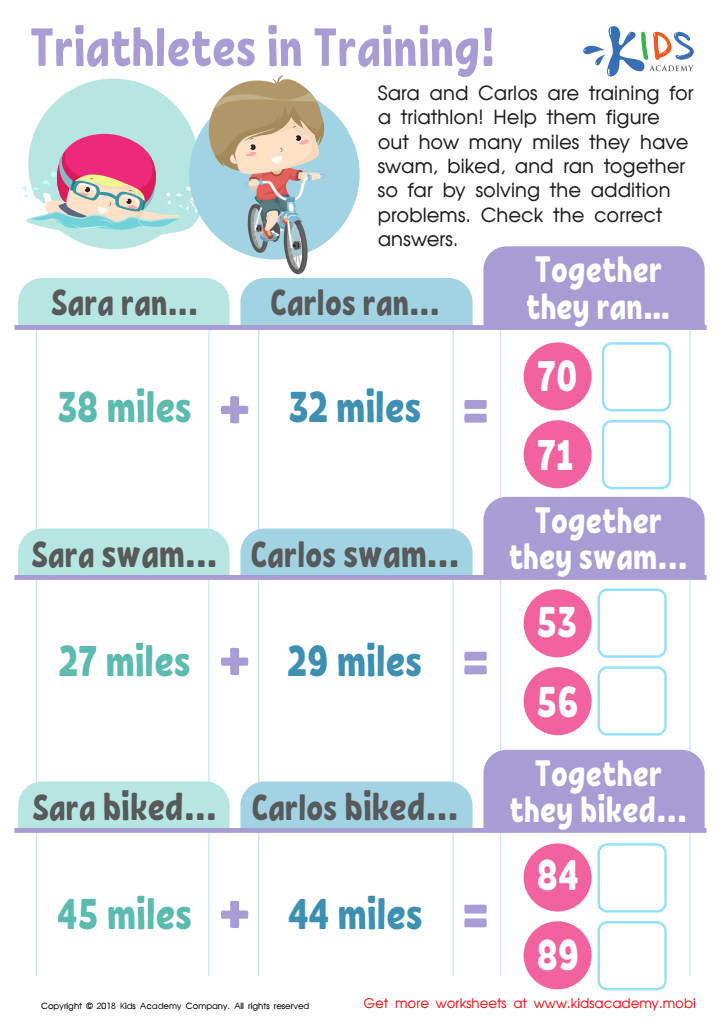
Triathletes in Training Worksheet
Sara and Carlos are training for a triathlon and need your child's help! They must solve the addition problems to figure out how many miles they've swam, ran, and biked. Help your kid check the answers and get them ready for the triathlon!
 Assign to My Students
Triathletes in Training Worksheet
Worksheet
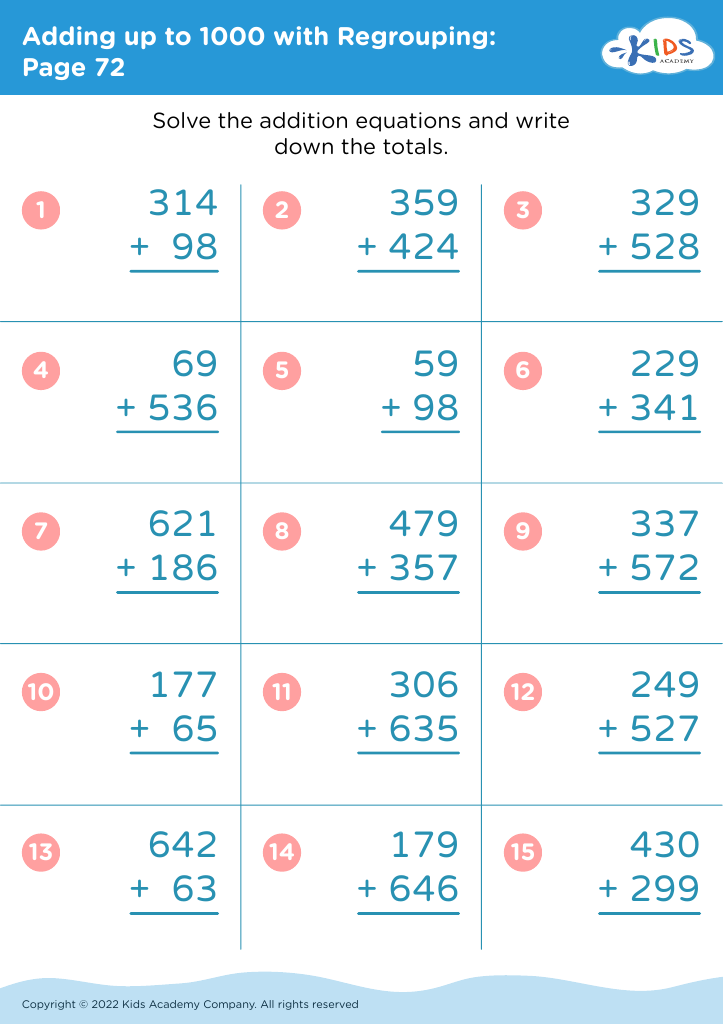
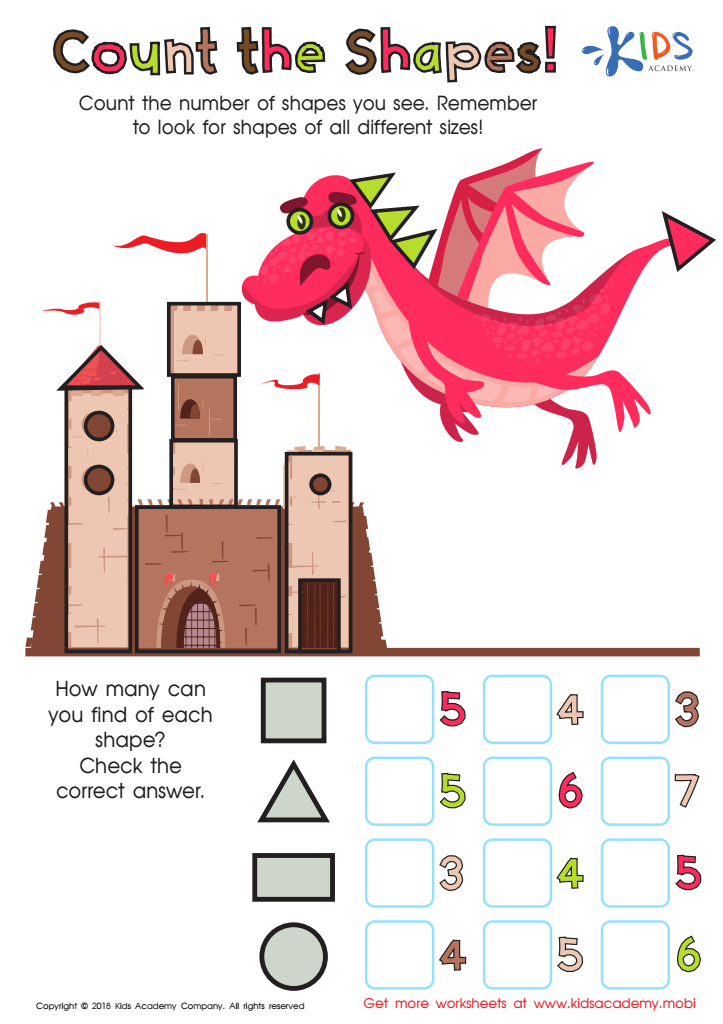
Count the Shapes Worksheet
This fun and learning worksheet is perfect for sharpening visual discrimination skills. Kids search a castle picture featuring a dragon and identify shapes, counting circles, squares, triangles and rectangles. Checking the correct box beside the number, they practice shape identification and counting. Download now and get started!
Count the Shapes Worksheet
Worksheet
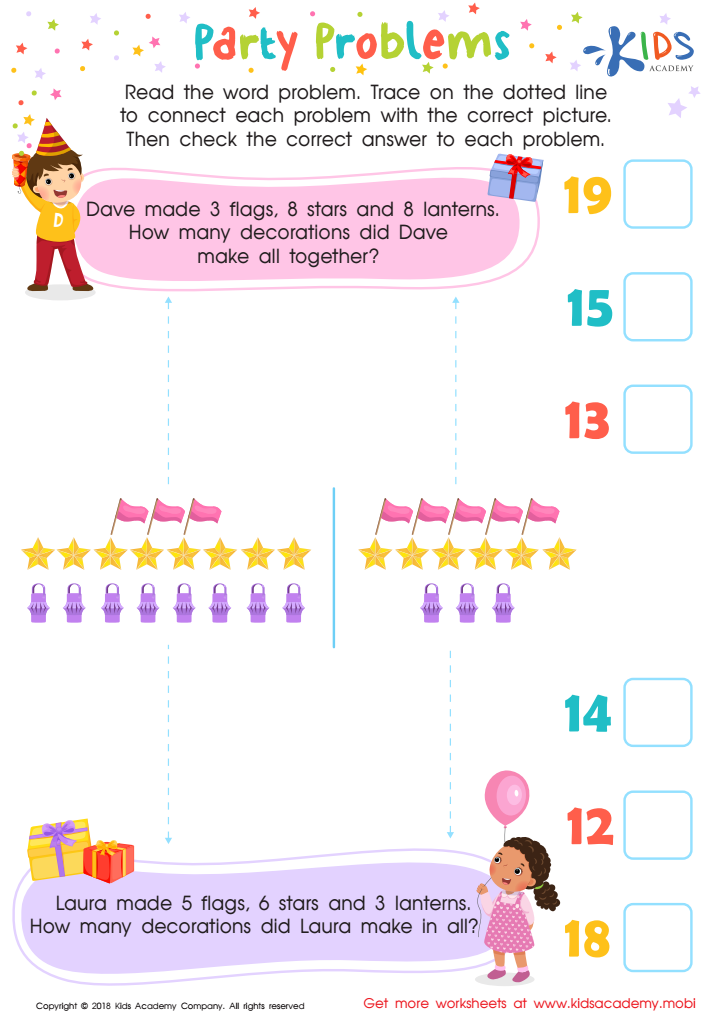
Party Problems Worksheet
Problems at parties? No problem! With this engaging PDF worksheet, your student can connect word problems to pictures, check correct answers, and find the sum of 3 addend problems. They'll be a party-saving hero in no time!
Party Problems Worksheet
Worksheet
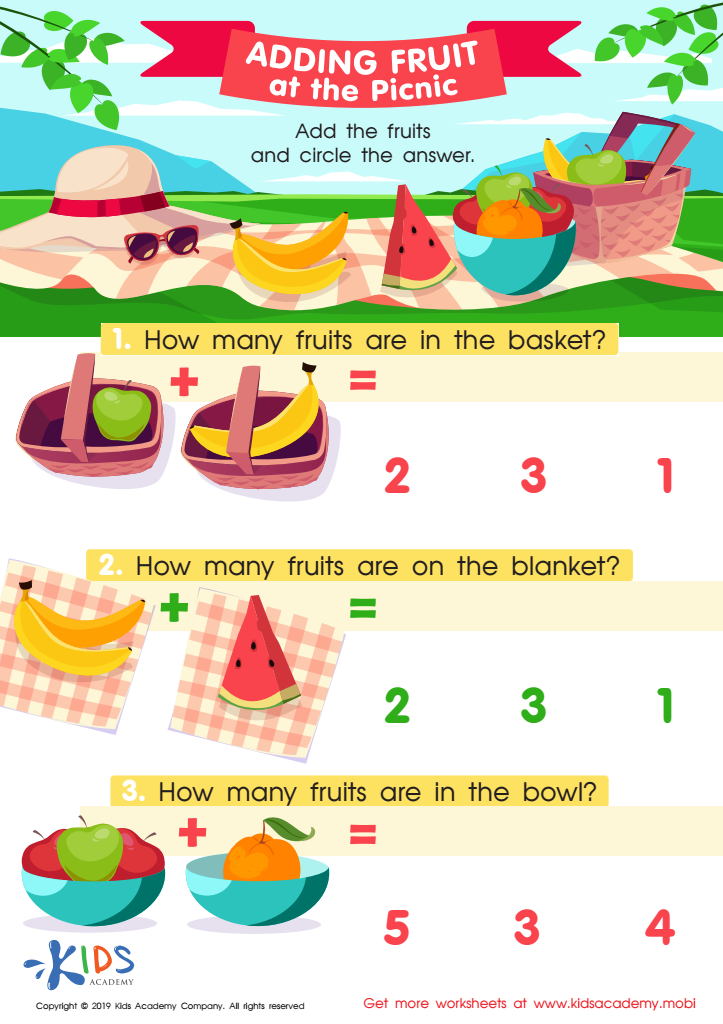
Adding Fruit at the Picnic Worksheet
Picnics are a great way for the family to enjoy a fun day in the sun! Get your kids involved by having them help load the picnic basket and do this worksheet to practice their math skills while they get ready. Identify the fruits in the picture, add them up, and circle the correct answer.
Adding Fruit at the Picnic Worksheet
Worksheet
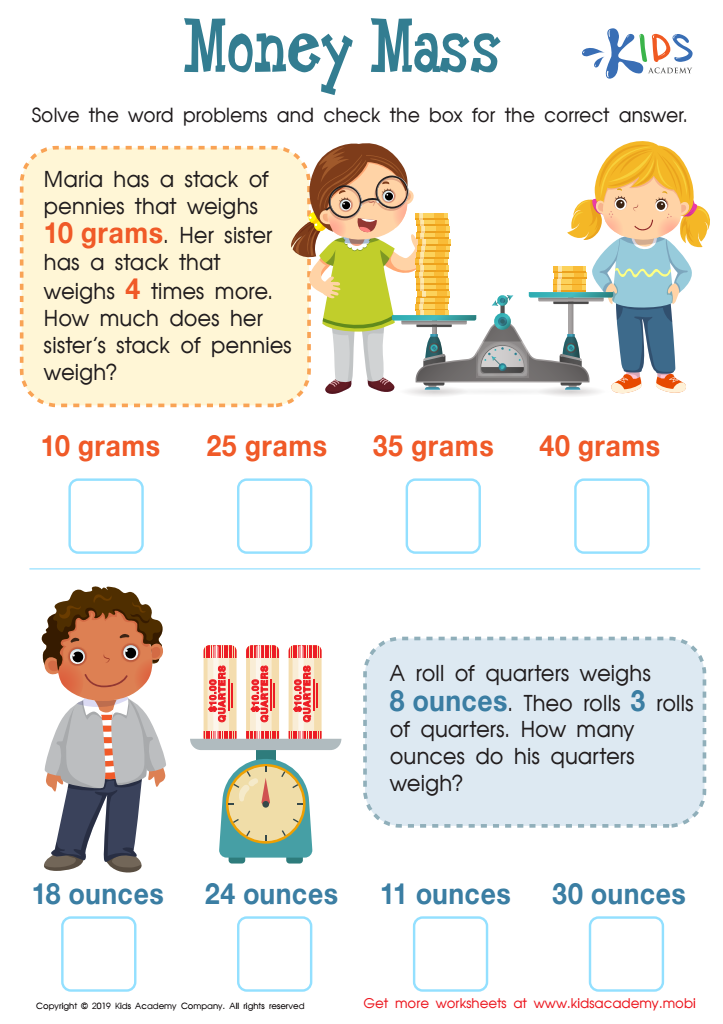
Money Mass Worksheet
By regularly working on math with your kids, they will become more confident. Ensure they understand the word problems in this printout, and help them solve it. Check the box for the correct answer of each to verify their work. With this practice, they will gradually get used to math and make progress.
Money Mass Worksheet
Worksheet
Join Kids Academy for Free
Who is primarily going to use this learning content?








Parents and teachers should prioritize Basic Mathematics for Ages 4-7 because this foundational stage sets the groundwork for a child’s lifelong attitude toward learning and problem-solving. At this age, children are naturally curious, and engaging them in fundamental math concepts can enhance cognitive skills and critical thinking. Basic math introduces essential ideas such as counting, patterns, addition, and subtraction, helping children understand the world around them and develop spatial awareness.
Furthermore, early math skills are positively correlated with later academic success. Research indicates that a solid grasp of basic mathematics not only supports future school performance but also fosters confidence in a child’s abilities. Engaging children through games, interactive activities, and real-life applications can make learning enjoyable and meaningful, promoting a love for math that can last a lifetime.
Moreover, being mathematically literate equips children with essential skills necessary for daily life, such as budgeting, cooking, and time management. In essence, investing time and resources in teaching basic mathematics in early childhood nurtures a well-rounded individual ready to tackle more complex challenges in school and beyond, thus benefiting both the child and society as a whole.








