
Chess knowledge Worksheets for Ages 4-7
5 filtered results
Difficulty Level
Grade
Age
-
From - To
Subject
Activity
Standards
Welcome to our "Chess Knowledge Worksheets for Ages 4-7" page! Designed to spark young minds, our worksheets introduce children to the wonderful world of chess. With engaging activities, kids will learn the names of pieces, basic rules, and essential strategies in a fun and interactive way. Perfect for parents and teachers, these printable resources promote critical thinking, problem-solving, and patience while fostering a love for the game. Ideal for home schooling, classroom activities, or after-school enrichment, these worksheets will help little ones develop foundational chess skills while enjoying the challenge and excitement of learning through play!
Favorites
With answer key
Interactive
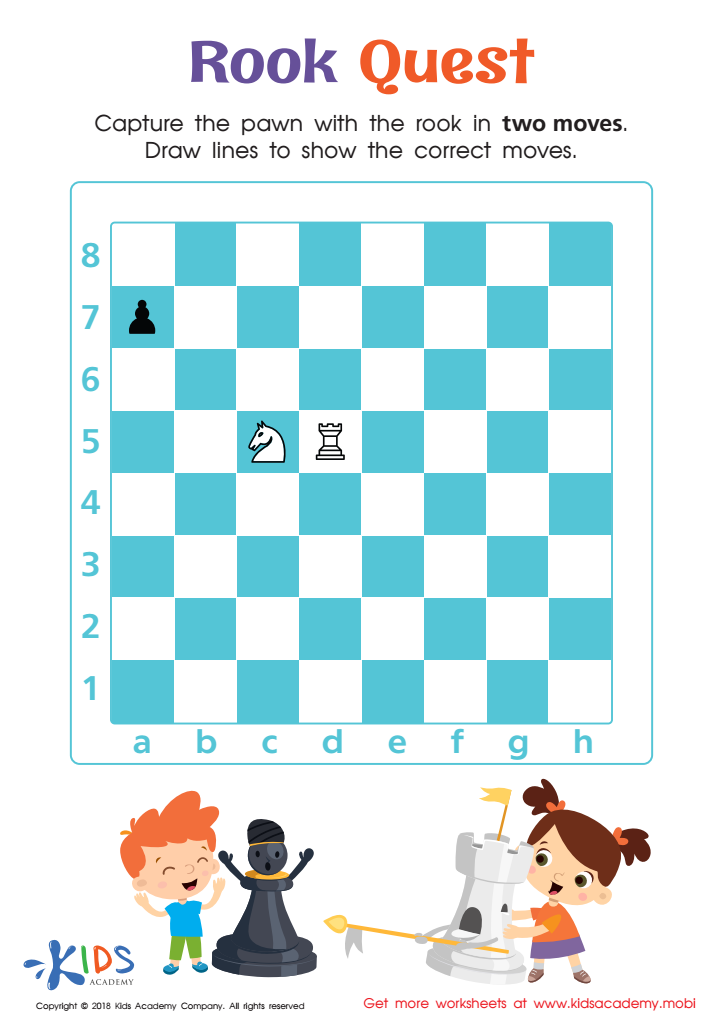
Rook Quest Worksheet
Is your child a chess whiz? Check their progress with this rook quest: get the enemy's pawn piece in just two moves. Have them draw the lines for the moves they'll make. See how quickly they master it!
 Assign to My Students
Rook Quest Worksheet
Worksheet
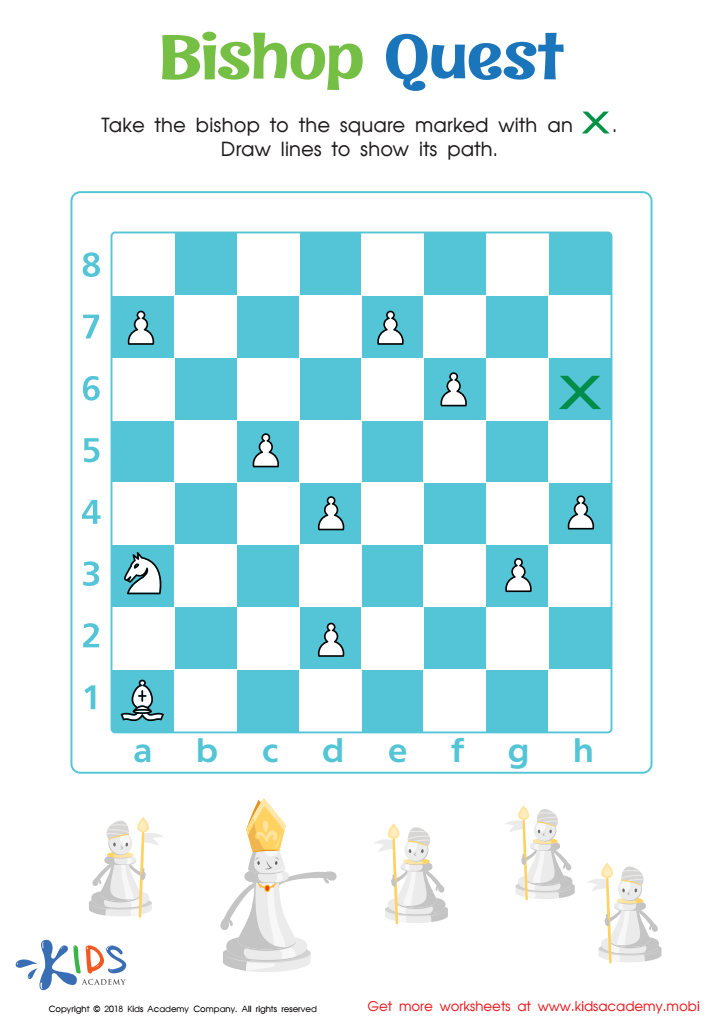
Bishop Quest Worksheet
Show kids the board and ask them to identify the bishop. Then ask them to move it to the square marked 'x', drawing lines to show its path. This worksheet helps teach kids how to move the bishop on a chessboard.
Bishop Quest Worksheet
Worksheet
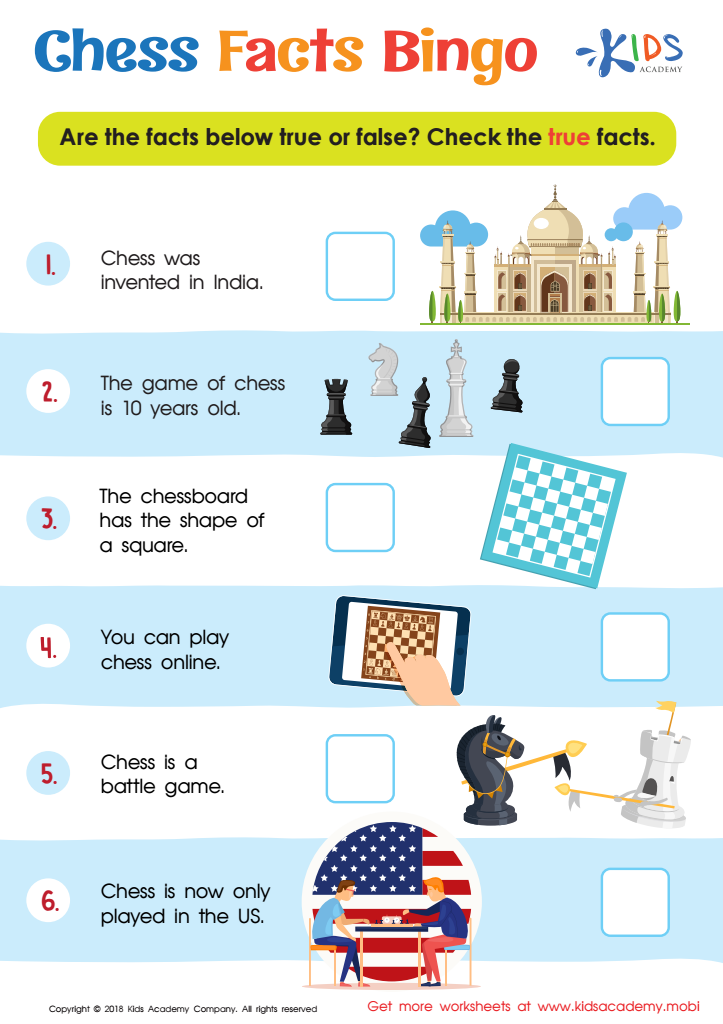
Chess Facts Bingo Worksheet
Help your child assess their knowledge of chess with our simple worksheet. It contains six questions; read them to your child and ask them if the statements are true or false. Once they check the boxes for the true statements, you'll have a better understanding of their understanding of the game.
Chess Facts Bingo Worksheet
Worksheet
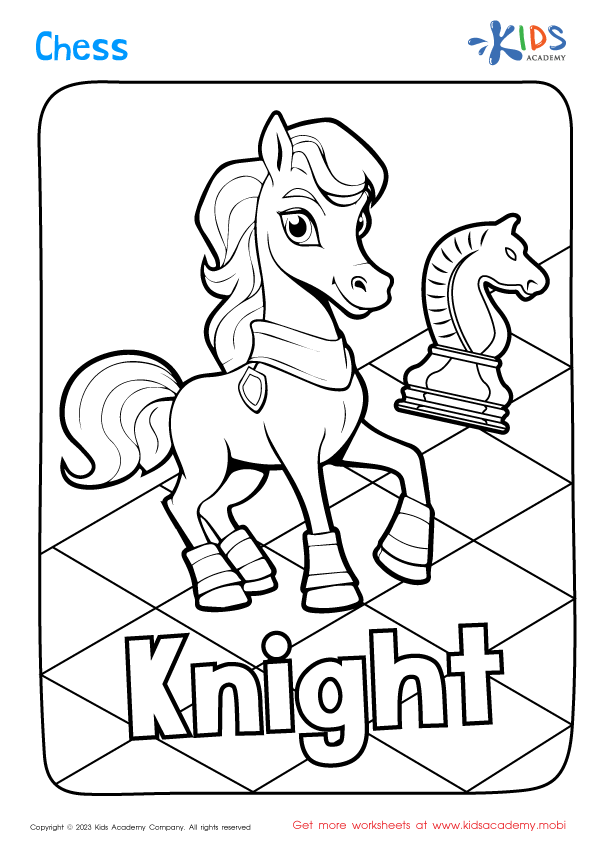
Join Kids Academy for Free
Who is primarily going to use this learning content?






Introducing chess to children aged 4-7 can significantly enhance their cognitive and social development. At this early age, children are exceptionally receptive to learning, and chess offers a unique blend of challenges that can cultivate critical thinking and problem-solving skills. As young players navigate the game, they engage in strategic planning, spatial reasoning, and the ability to anticipate opponents' moves, which can translate into improved analytical skills in other academic areas.
Moreover, chess nurtures emotional intelligence by teaching patience, resilience, and the value of sportsmanship. Children learn that losing is a part of growth, encouraging them to persist in face of challenges. Additionally, chess can foster socialization; it is often played in pairs, helping children develop communication skills and cooperation as they interact with peers.
For parents and teachers, recognizing these benefits can guide decisions about educational activities. Integrating chess into learning environments can provide a structured yet engaging way to cultivate essential life skills that benefit children well beyond the classroom. Ultimately, fostering an early appreciation for chess sets a foundation for lifelong learning, strategic thinking, and meaningful social interactions. Children equipped with these skills are better prepared for future academic challenges and social situations.








