Color recognition Worksheets for Ages 4-7 - Page 6
121 filtered results
-
From - To
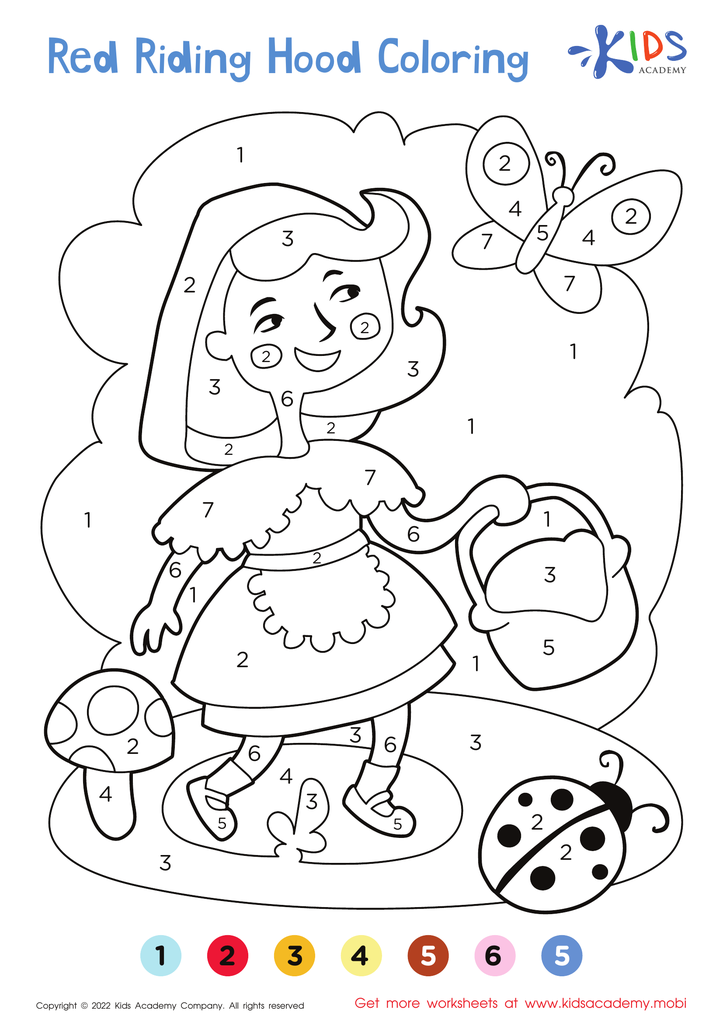
Little Red Riding Hood – Coloring by Numbers




.jpg)


Color recognition is a foundational skill vital for children aged 4 to 7, impacting their cognitive and social development. At this age, children are navigating a world rich in colorful stimuli, and learning colors enhances their ability to categorize and make sense of their environment. Recognizing colors aids in the development of language skills; as children learn to name and differentiate colors, they enrich their vocabulary and enhance communication abilities.
Beyond language, color recognition plays a key role in critical thinking and problem-solving. For example, identifying colors helps children follow instructions, sort objects, and make comparisons, fostering essential cognitive skills. Color coding can also aid in organization and memory retention, making learning more engaging and manageable.
Furthermore, understanding colors can instill confidence and self-expression in children, allowing them to articulate preferences and emotions effectively. Teachers and parents who emphasize color recognition and related activities can contribute positively to a child's learning experience. Collaborative coloring projects, games, and storytelling that incorporate colors deepen relationships and promote teamwork, all of which are important interpersonal skills. In summary, parents and teachers should prioritize color recognition as it plays an integral role in children's overall development and prepares them for future educational success.








