
Handwriting development Worksheets for Ages 4-7
3 filtered results
Difficulty Level
Grade
Age
-
From - To
Subject
Activity
Standards
Enhance your child's handwriting skills with our carefully designed worksheets for ages 4-7. Our resources focus on developing fine motor skills, letter recognition, and proper letter formation through engaging and interactive activities. Each worksheet is tailored to boost confidence and provide practice in a fun and educational way. From tracing letters to practicing basic words, these exercises promote essential handwriting development while fostering creativity. Perfect for home or classroom use, our worksheets make learning enjoyable and effective. Explore our collection today to support your child's journey towards neat and legible handwriting!
Favorites
With answer key
Interactive
Letter M Tracing Page
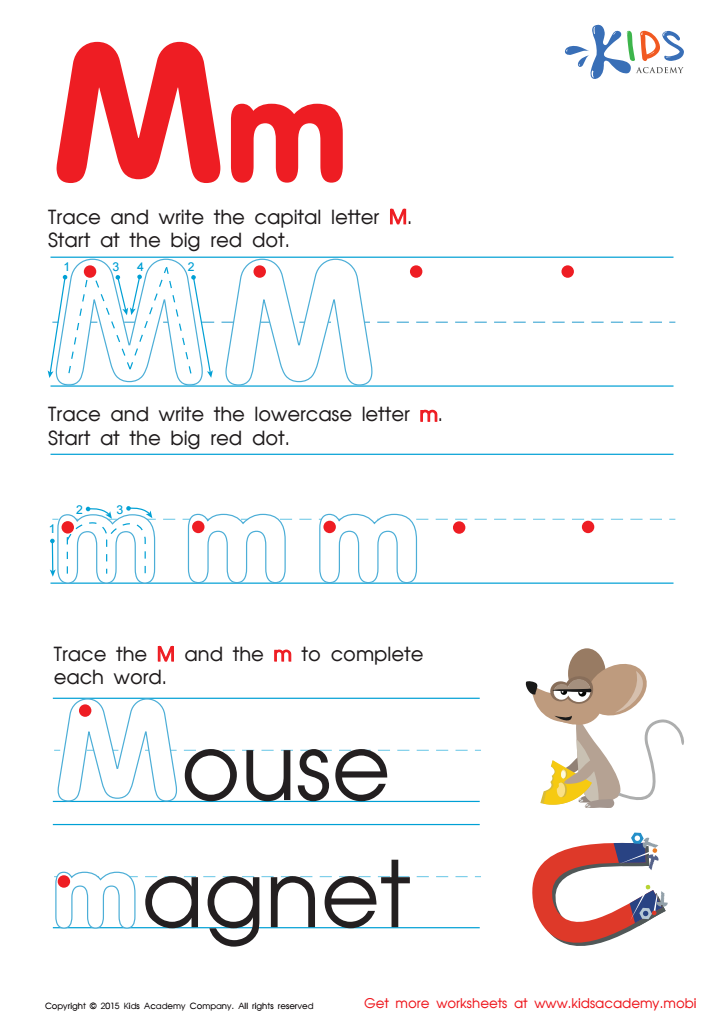
Trace and write the letter "M" to help kids learn the alphabet. Start at the red dot and practice several times. Trace the capital letter first, then move on to the lowercase. Complete words like "mouse" and "magnet" in the further exercise. Get more free printables here.
Letter M Tracing Page
Worksheet
My Name: Letter Fishing Worksheet
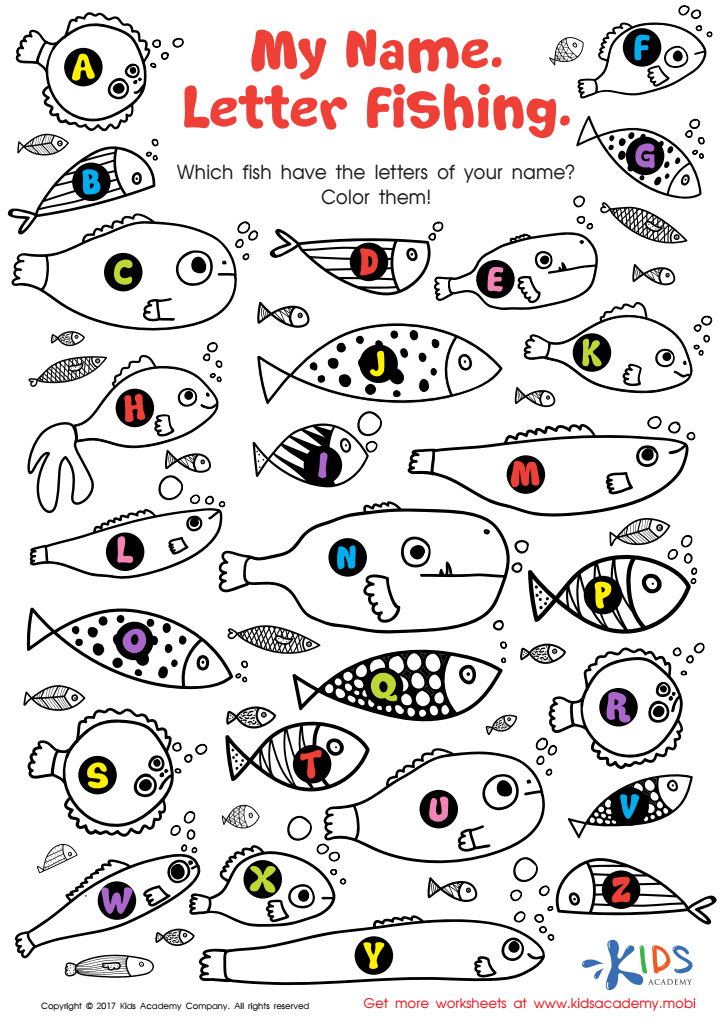
Dive into the deep sea and search for fish with a letter on them. Can you find all the letters from your name? Color your favorite fish with crayons and be creative! On the other side, use the letters you found to write your name. Have fun coloring and finding the letters of your name! (80 words)
Download (PDF)
 Assign to My Students
Assign to My Students
My Name: Letter Fishing Worksheet
Worksheet
Join Kids Academy for Free
Who is primarily going to use this learning content?








Handwriting development in children ages 4-7 is crucial for several reasons. First, during these formative years, children are honing their fine motor skills, which are essential not only for effective writing but also for various daily tasks. Building these skills prepares them for academic success since writing is a fundamental part of learning in school.
Additionally, handwriting is closely linked to cognitive development. As children practice forming letters and words, they reinforce their understanding of phonetics, spelling, and grammar. This correlation strengthens their reading and writing abilities, providing a solid foundation for later literacy skills.
Emphasizing handwriting also plays a significant role in self-expression and communication. As children improve their handwriting, they gain confidence in sharing their thoughts and creativity, which can positively impact their social interactions and emotional well-being.
Moreover, well-developed handwriting can enhance academic performance. Research indicates that fluency in writing allows students to focus more on content and ideas rather than the mechanics of writing, leading to richer quality in their assignments.
In essence, fostering handwriting development is not just about learning to write; it's about supporting holistic growth in children, preparing them for future educational challenges, and nurturing their ability to express themselves effectively.








