Identifying Animals Worksheets for Ages 4-7
9 filtered results
-
From - To
Discover our engaging "Identifying Animals Worksheets for Ages 4-7" designed to enhance early childhood learning while sparking curiosity about the animal kingdom. Tailored for young learners, these worksheets offer fun, interactive activities that help children recognize various animals and their habitats. Through vibrant illustrations and simple exercises, kids develop essential skills such as observation, classification, and memory. Perfect for both classroom and home use, our expertly crafted materials support foundational learning in a playful and educational manner. Make learning exciting and enjoyable with our Identifying Animals Worksheets, a resource your little ones will love!

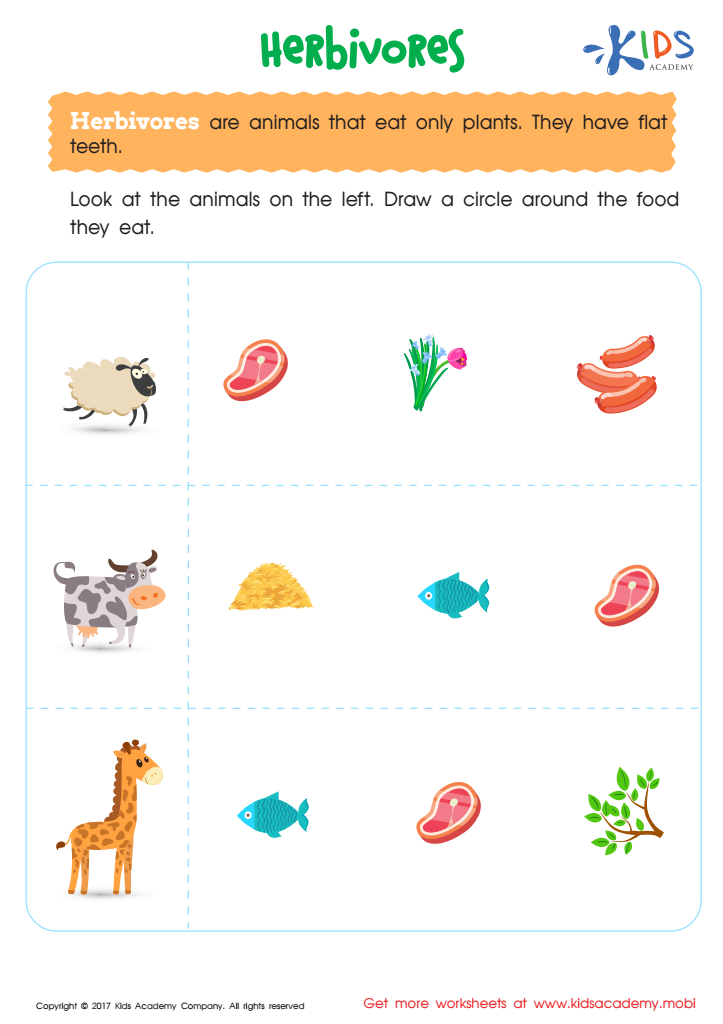
Herbivores Printable
 Assign to My Students
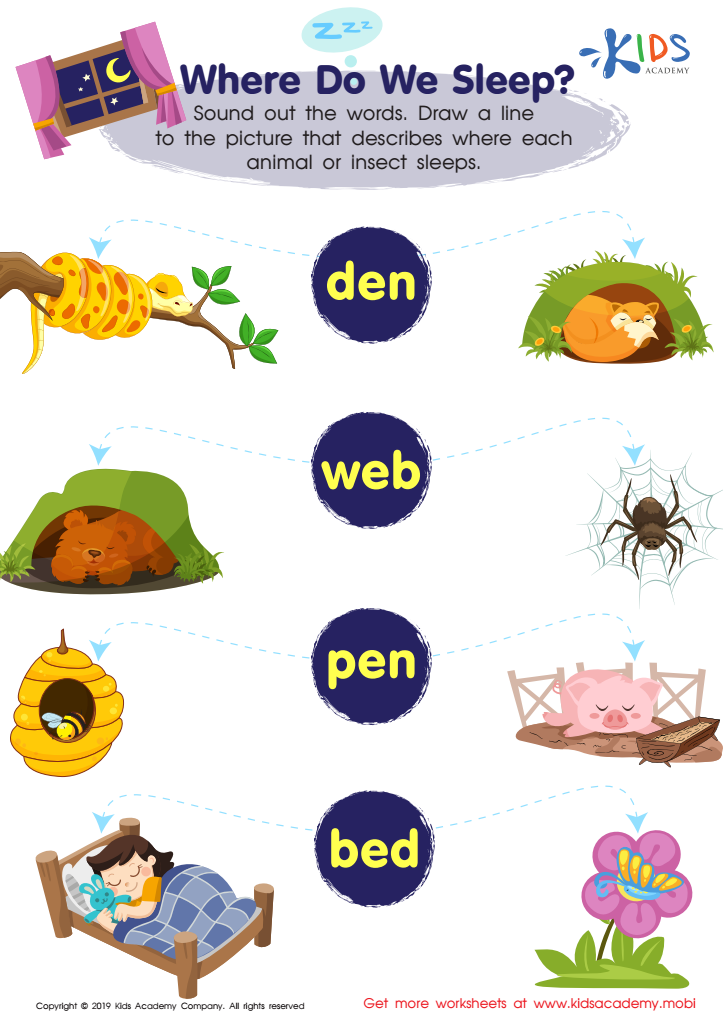
Where Do We Sleep Worksheet
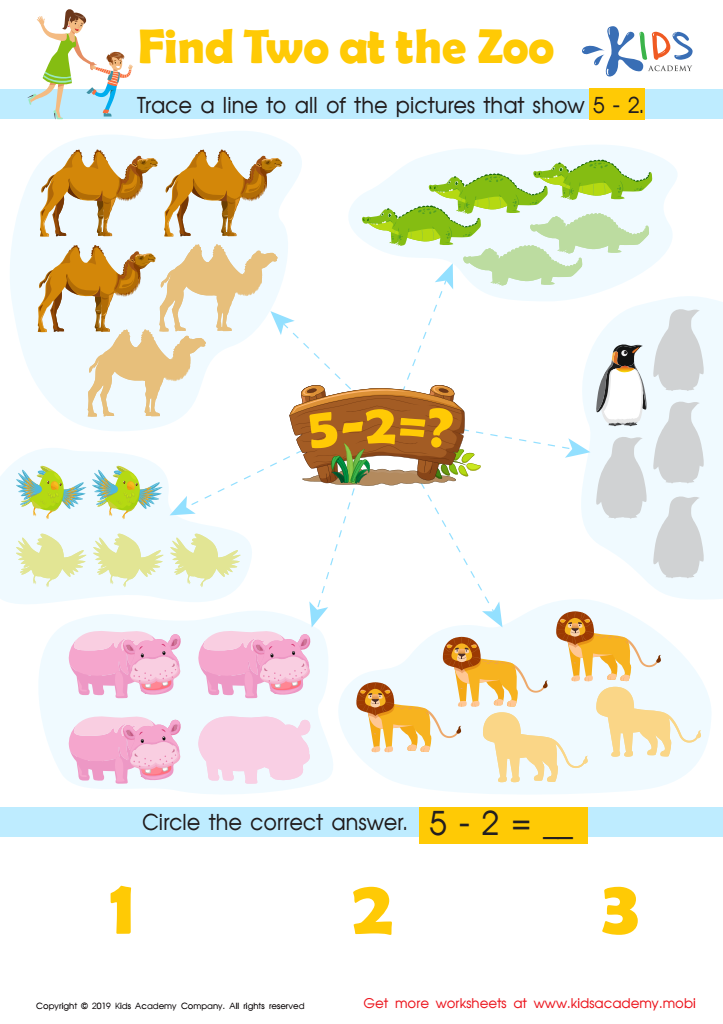
Find Two at the Zoo Worksheet
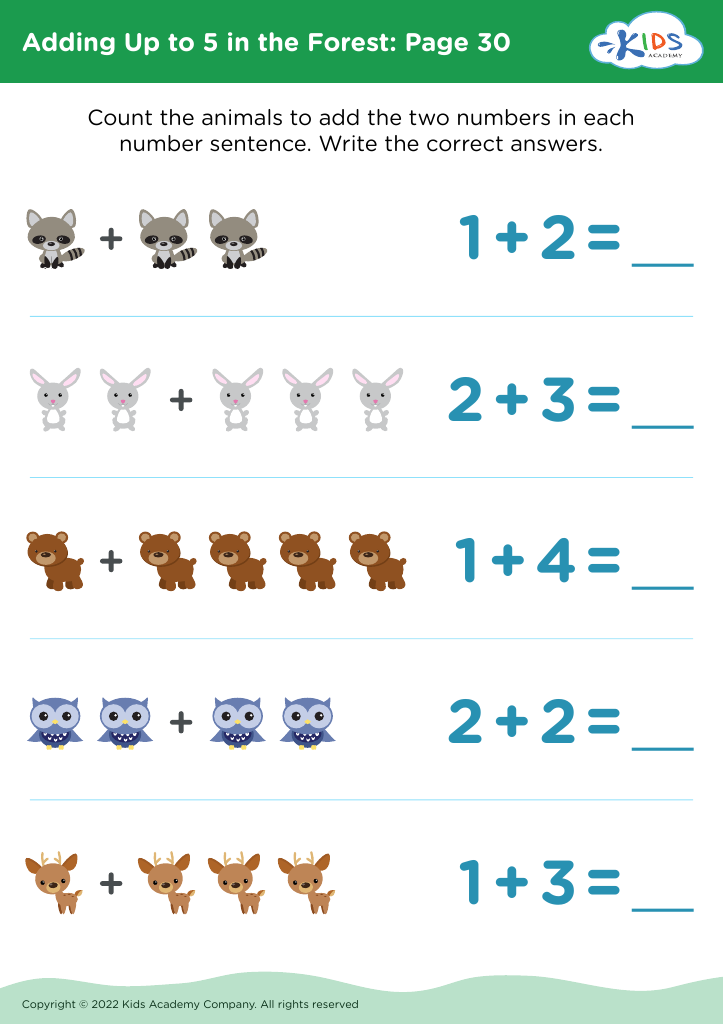
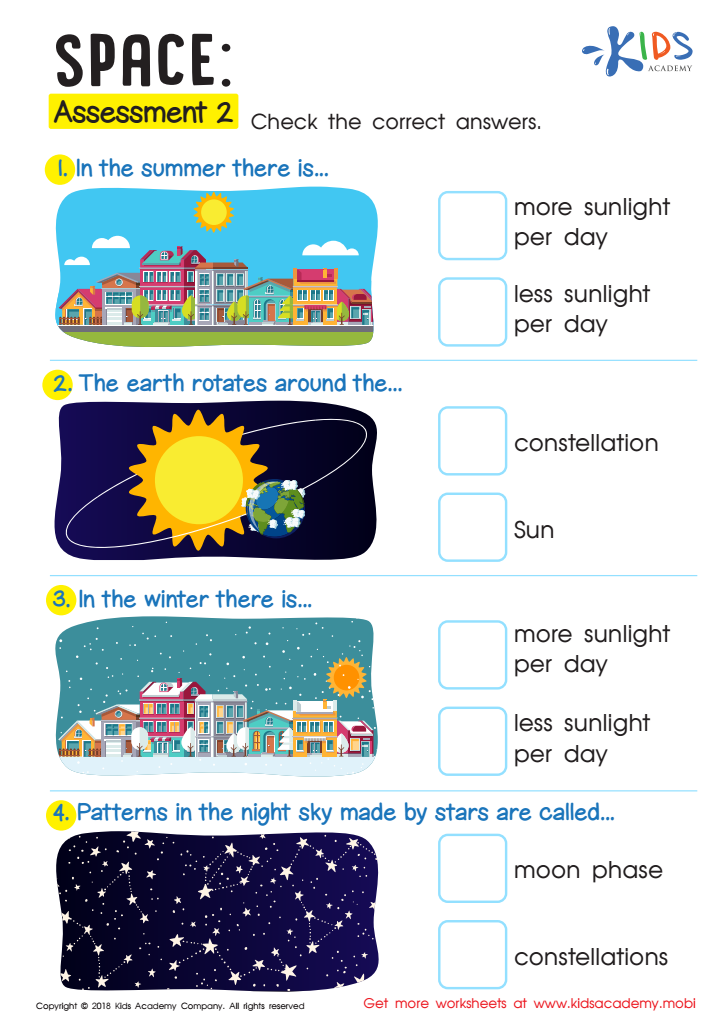
Space: Assessment 2 Worksheet








Identifying animals is a crucial activity for children aged 4-7 as it fosters significant cognitive, emotional, and social development. On the cognitive front, recognizing and naming different animals engages young children's observational skills, memory, and vocabulary expansion. This not only enhances their language abilities but also sparks curiosity about the natural world, laying a strong foundation for future scientific learning.
Emotionally, identifying animals can cultivate empathy and a sense of responsibility in children. Learning about various animals and their habitats can foster a deep appreciation for living creatures and the environment. This emotional connection inspires a lifelong respect for nature and encourages eco-friendly behaviors.
Socially, animal identification activities provide opportunities for collaboration and communication. Whether children work on projects in class or discuss animals at home, these interactions improve their social skills, such as sharing ideas and active listening. Additionally, themes involving animals often serve as common ground for building friendships and promoting inclusive play.
Overall, integrating animal identification into early education not only reinforces key developmental domains but also enriches the child's understanding and compassion for the world around them, making it a valuable component of early childhood learning.








