Identifying characters Worksheets for Ages 4-7
3 filtered results
-
From - To
Discover our delightful "Identifying Characters Worksheets for Ages 4-7," designed to encourage young readers to engage with their favorite stories. These interactive worksheets help kids recognize and understand characters, enhancing their comprehension and retention skills. Tailored for early learners, each activity features vibrant illustrations and simple exercises to make learning fun and effective. Perfect for both classroom and at-home use, these worksheets support critical reading and cognitive development, laying a strong foundation for future literacy success. Visit our page to explore the magical world of characters and watch your child's love for reading flourish!
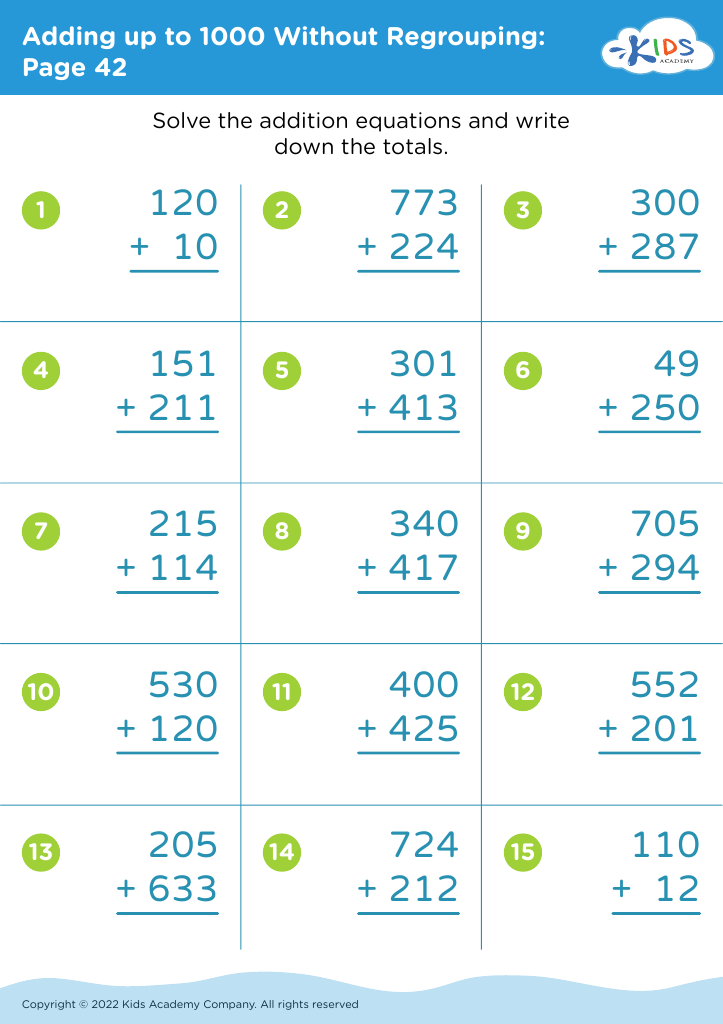
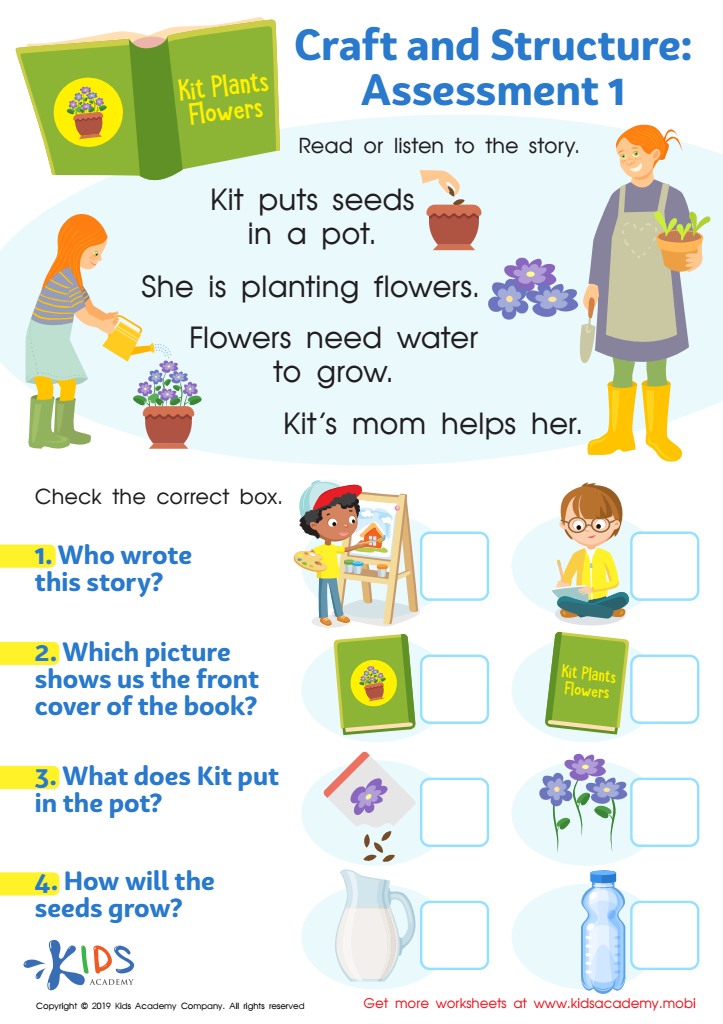
Craft and Structure: Assessment 1 Worksheet
 Assign to My Students
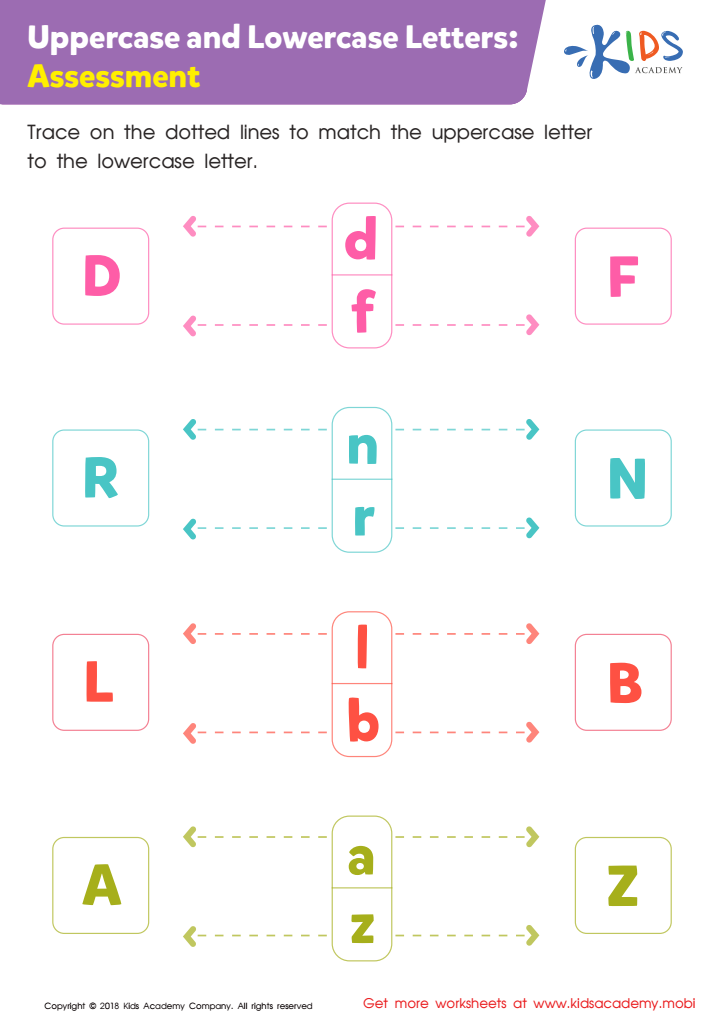
Uppercase and Lowercase Letters: Assessment Worksheet







Identifying characters is a fundamental literacy skill crucial for young children, between ages 4-7, as they develop their reading comprehension and storytelling abilities. At this age, children are beginning to recognize that stories have distinct people, animals, or beings who play integral roles. Understanding and identifying characters help children engage more deeply with texts. It enhances their ability to recall facts, make predictions, and differentiate between various perspectives within a story. Moreover, it cultivates empathy as they learn to see the world through the characters' experiences, feelings, and motivations.
Character identification also serves as a stepping stone for more complex literacy skills, such as summarizing, sequencing, and inferencing. When children can name and describe characters, they are prepared to piece together how these characters drive plots and interact with diverse settings. Consequently, children can follow narratives more easily and begin to appreciate literature's multifaceted nature.
Beyond academic growth, being mindful of character traits can fuel children’s creativity and expression. They often emulate behaviors and situations from their favorite characters, enhancing imaginative play and social development. Thus, parents and teachers should prioritize this skill to foster an early love for reading, and equip children with essential building blocks for lifelong learning and emotional intelligence.








