
Learning scientific vocabulary Worksheets for Ages 4-7
3 filtered results
Difficulty Level
Grade
Age
-
From - To
Subject
Activity
Standards
Discover an engaging collection of worksheets designed to help children ages 4-7 master essential scientific vocabulary. These fun and educational activities make complex scientific terms accessible and enjoyable through vibrant illustrations and interactive exercises. Each worksheet focuses on fundamental concepts in life sciences, earth sciences, and physical sciences, fostering curiosity and nurturing a love for learning. Through matching games, coloring sheets, and simple experiments, young learners will enhance their word recognition and comprehension skills. Equip your child with a strong foundation in scientific language and spark their enthusiasm for future scientific exploration!
Favorites
With answer key
Interactive
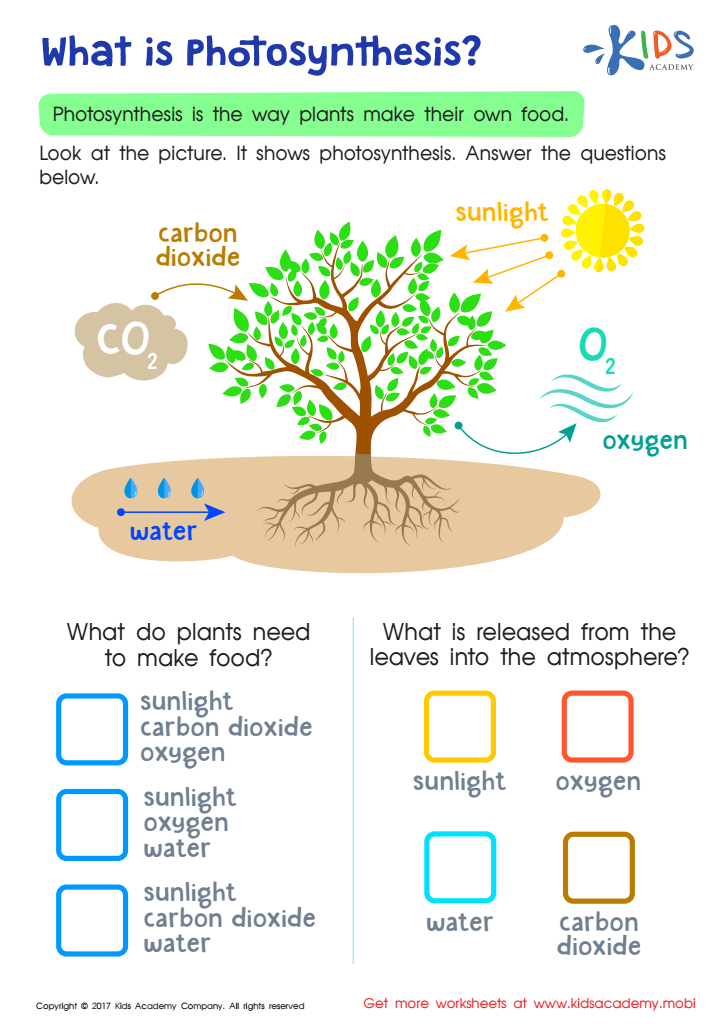
What is Photosynthesis Printable
Plants need to eat too; they make their own food from the air. Introduce them to photosynthesis with this fun worksheet!
 Assign to My Students
What is Photosynthesis Printable
Worksheet
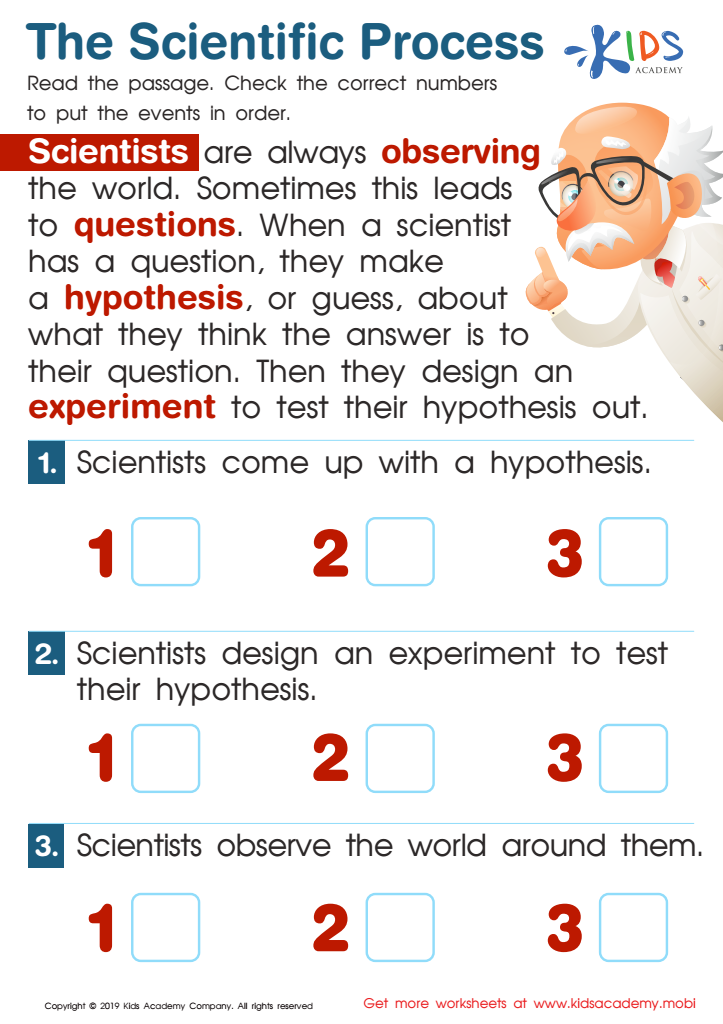
The Scientific Process Worksheet
Help your kids read the passage, then ask them to explain what they've learnt. Ask the questions and help put the events in order. Through this worksheet, your kids will learn more about science and practice reading skills. It's a fun way to explore science! (80 words)
The Scientific Process Worksheet
Worksheet
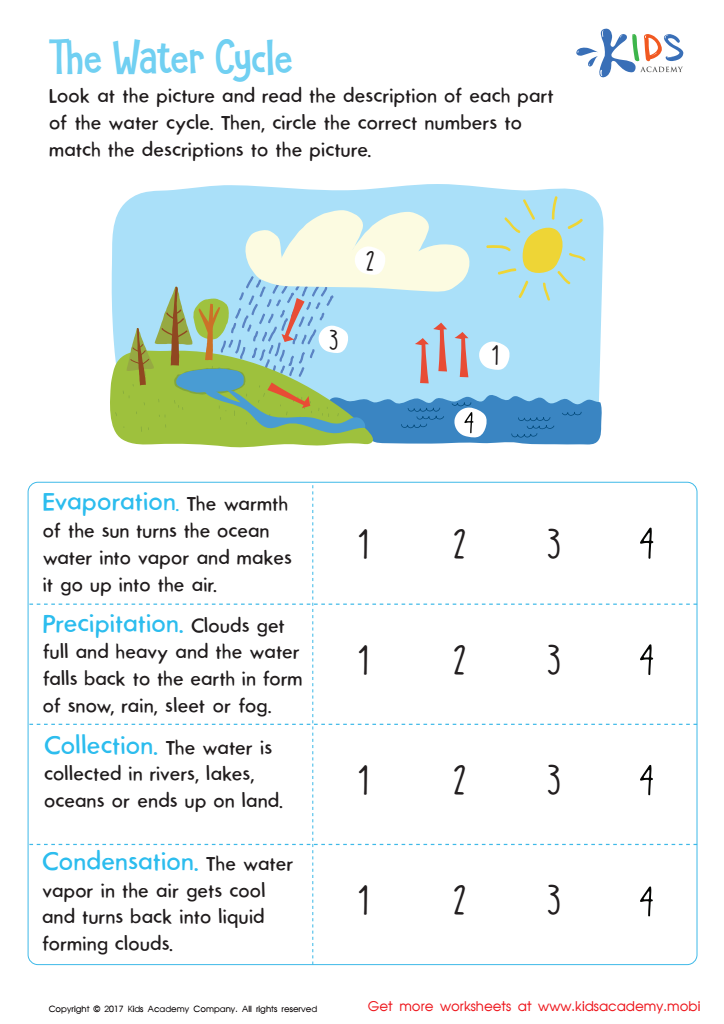
The Water Cycle Worksheet
Kids love science because it sparks their curiosity, so use this worksheet to introduce them to earth science and build a strong foundation for future learning.
The Water Cycle Worksheet
Worksheet
Learning Skills
Join Kids Academy for Free
Who is primarily going to use this learning content?







Parents and teachers should prioritize introducing scientific vocabulary to children aged 4-7 because it lays a solid foundation for future learning and cognitive development. At this age, children are naturally curious and eager to explore their surroundings. Providing them with the right terms to describe their observations can significantly enhance their ability to communicate ideas effectively and understand complex concepts later.
Introducing scientific vocabulary early helps in developing critical thinking skills and promotes active learning. When children know words like "observe," "predict," "experiment," and "analyze," they start to grasp the underlying processes of scientific inquiry. This early exposure can foster a positive attitude towards science and encourage a questioning mindset, which is crucial for problem-solving and innovation.
Moreover, learning scientific vocabulary can improve children's overall language proficiency. These terms often overlap with general academic vocabulary, thus enhancing reading comprehension and writing skills. When children recognize and use precise language, they can articulate thoughts more clearly and engage more meaningfully in discussions.
Starting early in teaching scientific vocabulary also supports differentiated learning, catering to varied intellectual levels by challenging advanced learners and providing clear structures for others. Ultimately, investing in this aspect of early education equips children with the tools they need to succeed in an increasingly scientific and technological world.








