Sentence completion Worksheets for Ages 4-7
5 filtered results
-
From - To
Unlock your child's creativity and language skills with our engaging Sentence Completion Worksheets designed specifically for ages 4-7. These fun and interactive worksheets encourage young learners to think critically as they complete sentences, expanding their vocabulary and comprehension. Each activity features colorful illustrations and relatable prompts that make learning enjoyable. Whether at home or in the classroom, these worksheets help children practice essential grammar skills while boosting their confidence in writing. Ideal for early education, our resources cater to various learning styles, ensuring every child has the opportunity to thrive. Start your journey to improved literacy skills today!
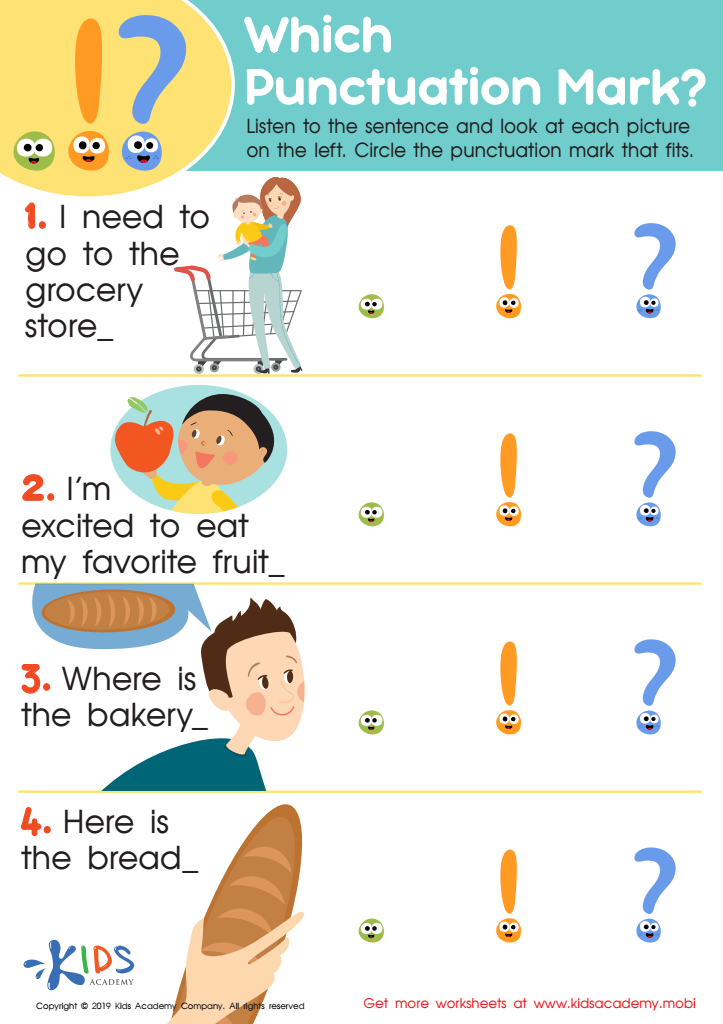
Which Punctuation Mark Worksheet
 Assign to My Students
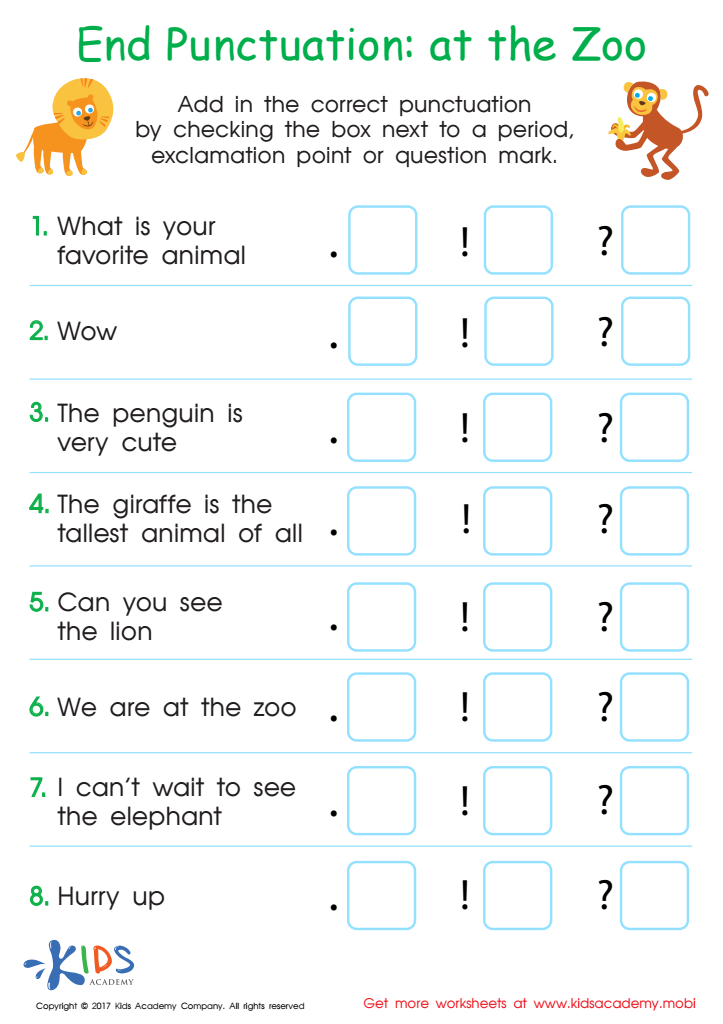
End Punctuation: At the Zoo Worksheet
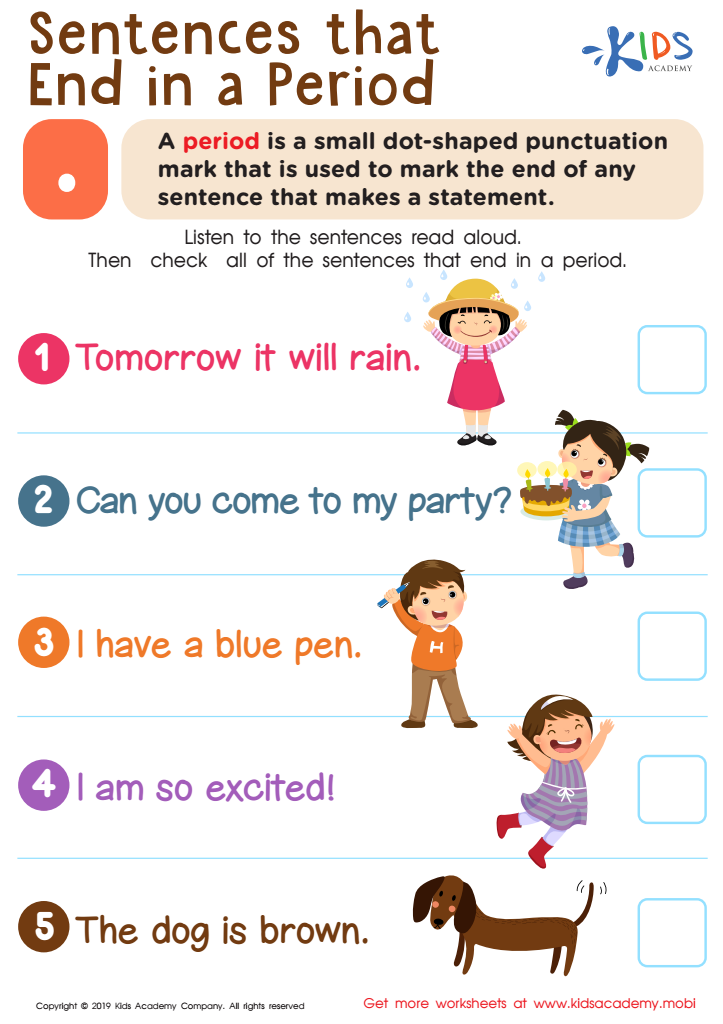
Sentences That End in a Period Worksheet
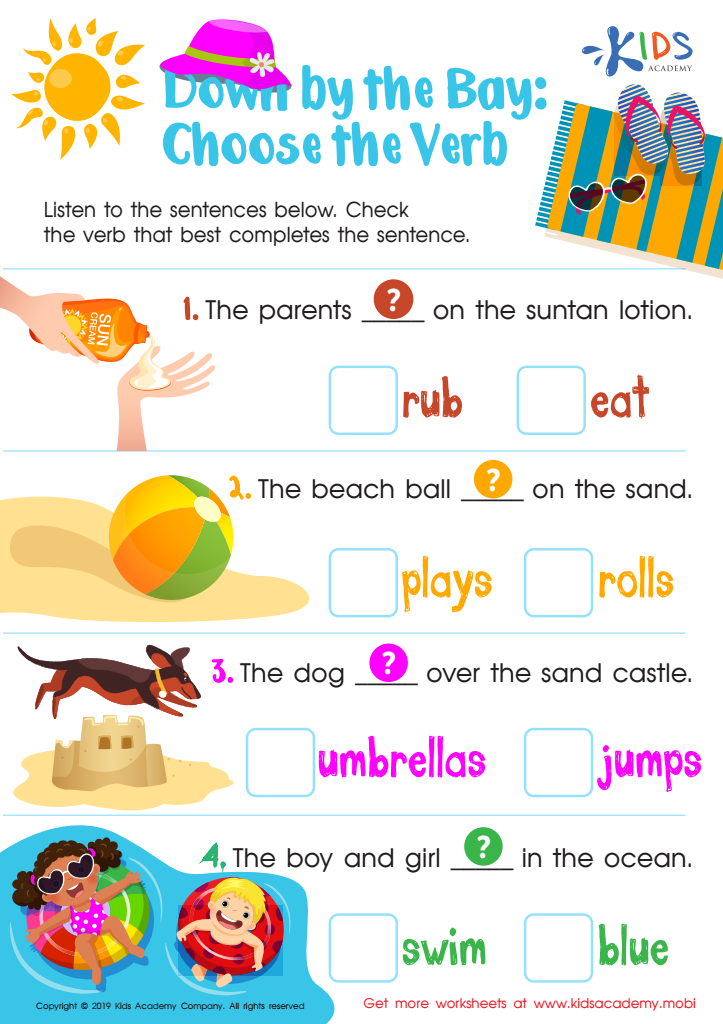
Down by the Bay: Choose the Verb Worksheet
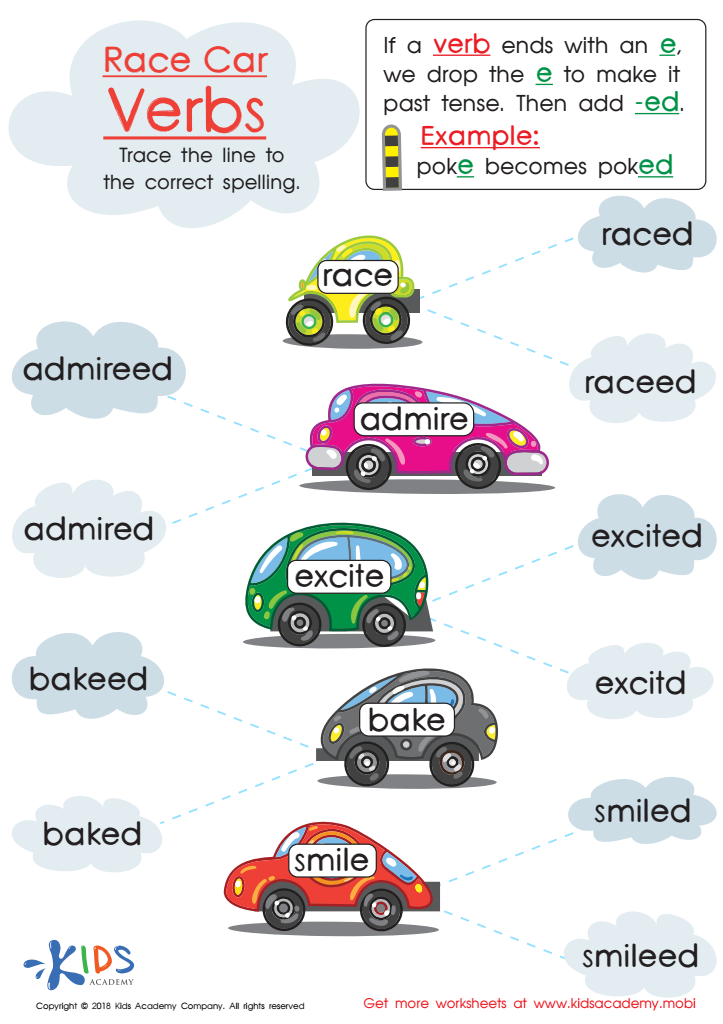
Race Car Verbs Worksheet





.jpg)


Sentence completion activities for children aged 4-7 play a crucial role in their language development and cognitive skills. At this early age, children are rapidly expanding their vocabulary and understanding of grammar. Engaging in sentence completion exercises helps enhance their language skills by encouraging them to think about word choice, sentence structure, and meaning. This practice supports creativity and critical thinking as children learn to formulate responses based on prompts and contextual clues.
Moreover, sentence completion activities can boost literacy skills. By practicing how to construct sentences, children become more confident in reading comprehension and writing abilities. These tasks introduce children to sentence variety and complexity, paving the way for more advanced language use later in life.
From a social perspective, sentence completion encourages children to express their thoughts and feelings effectively, thereby improving communication skills that are essential for interactions with peers and adults. Parents and teachers should care about this developmental activity because it lays the fundamental groundwork for academic success, fosters self-expression, and nurtures an inquisitive mindset critical for lifelong learning. Ultimately, prioritizing sentence completion can be an enjoyable and beneficial way for children to learn and grow during these formative years.








