Spatial awareness Worksheets for Ages 4-7 - Page 3
53 filtered results
-
From - To
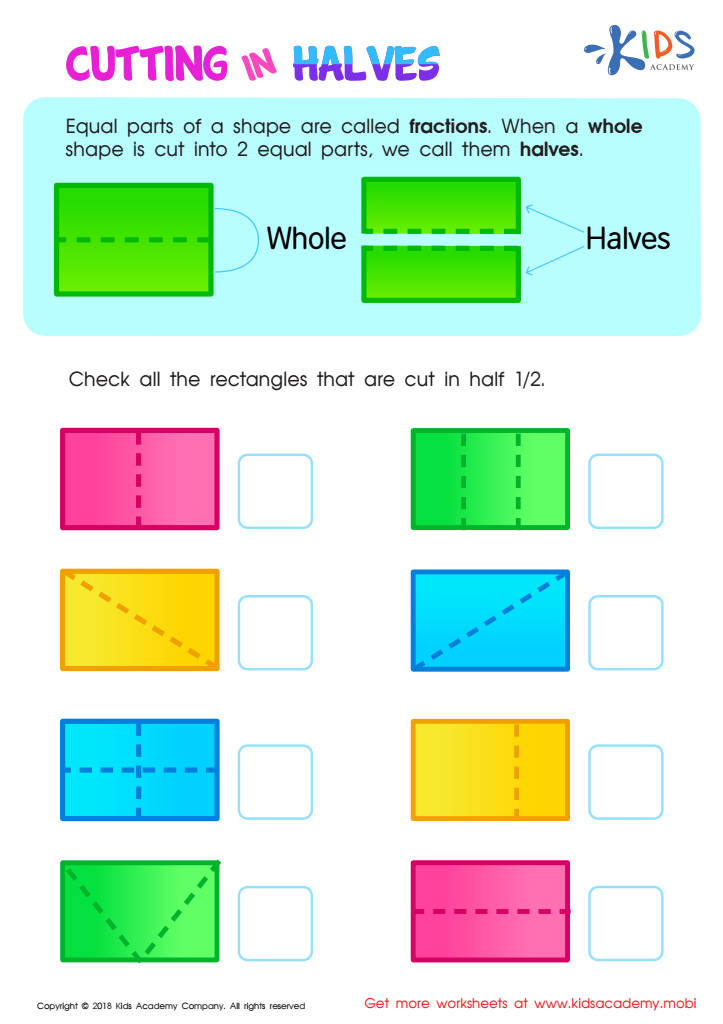
Cutting in Halves Worksheet
 Assign to My Students
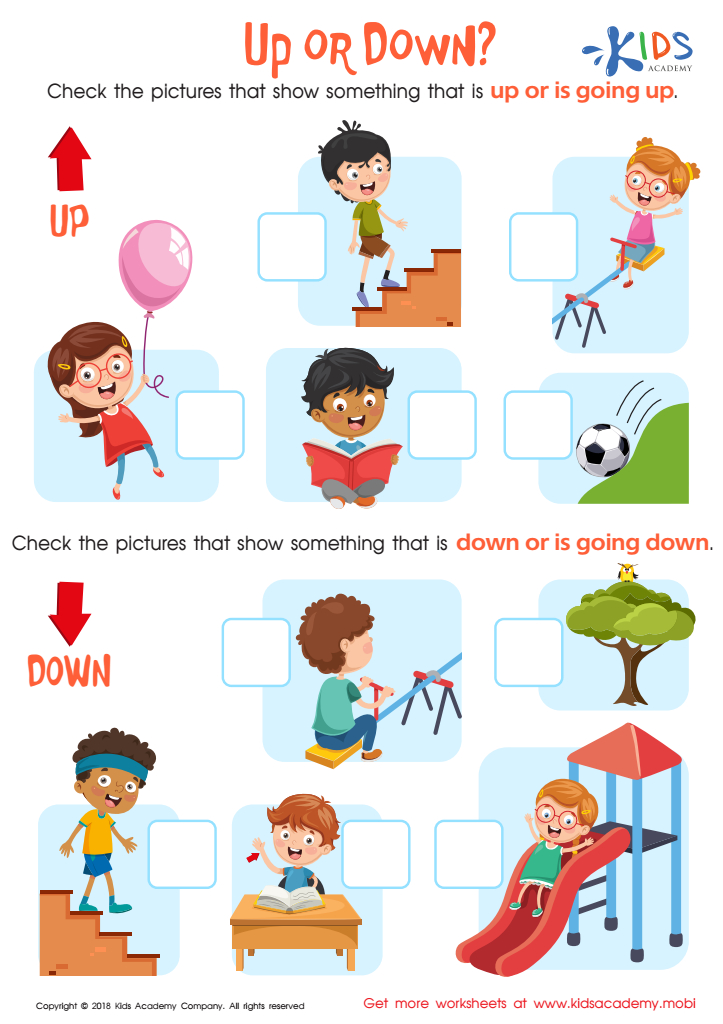
Up or Down Worksheet
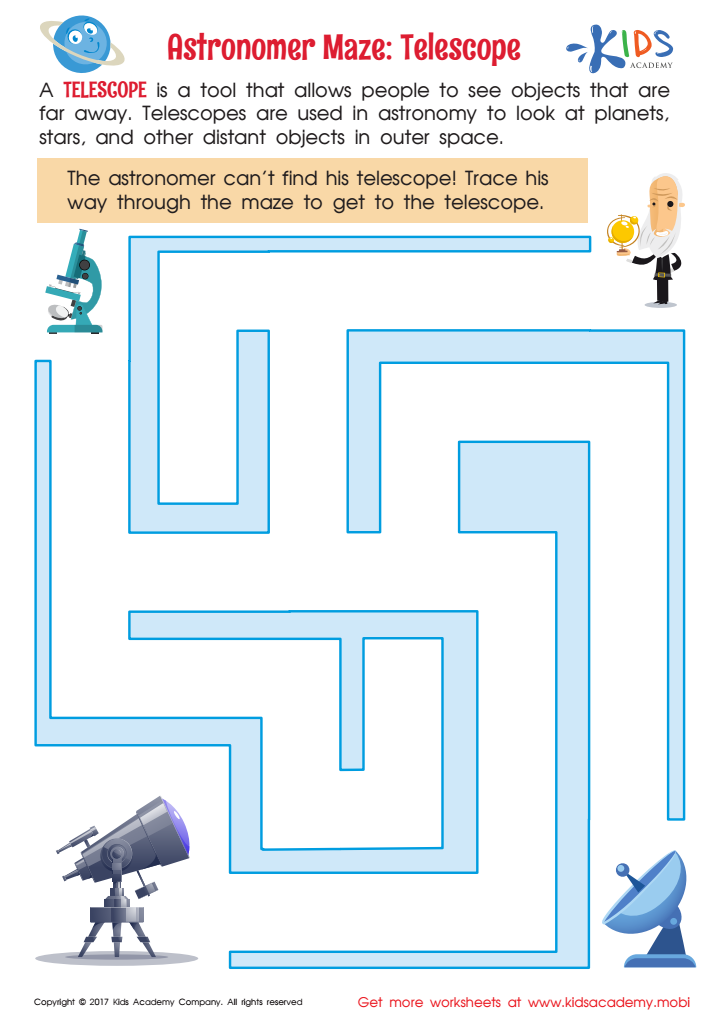
Astronomer Maze: Telescope Worksheet
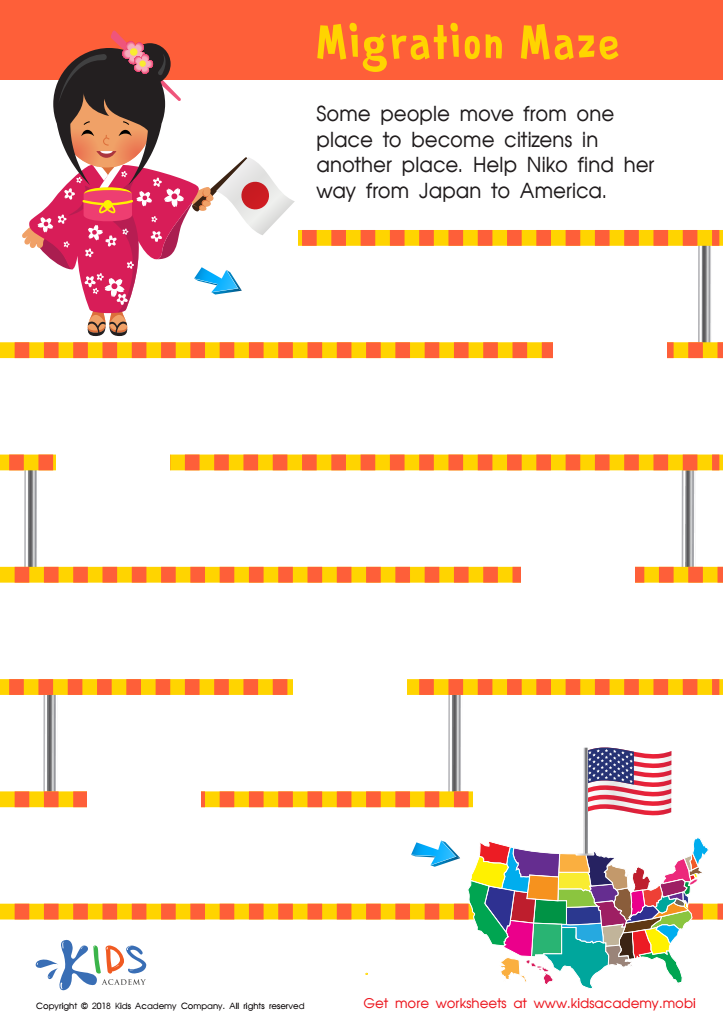
Migration Maze Worksheet
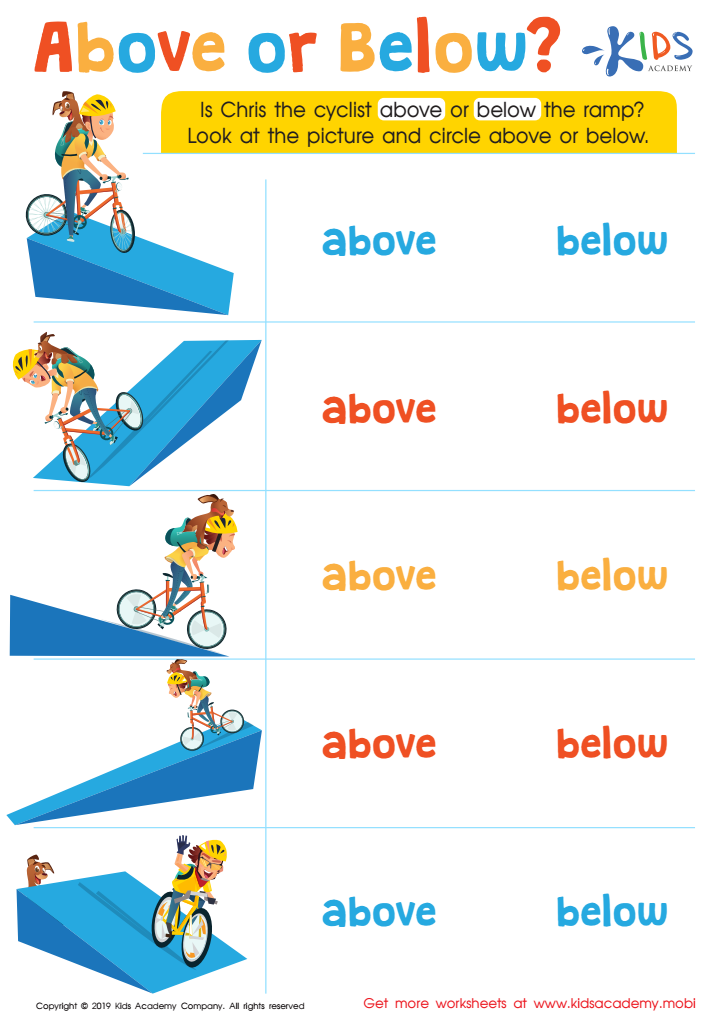
Above or Below? Worksheet






Spatial awareness is a fundamental skill for young children, particularly between ages 4-7, with crucial implications for their overall development. At this age, children are beginning to navigate the world more independently, and understanding spatial relationships helps them do so safely and efficiently.
First, spatial awareness is directly related to physical coordination and safety. Children who comprehend spatial relationships can better gauge distances, understand object positioning, and move through spaces without bumping into things, reducing their risk of injuries.
Second, spatial awareness supports academic achievement, particularly in subjects like mathematics and science. Concepts like shape, size, and volume, as well as ideas about position and movement, rely heavily on spatial understanding. Activities that enhance spatial awareness lay the groundwork for more complex problem-solving and logical reasoning skills used in mathematics and many scientific experiments.
Furthermore, spatial skills are integral to everyday tasks such as tying shoes, zipping jackets, and assembling puzzles. These activities also develop fine motor skills and hand-eye coordination.
Lastly, fostering spatial awareness boosts self-confidence. When children can interact successfully with their environment, they grow more self-assured and independent, which positively affects their social interactions and emotional well-being.
In summary, parents and teachers investing time into developing spatial awareness in young children provide them with critical tools for safety, academic success, everyday competence, and emotional health.








