Understanding graphs Worksheets for Ages 4-7
4 filtered results
-
From - To
Unlock your child’s potential with our "Understanding Graphs Worksheets for Ages 4-7" at Kids Academy! Our engaging worksheets are specially designed to introduce young learners to the basics of graphing and data interpretation. Through fun activities and colorful illustrations, your child will easily grasp how to read bar graphs, pictographs, and more. Perfect for building analytical and critical thinking skills, these worksheets cater to early-age curiosity and encourage a love for learning. With step-by-step guidance and age-appropriate content, mastering graphs has never been this enjoyable and accessible for kids aged 4-7.
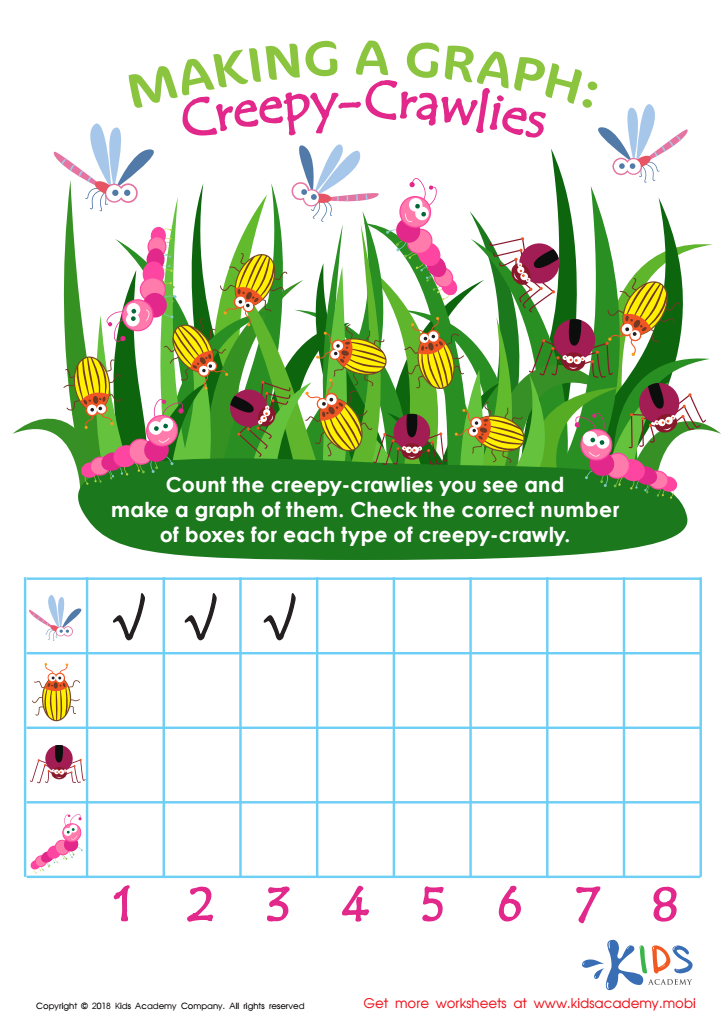
Making a Graph: Creepy Crawlies Worksheet
 Assign to My Students
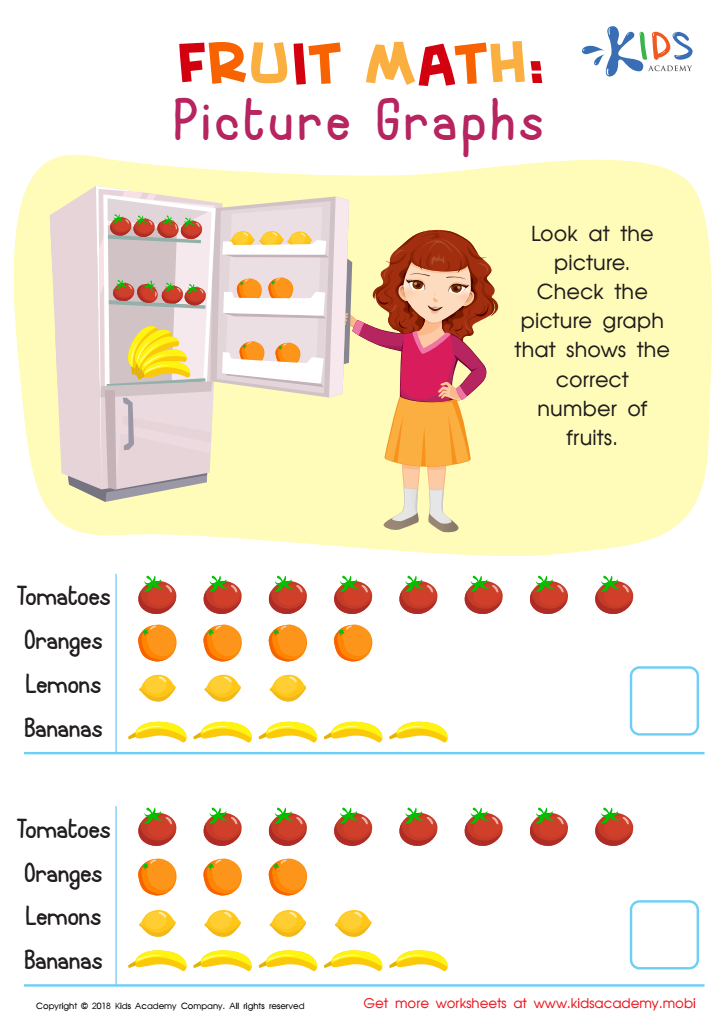
Fruit Math: Picture Graphs Worksheet
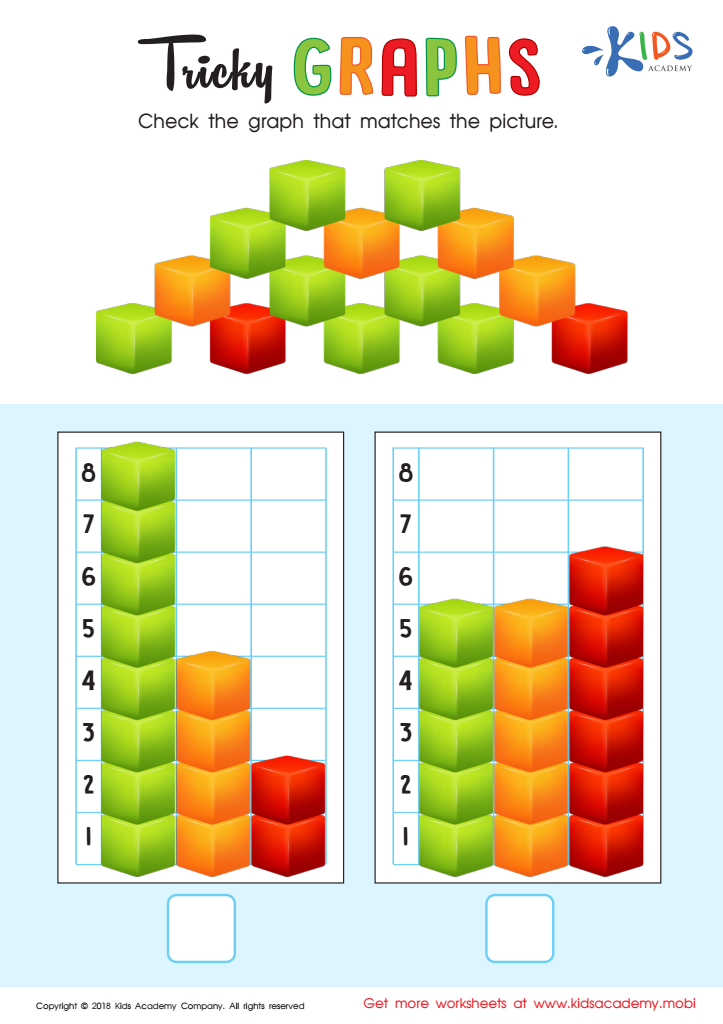
Tricky Graphs Worksheet
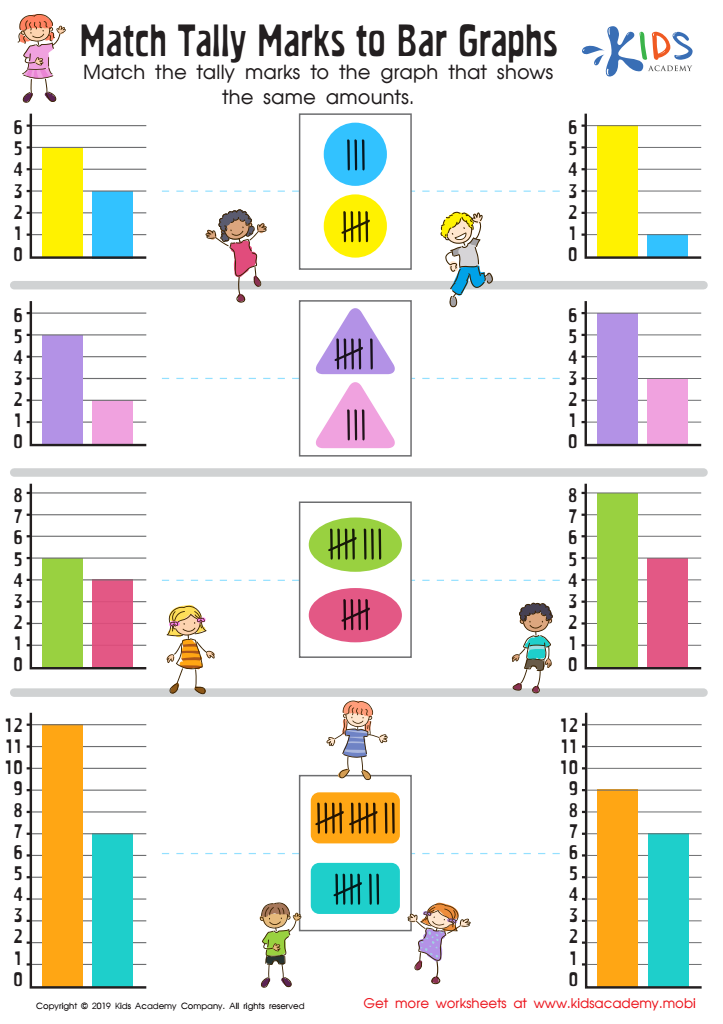
Match Tally Marks to Bar Graphs Worksheet







Understanding graphs from an early age equips children with essential skills that extend beyond mathematics. For children aged 4-7, learning how to interpret and create graphs enhances cognitive development and nurtures a sense of curiosity about the world.
Graphs simplify complex information, allowing young learners to visualize data in an accessible and engaging way. This visualization aids in developing critical thinking and analytical skills. Children start to see patterns, make predictions, and draw conclusions based on the graphical representations they observe. This is fundamental in nurturing decision-making abilities and problem-solving skills.
Furthermore, engaging with graphs supports language development. Describing what a graph shows requires children to use specific vocabulary and articulate their thoughts coherently. Activities involving graphs often spark discussions, fostering communication skills crucial for academic and social success.
Graphs also create an opportunity for hands-on, interactive learning. When children participate in graph-making by counting, categorizing, and plotting data, they develop fine motor skills and practice number recognition and counting.
By embedding graph-related activities within everyday contexts, such as tracking daily weather or classroom attendance, both parents and teachers can make learning relevant and exciting. Overall, integrating graph comprehension in early education sets a solid foundation for future learning in STEM subjects and empowers children with tools to navigate an increasingly data-driven world.








