Uppercase identification Worksheets for Ages 4-7
5 filtered results
-
From - To
Unlock your child's potential with our Uppercase Identification Worksheets designed for ages 4-7! These engaging and interactive activities help young learners recognize and differentiate uppercase letters through fun exercises and colorful illustrations. Tailored to support early literacy skills, our worksheets promote letter recognition, which is essential for reading and writing development. Each worksheet is crafted to provide a blend of learning and play, ensuring your child enjoys the journey of mastering the alphabet. Perfect for parents and educators alike, these resources are easily printable and can be integrated into daily learning routines. Start building a strong foundation in literacy today!
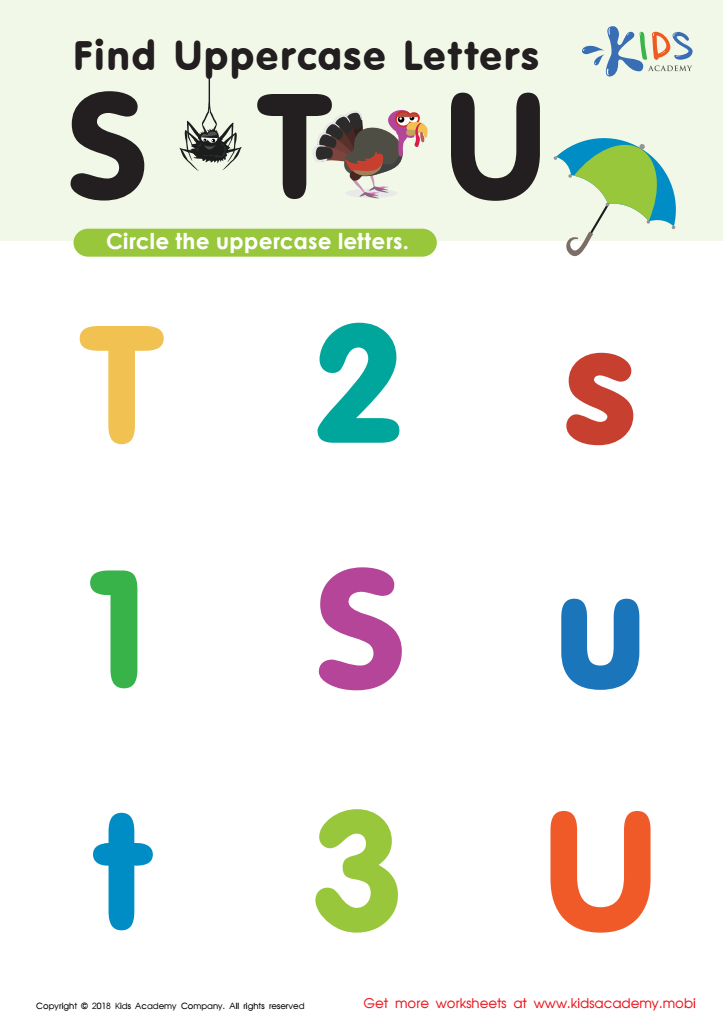
Find Uppercase Letters Worksheet
 Assign to My Students
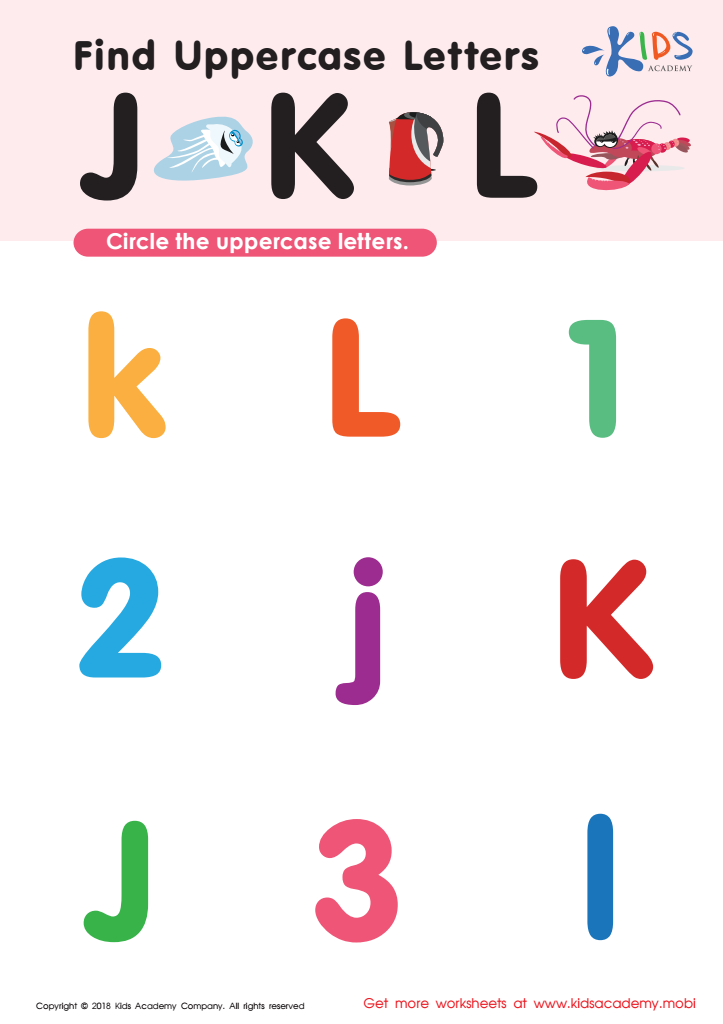
Find Uppercase Letters J, K, and L Worksheet
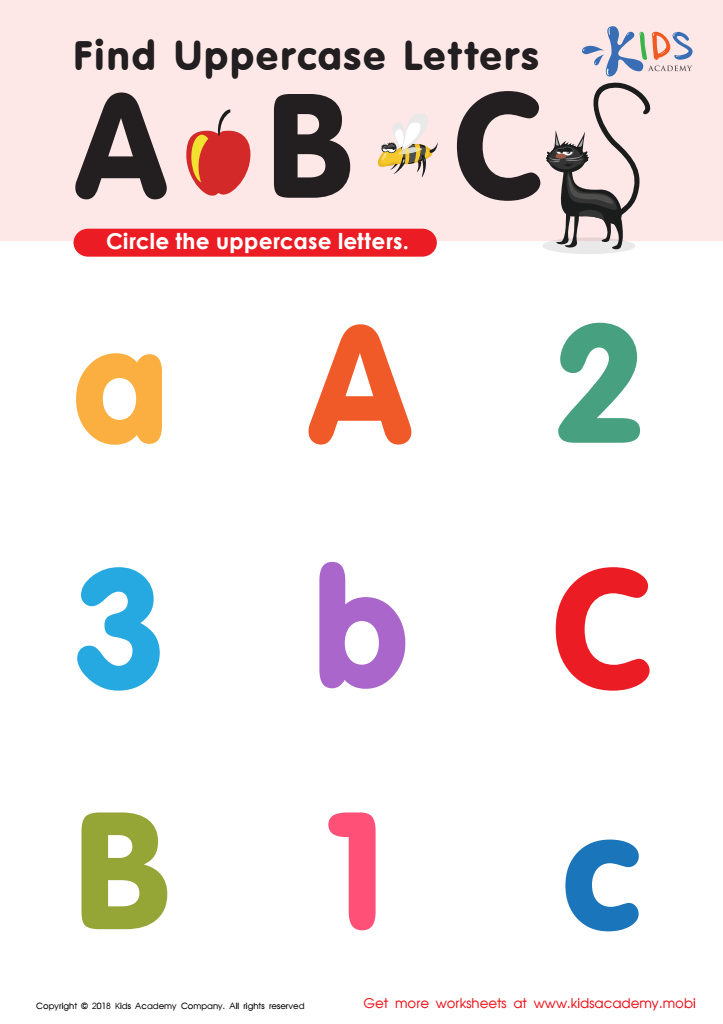
Find Uppercase Letters A, B, and C Worksheet
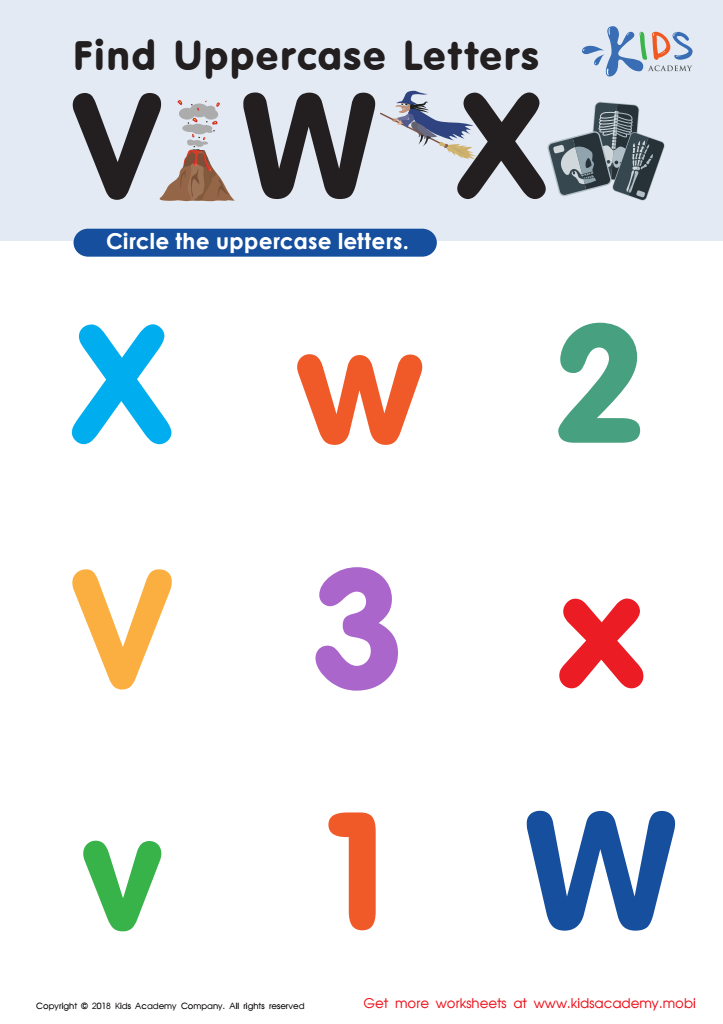
Find Uppercase Letters V, W, X Worksheet
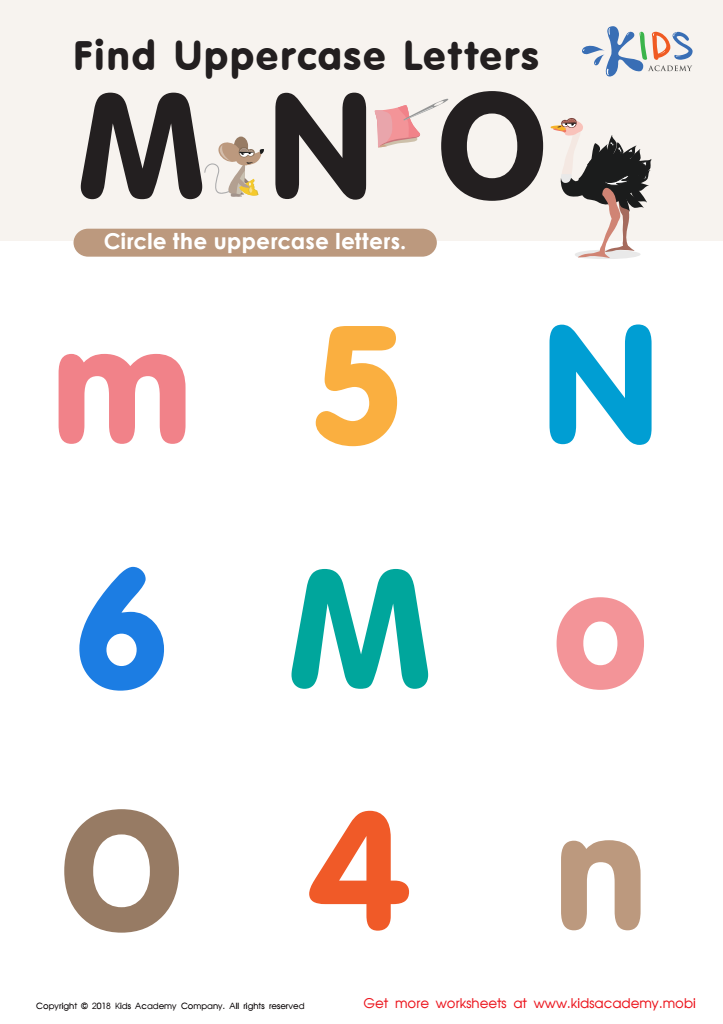
Find Uppercase Letters M, N, and O Worksheet








Uppercase letter identification is a vital aspect of early literacy development for children aged 4 to 7. Understanding uppercase letters is essential for several reasons. First, it forms the foundation for reading and writing, as children encounter these letters in titles, signs, and initial letters of sentences. Proficient uppercase identification enhances phonemic awareness, a critical skill for decoding words and developing confidence in reading.
Additionally, many developmental milestones align with ages 4 to 7, where children are beginning to recognize and form connections between letters and sounds. Parents and teachers play a crucial role in facilitating this learning through interactive activities, such as games or songs that encourage letter recognition in a fun and engaging way.
Moreover, incorporating uppercase letter identification into daily routines, such as reading books together or highlighting letters in the environment, fosters a love for literacy. Encouragement and reinforcement at this critical age can positively influence a child’s self-esteem and motivation to learn. Ultimately, a solid understanding of uppercase letters equips young learners with the essential skills they need as they move toward more complex reading and writing tasks, thereby fostering lifelong literacy habits.








