Basic Math Skills Adding 2-digit Numbers Worksheets for Ages 4-7
3 filtered results
-
From - To
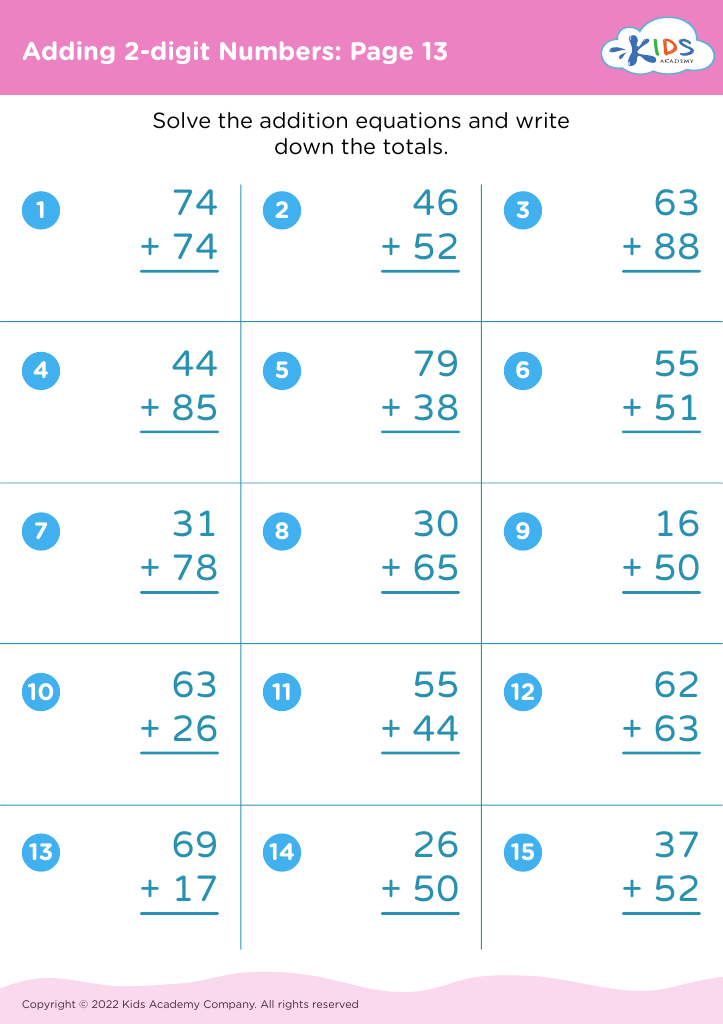
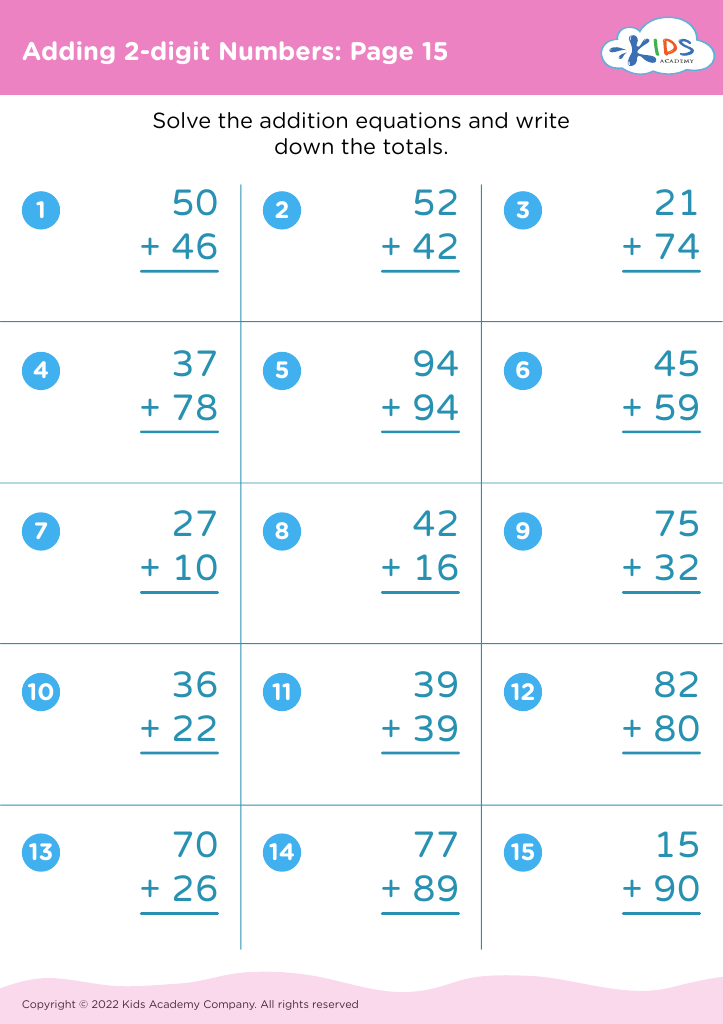
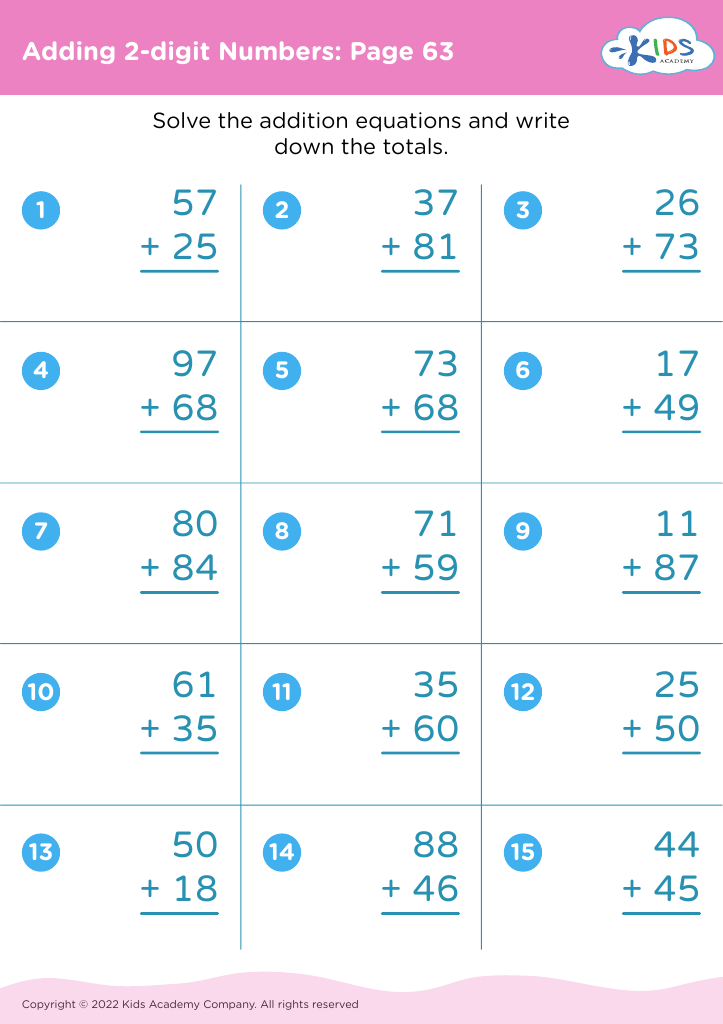
Unlock your child’s potential with our "Basic Math Skills Adding 2-digit Numbers Worksheets for Ages 4-7." These engaging worksheets are designed to help young learners master the essential skill of adding 2-digit numbers, fostering strong mathematical foundations. Each worksheet includes fun, visually appealing exercises that make learning enjoyable and accessible for children. Perfect for classroom use or at-home practice, these worksheets enhance number recognition, concentration, and problem-solving abilities. Tailored specifically for early learners, these resources promote confidence and fluency in basic math, setting the stage for future academic success. Spark your child's passion for math today!








Parents and teachers should prioritize teaching basic math skills, such as adding 2-digit numbers, to children aged 4-7 because these foundational skills pave the way for future academic success and everyday functionality. Mastery of early math concepts boosts cognitive development and problem-solving abilities. In these formative years, children's brains are highly adaptable, making it an optimal time to introduce essential numeracy skills.
Understanding how to add 2-digit numbers is more than just a math exercise; it reinforces logical thinking, spatial awareness, and number sense. By breaking numbers into tens and ones, kids start to grasp the base-ten system, a critical component of higher-level mathematics. Early competence in math also correlates with improved skills in other subjects, such as science, technology, and engineering, essential for a well-rounded education.
Moreover, competence in addition fosters a child’s confidence and encourages a positive attitude toward learning. Practical applications, like counting money or measuring ingredients, exhibit the relevance of math in daily life. Thus, investing time and resources in teaching these skills equips children with the tools necessary for academic achievement and lays the groundwork for future success, both in school and beyond.








