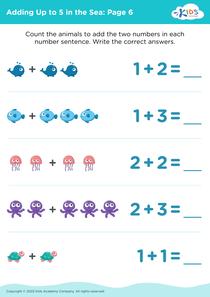
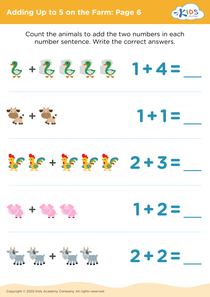
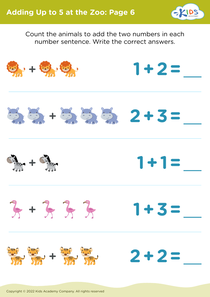
Animal recognition Adding in the Forest Worksheets for Ages 4-7
15 filtered results
-
From - To
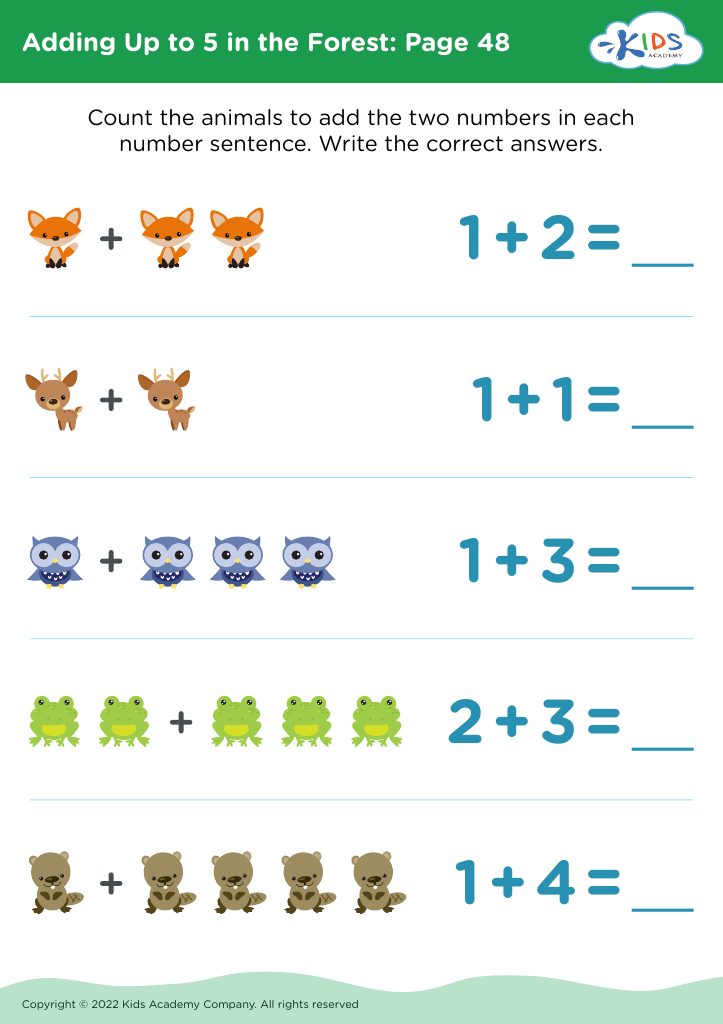
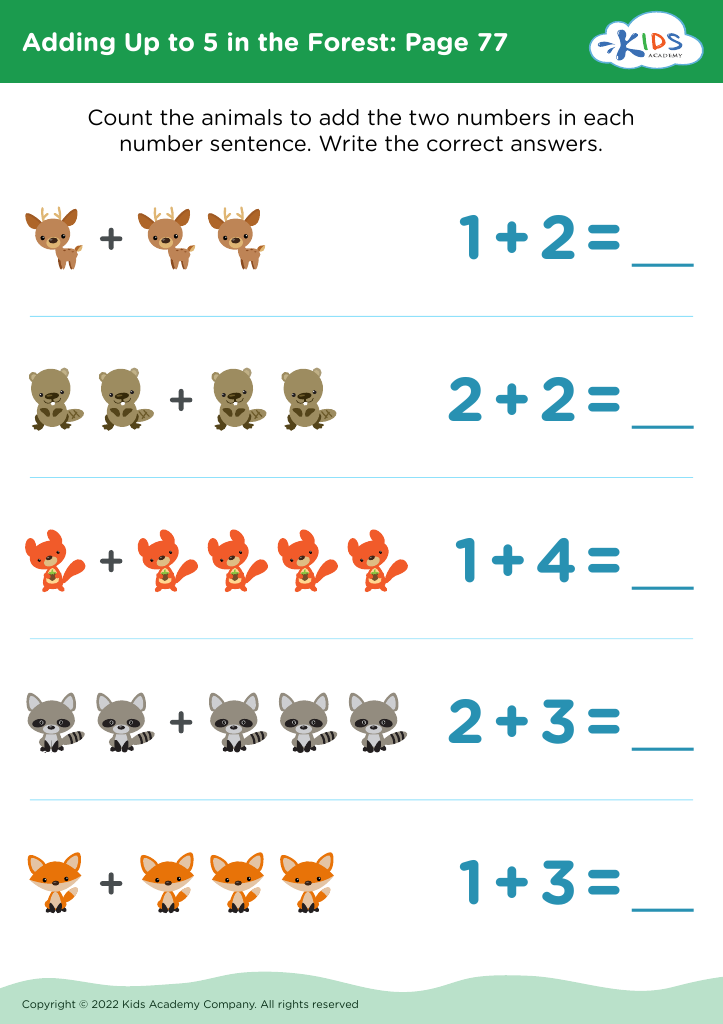
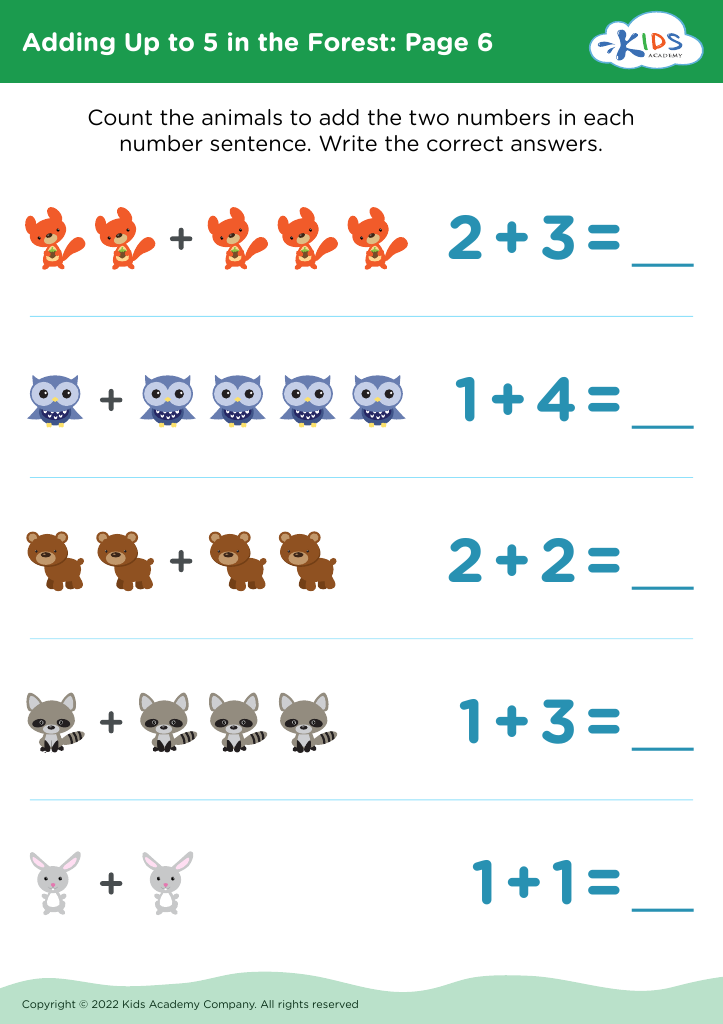
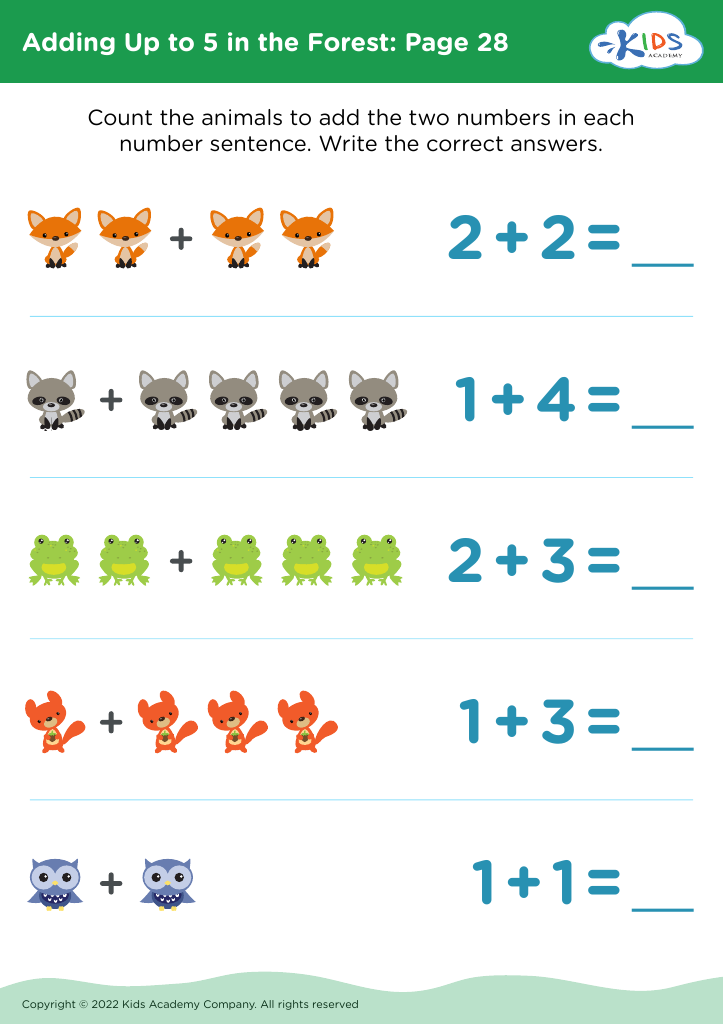
Unlock your child’s potential with our "Animal Recognition: Adding in the Forest Worksheets" designed for ages 4-7! These engaging worksheets seamlessly blend math and nature, helping young learners recognize various animals while practicing addition. Each worksheet features vibrant illustrations of forest creatures, making math enjoyable and relatable. As children solve problems, they will strengthen their arithmetic skills and develop critical thinking, all while reinforcing their knowledge of wildlife. Perfect for homeschooling or classroom use, these resources promote interactive learning. Spark curiosity and excitement in your child's educational journey with our fun, thematic activities focused on animal recognition and vital math concepts!
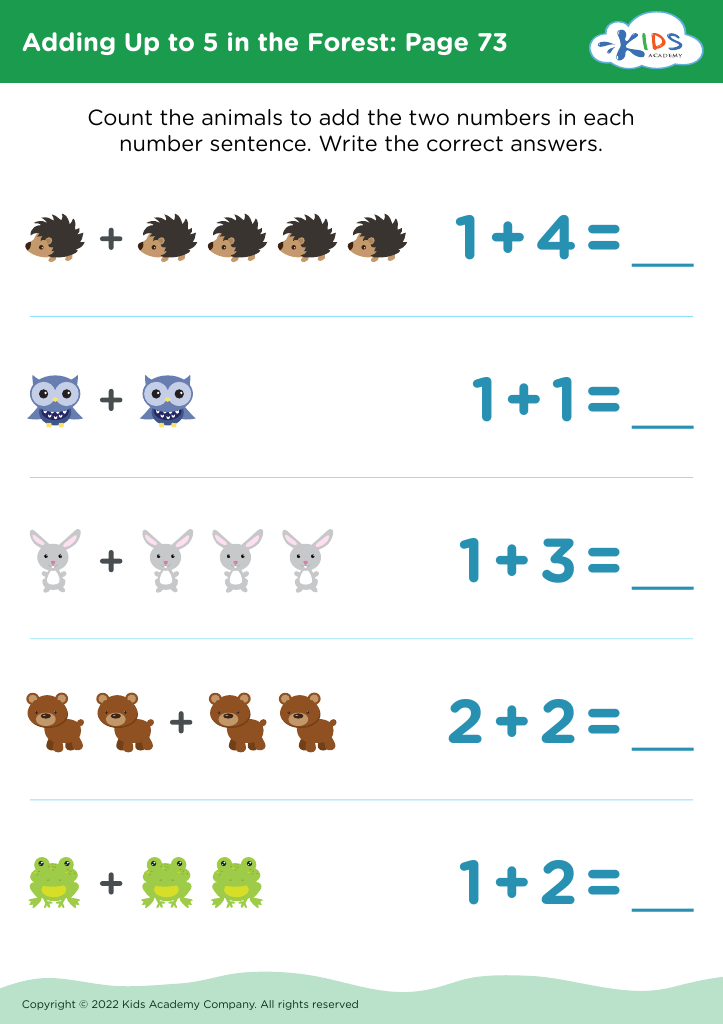
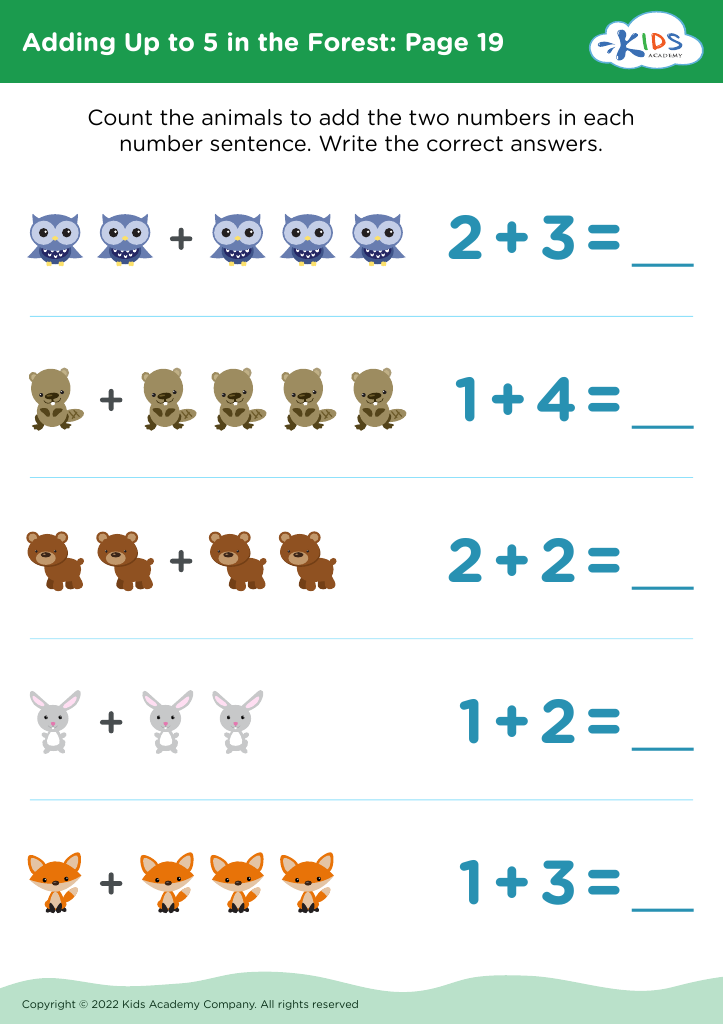
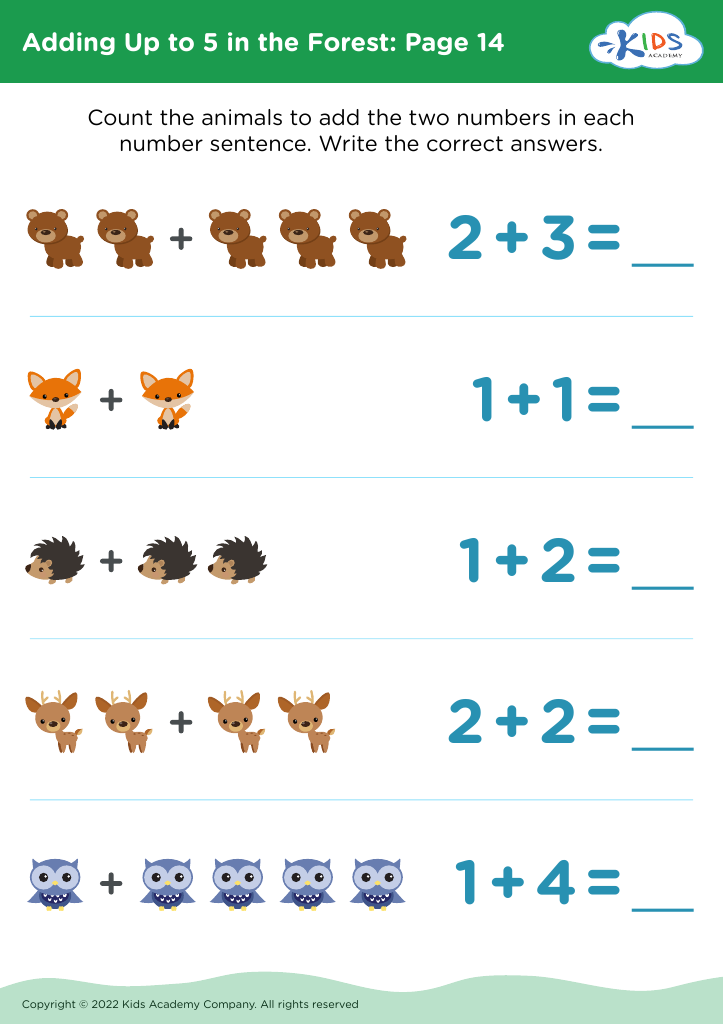
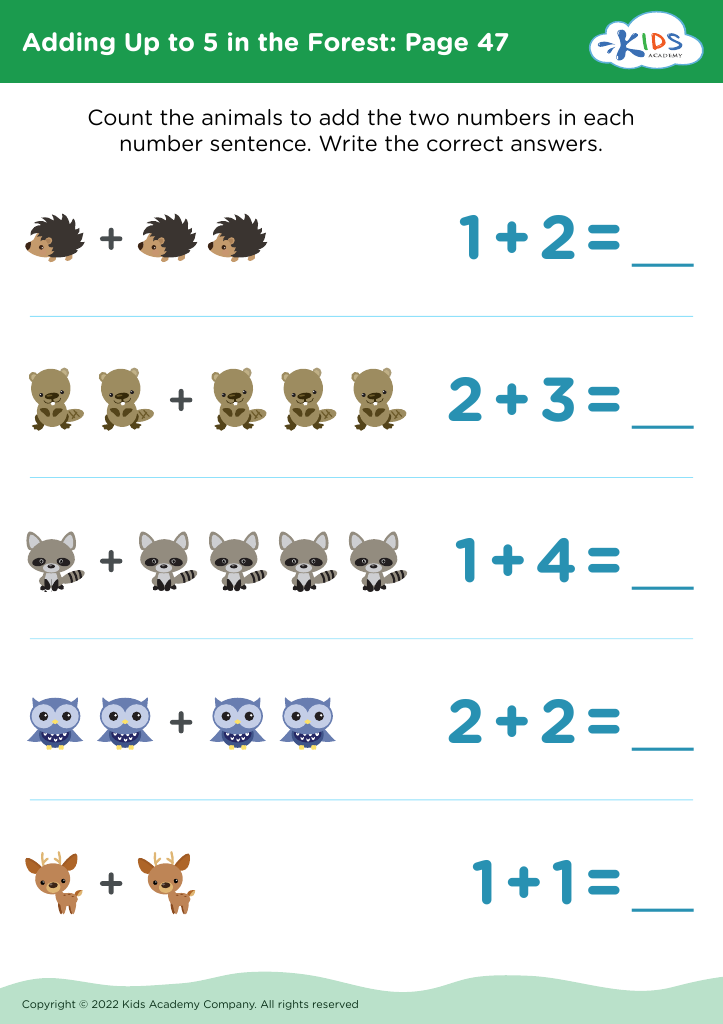
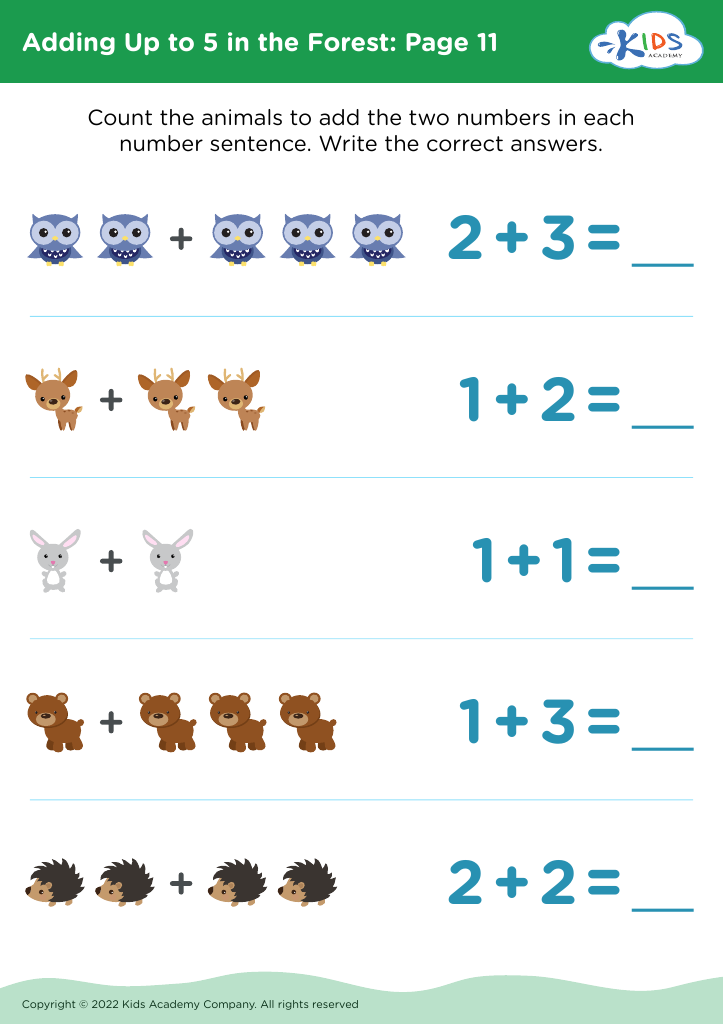
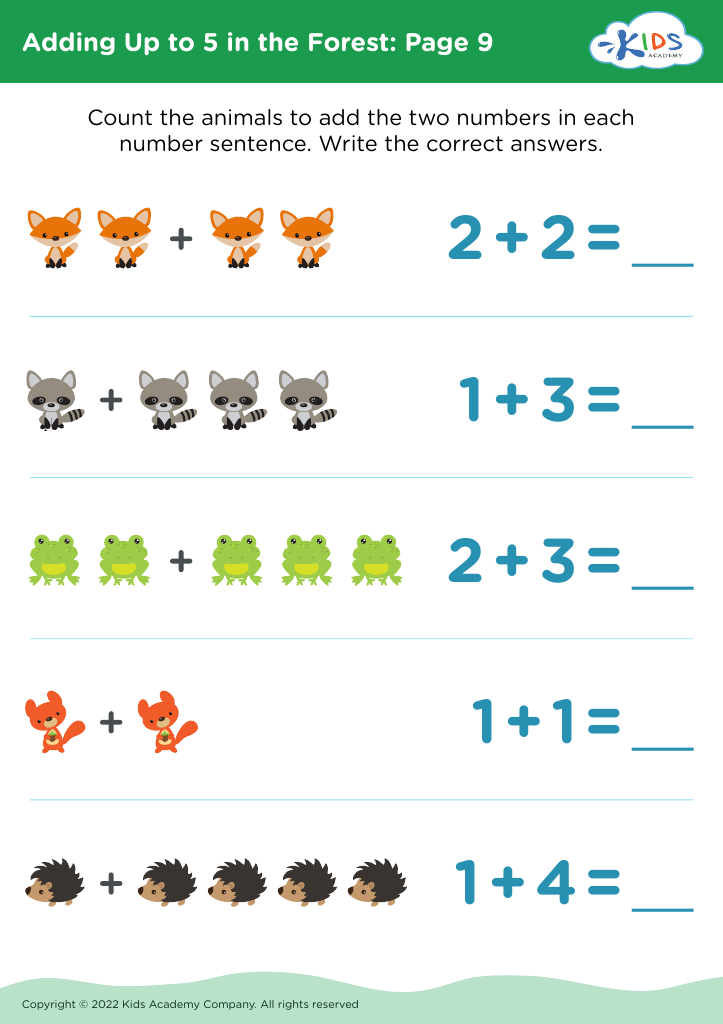
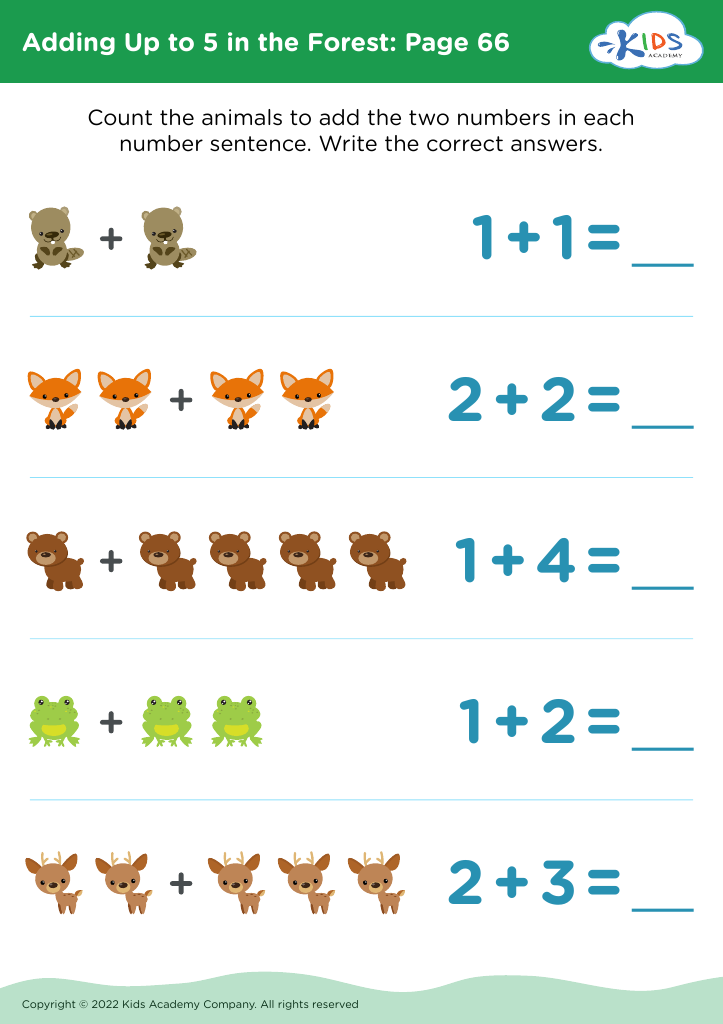
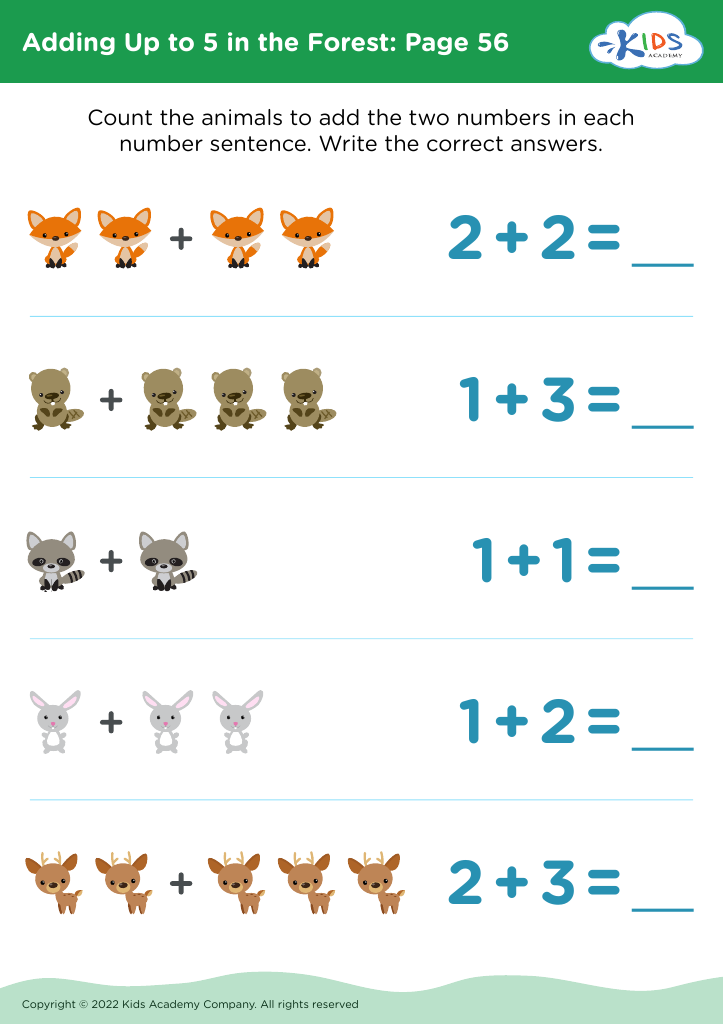
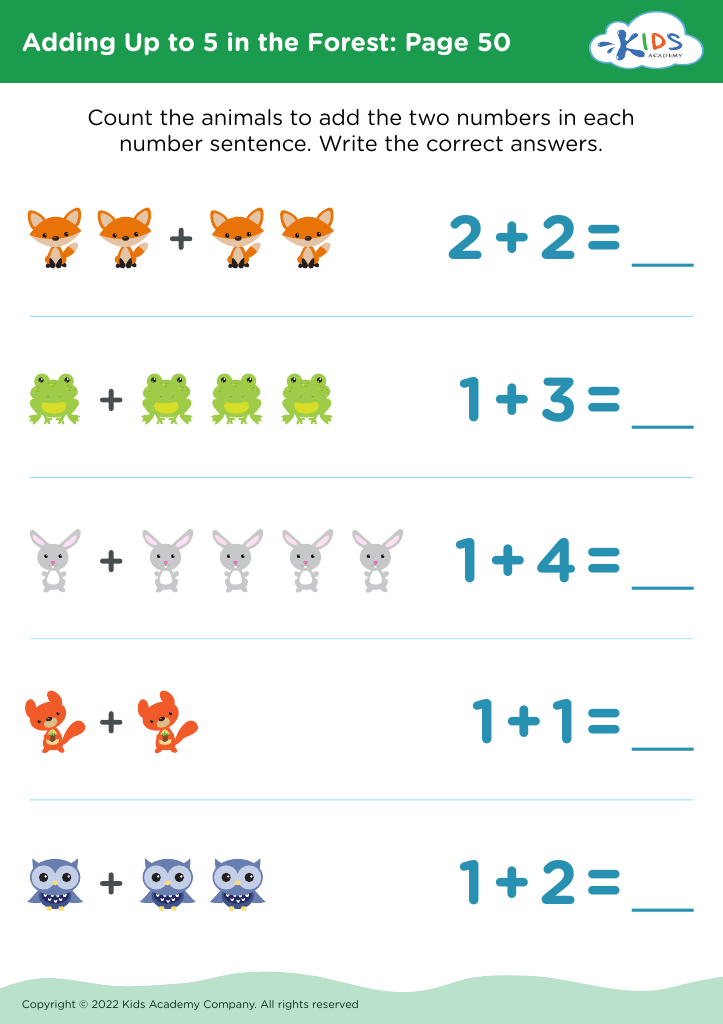
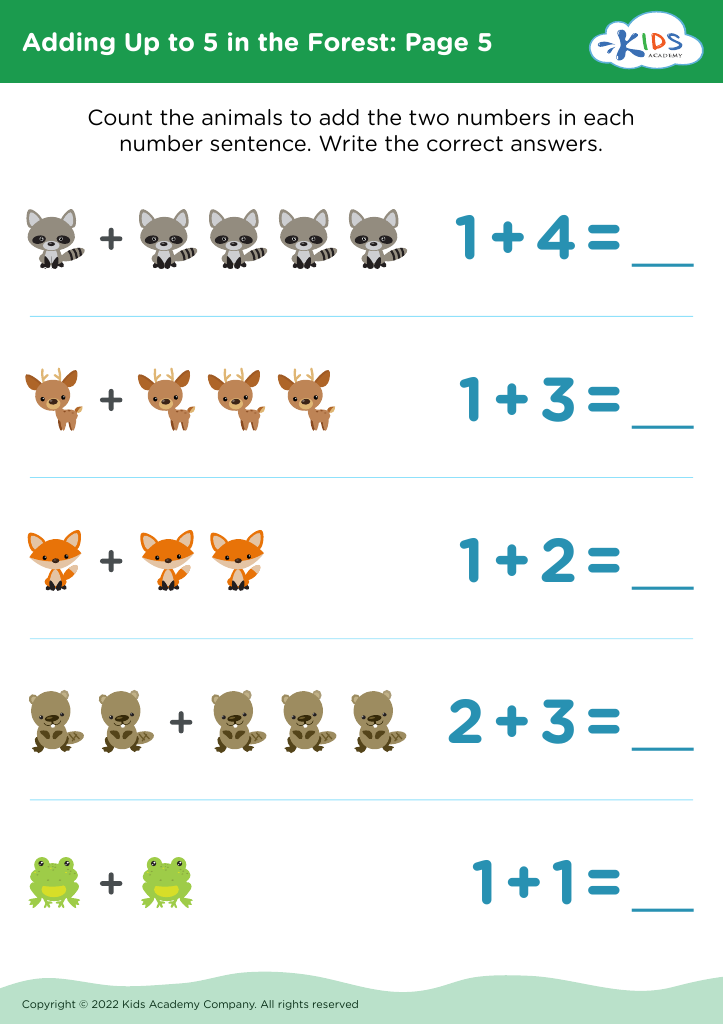
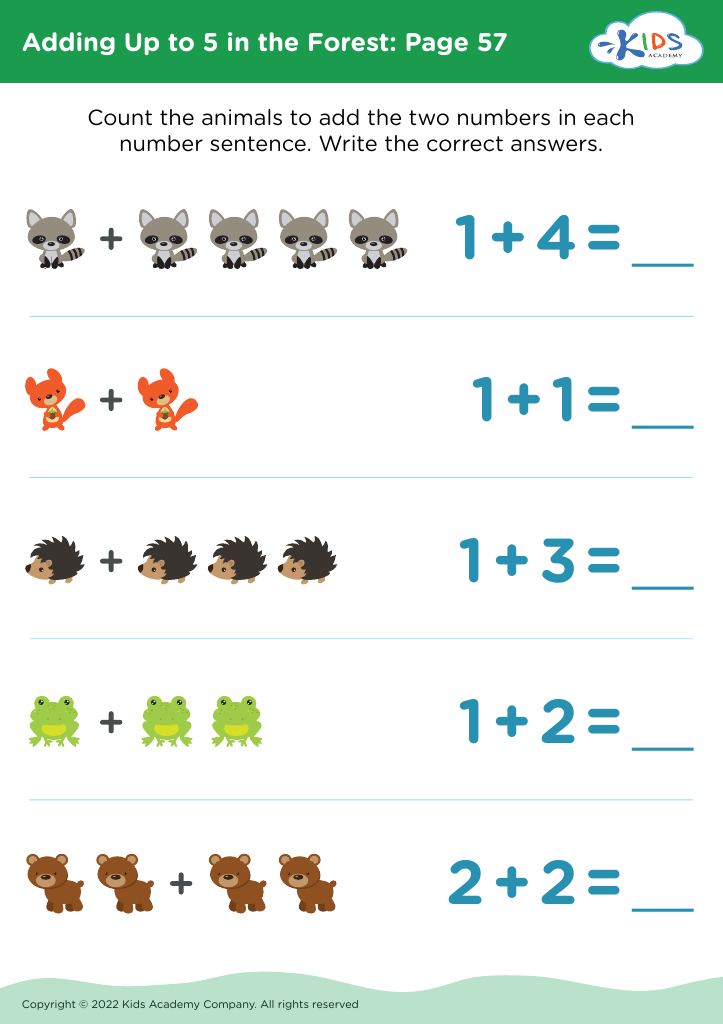



Animal recognition is a vital skill for children ages 4-7, and incorporating it into outdoor activities like “Adding in the Forest” presents a unique learning opportunity. Teaching young learners to identify animals fosters curiosity about the natural world, building observation skills and an appreciation for biodiversity. Understanding animal names and behaviors can also enhance language development, as children learn new vocabulary and concepts related to wildlife.
Furthermore, recognizing animals encourages environmental stewardship. When kids can identify local wildlife, they develop a personal connection to nature, fostering respect and a desire to protect it. Activities that incorporate animal recognition promote physical wellbeing through exploration, while also enhancing cognitive skills through problem-solving and critical thinking as kids make real-world connections.
Additionally, teaching this skill in a hands-on way empowers children to engage with their surroundings. It can spark imaginative play and storytelling, enriching their social-emotional growth. Parents and teachers who support animal recognition are cultivating informed, empathetic individuals. By guiding children to understand the significance of wildlife, we nurture future generations to become responsible custodians of our planet, highlighting the critical relationship between humans and nature from a young age.