Basic Addition Skills Adding in the Forest Worksheets for Ages 4-7 - Page 3
55 filtered results
-
From - To
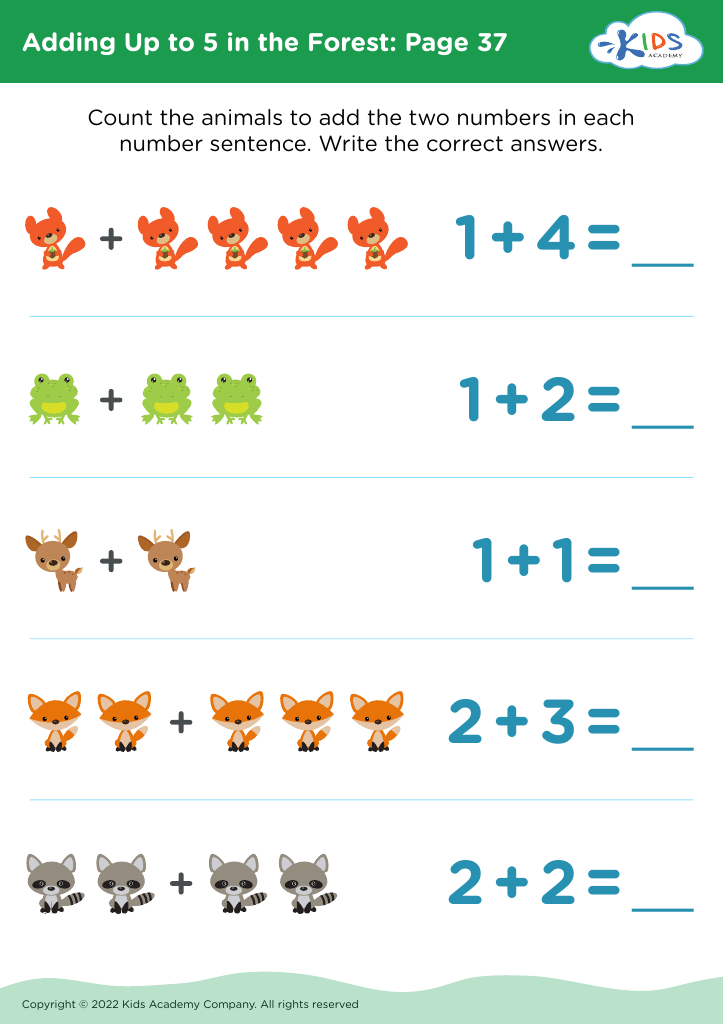
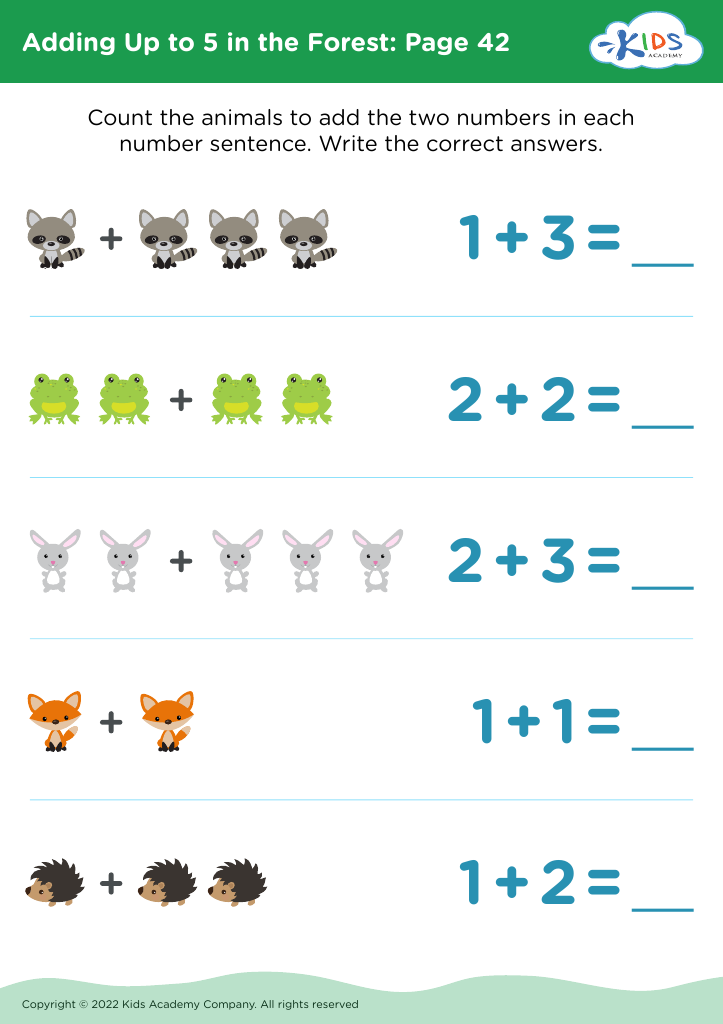
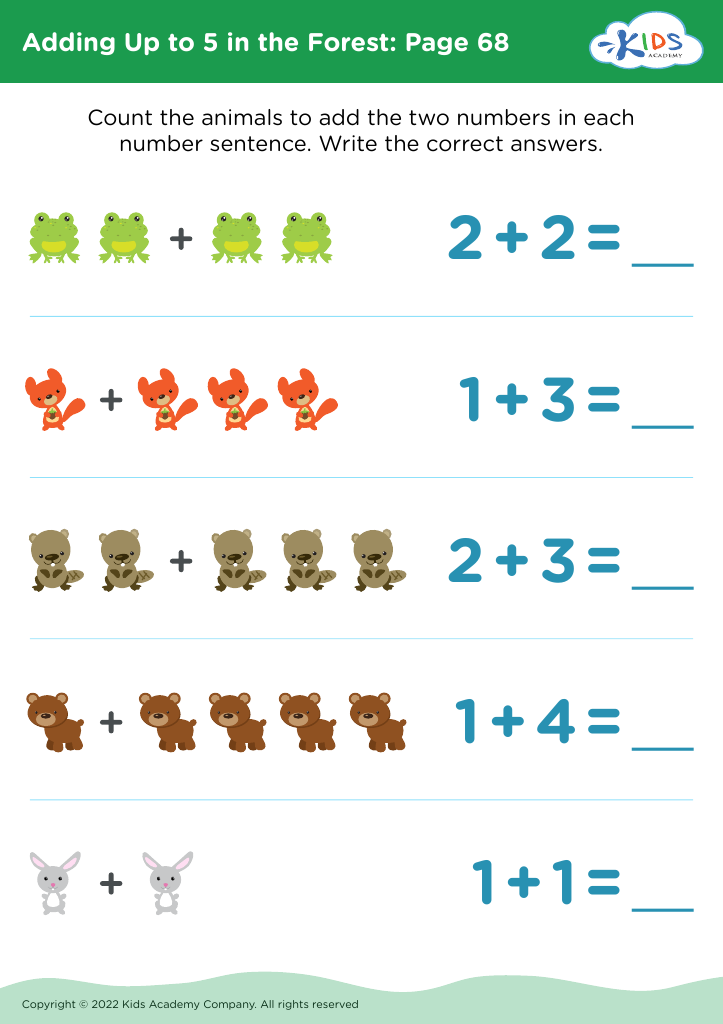
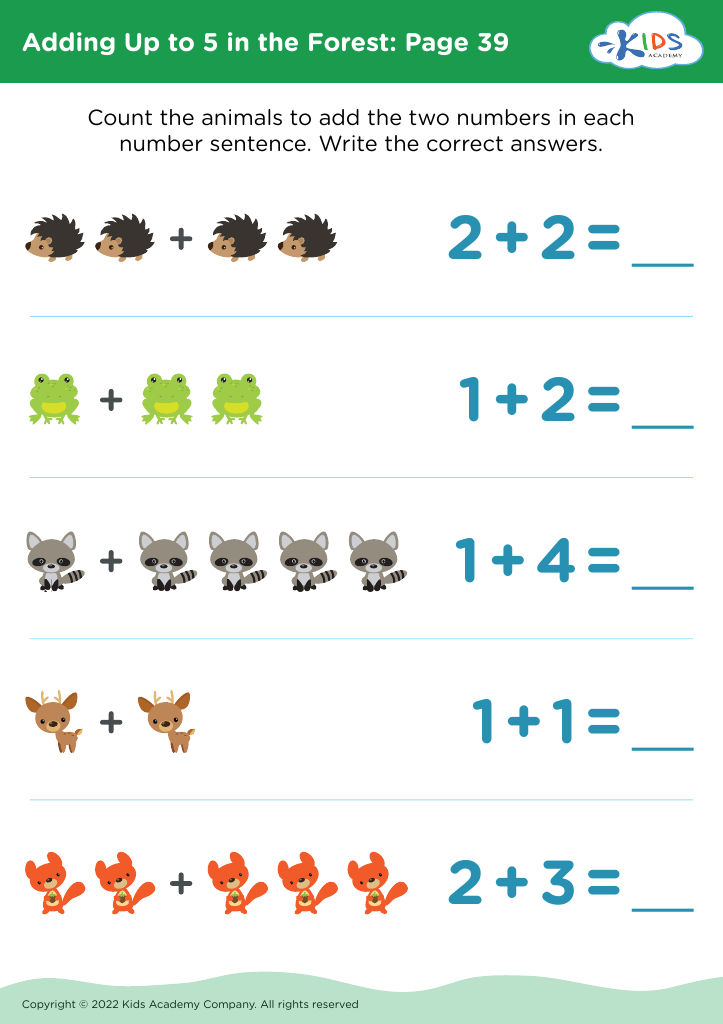
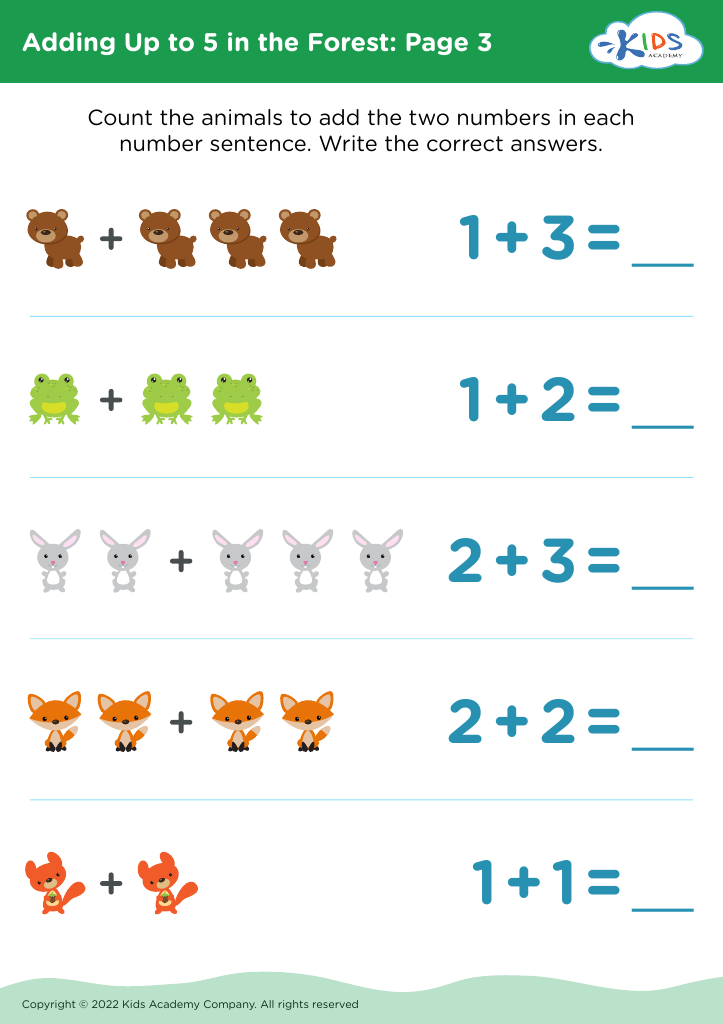
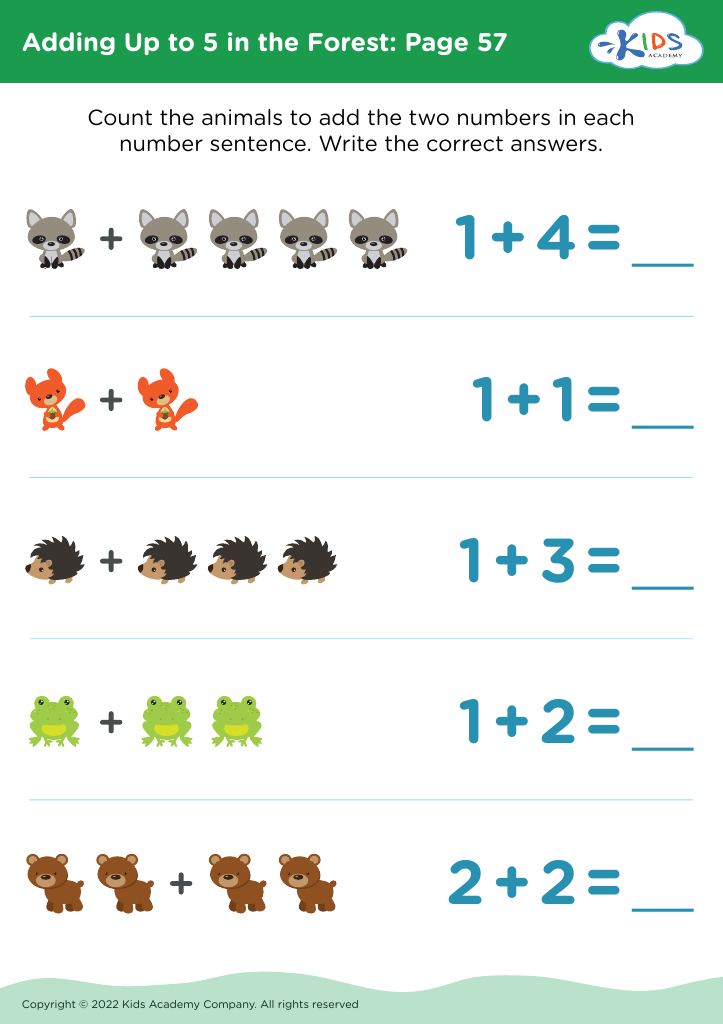
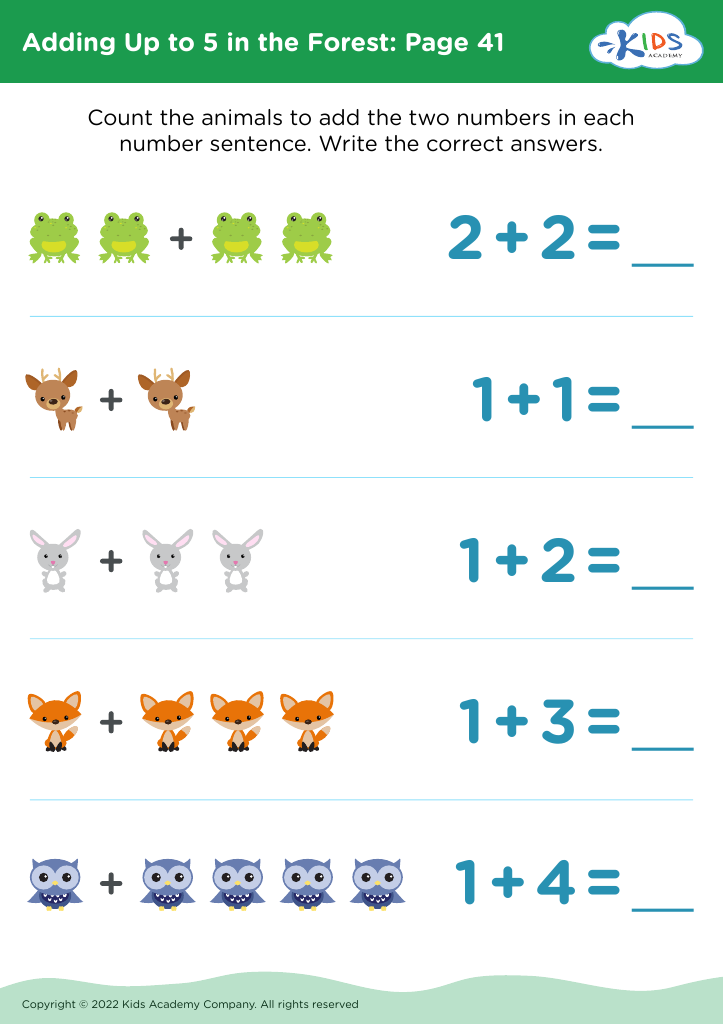




Basic addition skills are foundational for young children, ages 4-7, and introducing them through engaging activities like “Adding in the Forest” holds immense value for both parents and teachers. This playful and immersive method captures children's interest by integrating the natural world, enhancing their learning experience.
At this formative age, children's cognitive abilities are rapidly developing. Early exposure to math skills lays the groundwork for later academic success and everyday problem-solving. By starting with addition, a fundamental mathematical concept, children develop a sense of numbers and their relationships, which is crucial for more advanced arithmetic and beyond.
“Adding in the Forest” engages multiple senses, reinforcing learning through visual, auditory, and kinesthetic experiences. This method makes abstract concepts tangible by using elements like counting leaves or animals, which are relatable and enjoyable for young learners. Engaged children are more likely to retain information and foster a positive attitude towards mathematics.
For teachers and parents, using such interactive strategies ensures that children are not just passive recipients of information but active participants in their learning journey. This fosters curiosity, enhances memory retention, and builds confidence in their emerging mathematical abilities, setting the stage for continued academic excellence. Overall, basic addition skills are a critical stepping stone, and methods like “Adding in the Forest” make learning both effective and delightful.