Fine motor skills (writing) Adding in the Forest Worksheets for Ages 4-7
3 filtered results
-
From - To
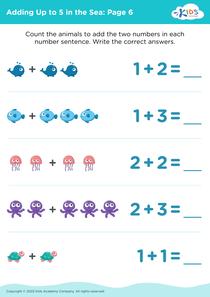
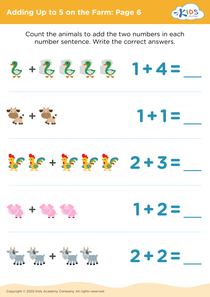
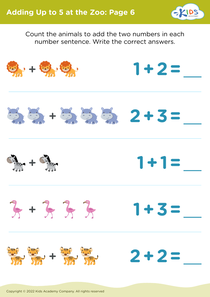
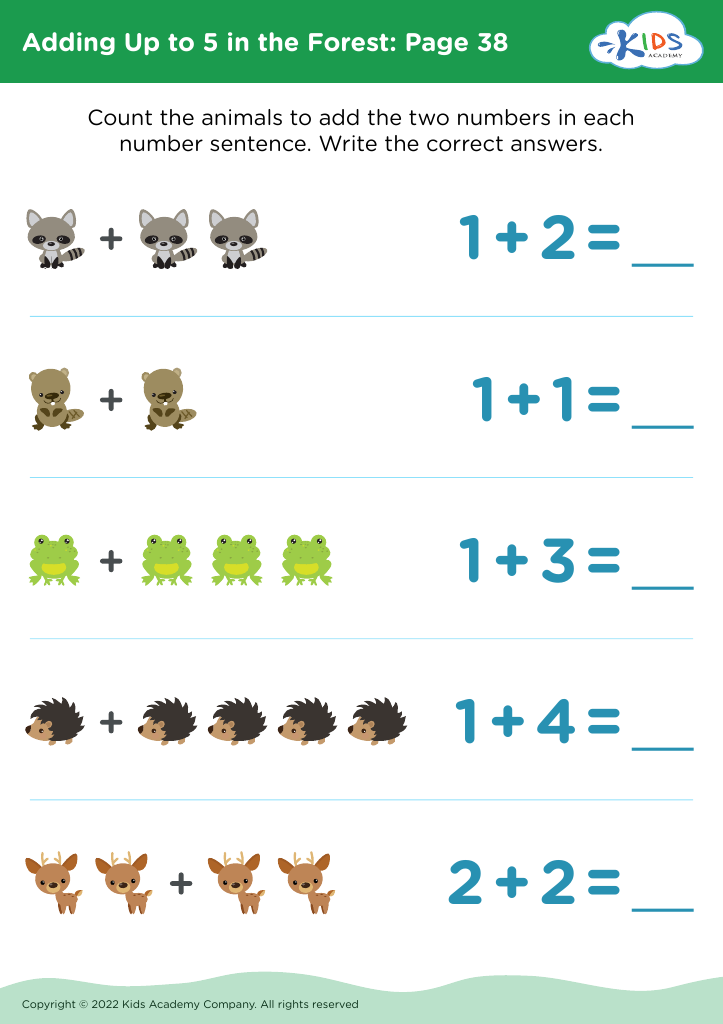
Our "Adding in the Forest Worksheets for Ages 4-7" are expertly designed to boost fine motor skills and writing abilities in young learners. These worksheets feature enchanting forest-themed addition problems that brighten the learning journey while enhancing children's pencil control and number formation. Engaging and educational, each sheet promotes essential skills required for accurate, legible writing and confident math abilities. Perfect for home or classroom use, these printables provide a fun, stimulating way to practice math while nurturing essential fine motor development in children aged 4 to 7. Turn math learning into an exciting adventure today!
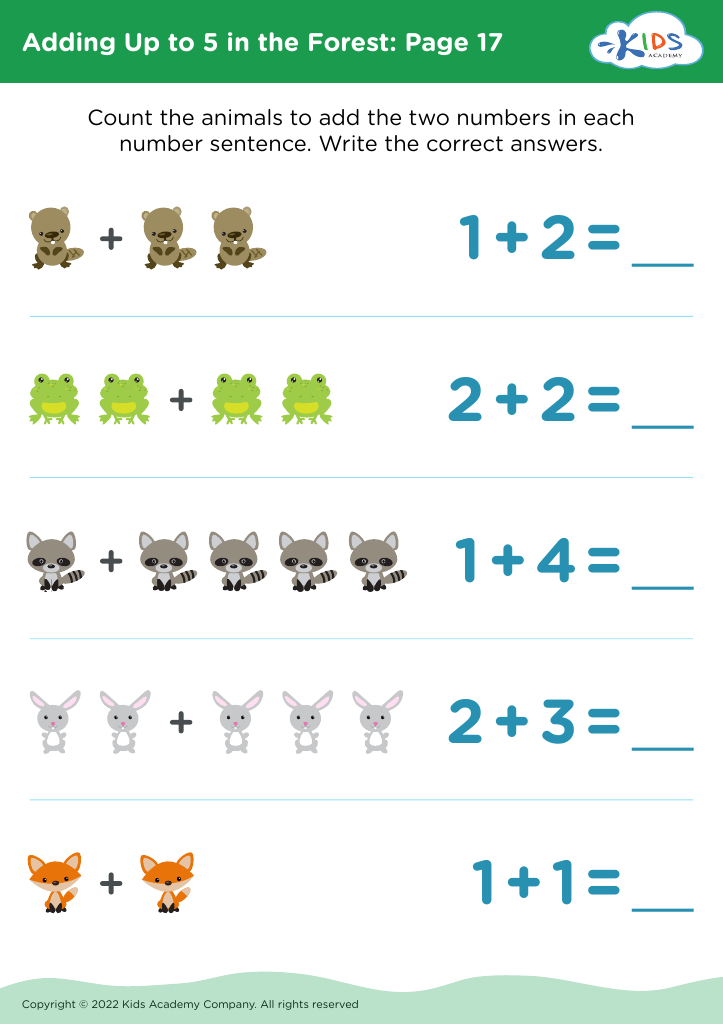
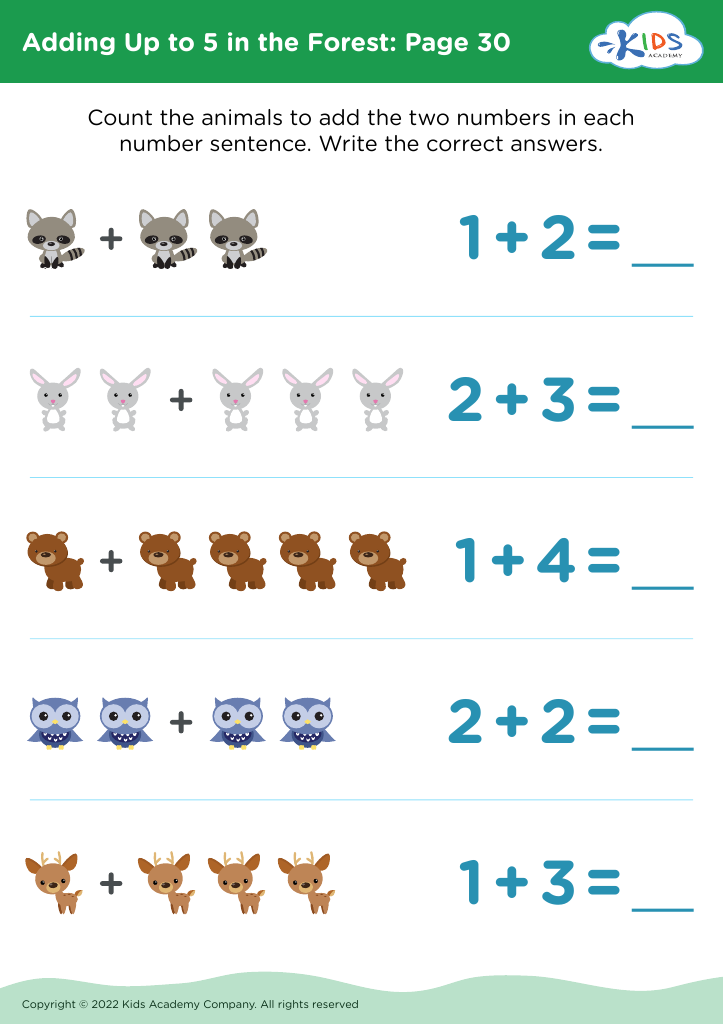



Developing fine motor skills through activities like practicing writing is crucial for children aged 4-7, offering significant benefits both academically and in everyday tasks. Fine motor skills involve the small muscles in the hands and fingers, which are essential for performing precise activities such as holding a pencil, buttoning a shirt, or tying shoelaces. When children engage in writing exercises, they improve their hand-eye coordination, strength, and dexterity.
In the context of teaching these skills in an imaginative setting like a forest, children are more likely to be engaged and motivated. A forest setting can provide a rich, multi-sensory environment where natural objects like leaves, twigs, and stones can be used to practice grip strength and coordination in fun, creative ways. For instance, children might trace the shapes of leaves or form letters with sticks.
Emphasizing fine motor skills at this early age lays a foundation for future learning and is linked to better handwriting and compositional skills. It also promotes self-confidence and independence as children feel more capable in their everyday activities. By caring about and focusing on fine motor development, parents and teachers ensure that children are equipped with essential skills that support their overall growth and learning journey.