Problem Solving Adding in the Forest Worksheets for Ages 4-7
3 filtered results
-
From - To
Discover our engaging "Problem Solving Adding in the Forest Worksheets," designed for young learners aged 4-7. These worksheets provide a fun and interactive approach to developing early math skills through nature-themed challenges. Children will explore addition concepts by solving problems featuring adorable forest animals, fostering both critical thinking and creativity. Our worksheets encourage independent learning while supporting cognitive growth, making math enjoyable and relatable. Perfect for classroom activities or at-home practice, these resources will help students build a strong foundation in problem-solving skills essential for math success. Dive into the wonders of the forest and watch your child's confidence in math soar!
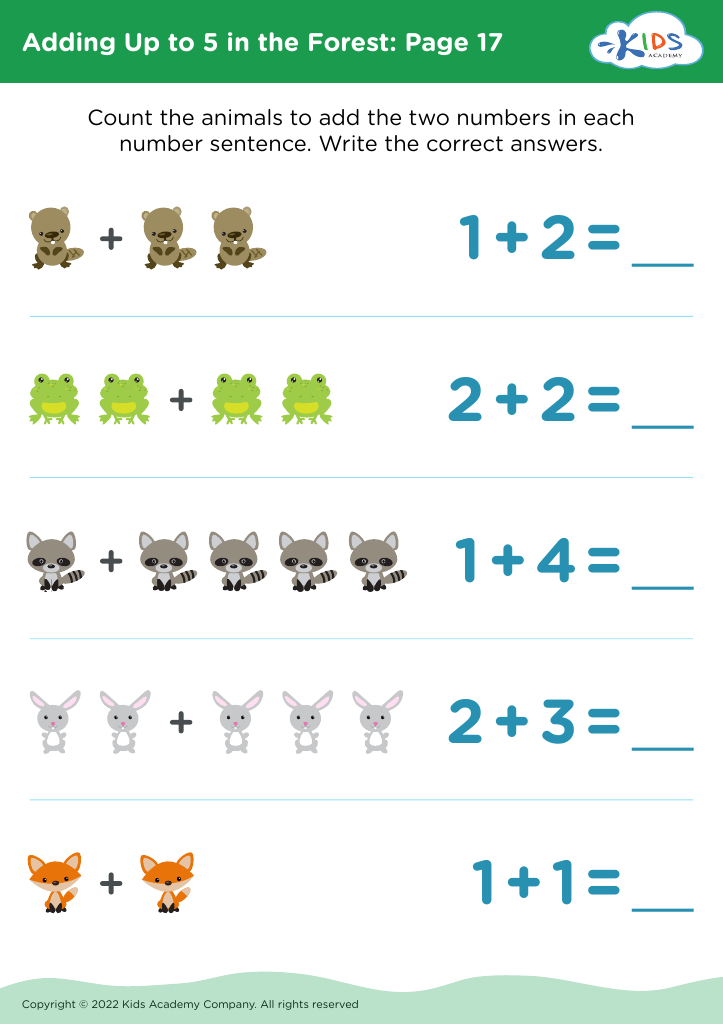
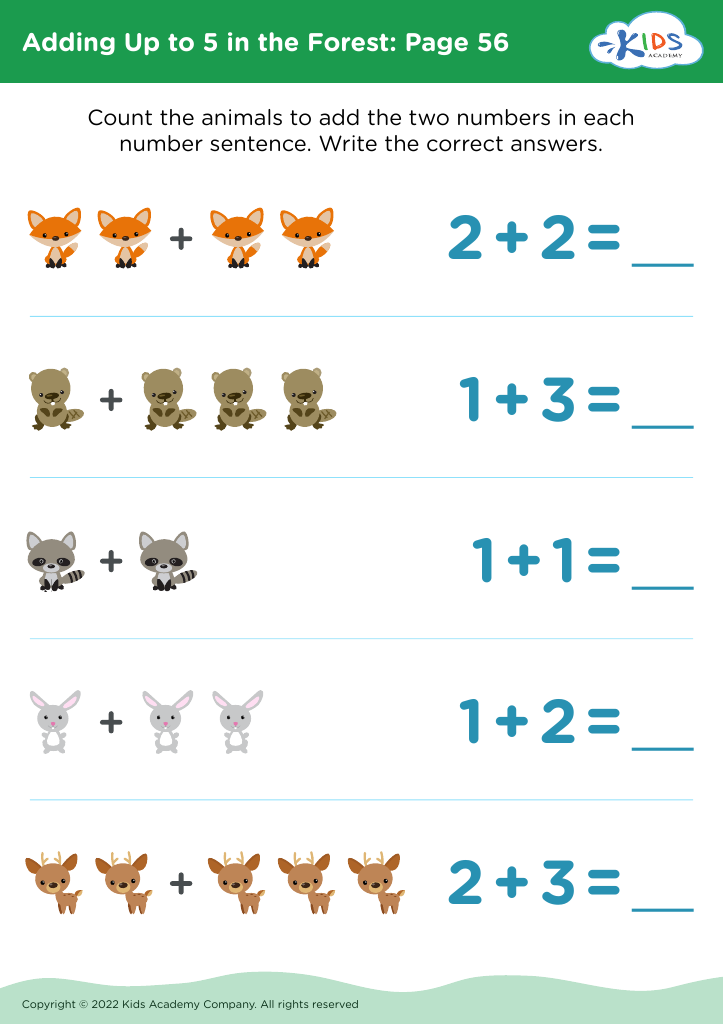
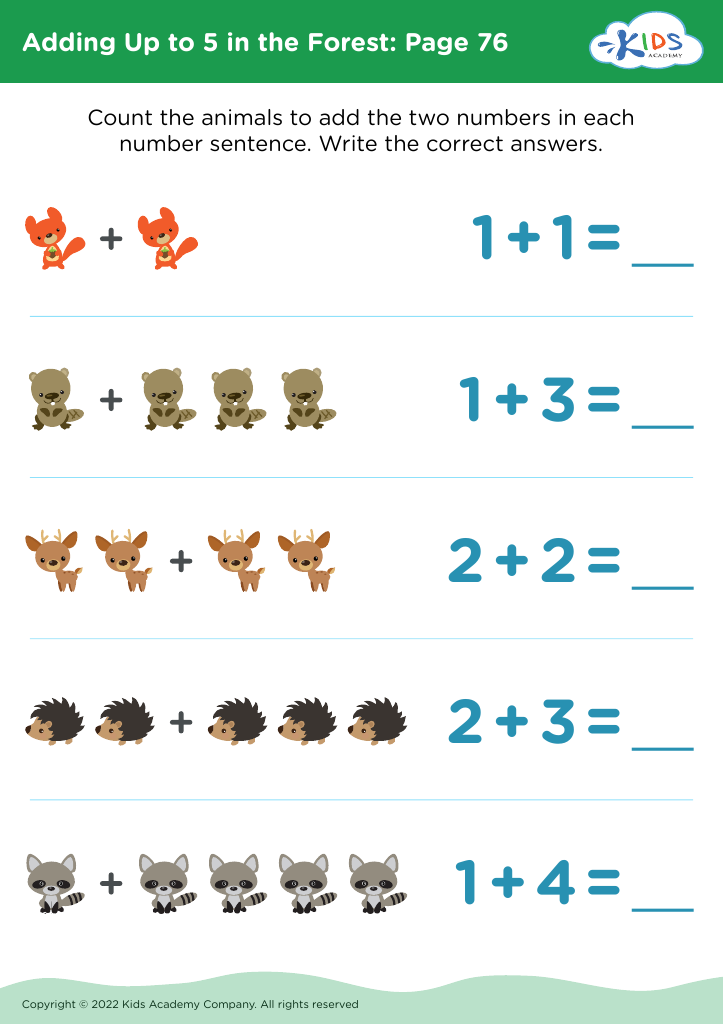



Problem Solving Adding in the Forest is a valuable educational activity for children aged 4-7, continuing to cultivate critical thinking, foundational math skills, and creativity. For parents and teachers, engaging children in this interactive play fosters a love for learning. It provides an opportunity to incorporate mathematical concepts into real-world scenarios through exploration and hands-on experiences.
This type of problem-solving activity encourages children to work collaboratively, enhancing their social skills as they discuss possible solutions and strategies. By using a forest setting, children can relate mathematical problems to enjoyable and familiar experiences in nature, stimulating their imagination and making abstract concepts more concrete.
Moreover, problem-solving fosters resilience as children learn to navigate challenges, developing perseverance in finding the right answers. This approach not only strengthens their addition skills but also enhances cognitive abilities such as reasoning, which are essential for later academic success.
By prioritizing activities like Problem Solving Adding in the Forest, parents and teachers help set the groundwork for logical thinking and a positive relationship with math, enabling children to face future mathematical challenges with confidence and curiosity. Investing in these early experiences creates a solid base for lifelong learning.