Addition Practice Adding up to 100 Misc Worksheets for Ages 4-7
3 filtered results
-
From - To
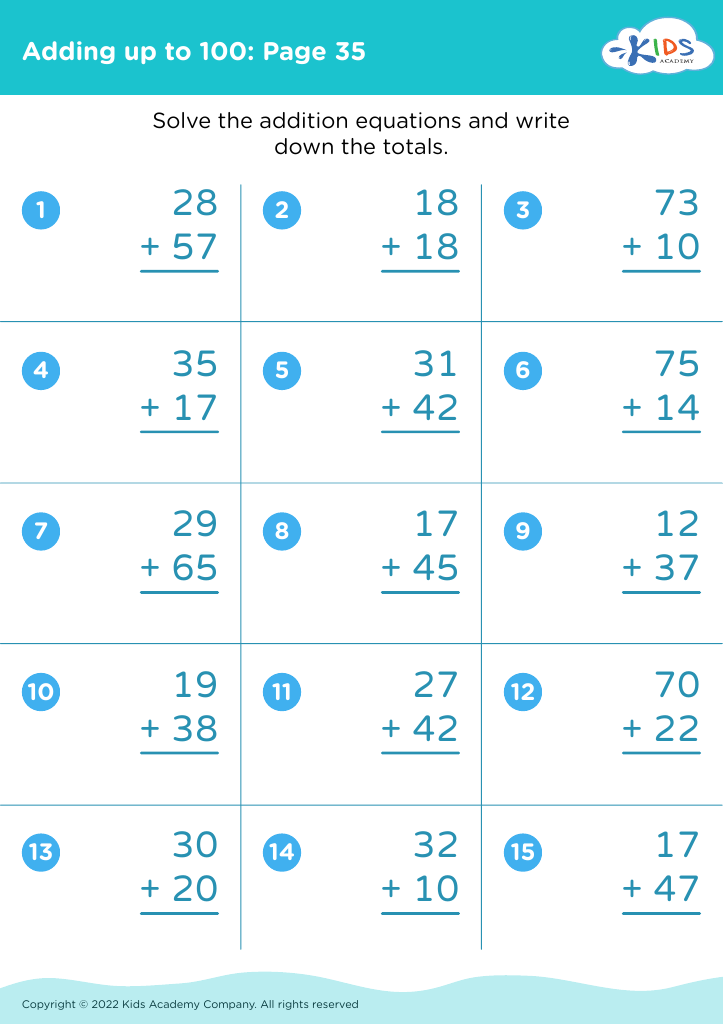
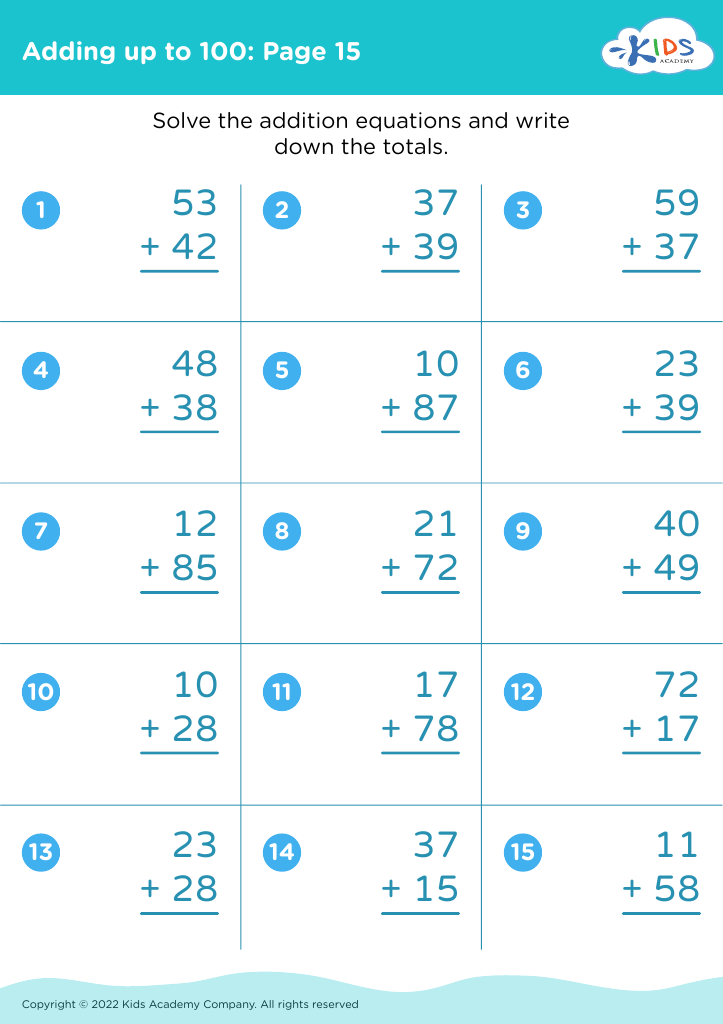
Explore our engaging "Addition Practice Adding up to 100" worksheets designed specifically for ages 4-7. These printable resources provide young learners with a variety of fun activities to strengthen their addition skills while keeping the learning process enjoyable. Each worksheet offers a mix of challenges, from simple equations to engaging visual aids, making arithmetic accessible and exciting. Perfect for classrooms or at-home learning, these worksheets help children develop confidence in their math abilities. Download and print these resources today to support your child's mathematical journey and watch their skills blossom as they tackle addition problems with ease!
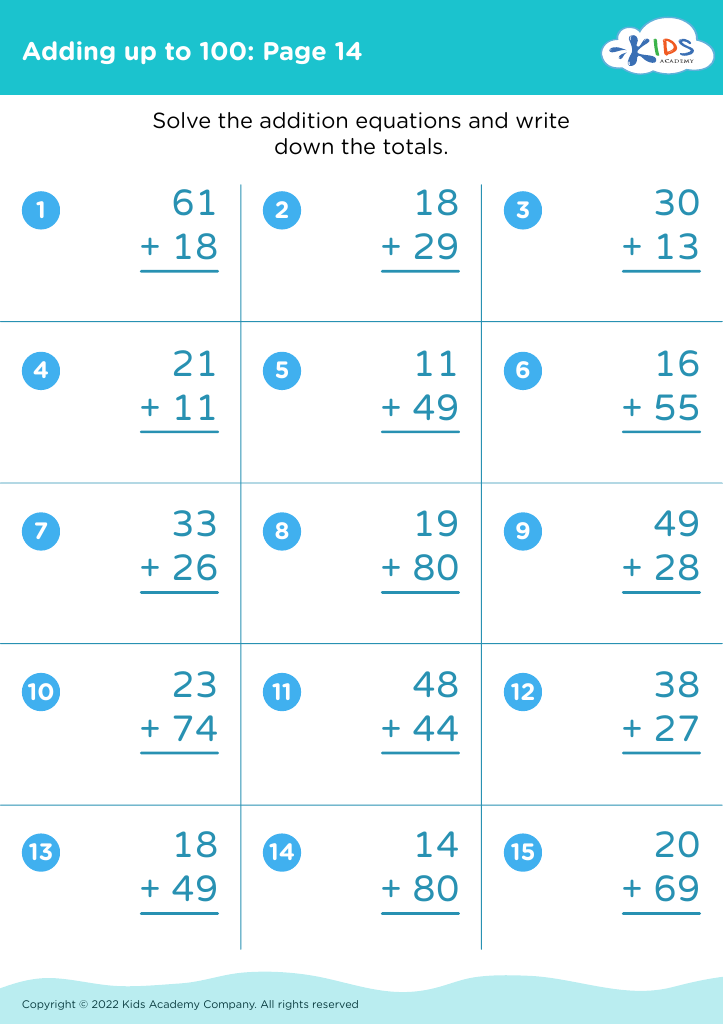


Addition practice for ages 4-7, particularly focusing on adding up to 100, is crucial for various developmental reasons. At this age, children are building foundational math skills that serve as the building blocks for future learning. Engaging in addition exercises enhances their numeracy skills, aiding in their understanding of concepts like value, grouping, and number sense. Mastering these basic arithmetic skills promotes confidence in math, which is essential for their academic growth.
Moreover, addition practice fosters cognitive development and critical thinking. As children explore different ways to combine numbers, they learn to solve problems and approach tasks logically. It also instills persistence and resilience, as they practice and resolve difficulties in their understanding.
From a parental and educational perspective, a strong foundation in basic math can lead to greater academic achievement in higher grades. Establishing these skills early reduces the likelihood of developing math anxiety as they encounter more complex mathematical concepts in the future.
Additionally, fluctuating focus during these formative years can be beneficial; hence, varied practice methods, like games and interactive activities, keep learning engaging. Overall, supporting addition practice equips children with essential tools for lifelong learning and success.