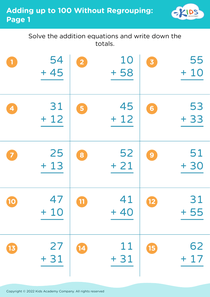
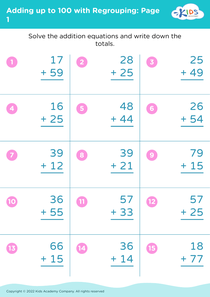
Comparing Fractions Adding up to 100 Misc Worksheets for Ages 4-7
10 filtered results
-
From - To
Discover our "Comparing Fractions Adding up to 100 Misc Worksheets" designed for children aged 4-7. These engaging and educational worksheets help young learners grasp the foundational concepts of comparing fractions in a fun and interactive way. Each worksheet combines colorful visuals with simple exercises to make learning fractions easy and enjoyable. Strengthen your child's math skills by practicing with these expertly crafted resources, tailor-made to build their confidence and proficiency in comparing fractions while also reinforcing their ability to add up to 100. Perfect for classroom use or at-home practice! Try them today and watch your little mathematician excel.
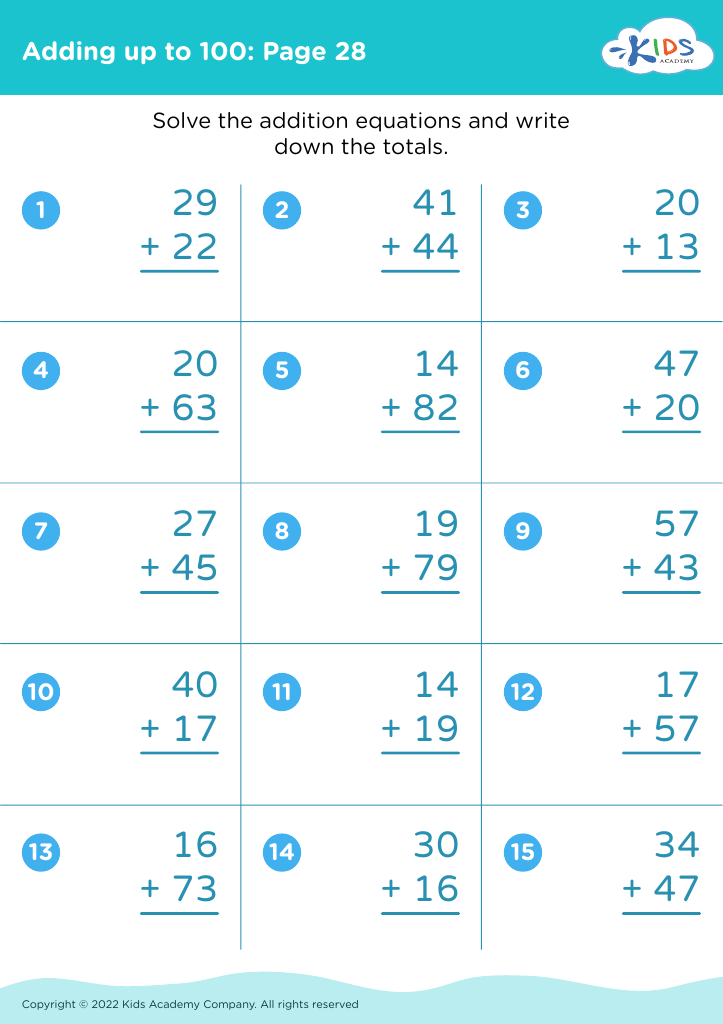
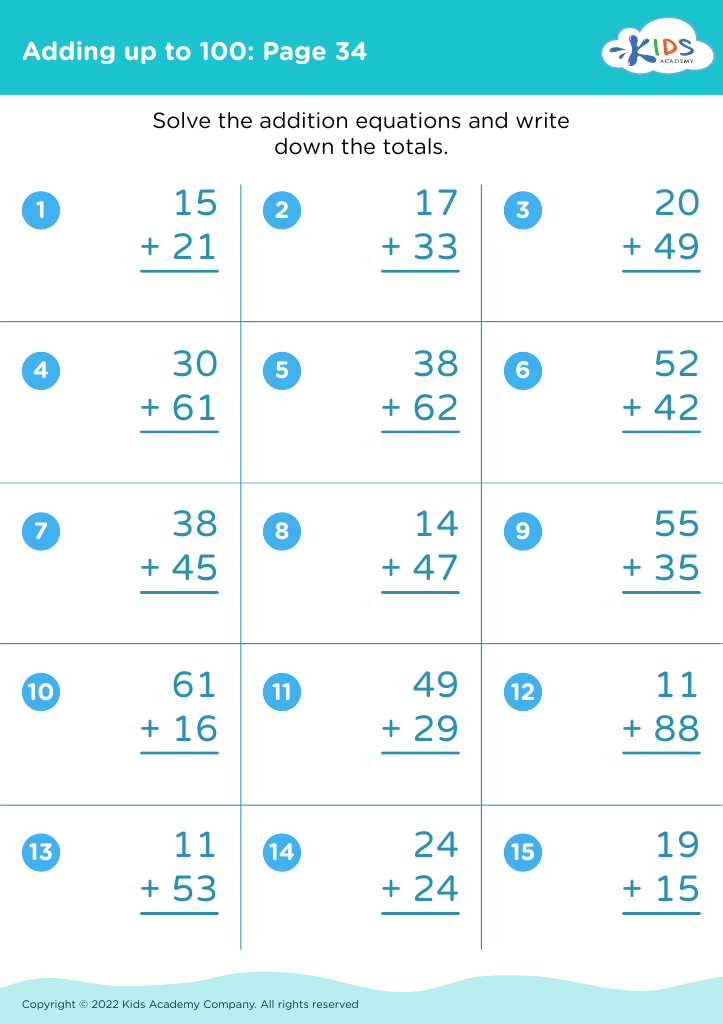
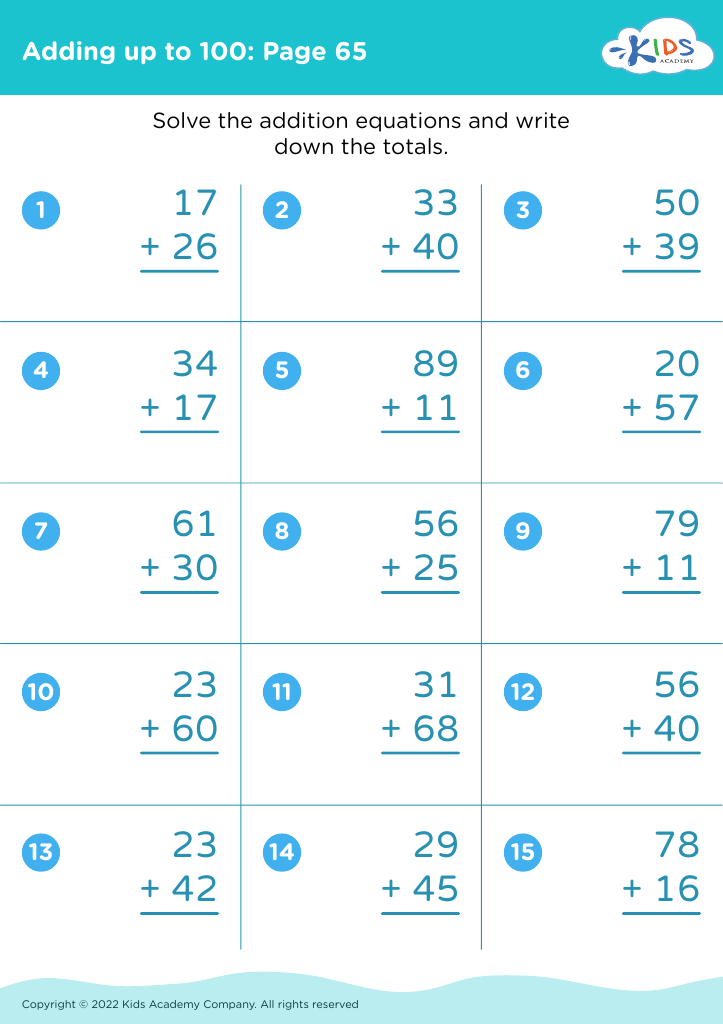
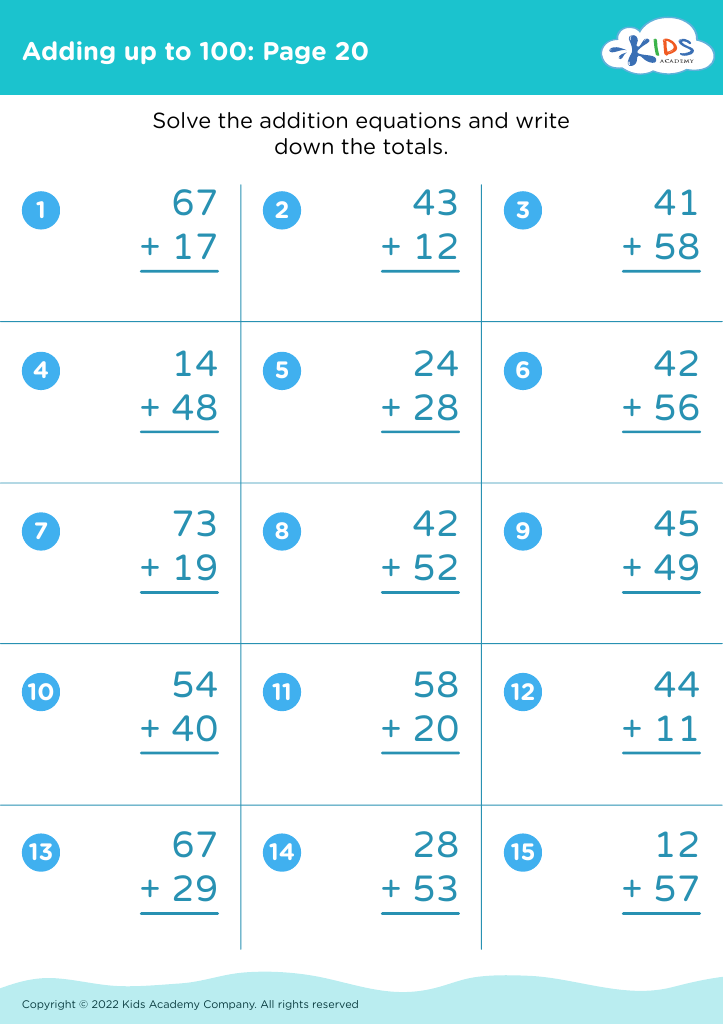
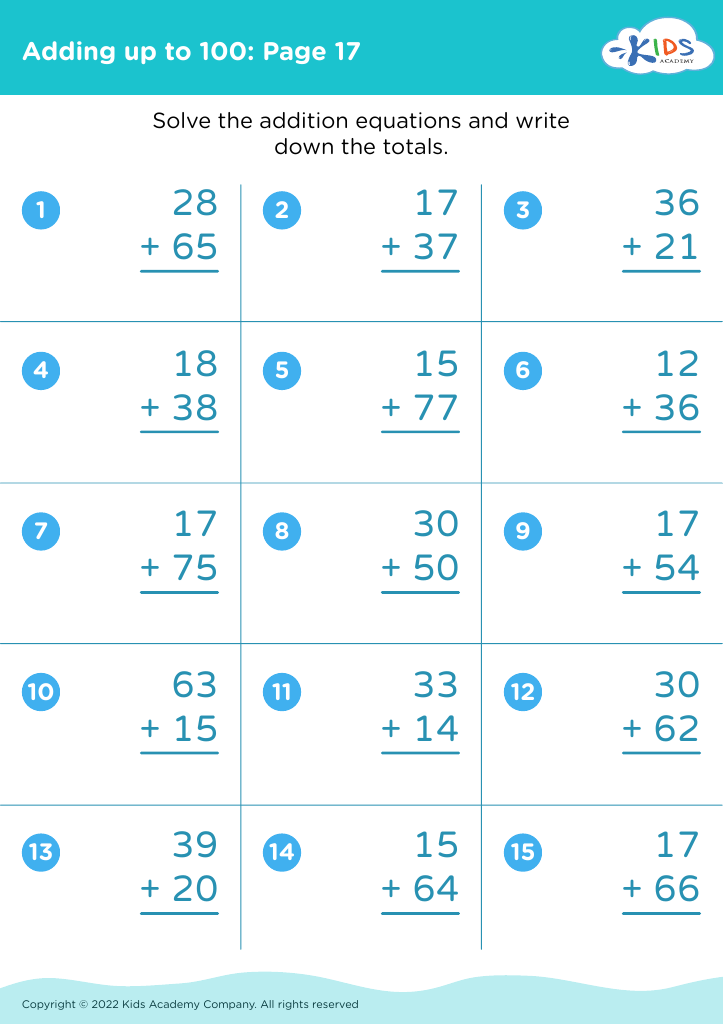
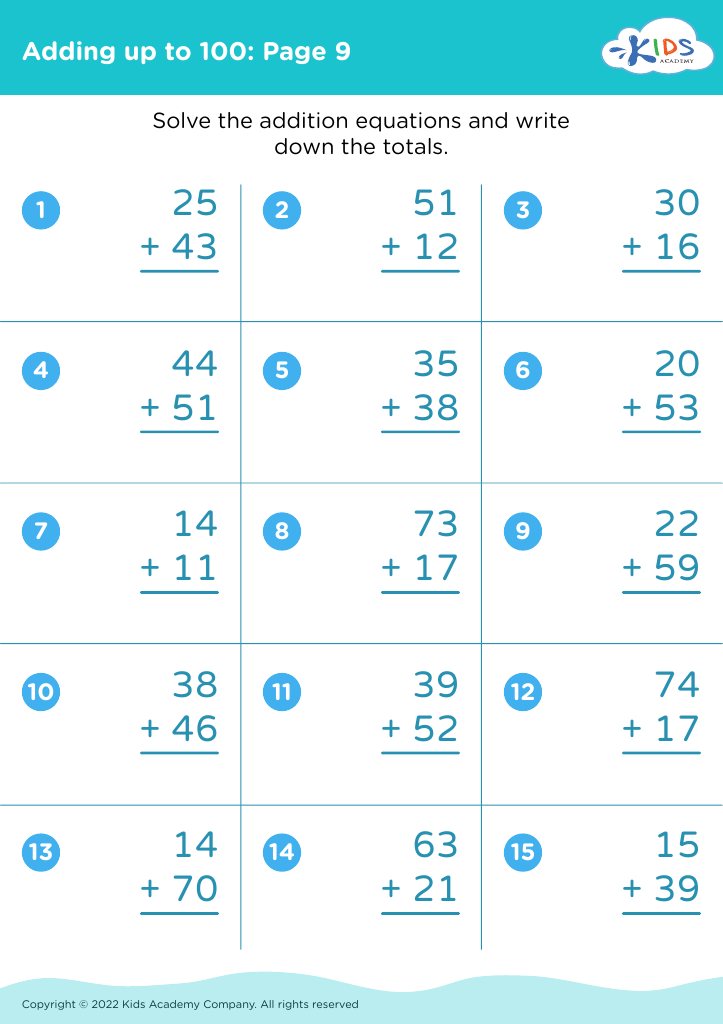
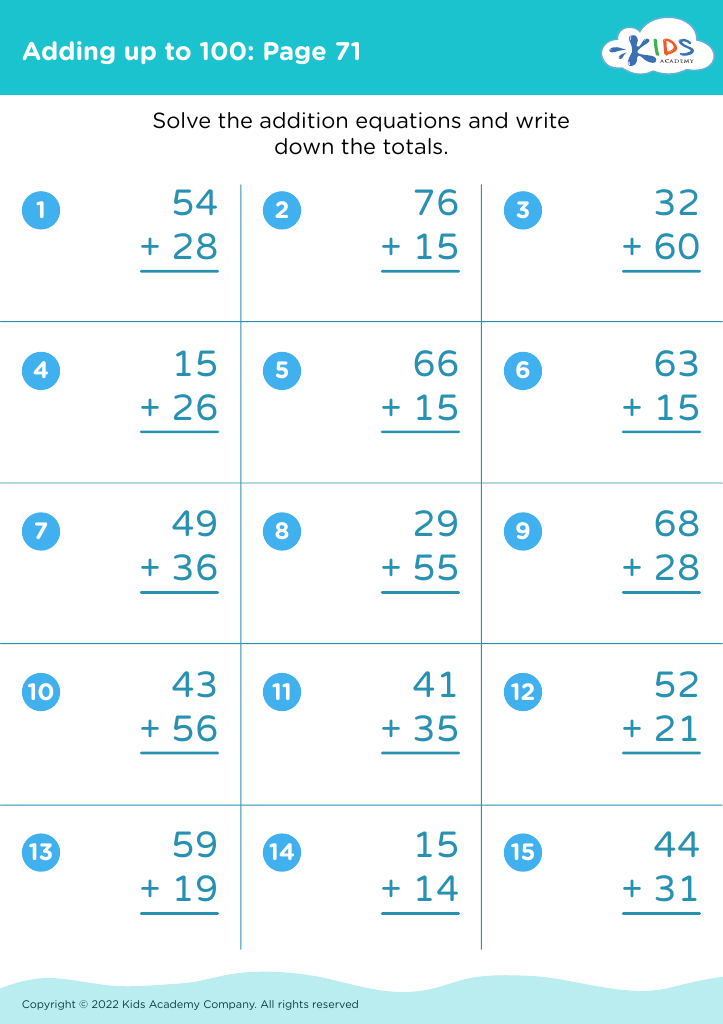
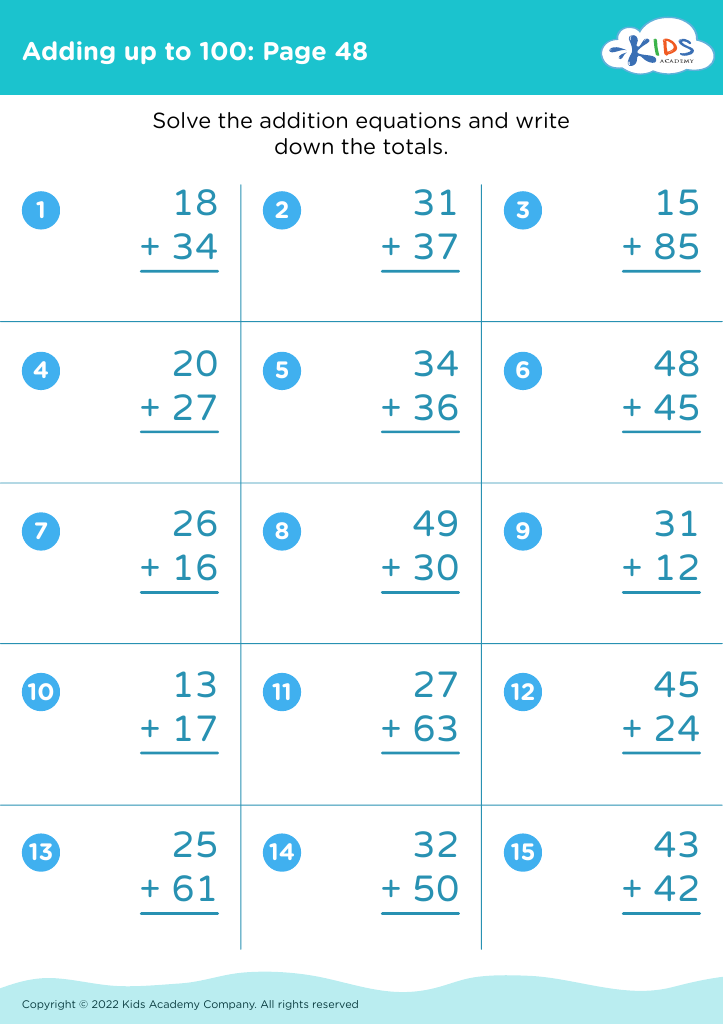
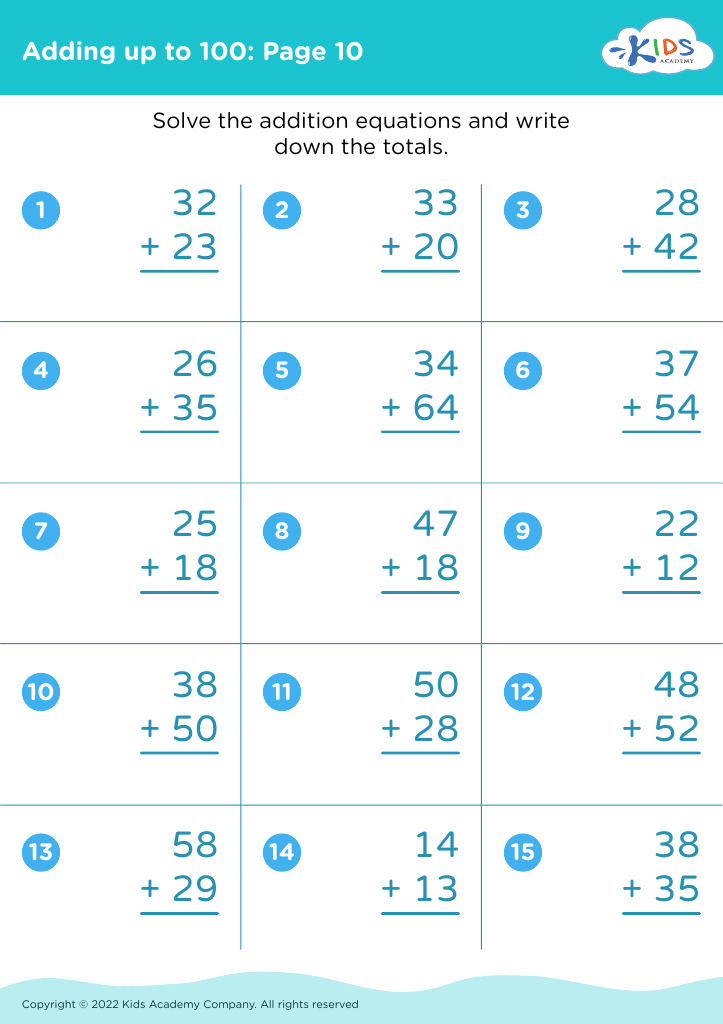
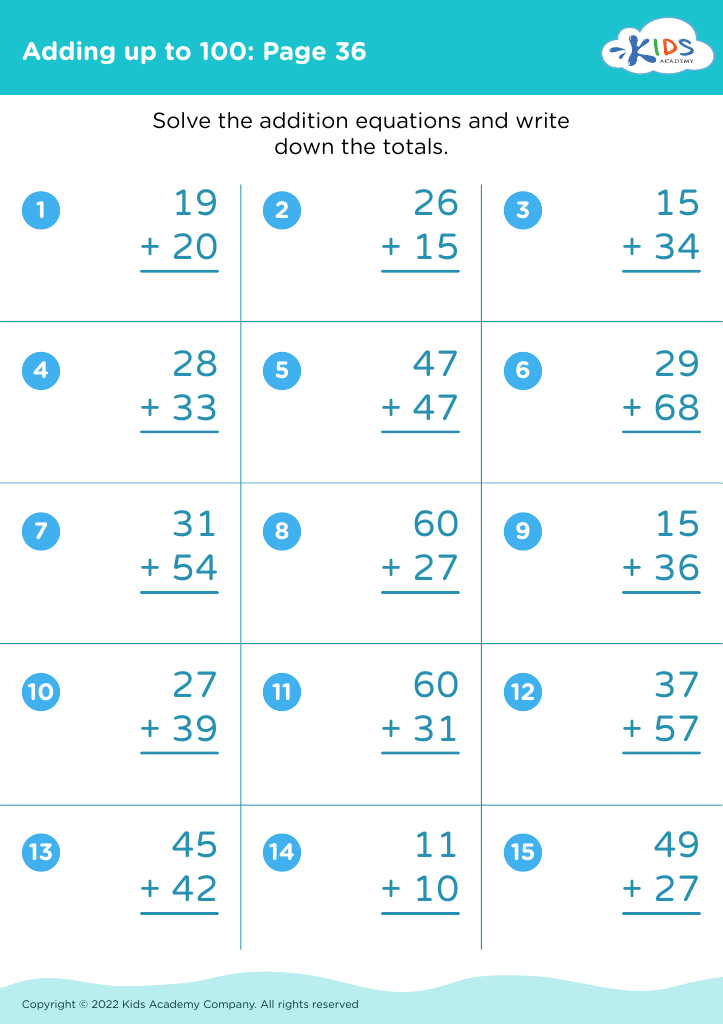


Caring about teaching young children, ages 4-7, to compare fractions and engage in mathematical games like "Comparing Fractions Adding up to 100" is essential for several reasons. Firstly, early exposure to mathematical concepts lays a solid foundation for future learning. Understanding fractions, even in simple forms, fosters essential skills such as numeracy, comparison, and critical thinking. These skills are vital for a child's academic success across various subjects.
Secondly, at this age, children are highly receptive and curious, making it an ideal period to introduce challenging concepts in a playful and engaging manner. Through games and interactive activities, learning fractions can seem less like a chore and more fun, increasing their motivation and interest in math.
Moreover, math games that involve adding up to 100 help children grasp significant numerical benchmarks and build a more profound sense of numbers. This hands-on learning enhances their problem-solving abilities and confidence in handling larger numbers.
Lastly, by introducing these concepts early, parents and teachers can identify and address learning gaps promptly. Early interventions ensure that children do not fall behind, setting them on a pathway to continual academic growth.
In summary, focusing on comparing fractions and related math activities for young children ensures they develop fundamental skills, fosters a positive attitude towards math, and aids in early identification of learning needs.