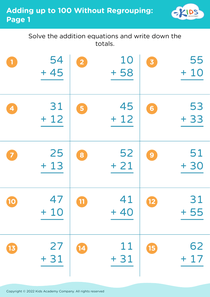
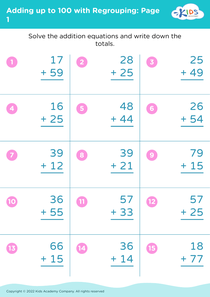
Counting practice Adding up to 100 Misc Worksheets for Ages 4-7
4 filtered results
-
From - To
Explore our comprehensive Counting Practice: Adding up to 100 Misc Worksheets for Ages 4-7, designed to make math engaging and fun for young learners. These printables from Kids Academy reinforce essential skills including counting, addition, and number recognition through a variety of imaginative activities and exercises. Perfect for children aged 4 to 7, our worksheets cater to early grade levels and provide a solid foundation in fundamental math concepts. Help your child build confidence and develop a love for learning with our easy-to-use, visually appealing, and highly interactive counting practice resources. Join Kids Academy today!
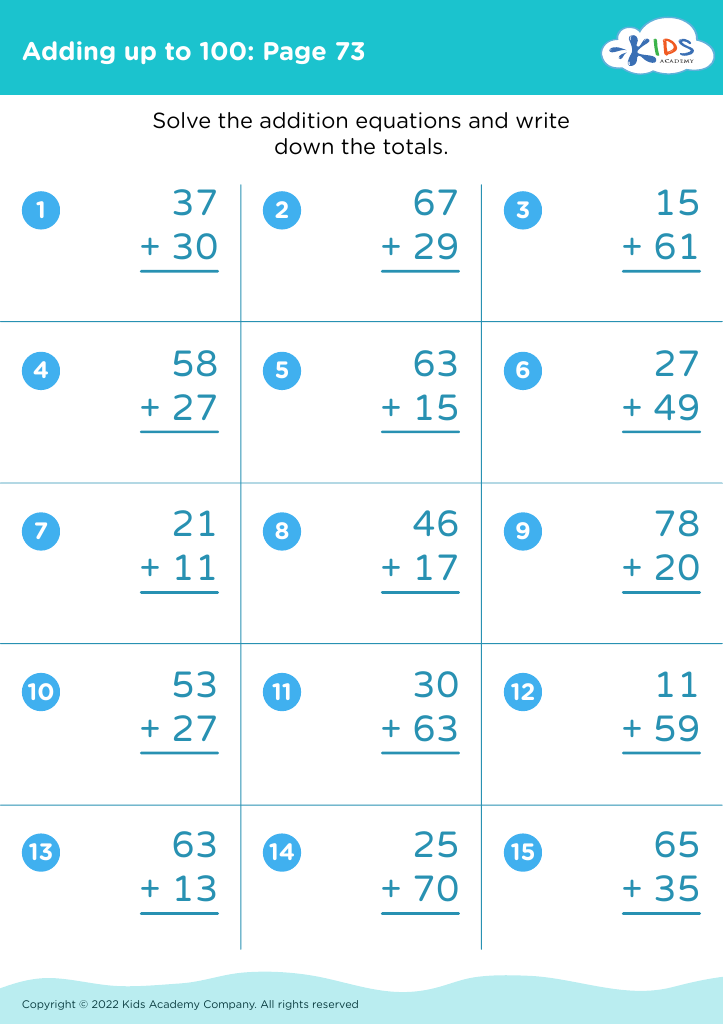
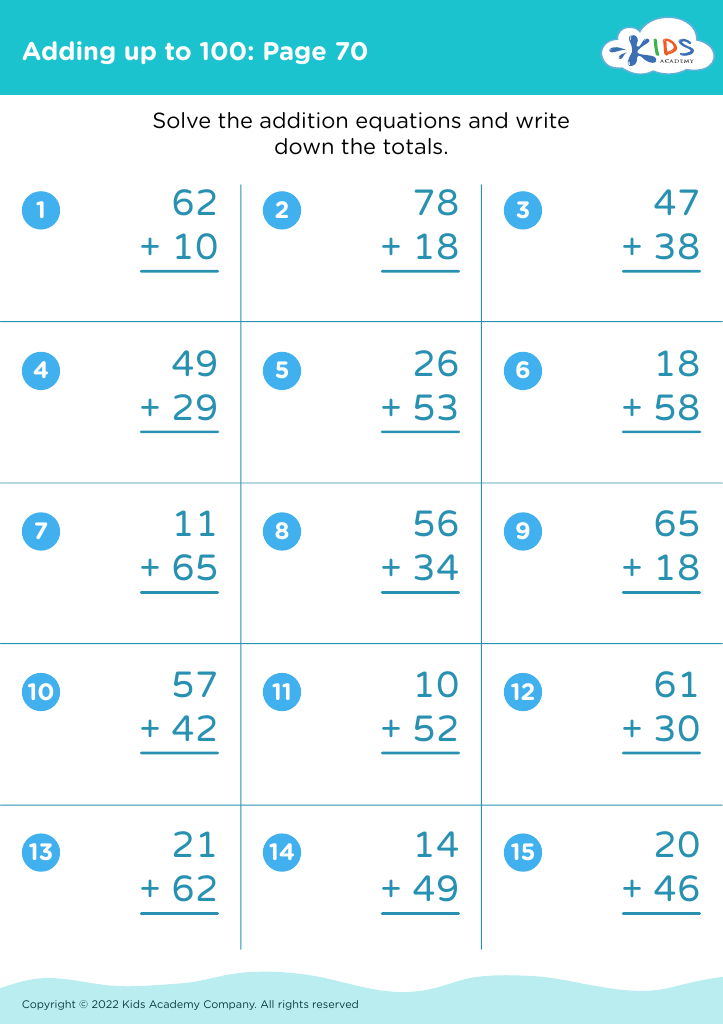
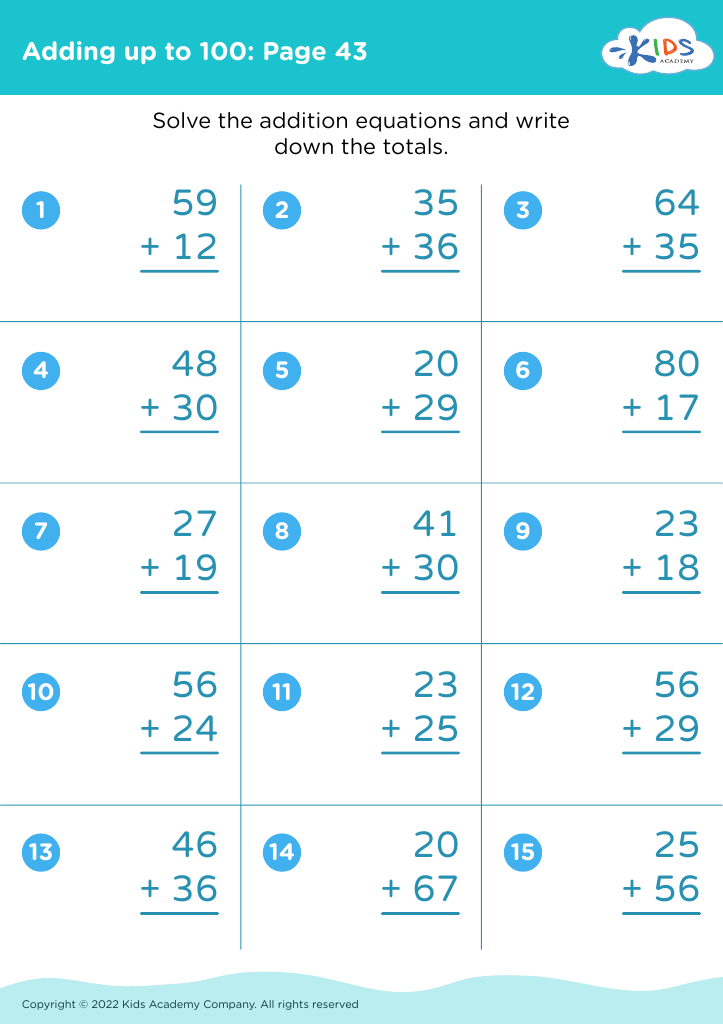
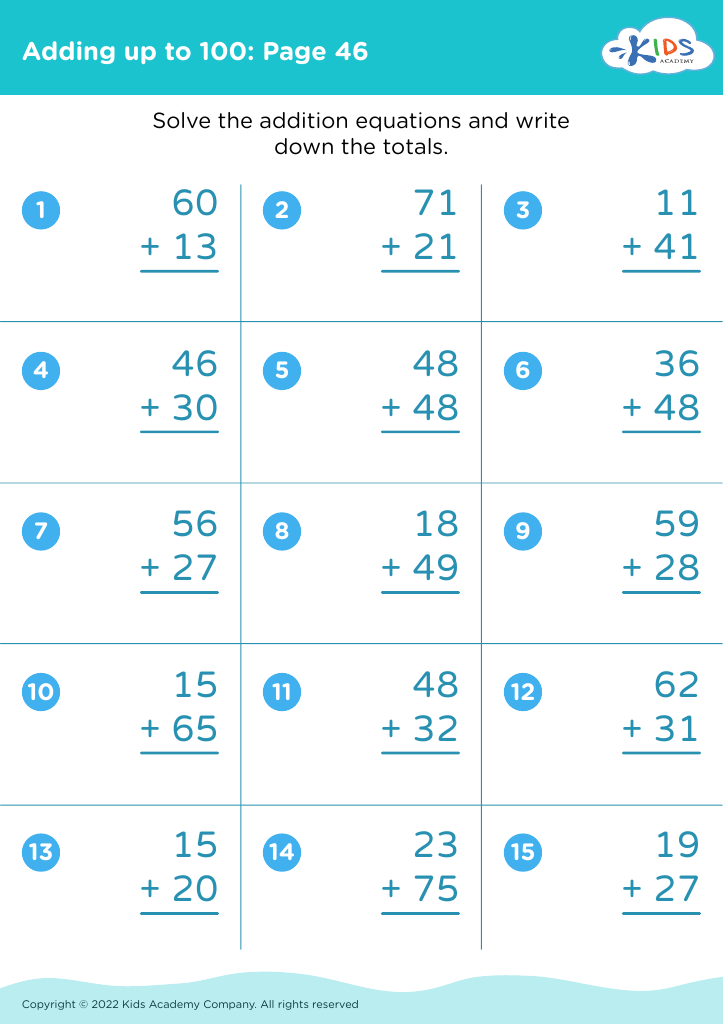


Counting practice and adding up to 100 for children ages 4-7 is crucial for foundational math skills and overall cognitive development. At this early stage, developing strong number sense helps children understand the relationships between numbers, making arithmetic operations easier as they progress. Engaging in counting and addition exercises enhances logical thinking, attention to detail, and memory, which are essential skills for academic success.
Parents and teachers play a pivotal role in fostering a positive attitude towards mathematics. By integrating counting and simple addition into daily activities, they help children see math as a fun, integral part of life rather than a daunting task. For example, counting fruits during a snack time or adding up points in a game provides practical learning opportunities in a fun and relatable way.
Additionally, confidence in math during these formative years is linked to higher academic achievement in later grades. Consistent exposure to counting and addition activities builds a strong mathematical foundation, reducing anxiety towards the subject as children grow older.
Thus, caring about and actively participating in early math practice not only supports a child's immediate educational needs but also sets the stage for long-term mathematical competency and a positive learning experience.