Enhance number recognition Adding up to 100 Misc Worksheets for Ages 4-7
5 filtered results
-
From - To
Boost your child's number recognition skills with our engaging "Adding Up to 100 Misc Worksheets" designed for ages 4-7. These fun, colorful worksheets make learning addition an enjoyable experience for early learners. By solving different problems, children will confidently identify numbers and master early math concepts. Our printable worksheets encourage independent learning and provide ample practice to enhance their number sense, critical thinking, and problem-solving abilities. Perfect for both classroom and home use, these exercises turn mathematical exploration into an exciting adventure, laying a solid foundation for future math success. Download now and watch your young mathematician thrive!
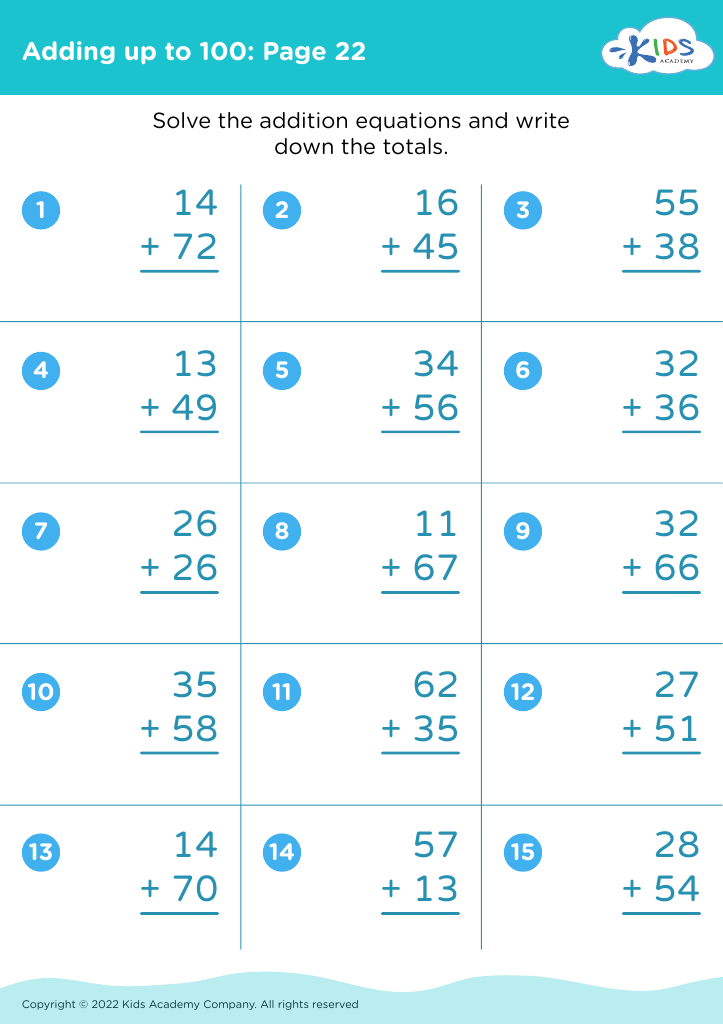
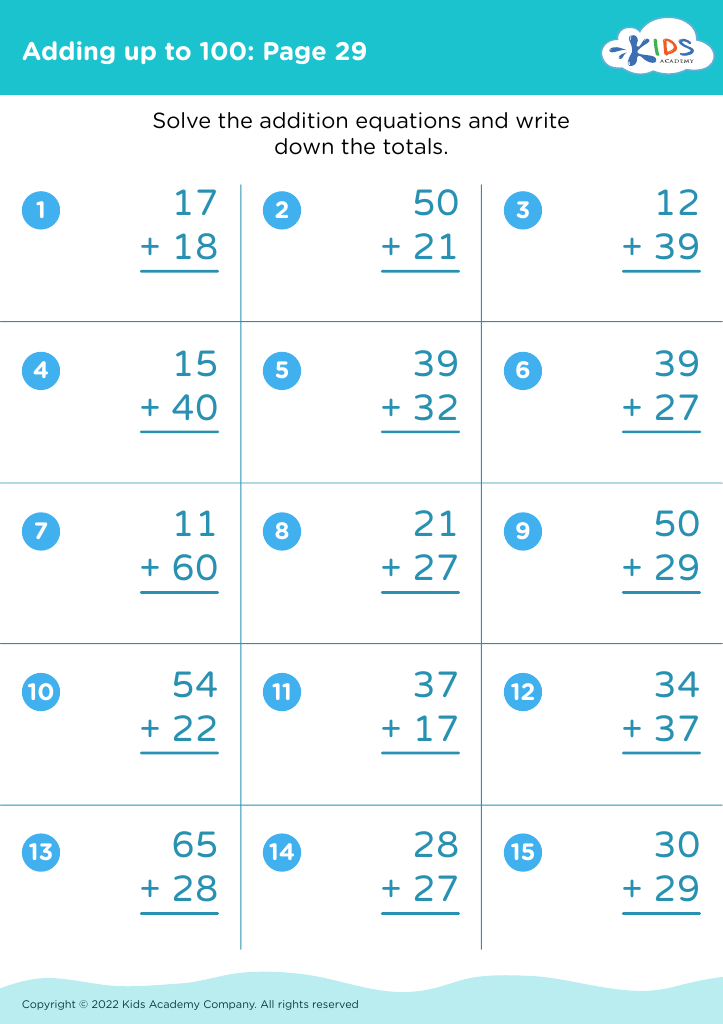
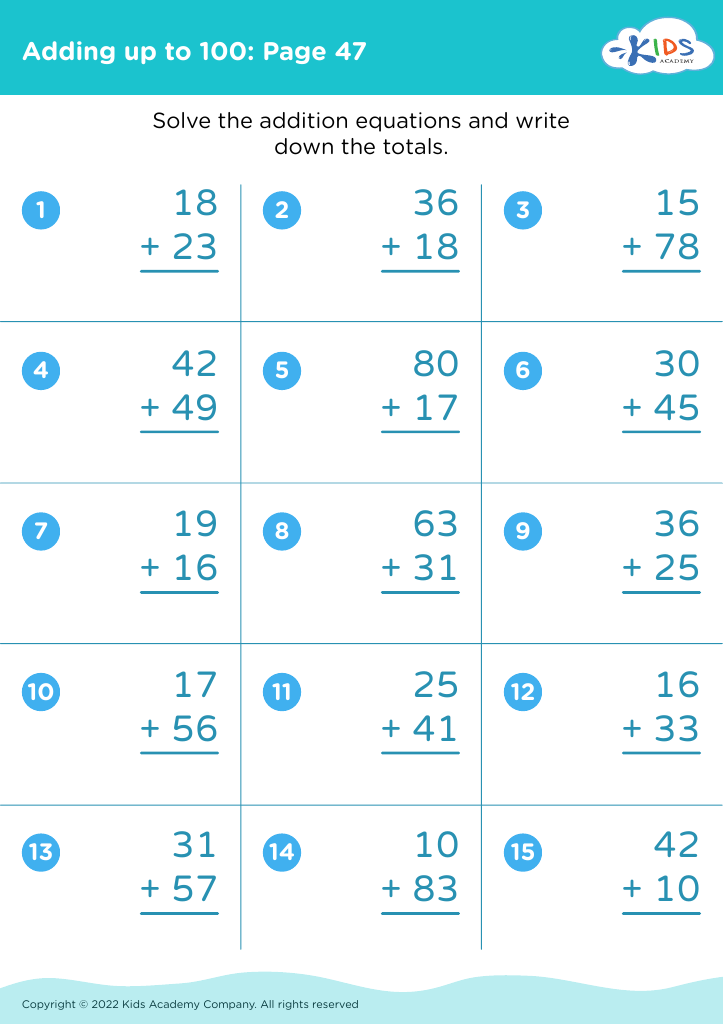
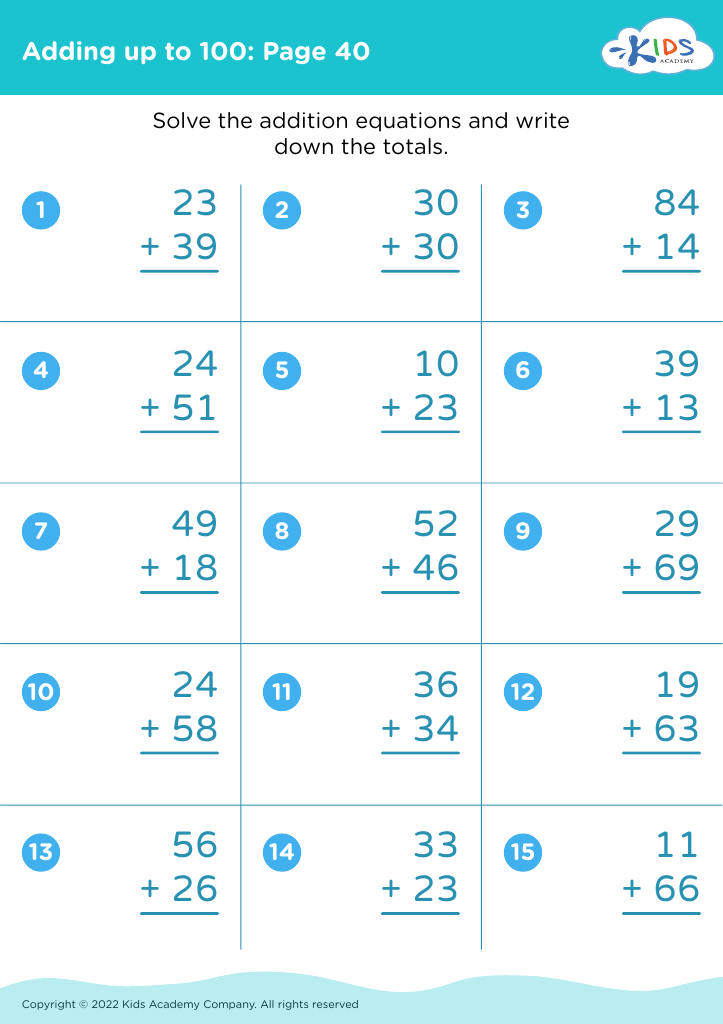
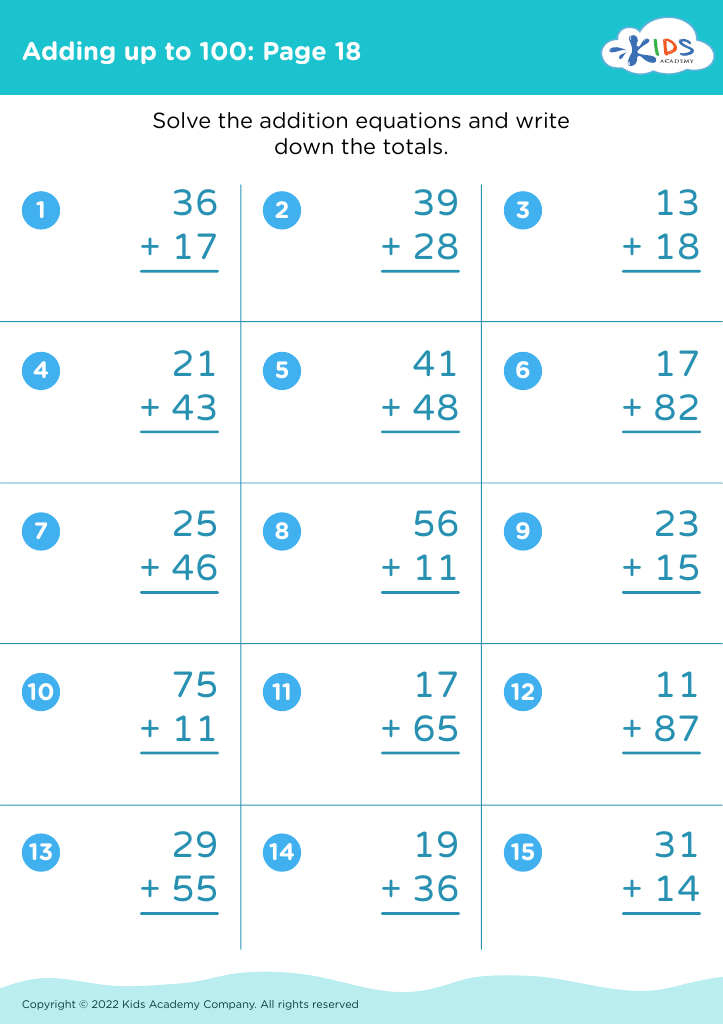


Enhancing number recognition and adding up to 100 are fundamental skills for children aged 4-7 that provide a crucial foundation for future mathematical learning. At this age, children are naturally curious and absorb information quickly, making it an ideal time to introduce essential math concepts. Number recognition forms the basis for all other math-related topics; it helps children understand the value and function of numbers in everyday life. When kids can confidently recognize numbers up to 100, they are better prepared for more complex arithmetic operations.
Adding up to 100 not only reinforces number recognition but also introduces basic addition, an essential arithmetic skill. Practicing addition helps children develop logical thinking and problem-solving abilities. It also strengthens their memory and enhances their ability to concentrate, as adding numbers requires a certain level of focus and accuracy.
Parents and teachers play a critical role in this developmental phase by providing engaging and interactive learning experiences. Utilizing games, visual aids, and hands-on activities can make learning fun and effective. These early math skills are not only integral for academic success but also for practical daily tasks, paving the way for a child's confidence and competence in math as they grow. Therefore, nurturing these skills early on sets the stage for a positive lifelong relationship with mathematics.