Fraction simplification Adding up to 100 Misc Worksheets for Ages 4-7
6 filtered results
-
From - To
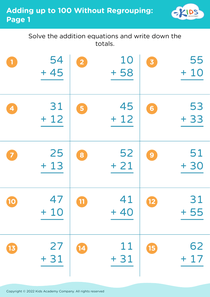
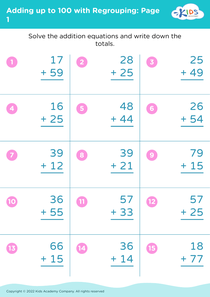
Explore our engaging "Fraction Simplification Adding Up to 100" worksheets, perfect for children ages 4-7! Designed to make learning fun, these printable resources help young learners grasp essential math concepts like simplifying fractions while reinforcing their adding skills. With a variety of activities that promote critical thinking and problem-solving, your kids will become confident in managing numbers. Ideal for classroom or home use, these worksheets provide a solid foundation for future math success. Start your child’s math journey today by downloading our interactive worksheets and watch them thrive in understanding fractions and addition up to 100!
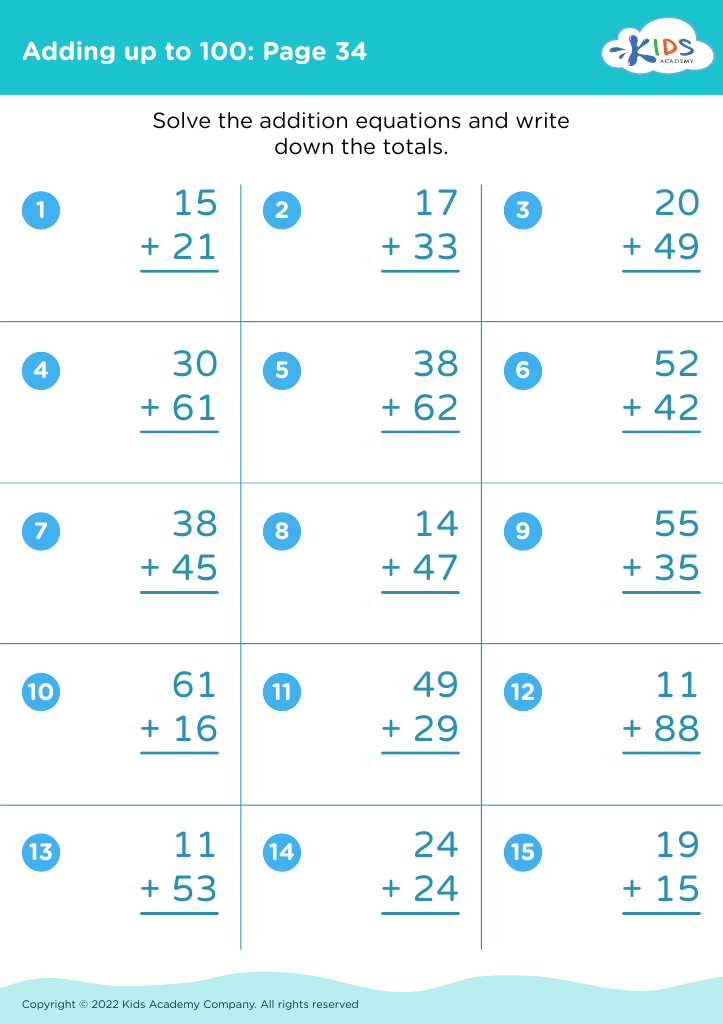
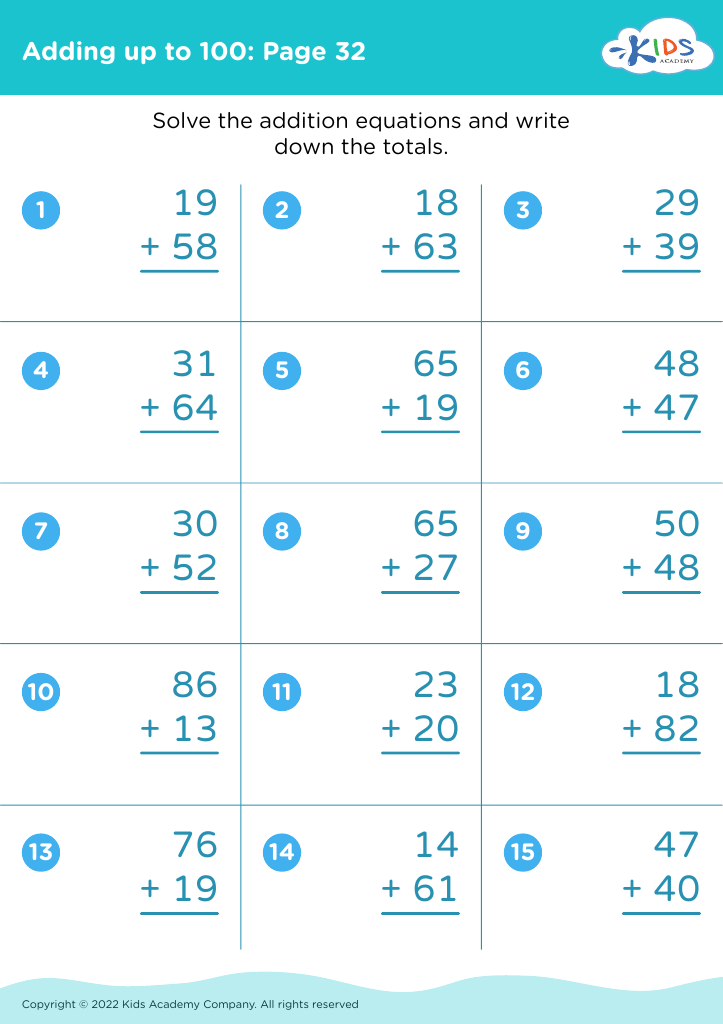
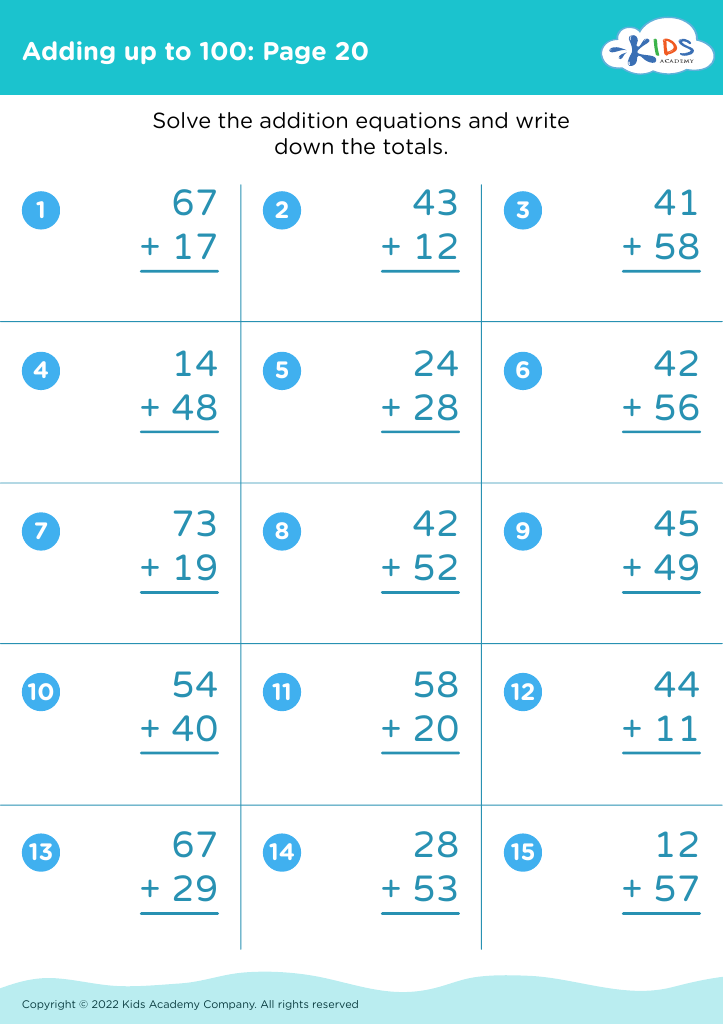
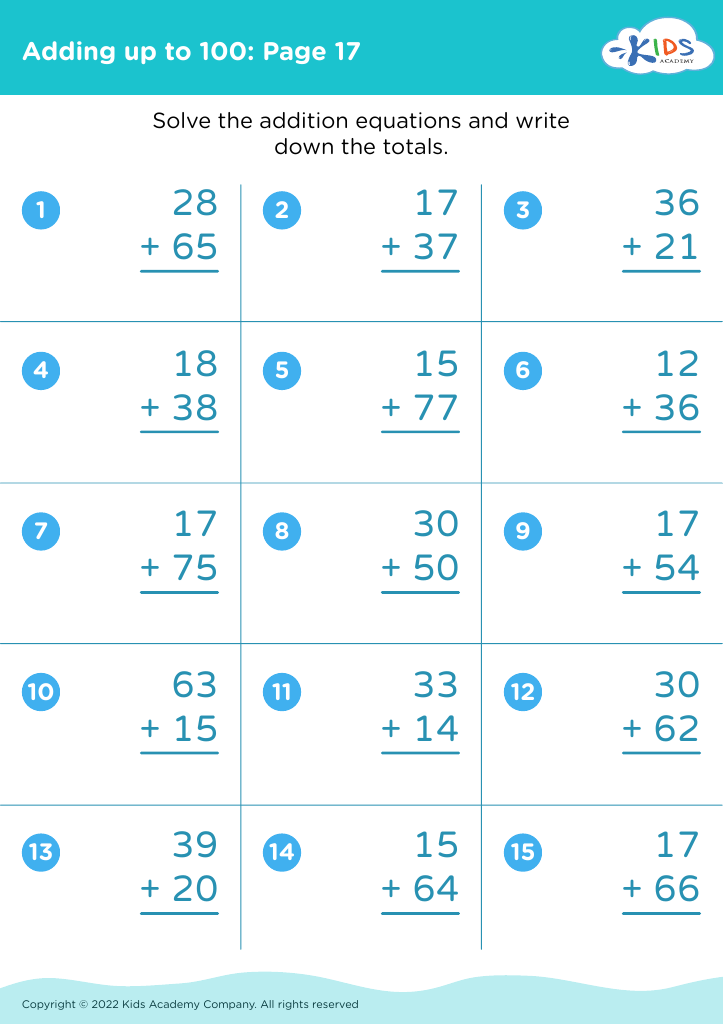
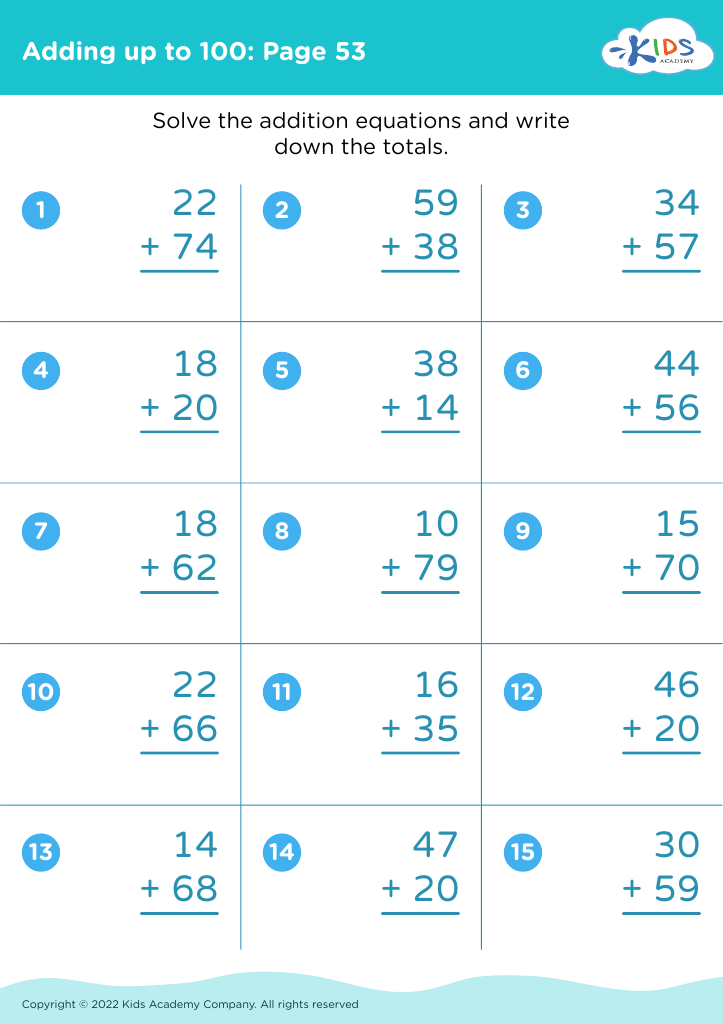
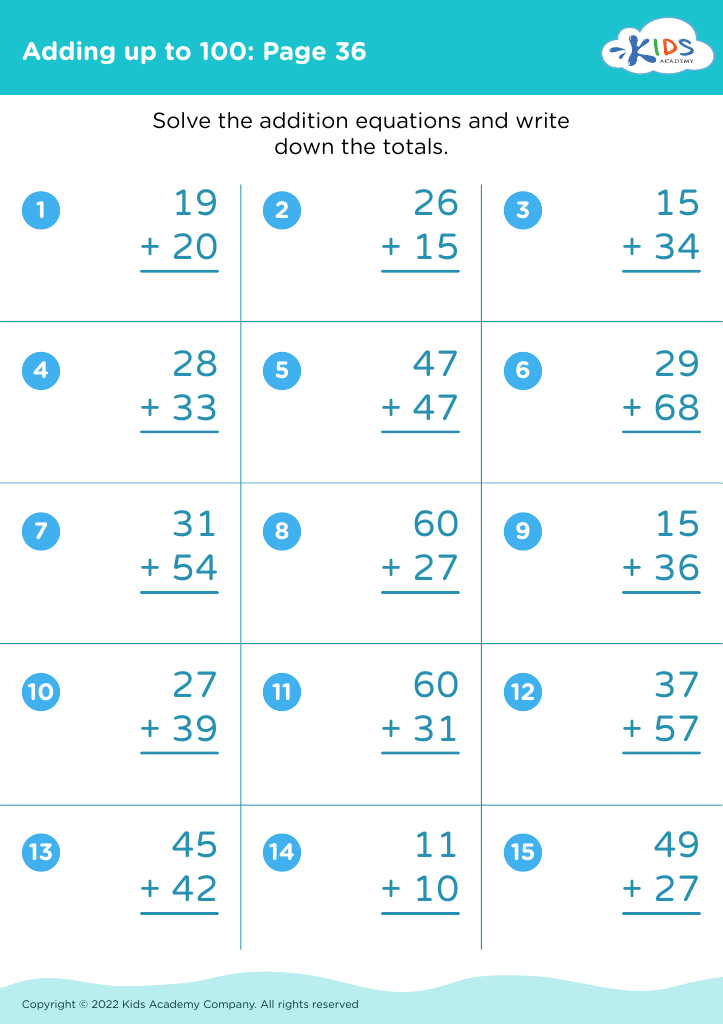


Parents and teachers should prioritize teaching fraction simplification and numbers that add up to 100 for children aged 4-7, as these foundational skills are crucial for early math development. Understanding fractions helps children grasp the concept of parts of a whole, fostering critical thinking and problem-solving abilities. Simplifying fractions lays the groundwork for more complex math concepts in later years, making it an essential skill for future academic success.
Similarly, mastering the concept of numbers that add up to 100 enhances children's understanding of addition and subtraction. It allows them to recognize patterns, develop number sense, and build confidence in their mathematical abilities. Engaging in exercises centered around these concepts helps children practice their counting skills and improves their ability to work with numbers in diverse contexts.
Additionally, early exposure to these skills strengthens cognitive development and encourages a positive attitude towards math. By making learning enjoyable through games and interactive activities, parents and teachers create a supportive environment that nurtures a lifelong interest in mathematics. Focusing on these concepts not only prepares children for more challenging concepts as they progress but also empowers them with the skills needed to succeed in everyday math situations.