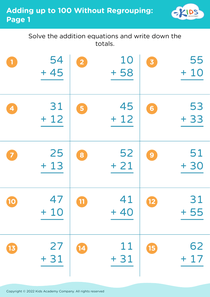
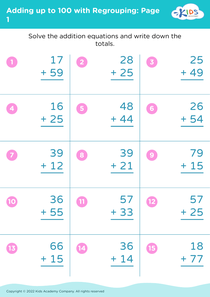
Recognizing shapes Adding up to 100 Misc Worksheets for Ages 4-7
4 filtered results
-
From - To
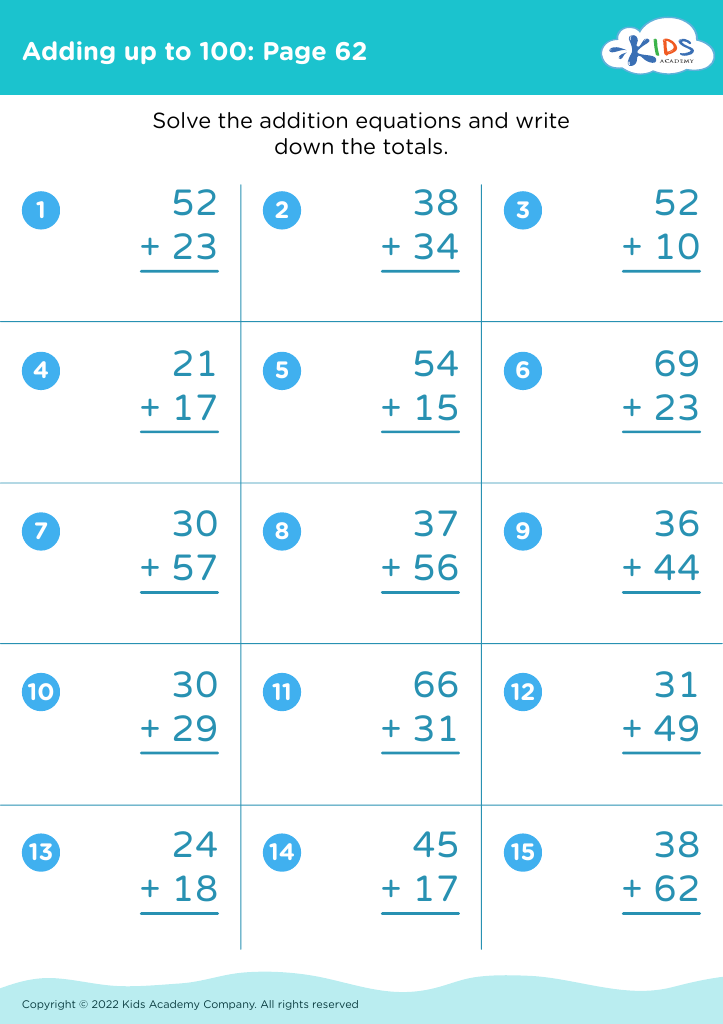
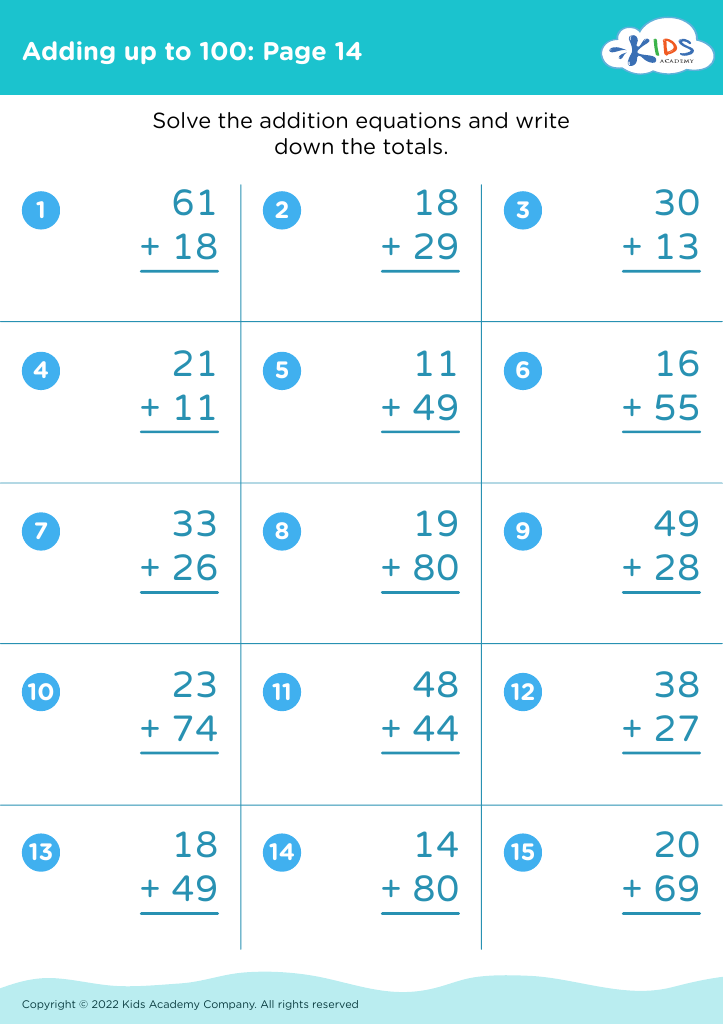
Discover our engaging "Recognizing Shapes Adding Up to 100 Misc Worksheets" designed for children aged 4-7! These worksheets blend creativity and math, providing young learners with fun activities that enhance their shape recognition skills while practicing addition up to 100. With colorful images and interactive exercises, kids will stay motivated as they explore different shapes, all while developing critical math foundations. Ideal for home or classroom use, these worksheets encourage independent learning and can seamlessly integrate into daily lessons. Start this exciting educational journey today and help your child build confidence in both shapes and mathematics!
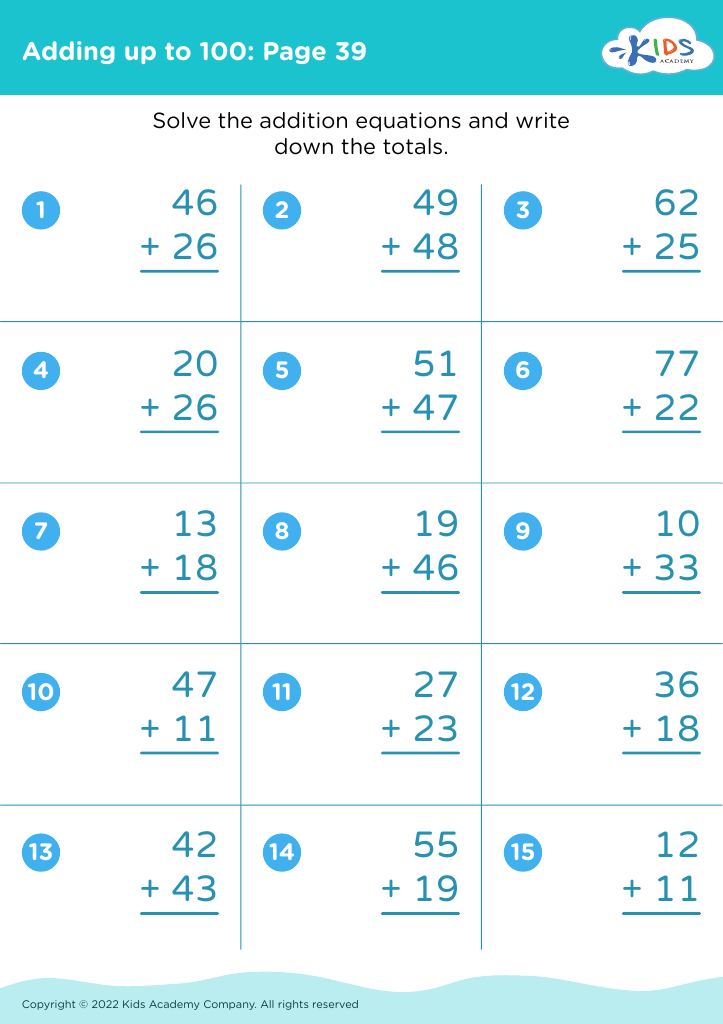
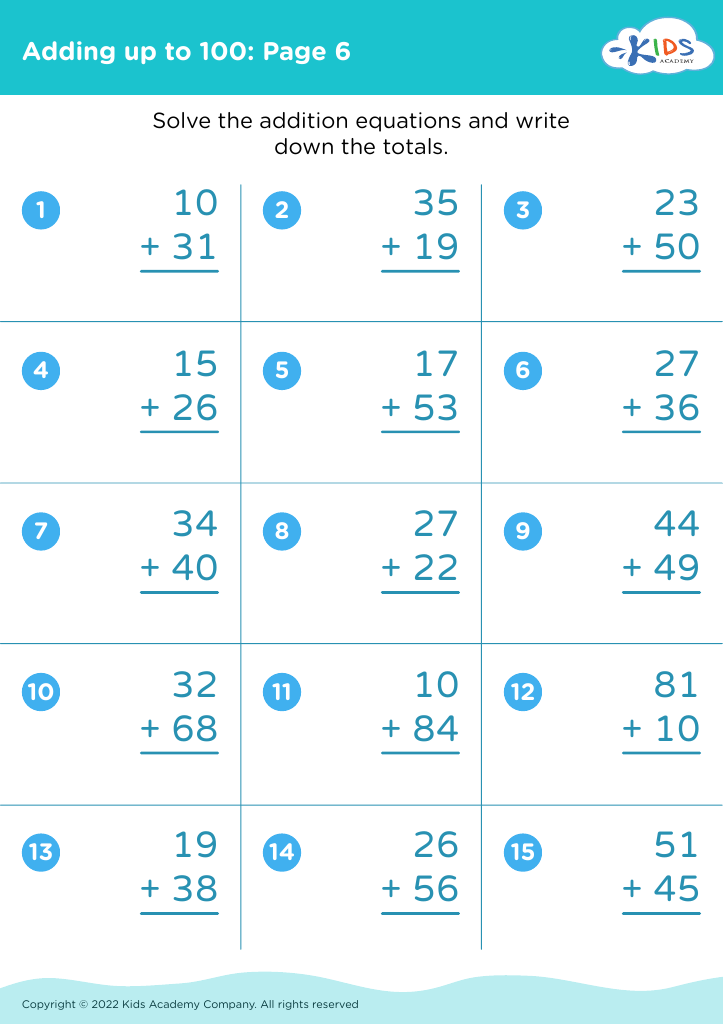


Recognizing shapes and understanding numbers are foundational skills critical for young learners aged 4-7. Parents and teachers should prioritize these concepts as they form the building blocks for various mathematical and cognitive competencies essential for future learning.
Recognizing shapes helps children develop spatial awareness, which is crucial for problem-solving and everyday tasks. It also enhances their ability to identify patterns, leading to better reasoning skills. Additionally, understanding basic geometry fosters creativity, as children begin to see connections between shapes in art, nature, and their environment.
Furthermore, learning to add up to 100 introduces children to the concept of number sense, a vital aspect of mathematical comprehension. This skill instills confidence and flexibility in using numbers, preparing students for more complex mathematical operations in later grades.
When parents and teachers actively engage students in recognizing shapes and practicing addition, they create a supportive learning environment that encourages exploration and mastery of these concepts. Ultimately, these foundational skills not only aid in academic success but also empower children to approach challenges with a positive mindset, setting the stage for a lifelong love of learning.