Understanding fractions Adding up to 100 Misc Worksheets for Ages 4-7
16 filtered results
-
From - To
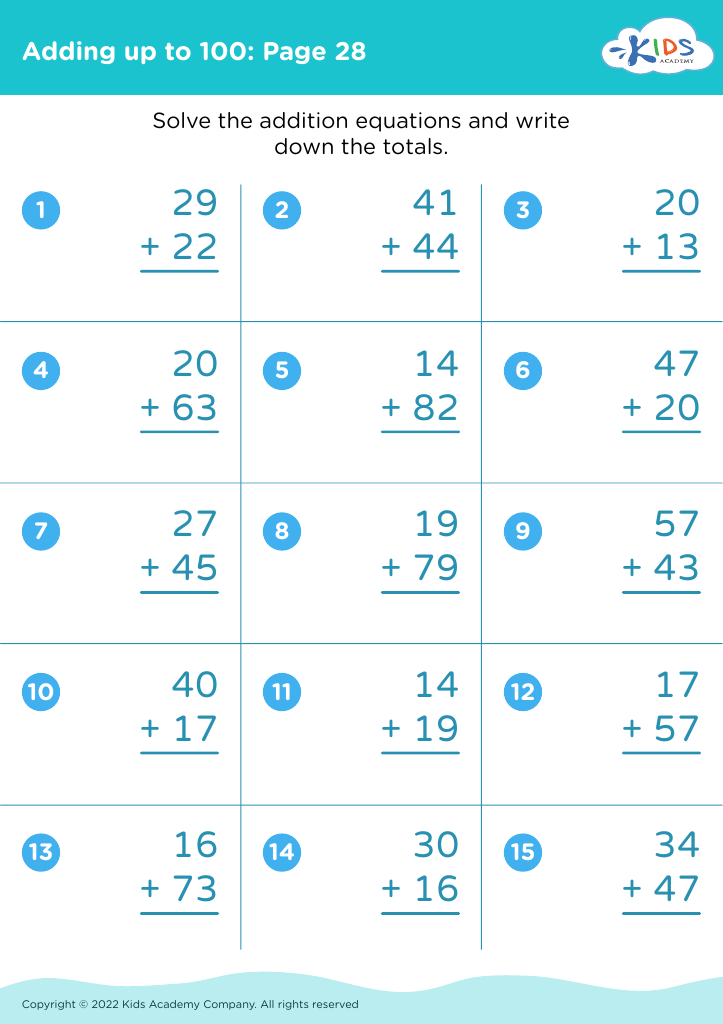
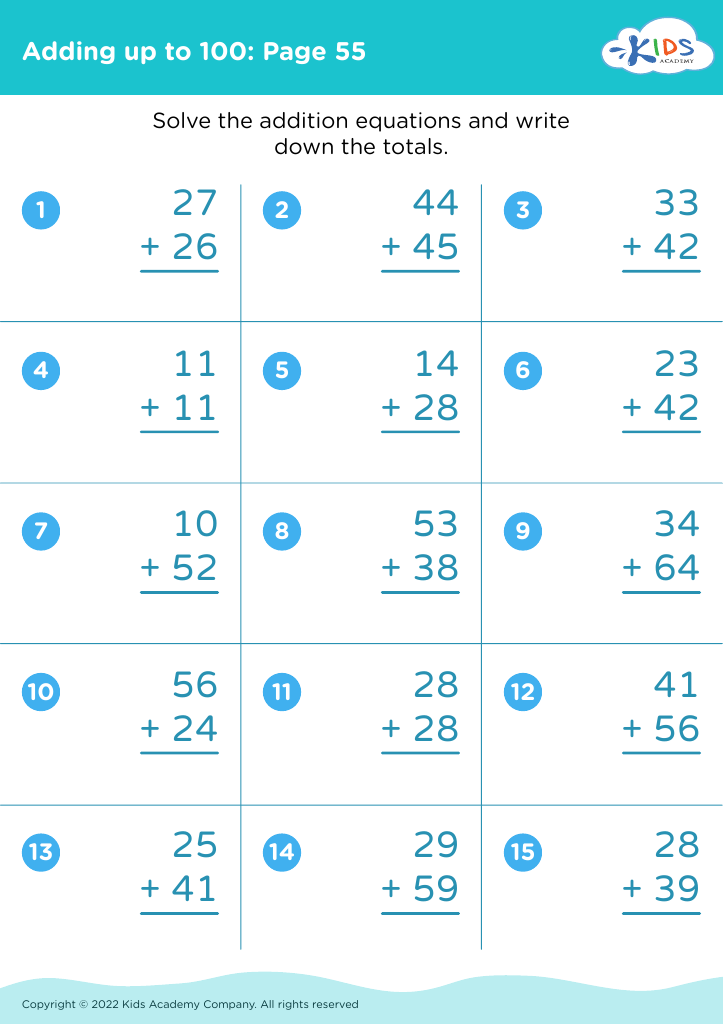
Discover the exciting world of fractions with our "Understanding Fractions: Adding up to 100" worksheets, designed specifically for children aged 4-7. These engaging resources help young learners grasp the concept of fractions in a fun and interactive way. Through colorful visuals and simple exercises, children will explore how to identify, compare, and add fractions up to 100. Each worksheet is crafted to nurture foundational math skills, boosting confidence and understanding in early learners. Ideal for classrooms or at-home practice, these worksheets provide a playful approach to mastering fractions, laying a strong groundwork for future mathematical success. Start your child's journey with fractions today!
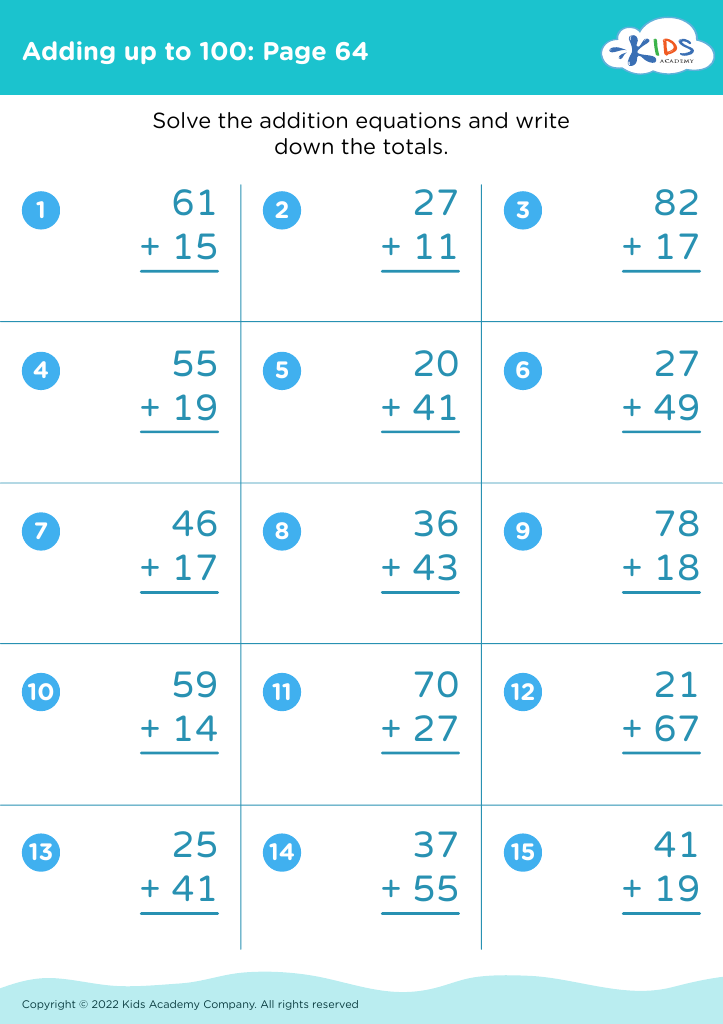
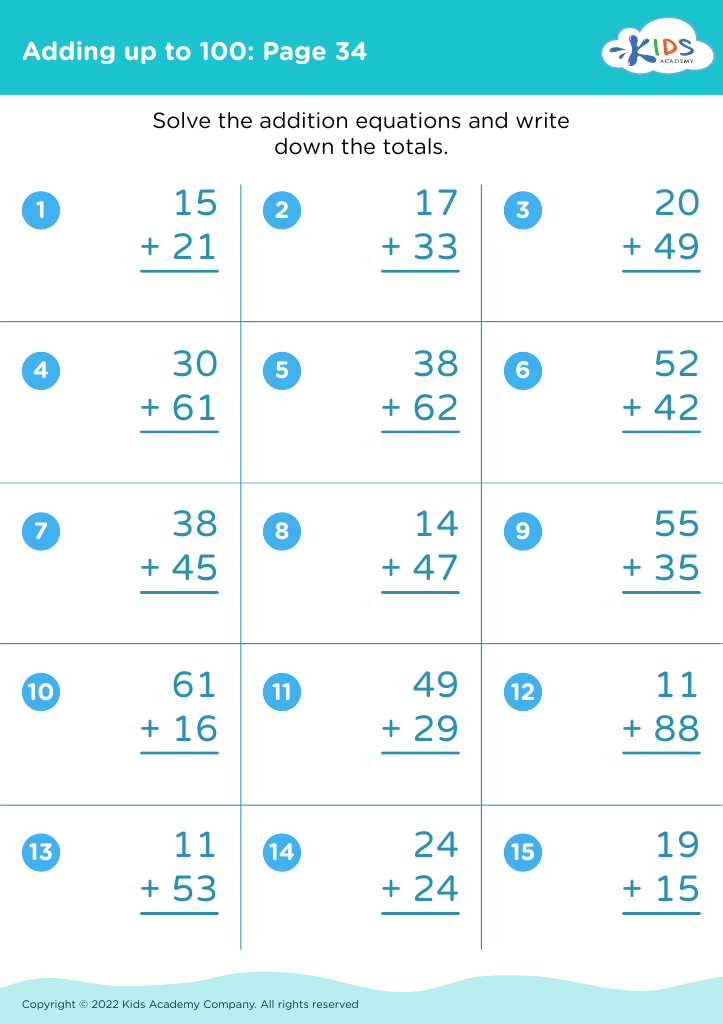
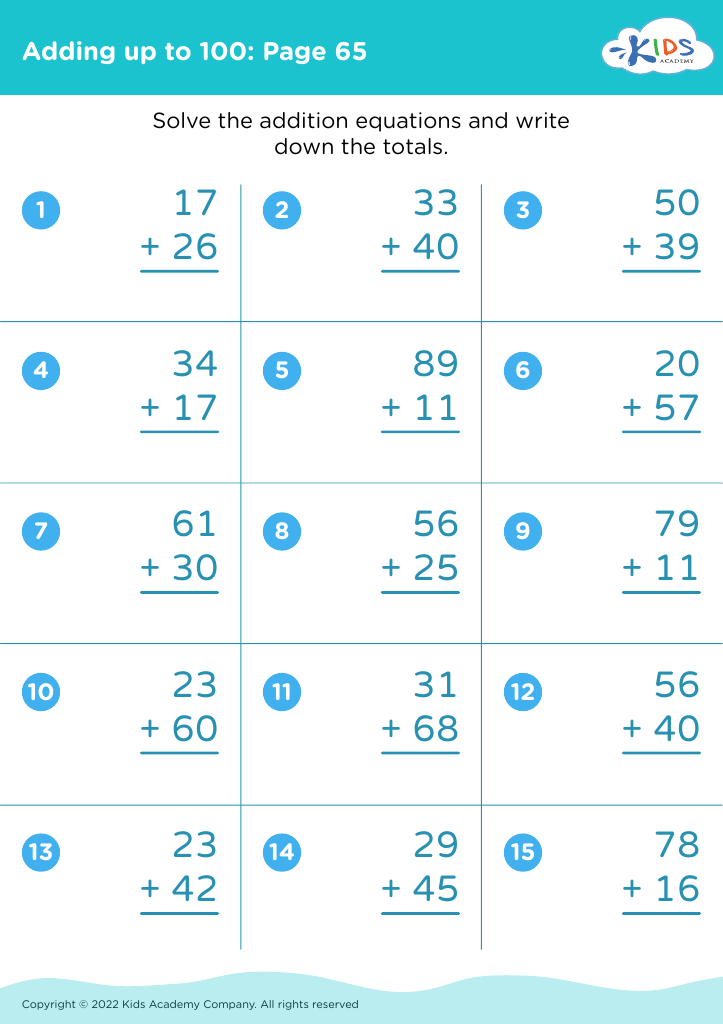
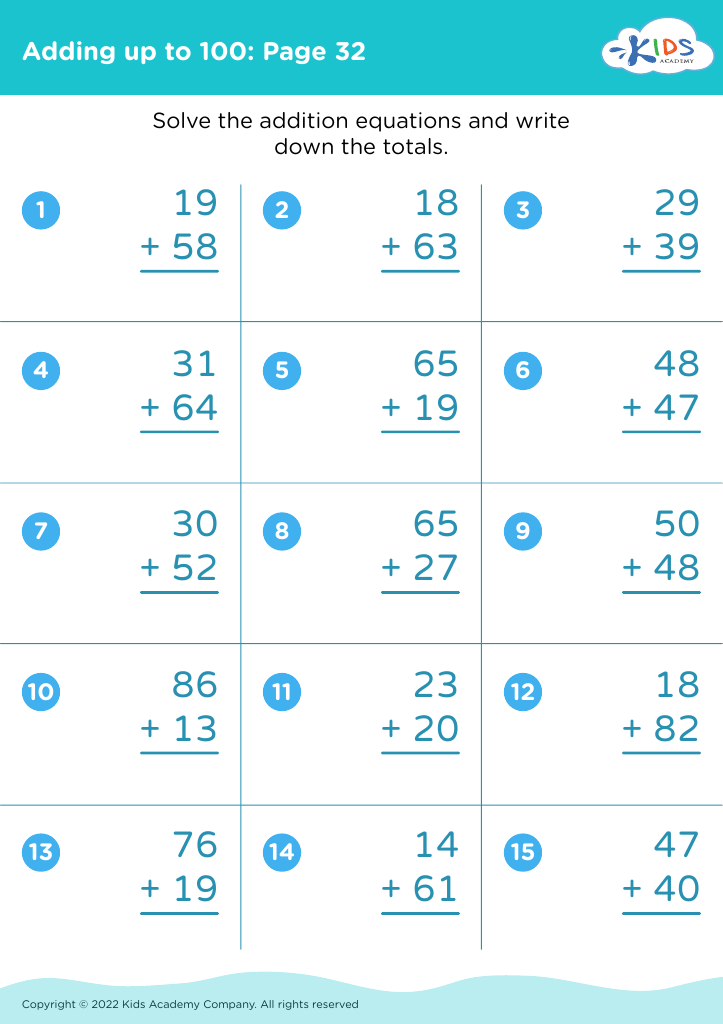
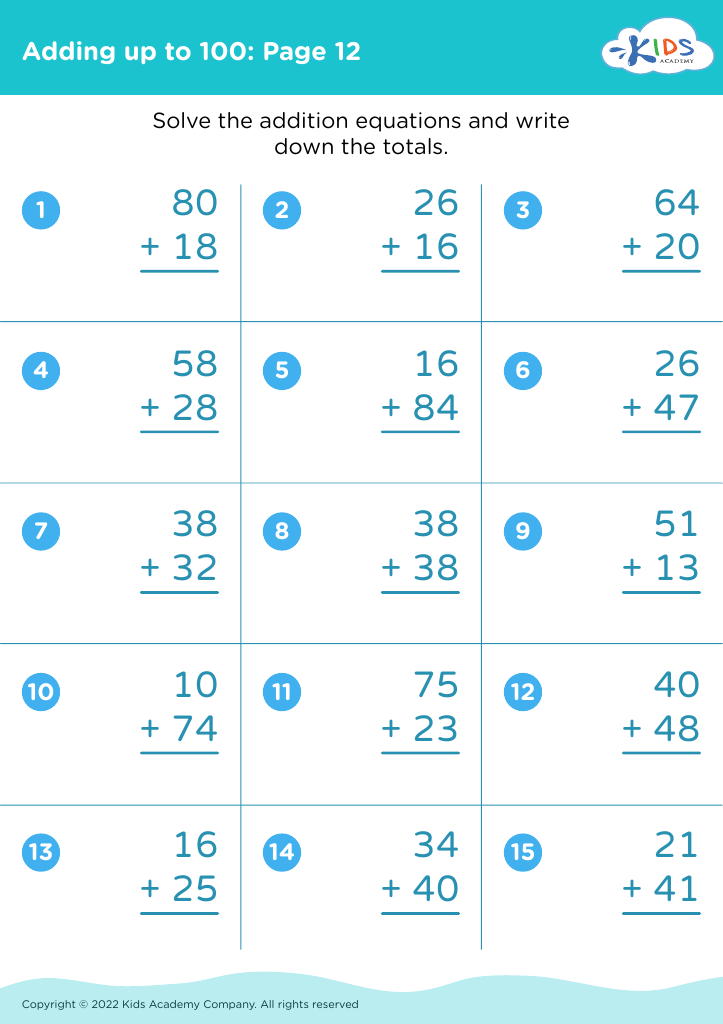
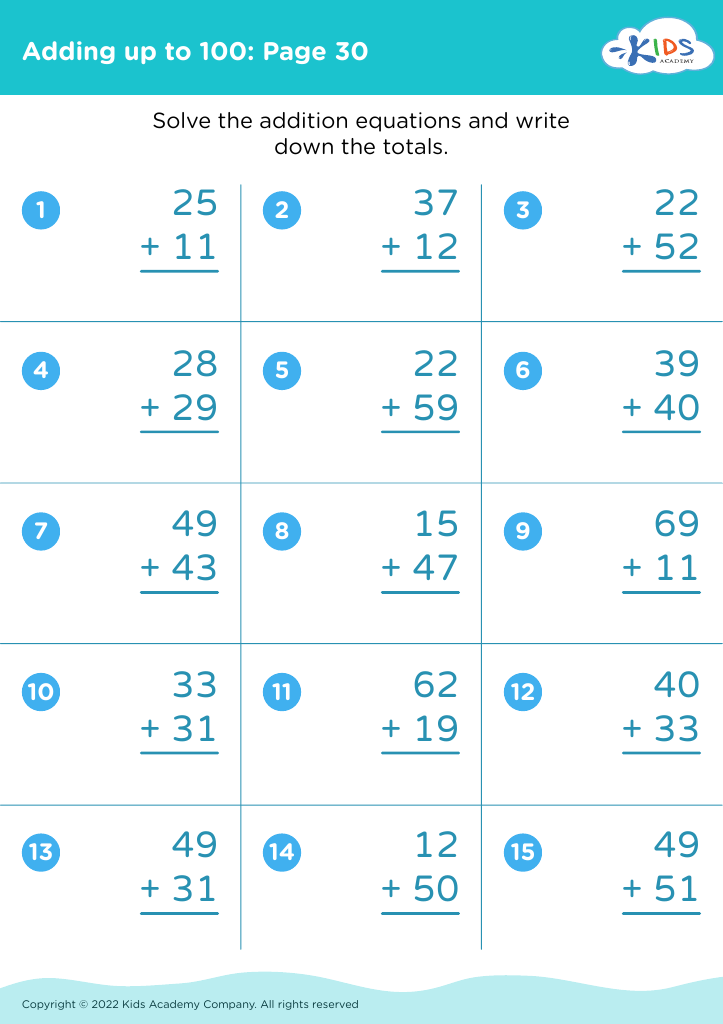
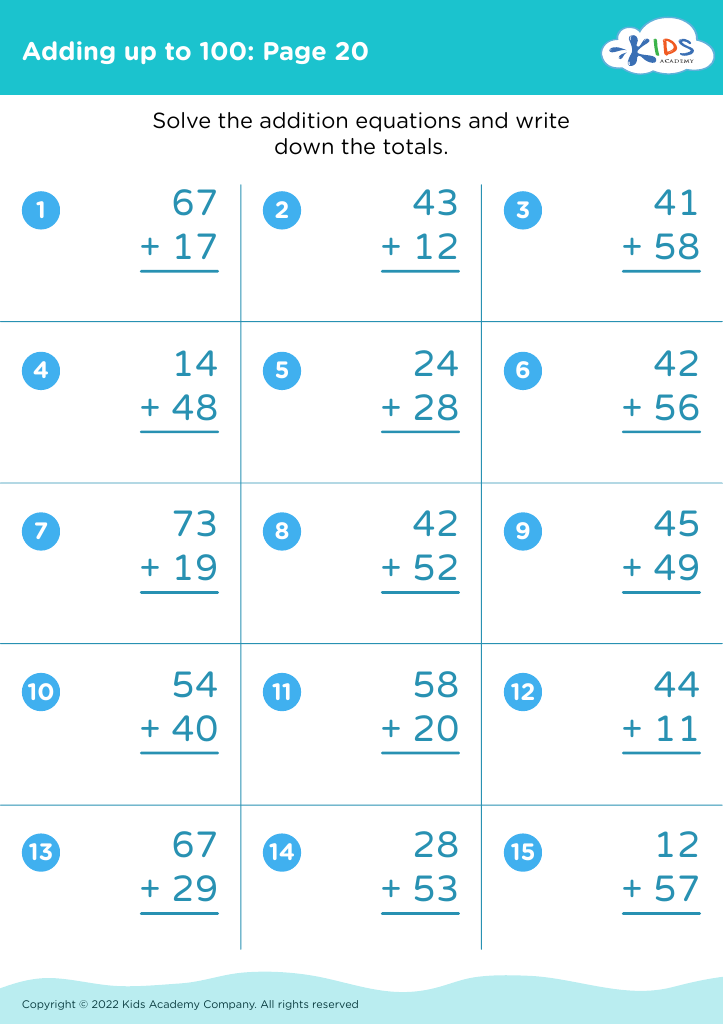
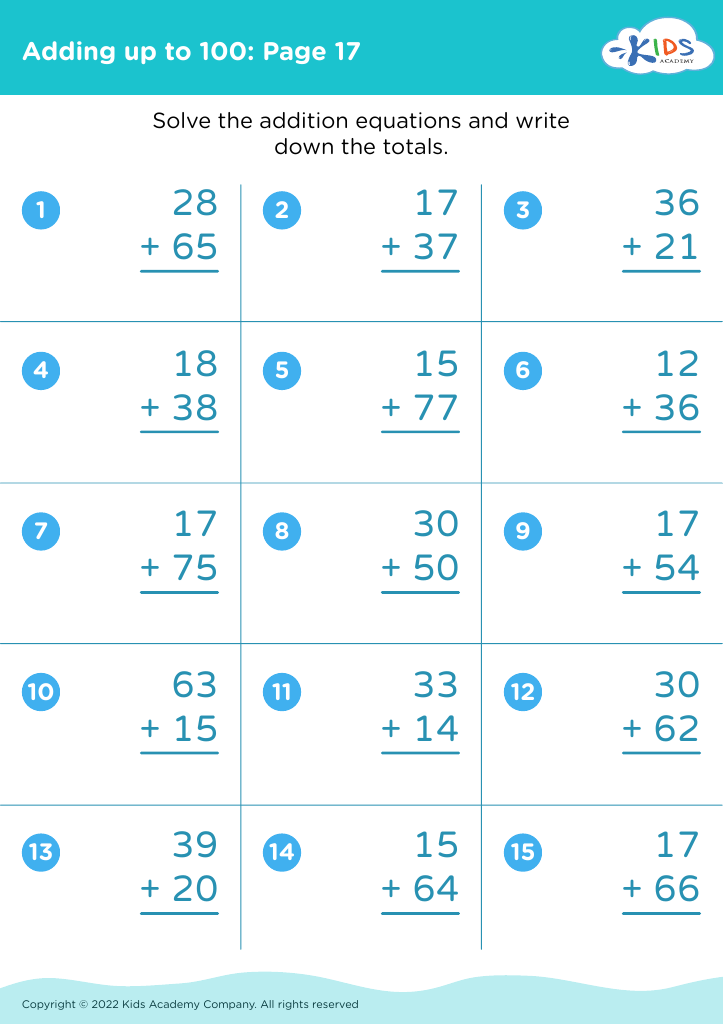
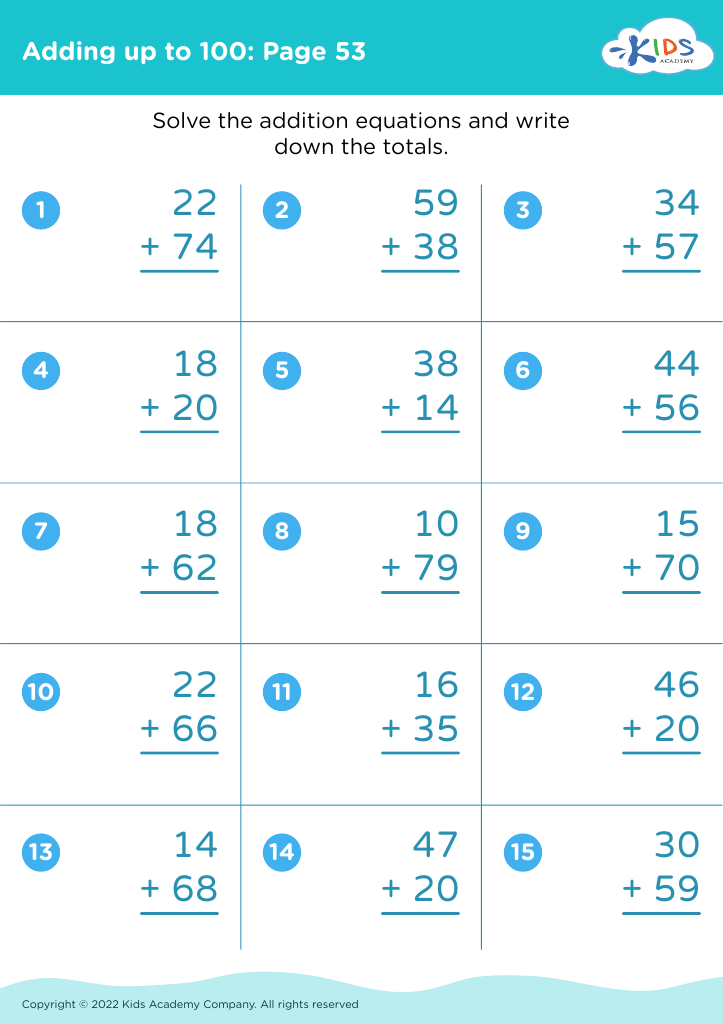
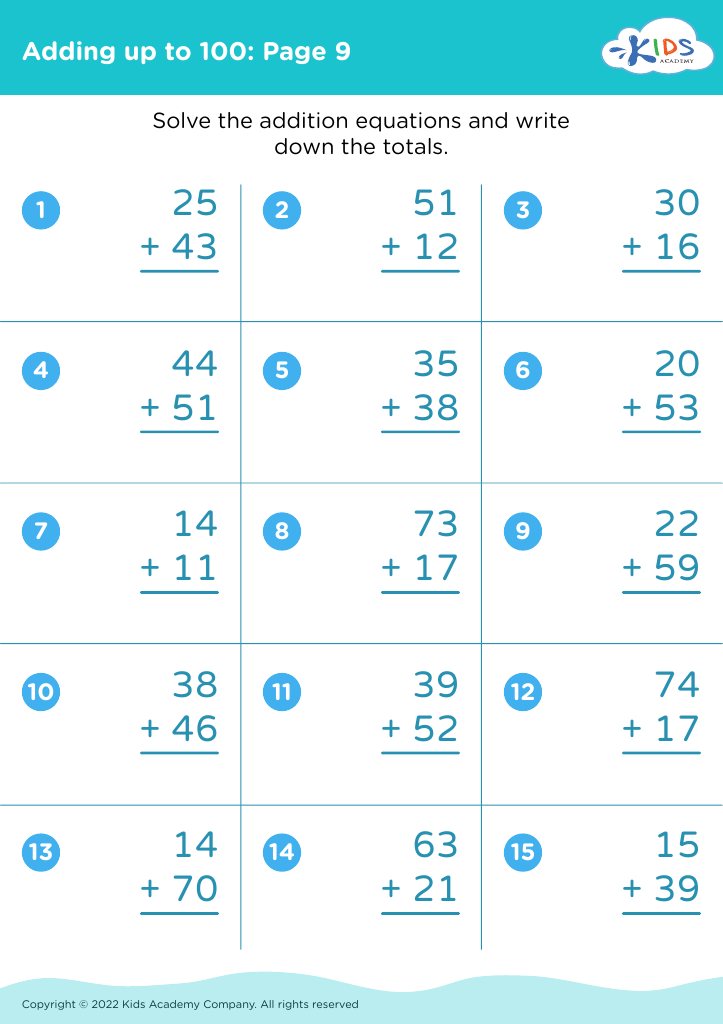
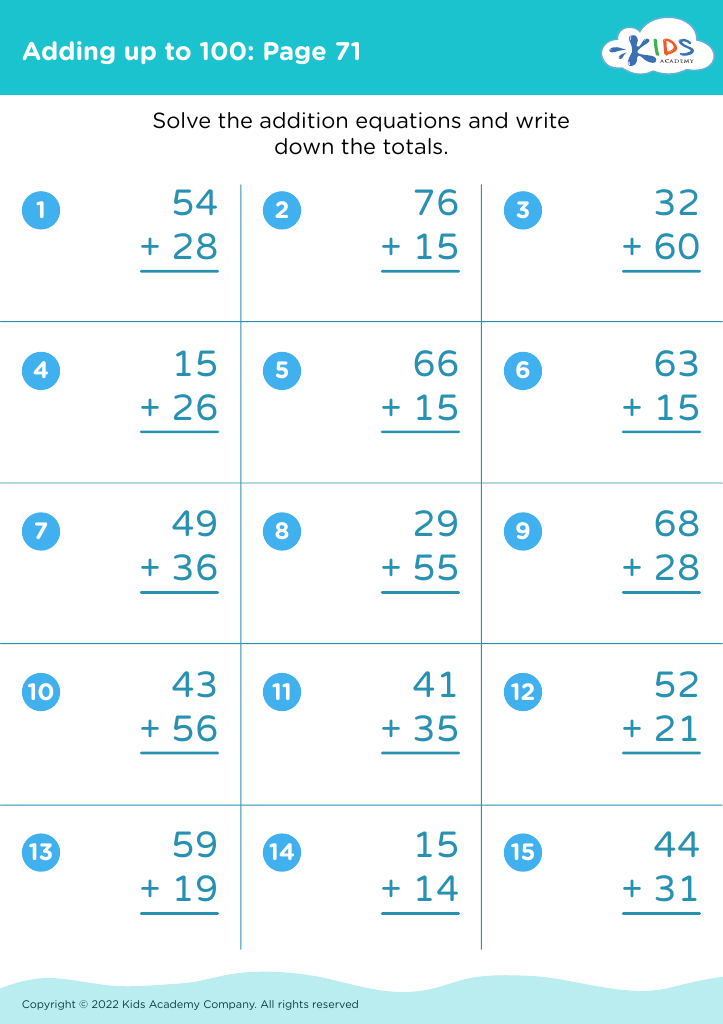
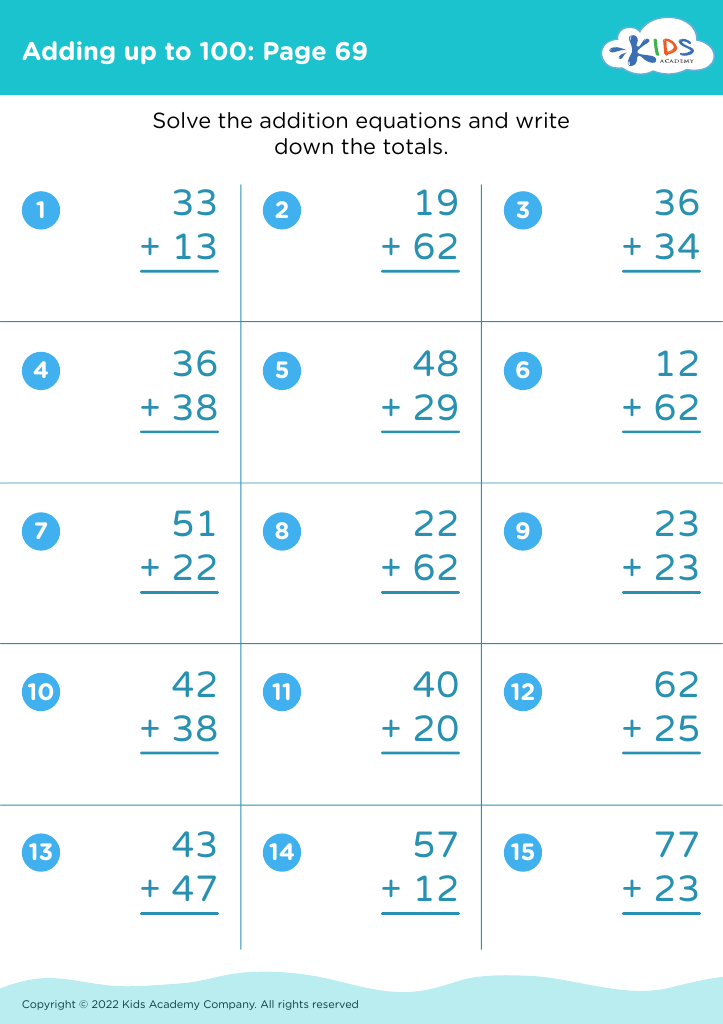
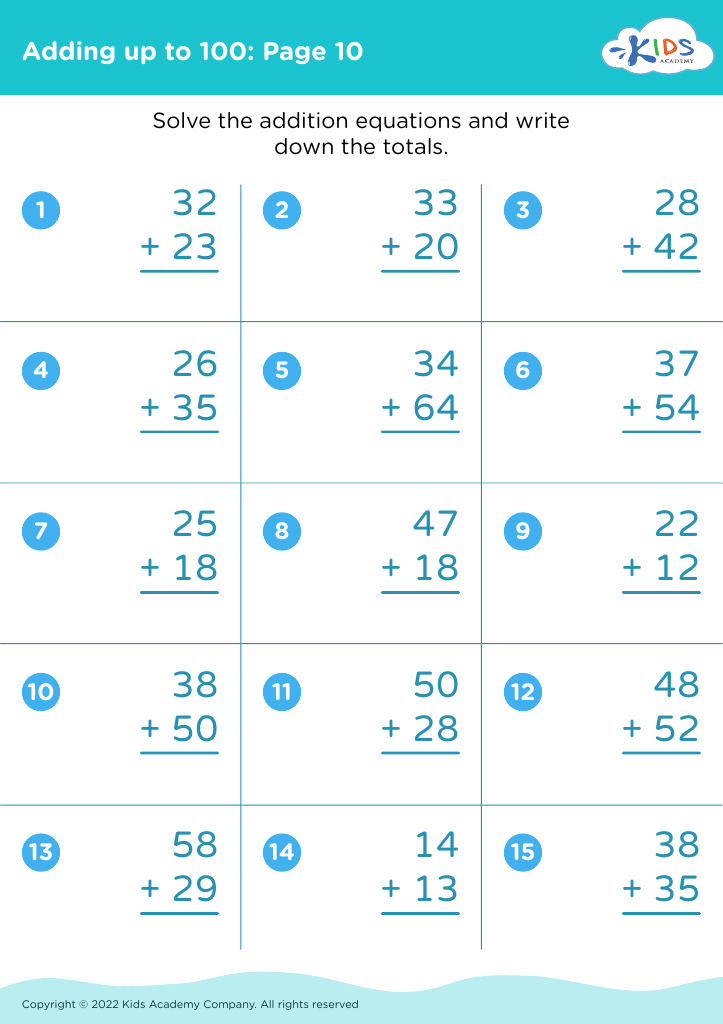
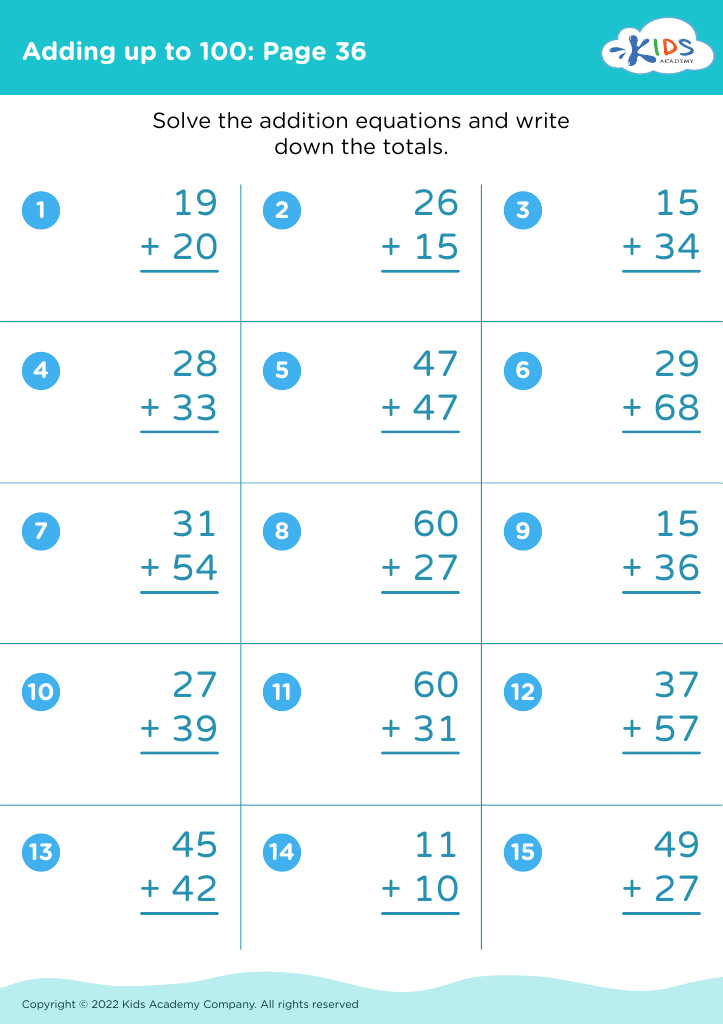


Understanding fractions and concepts like "adding up to 100" is vital for children aged 4-7 as it builds their foundational math skills, which are crucial for future learning. Early grasp of these concepts helps young learners make sense of mathematical operations and enhances critical thinking. Fractions introduce them to the idea of parts of a whole, which is fundamental in many subjects, including science and economics.
Additionally, learning to add up to 100 fosters number sense and helps children understand place value, enabling them to handle larger numbers in the future. These skills promote problem-solving abilities and confidence in using math in real-life situations, such as sharing food or money.
As parents and teachers, supporting children in these early stages encourages a positive attitude towards math and develops a strong mathematical foundation. Engaging children in activities that explore fractions and addition in a fun, hands-on manner ensures they not only learn these fundamental concepts but also enjoy the learning process. This early intervention can instill a lifelong appreciation for mathematics, ultimately helping them in more complex mathematical reasoning as they advance in school.