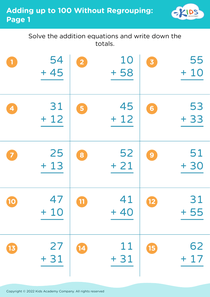
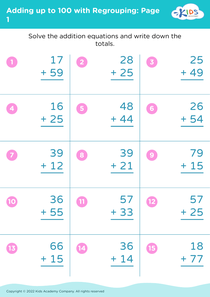
Understanding patterns Adding up to 100 Misc Worksheets for Ages 4-7
6 filtered results
-
From - To
Unlock the world of math with our "Understanding Patterns Adding Up to 100 Misc Worksheets" designed for ages 4-7! This resource provides engaging, age-appropriate activities that help young learners recognize and understand patterns, an essential skill in mathematics. With vibrant illustrations and easy-to-follow exercises, children will explore various patterns while practicing addition up to 100. These worksheets aim to build critical thinking and problem-solving skills in a fun, interactive way. Whether in the classroom or at home, these activities will enhance your child's confidence in math, making early learning both enjoyable and effective. Start your child's math journey today!
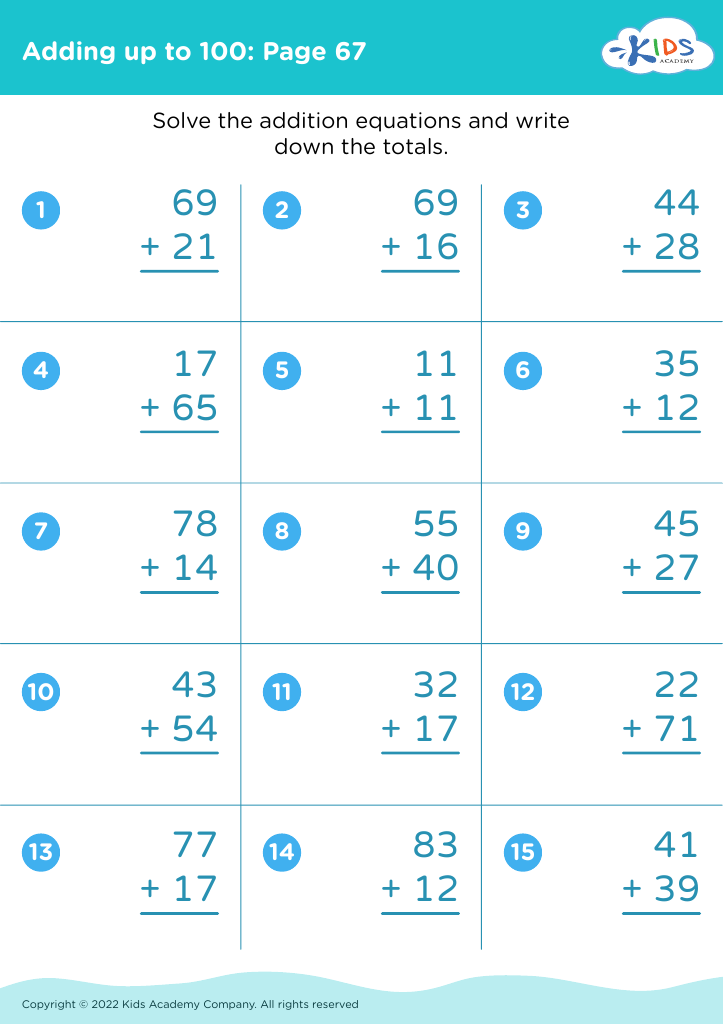
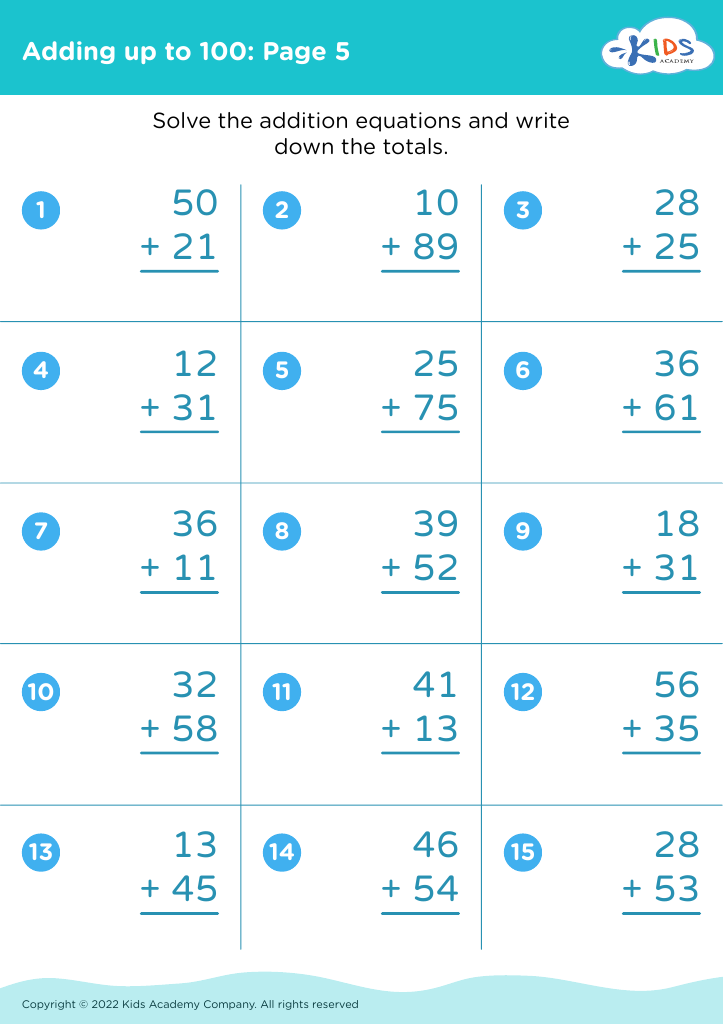
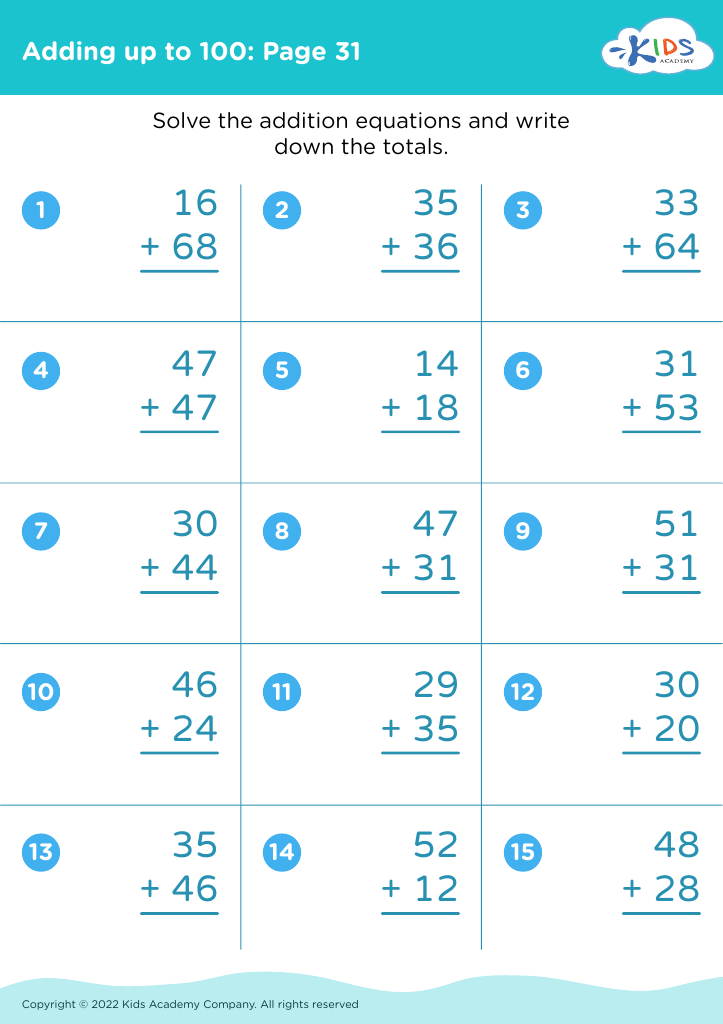
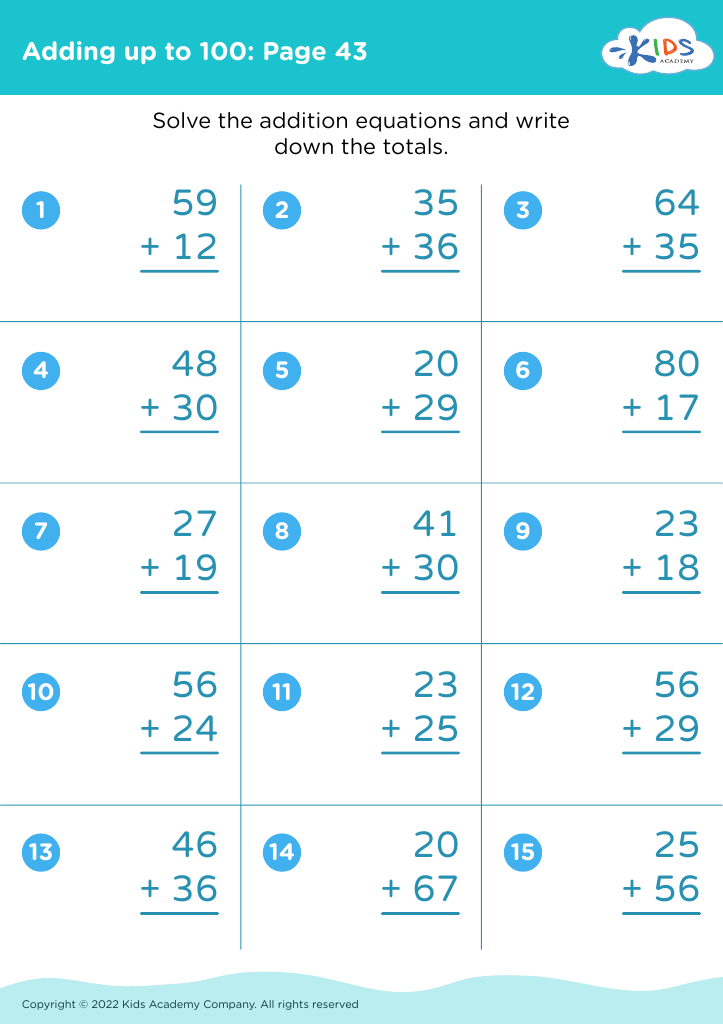
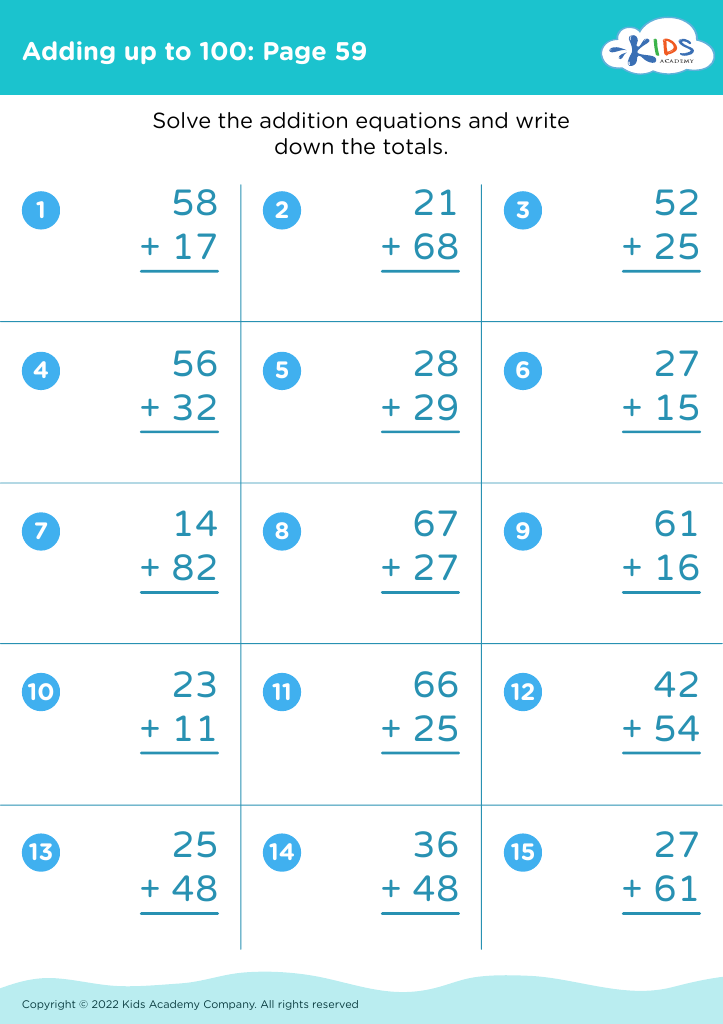
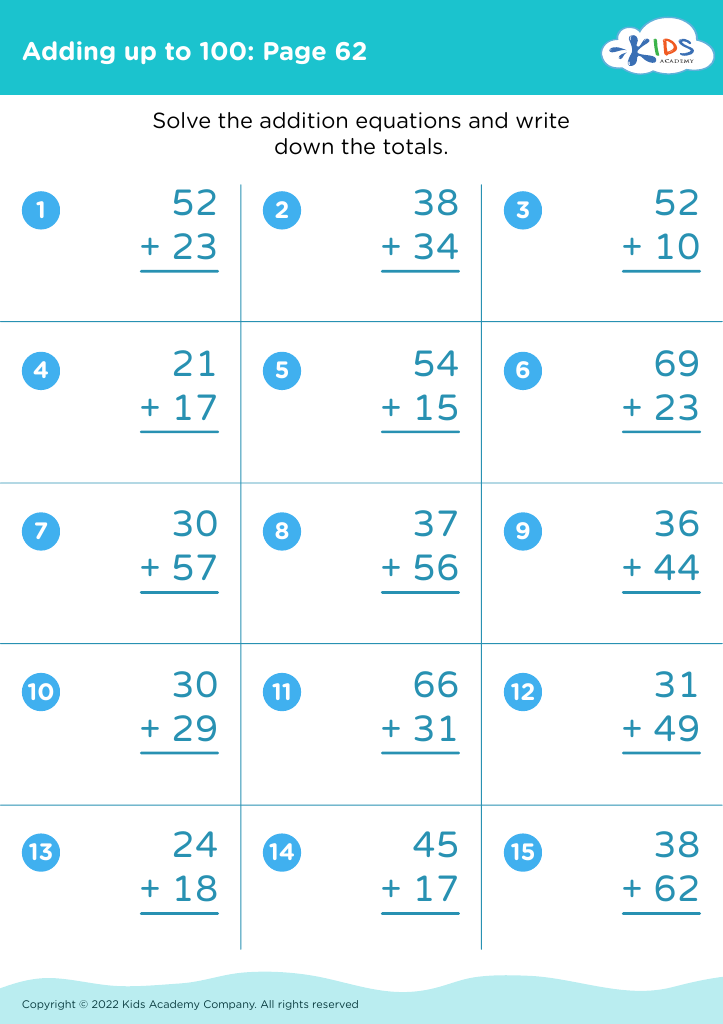


Understanding patterns and learning how to add up to 100 are foundational skills for young children, particularly for those aged 4-7. For parents and teachers alike, helping children grasp these concepts is essential for several reasons.
Firstly, recognizing patterns is critical in developing early math skills. When children identify patterns, they enhance their critical thinking and problem-solving abilities. These skills lay the groundwork for more complex math concepts in the future. Furthermore, pattern recognition is not just applicable to math; it enhances logic and reasoning, abilities that are crucial throughout their education.
Adding up to 100 introduces children to number relationships and place value, crucial aspects of mathematics. Mastering basic addition using manageable numbers fosters confidence, encouraging children to tackle more challenging math as they progress.
Moreover, engaging children in these activities promotes social interaction and cooperative learning. Working on patterns and addition can be structured through games, making learning fun and interactive.
Lastly, these skills correlate with broader academic success. A strong foundation in early math can significantly impact a child's lifelong learning trajectory. Therefore, it is vital for parents and teachers to invest time in these early concepts, ensuring children flourish academically and develop a positive attitude towards math from an early age.