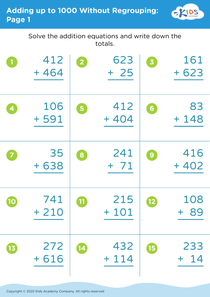
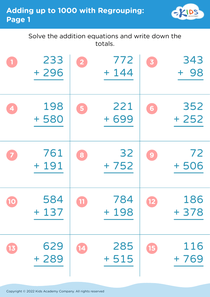
Counting practice Adding up to 1000 Misc Worksheets for Ages 4-7
8 filtered results
-
From - To
Enhance your child's counting skills with our engaging Counting Practice worksheets, designed for ages 4-7. These printables focus on adding up to 1000, making math fun and interactive. Each worksheet is thoughtfully crafted to help young learners develop their counting and addition skills while boosting confidence in their mathematical abilities. From colorful visuals to stimulating activities, these worksheets are perfect for classroom use or home practice. Bring joy to learning with varied exercises that cater to different learning styles, ensuring effective and enjoyable counting practice. Download your free worksheets today and watch your child's math skills blossom!
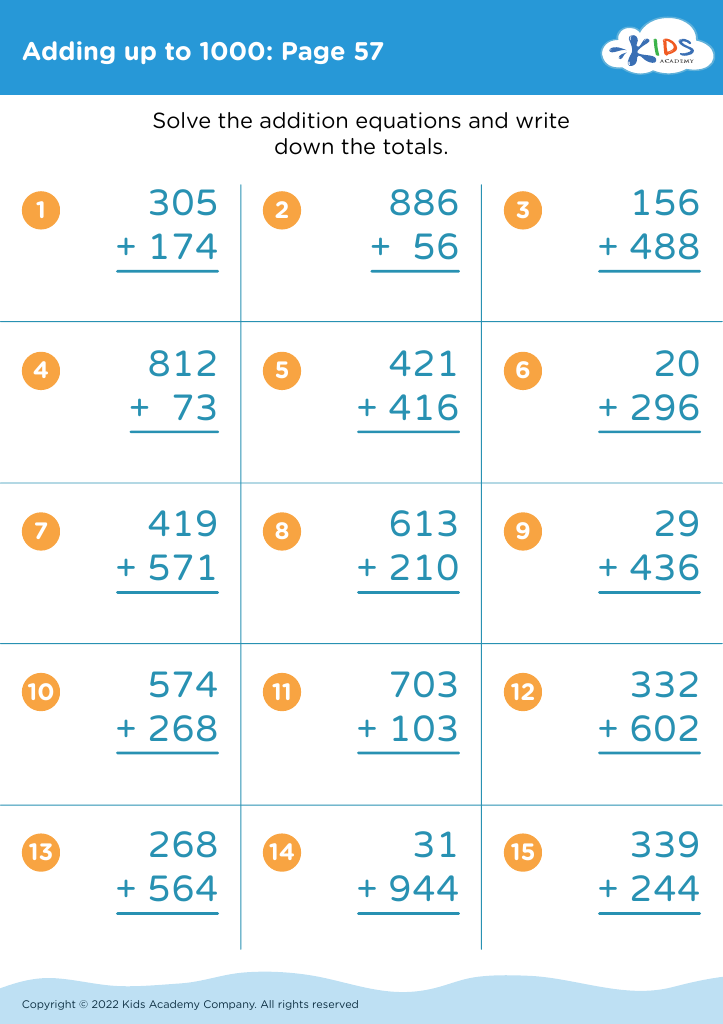
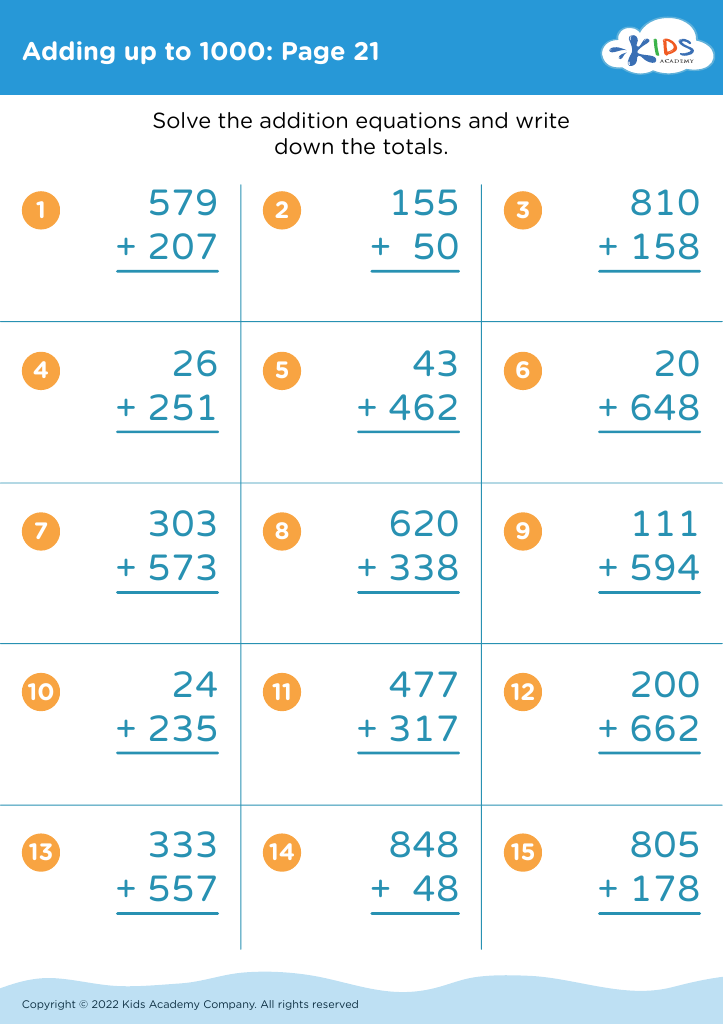
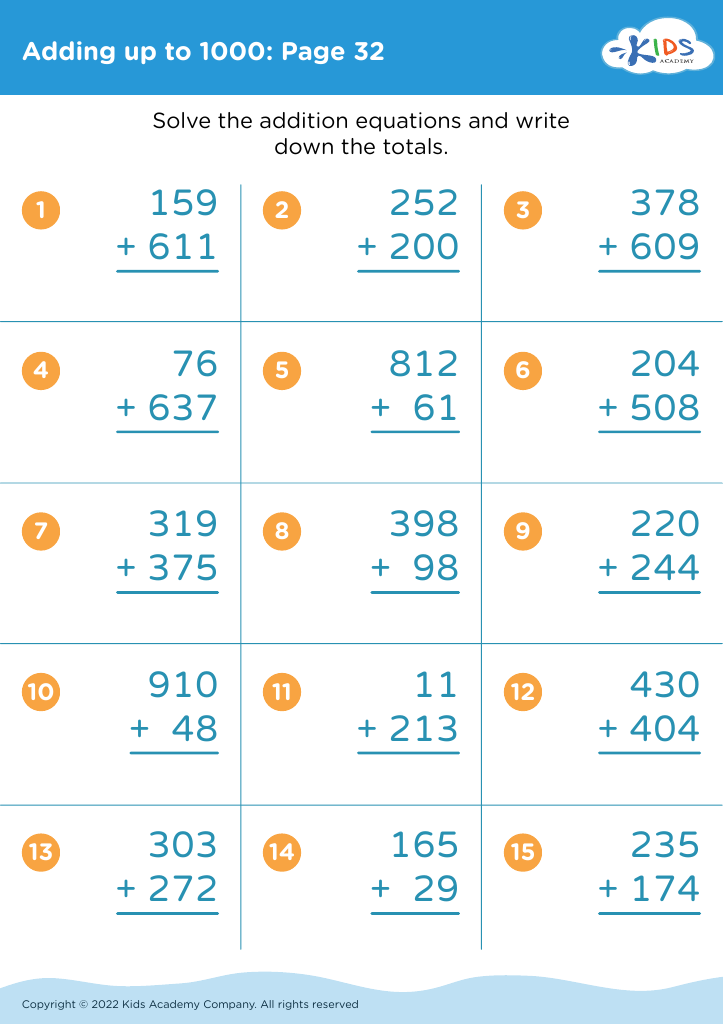
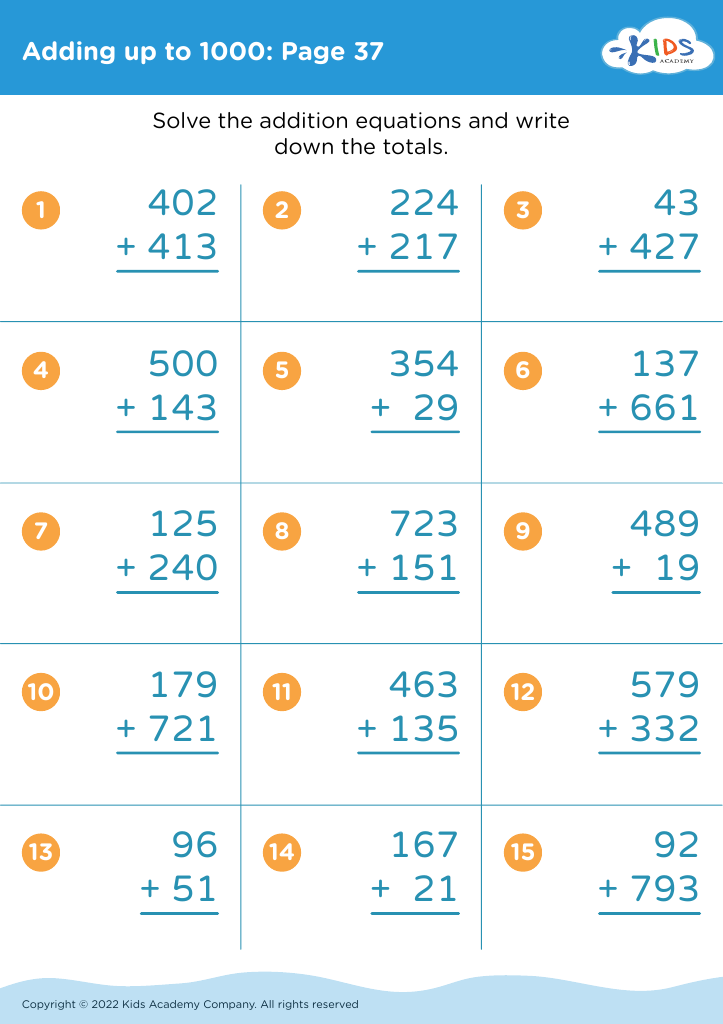
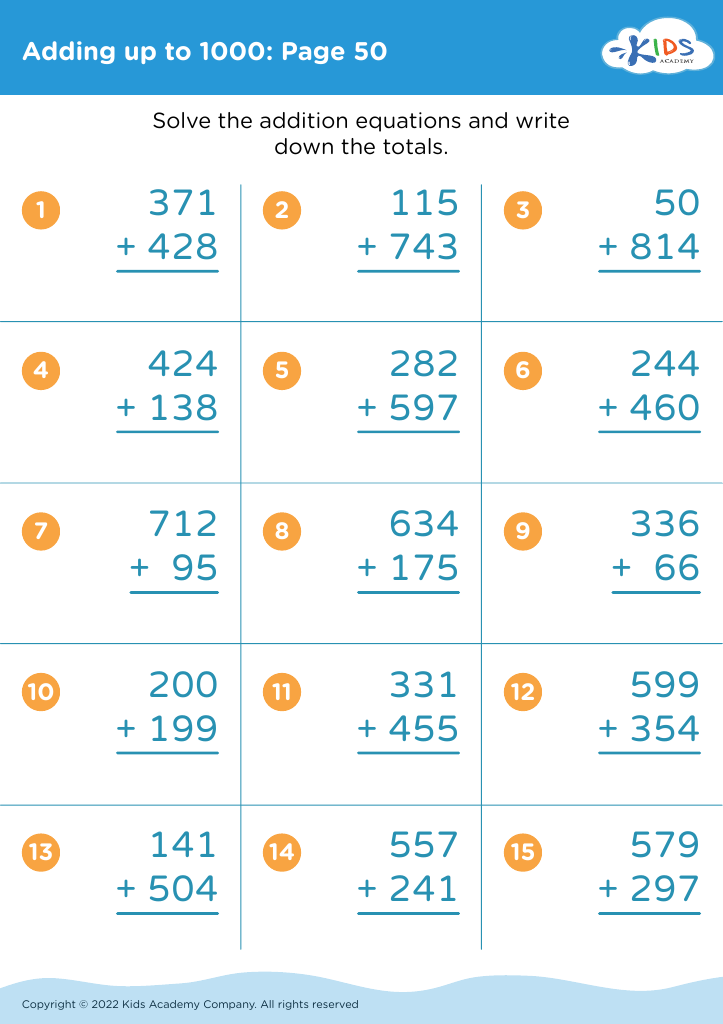
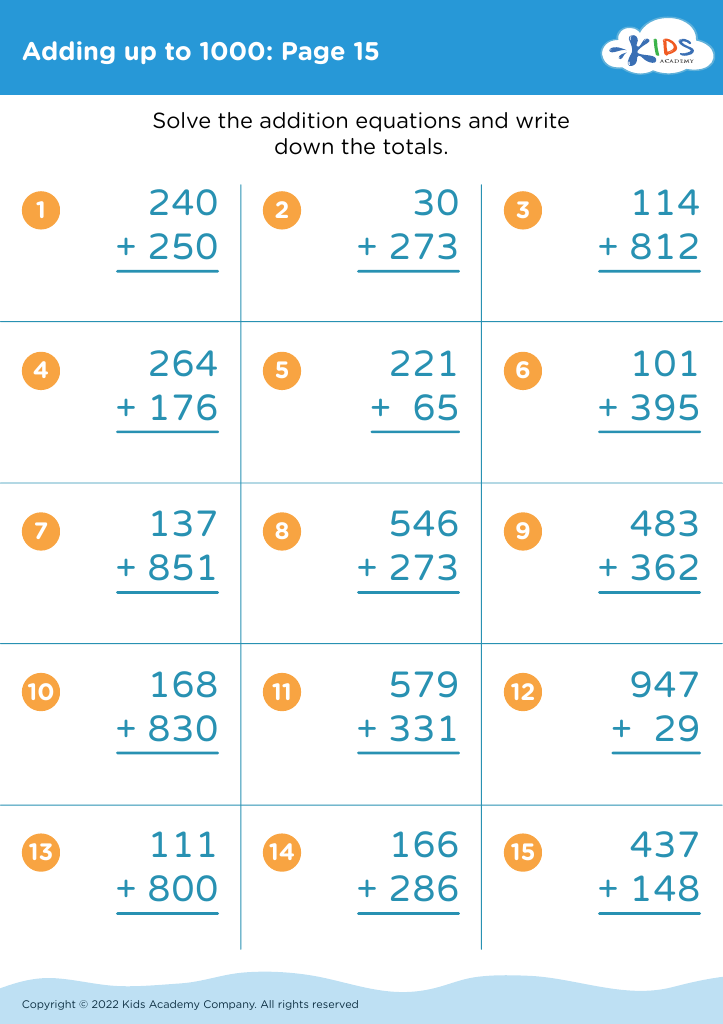
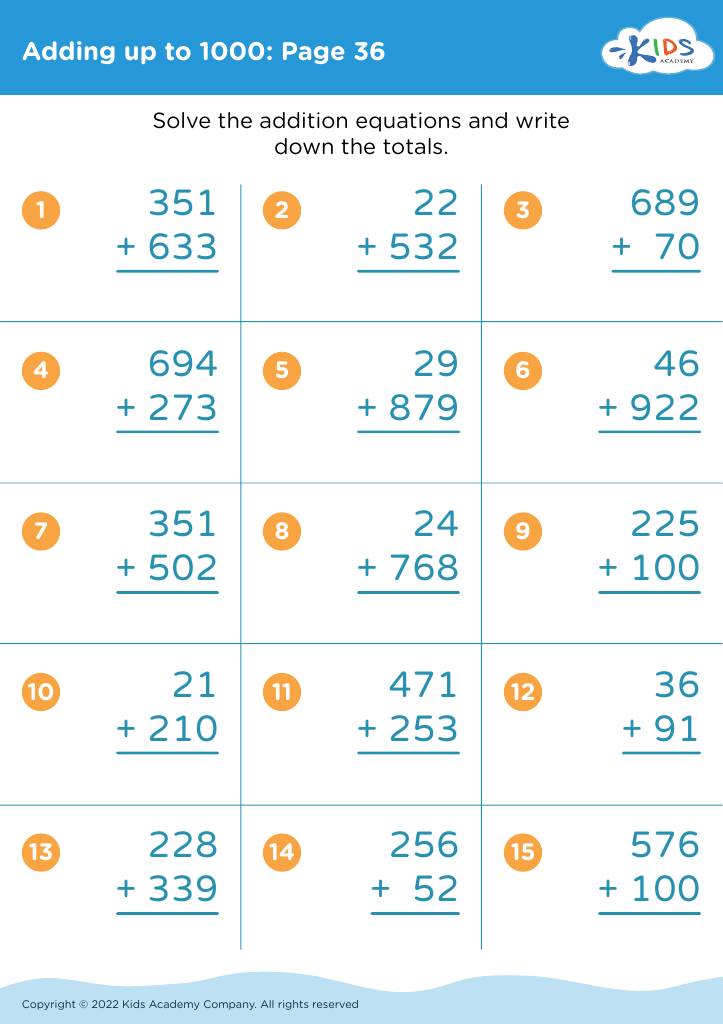
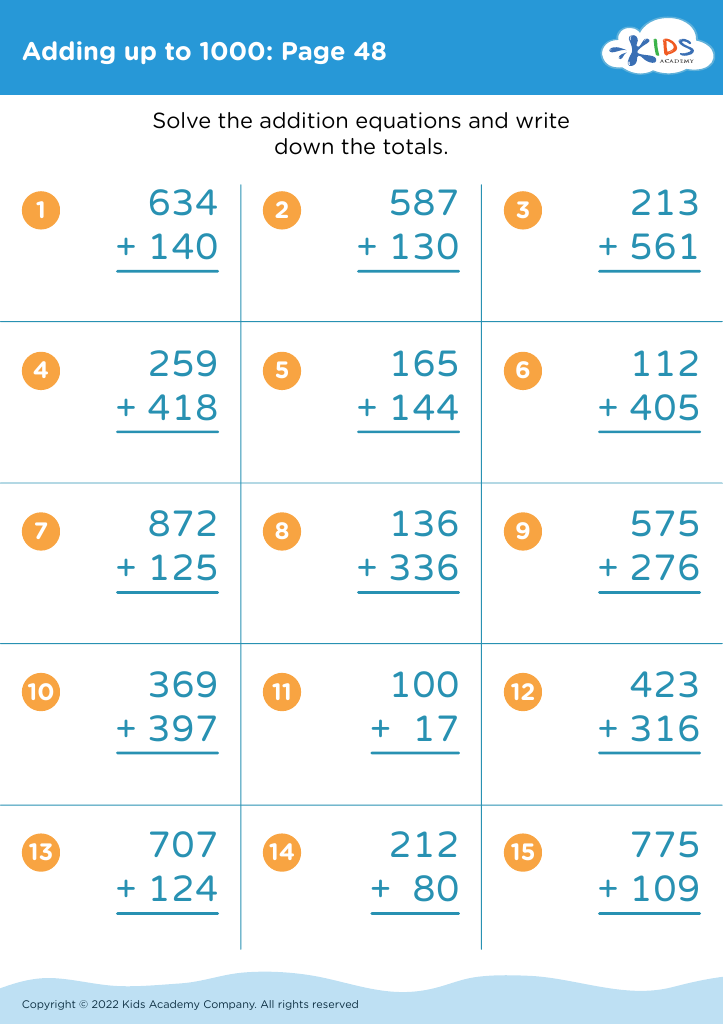


Counting practice, particularly focusing on adding up to 1000 for children aged 4-7, is essential for several critical reasons. First, it lays the foundational skills for numeracy that will be built upon in later years. This age range is pivotal for cognitive development, wherein children begin to understand the concepts of quantity, values, and mathematical operations.
Second, practice with counting and addition promotes strong problem-solving abilities. Engaging with numbers helps children develop logical thinking and the ability to approach challenges systematically. As they tackle addition problems, they learn to recognize patterns, which is crucial for progressing in mathematics.
Moreover, counting helps in developing fine motor skills through activities involving writing numbers or manipulating physical objects for counting. This tactile experience enhances their coordination and focus.
Additionally, instilling confidence in early math skills can foster a positive attitude toward learning and problem-solving throughout a child's life. When parents and teachers prioritize these practices, they reinforce the importance of education and create a supportive environment for children’s growth. Ultimately, counting and addressing larger numbers prepares young learners for future academic success in various fields.