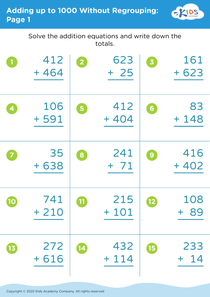
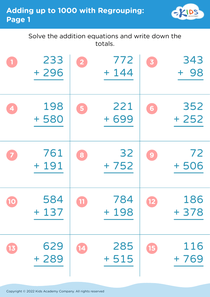
Critical Thinking Adding up to 1000 Misc Worksheets for Ages 4-7
3 filtered results
-
From - To
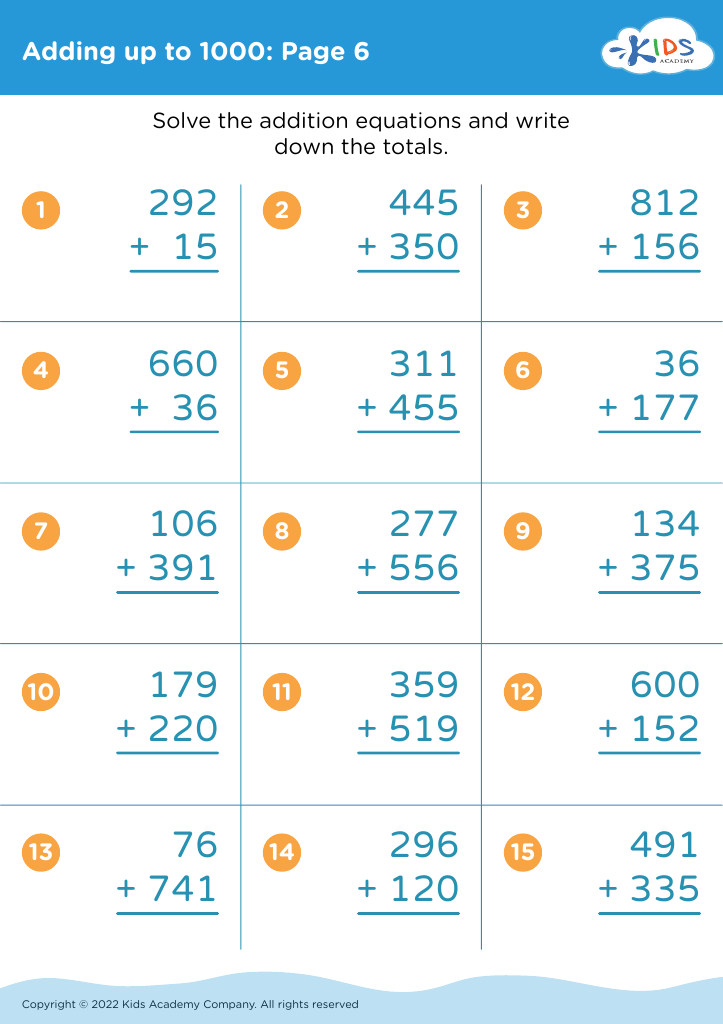
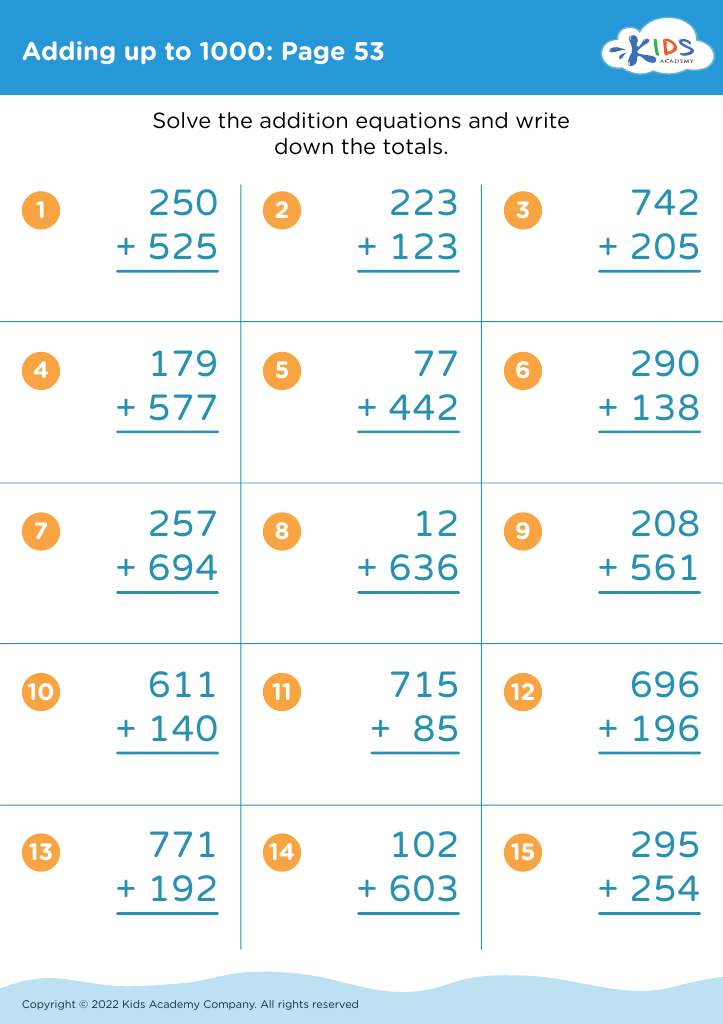
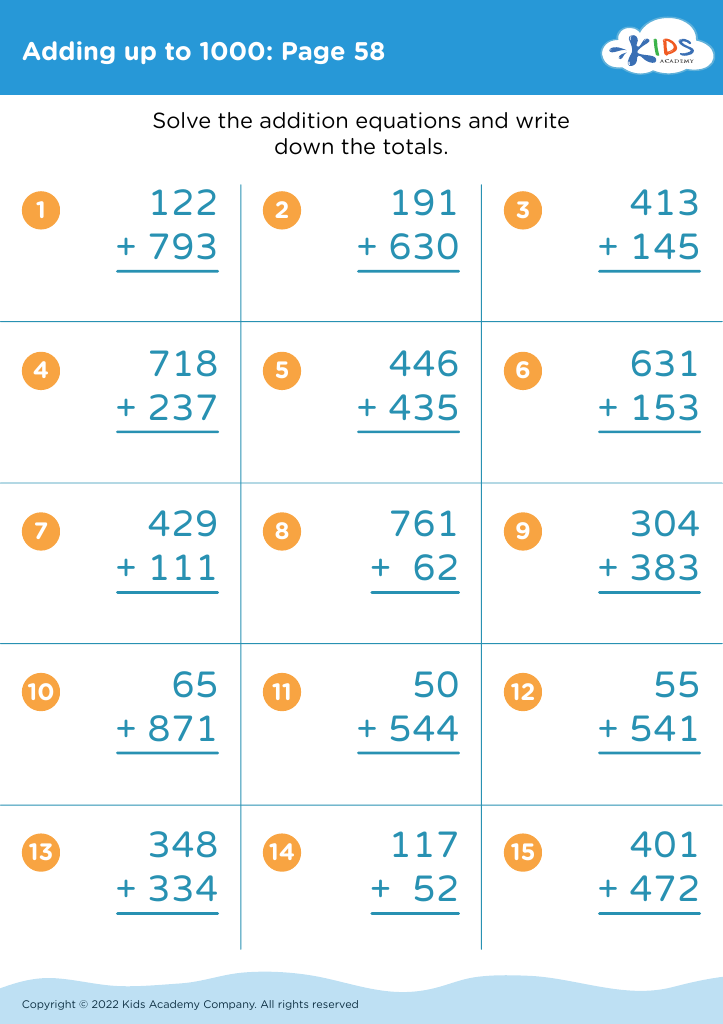
Discover our engaging "Critical Thinking Adding Up to 1000" worksheets, designed specifically for children aged 4-7! These fun and colorful activities promote essential math skills while enhancing critical thinking abilities. With a variety of exercises that encourage problem-solving, pattern recognition, and logical reasoning, kids will eagerly explore the world of numbers. Our worksheets make learning interactive and enjoyable, ensuring young learners build a strong foundation in mathematics. Each printable sheet provides opportunities for children to think independently and creatively as they add their way up to 1000. Perfect for homeschooling, supplemental learning, or classroom use, these worksheets make math a breeze!


Critical thinking is an essential skill for young children, particularly those aged 4-7, as it lays the foundation for lifelong learning and problem-solving abilities. Parents and teachers should care about fostering critical thinking for several key reasons.
Firstly, critical thinking encourages curiosity, helping children ask questions and seek deeper understanding of the world around them. Engaging in activities that promote questioning fosters a love of learning and exploration.
Secondly, teaching critical thinking skills enhances decision-making abilities. Children learn to assess information, evaluate options, and make informed choices, skills crucial for success in both academic and everyday situations.
Furthermore, critical thinking nurtures creativity. By encouraging children to brainstorm multiple solutions to a problem, they learn to approach challenges with an open mind and develop innovative ideas.
Lastly, in our rapidly changing world, the ability to analyze information critically is crucial for navigating complex issues. Teaching these skills early prepares children to engage thoughtfully with diverse perspectives.
Incorporating critical thinking activities, such as problem-solving games or open discussions, into early education can therefore accelerate cognitive development and instill a sense of confidence, making it a pressing priority for parents and educators alike.