Fine Motor Skills Adding up to 1000 Misc Worksheets for Ages 4-7
5 filtered results
-
From - To
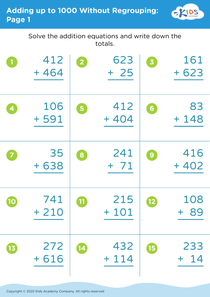
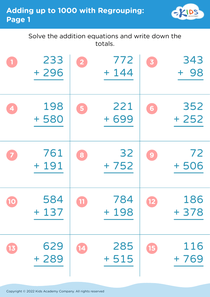
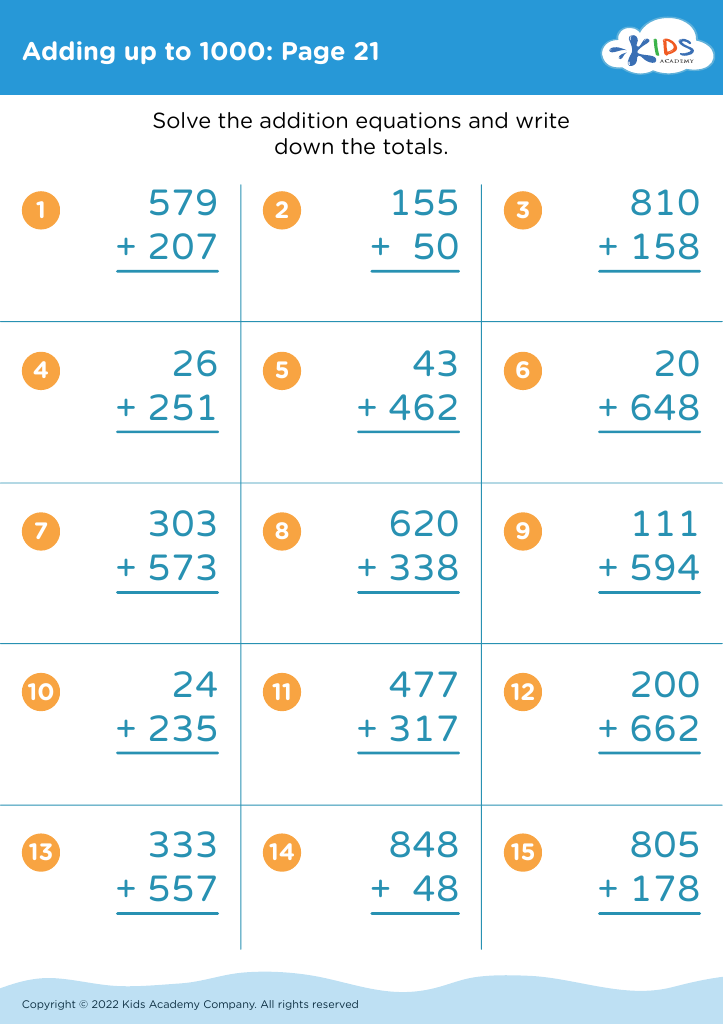
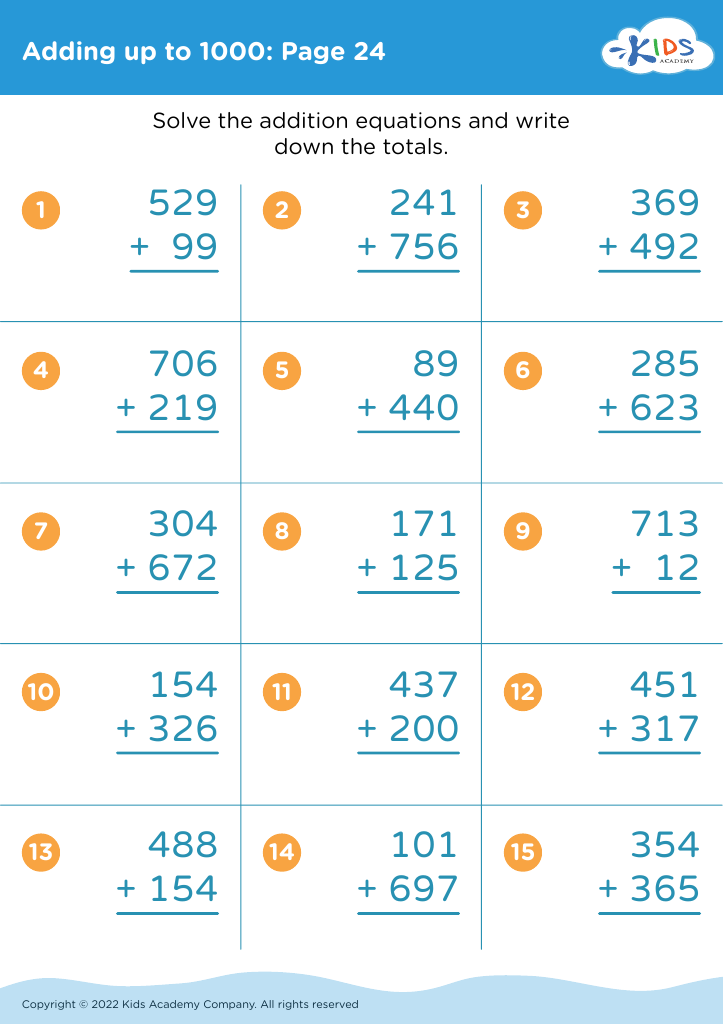
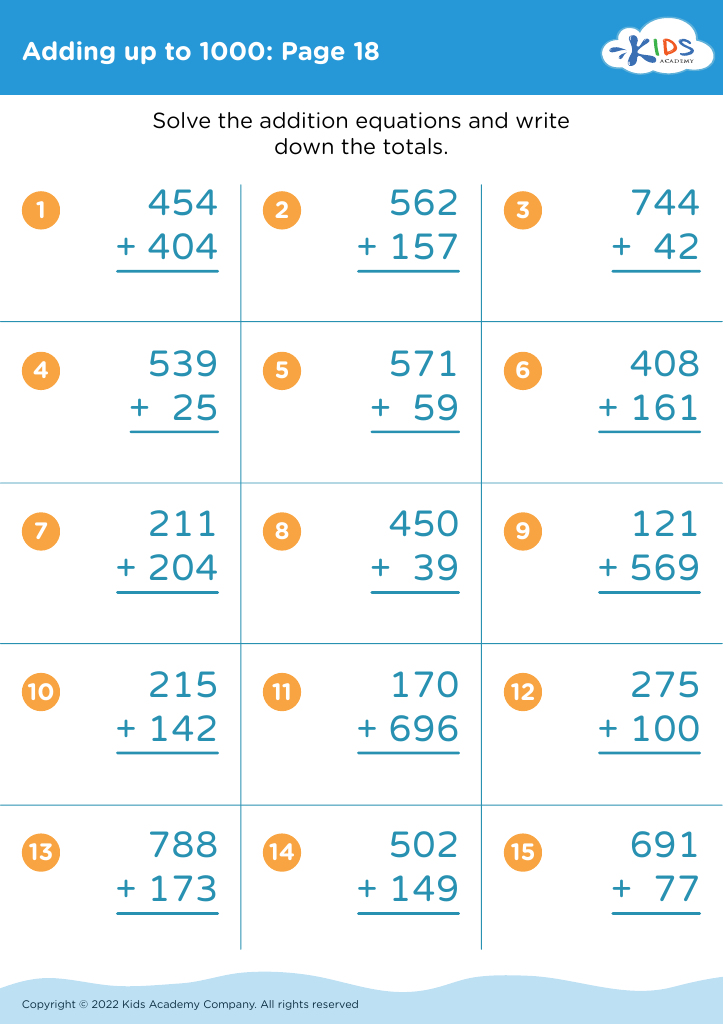
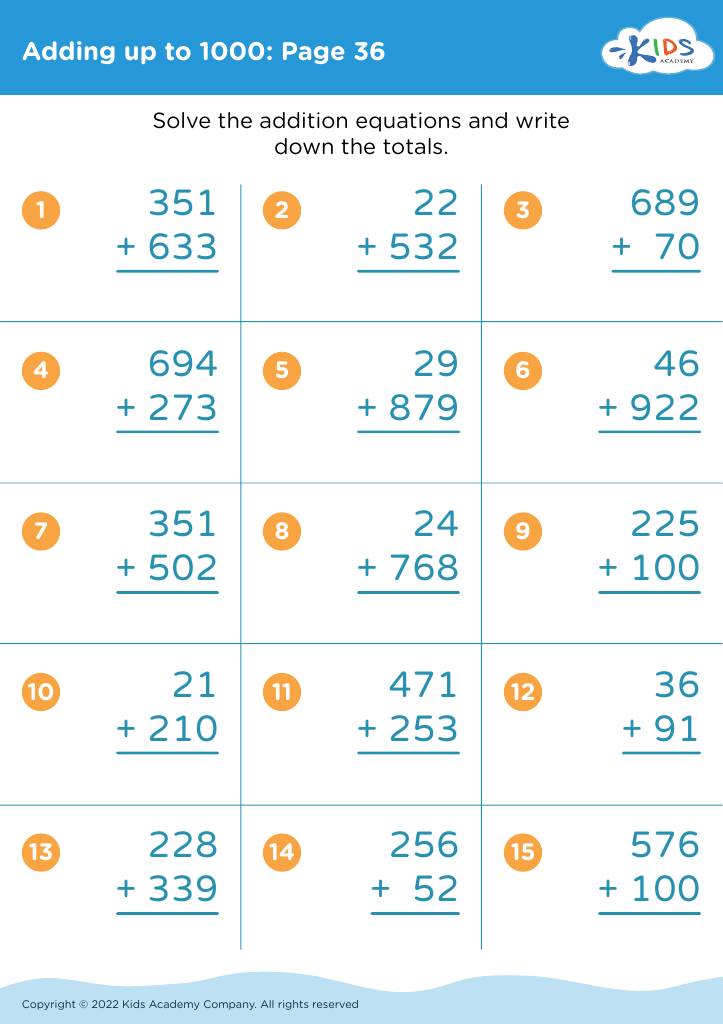
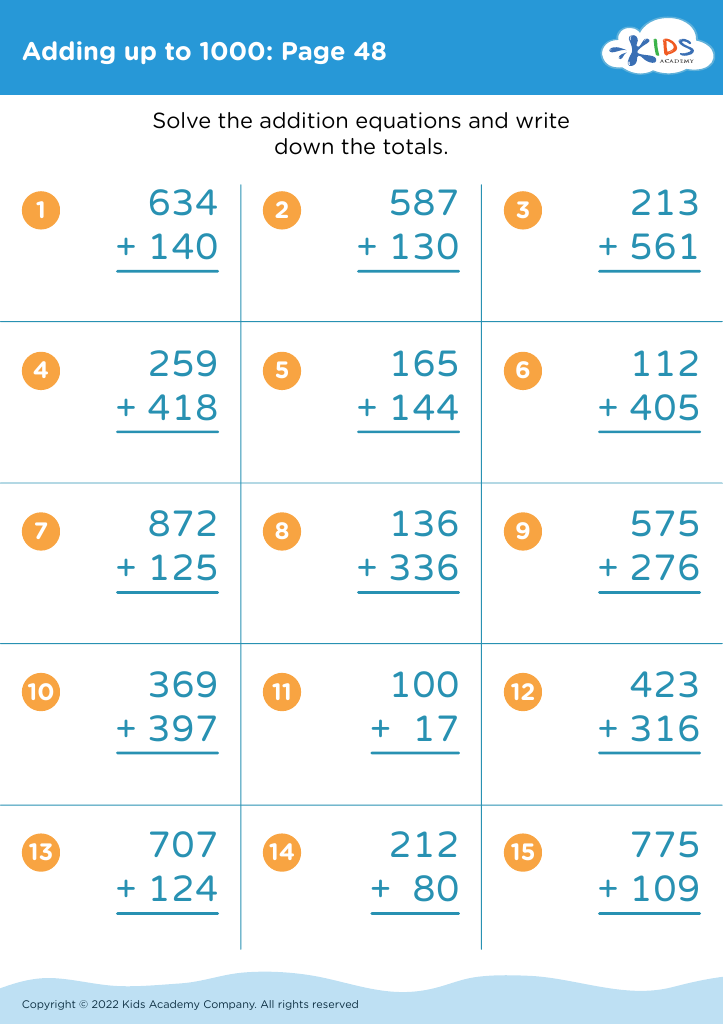
Unlock your child's potential with our "Fine Motor Skills Adding up to 1000 Misc Worksheets" designed for ages 4-7! These engaging printables not only enhance math skills by introducing numbers and concepts up to 1000 but also focus on developing essential fine motor abilities. Each worksheet encourages young learners to practice writing, tracing, and manipulating various materials, fostering creativity and concentration. As children work through each activity, they build confidence in their academic journey while refining skills critical for everyday tasks. Explore a treasure trove of fun, interactive worksheets that cater to diverse learning styles and make learning an enjoyable adventure!


Fine motor skills are essential for young children's development, particularly for those aged 4-7, as they lay the groundwork for various important tasks. These skills involve the coordination of small muscles in the hands and fingers, allowing children to perform everyday activities like buttoning shirts, tying shoelaces, and holding pencils.
Parents and teachers should care about fine motor skills because they play a vital role in self-sufficiency and confidence. Children who struggle with these skills may find it difficult to participate in classroom activities, leading to frustration and reluctance to engage in learning. Finely-tuned dexterity is crucial for academic success, especially in early writing tasks.
Furthermore, fine motor skills contribute to cognitive development. Activities like cutting with scissors or manipulating small objects enhance hand-eye coordination and spatial awareness, promoting critical thinking. They can also foster creativity through art projects, which can positively impact a child's willingness to explore and learn.
Building fine motor skills can be fun and engaging through games, crafts, and activities that promote exploration and play. By prioritizing these skills, parents and teachers can help lay a solid foundation for children's overall growth and academic progress.