Fraction simplification Adding up to 1000 Misc Worksheets for Ages 4-7
5 filtered results
-
From - To
Introduce your child to the captivating world of fractions with our "Fraction Simplification Adding up to 1000 Misc Worksheets" specially crafted for ages 4-7. These engaging resources help young learners grasp fundamental math concepts through fun and interactive exercises. Each worksheet is designed to simplify fractions and build a solid foundation in addition, promoting confidence and enjoyment in math. Perfect for in-class activities or at-home practice, these worksheets transform complex ideas into manageable and exciting challenges. Nurture your child’s early math skills with Kids Academy's expertly developed materials. Enhance their learning journey today!
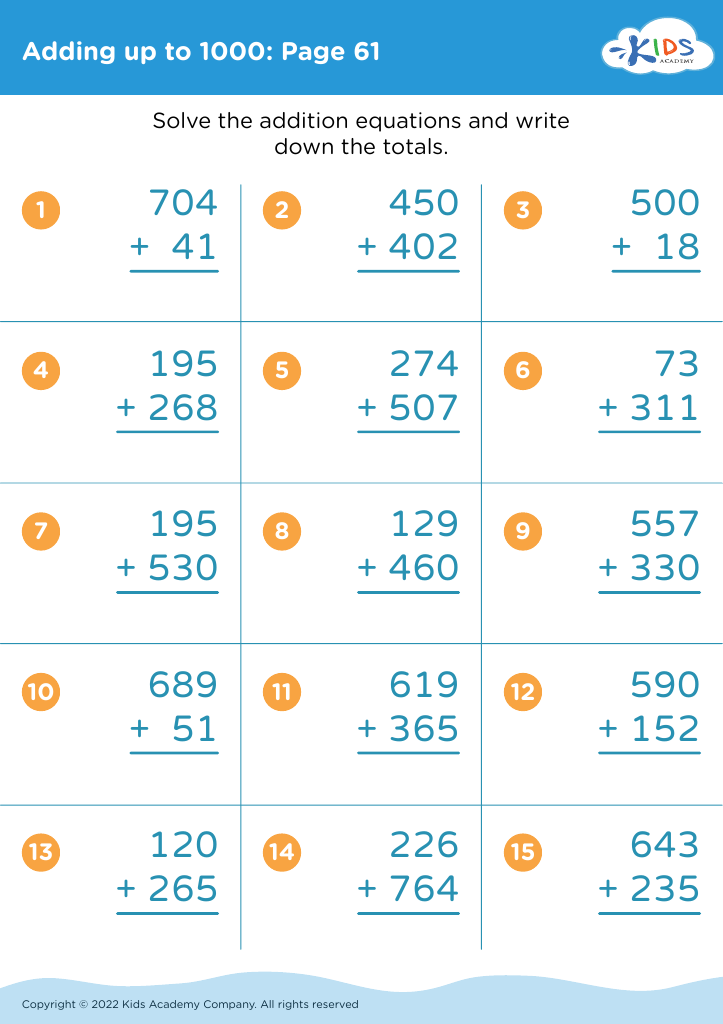
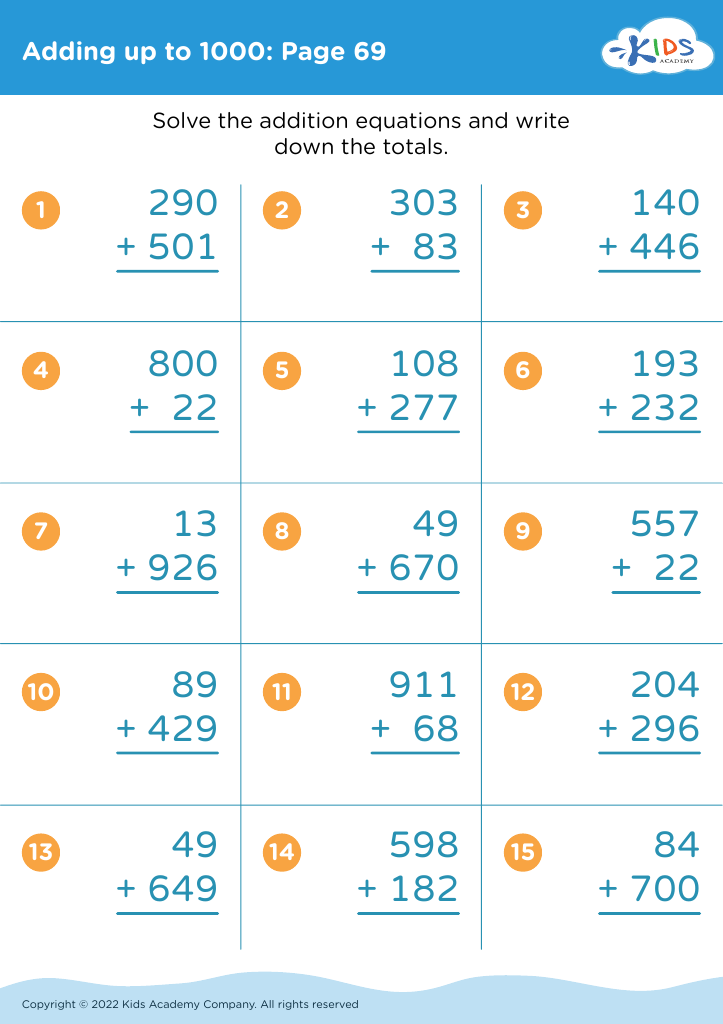
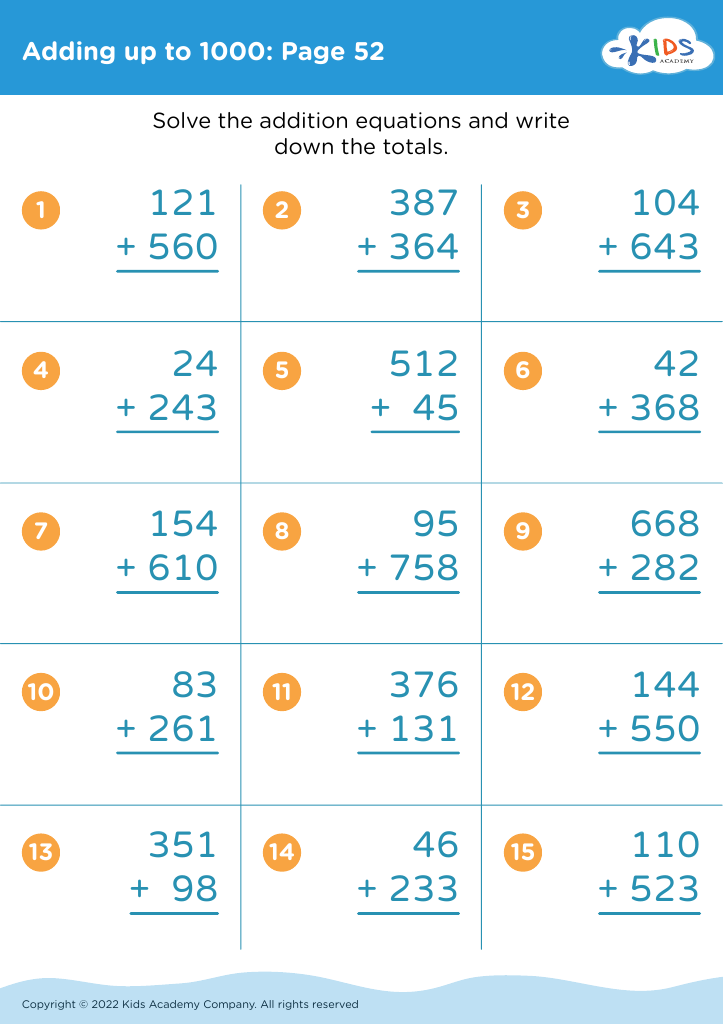


At ages 4-7, children are developing foundational mathematical skills that are crucial for their future academic success. Parents and teachers should prioritize fraction simplification, adding up to 1000, and various miscellaneous math topics to cultivate these essential skills early on.
Fraction simplification introduces young learners to the concept of breaking down complex problems into simpler parts, fostering critical thinking and problem-solving abilities. It also prepares them for more advanced math topics they'll encounter later.
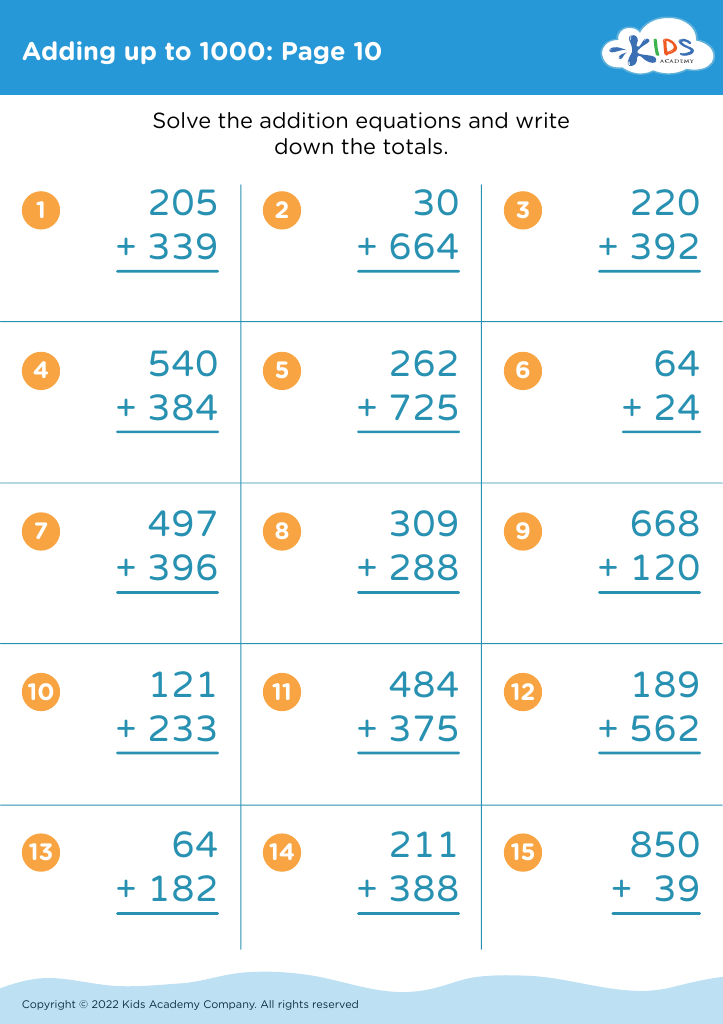
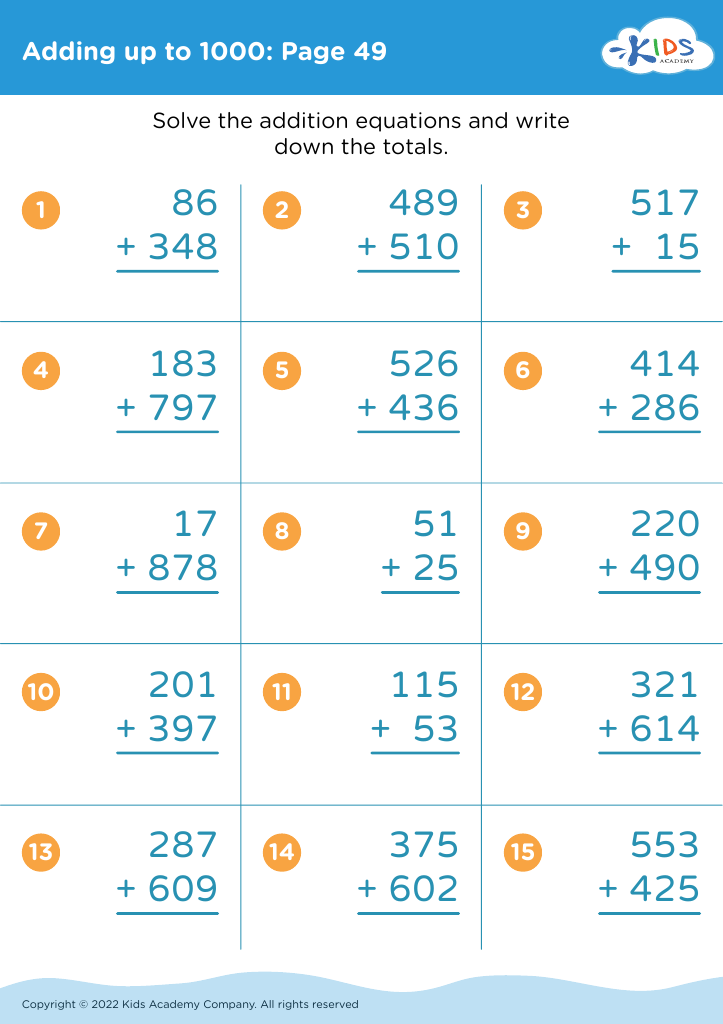
Adding up to 1000 enhances number sense and familiarizes children with larger numbers, building their confidence and ability to perform more complex calculations as they progress in their education. This practice strengthens their understanding of place value, addition, and carrying over numbers, which are fundamental arithmetic skills.
Focusing on various miscellaneous math skills enriches their learning experience by exposing them to different mathematical concepts. Activities like pattern recognition, shape identification, and basic geometry help in developing spatial awareness and logical thinking.
Investing time in these skills at a young age leads to a strong mathematical foundation, better problem-solving skills, and improved academic performance. Moreover, a positive early math experience nurtures a lifelong interest in the subject, empowering children to excel in future learning endeavors.