Understand multiplication Adding up to 1000 Misc Worksheets for Ages 4-7
3 filtered results
-
From - To
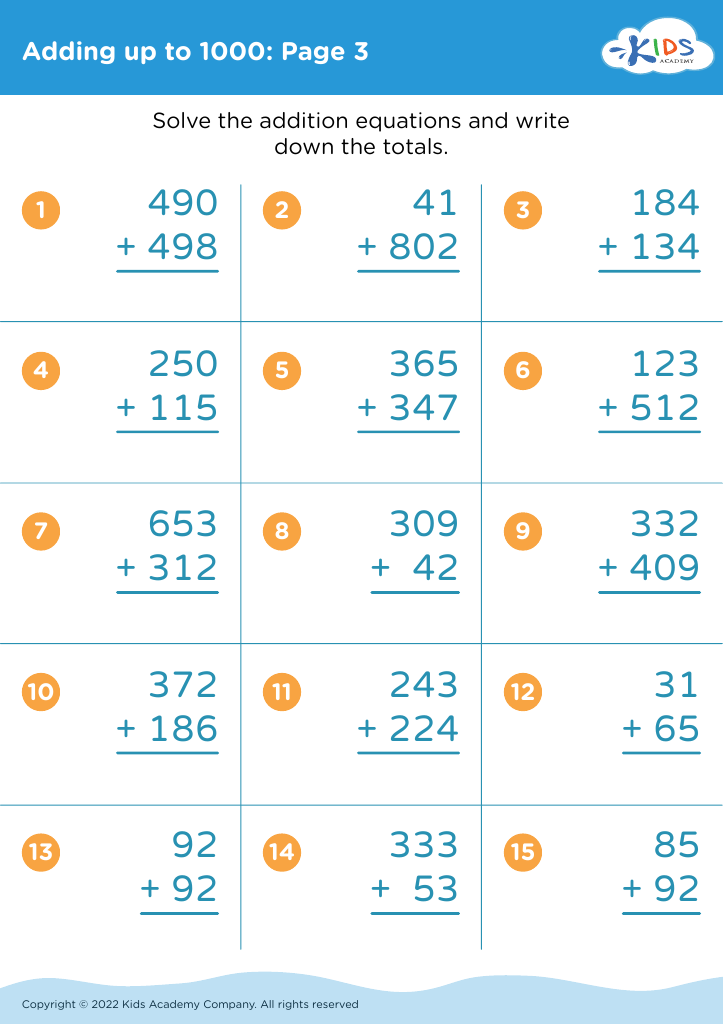
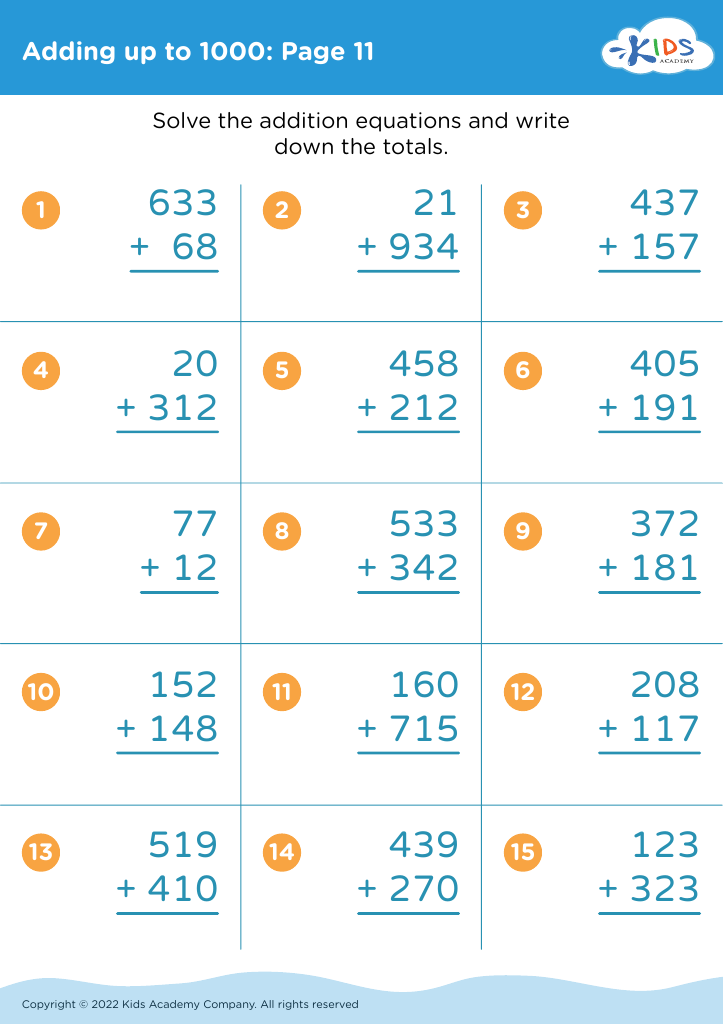
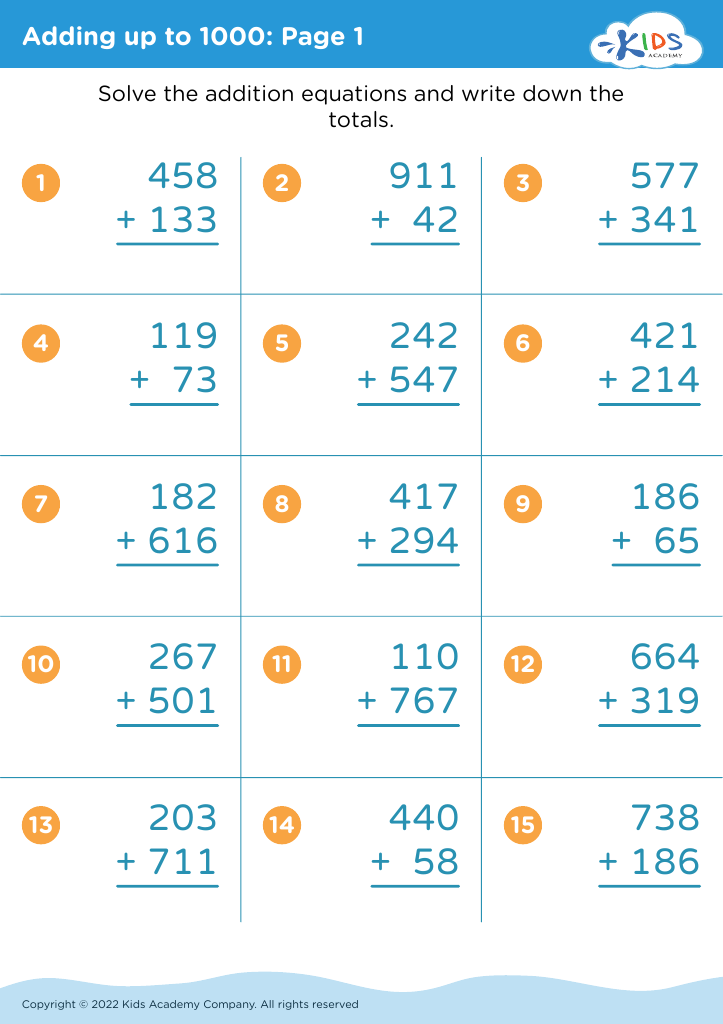
Explore the foundational concept of multiplication for young learners with our "Understand Multiplication: Adding up to 1000 Misc Worksheets for Ages 4-7". These engaging and age-appropriate worksheets are designed to make learning math fun and effective. Your child will develop essential skills by solving problems that simplify multiplication through visual aids and interactive activities. Each worksheet is tailored to help kids grasp the basics while adding up to 1000, nurturing their confidence and proficiency in math. Foster a love of learning with our expertly crafted materials that turn complex ideas into easy-to-understand exercises, setting the stage for future success.


Understanding multiplication and basic addition is a crucial cornerstone for young children aged 4-7, setting the stage for their future math competence and overall academic success. Multiplication is not just about memorizing tables; it cultivates logical thinking, problem-solving skills, and analytical reasoning, which are essential beyond the confines of mathematics and applicable across various life scenarios.
During these formative years, comprehension of concepts like adding up to 1000 and multiplication reinforces number sense, making children comfortable with larger numbers at an earlier age. This foundational knowledge lays the groundwork for more complex mathematical concepts they will encounter later, such as division, fractions, and algebra.
Furthermore, early proficiency in these areas boosts a child’s confidence and fosters a positive attitude towards math. Teachers and parents play an indispensable role by creating a supportive learning environment, offering appropriate resources, and nurturing curiosity and engagement through fun and practical activities.
Investing time in ensuring that children grasp these mathematical building blocks can lead to improved academic performance, which can open doors to advanced study and better career opportunities in the long run. Additionally, a strong foundation in math supports everyday tasks, fostering a generation of critical thinkers adept at making informed decisions.