Addition Practice Adding up to 1000 with Regrouping Worksheets for Ages 4-7
3 filtered results
-
From - To
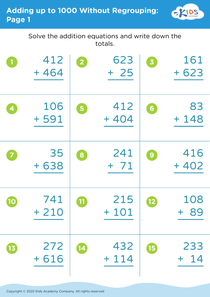
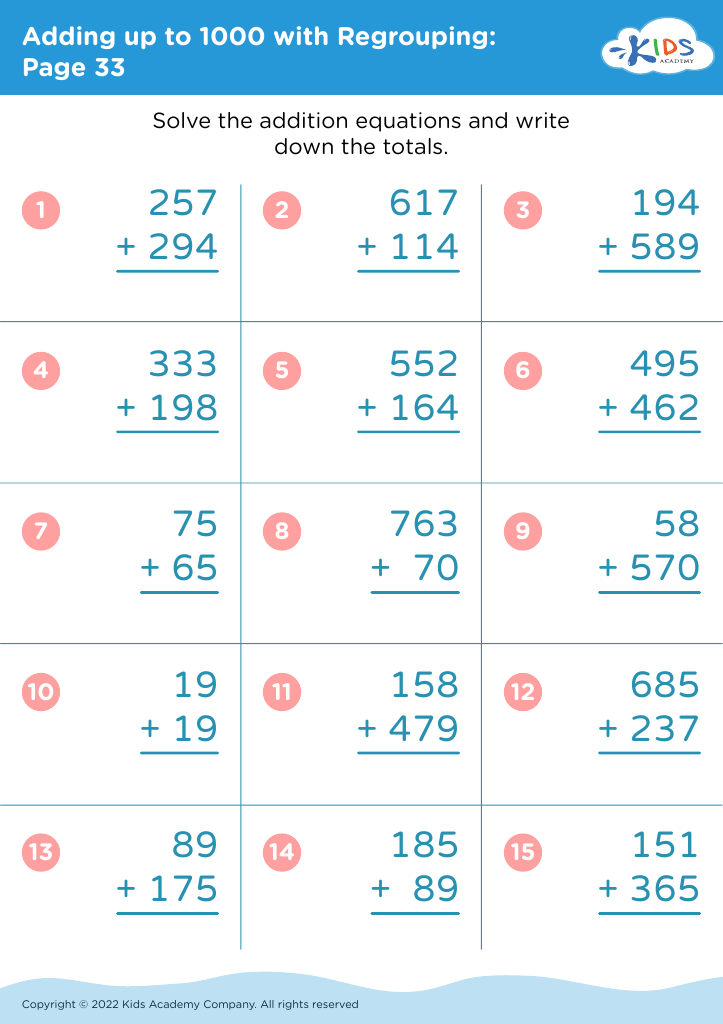
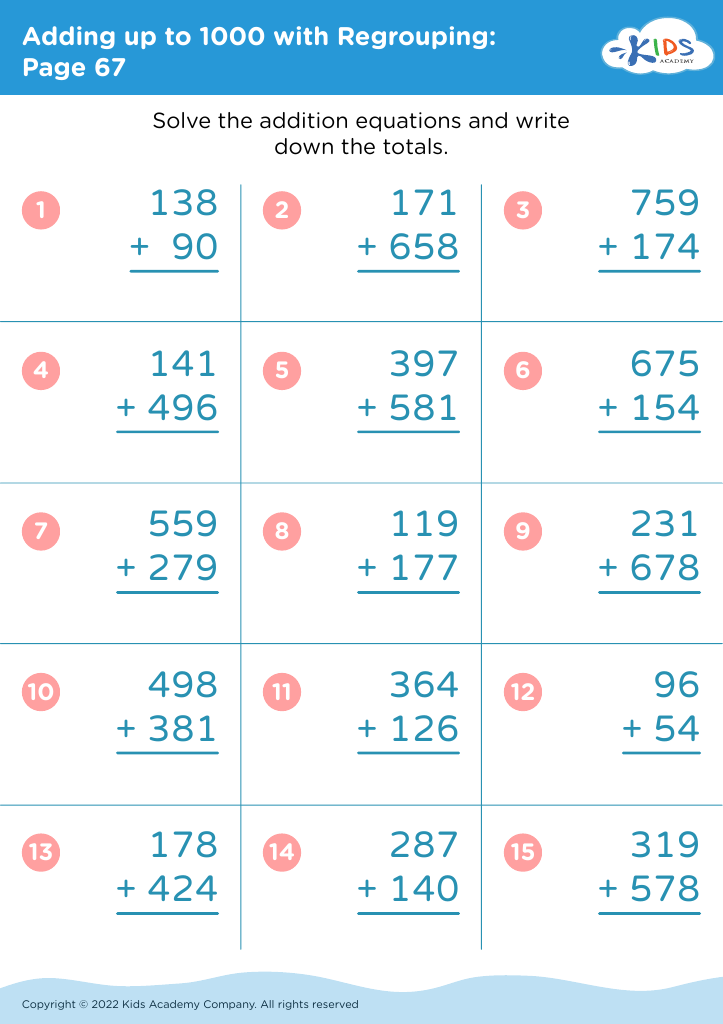
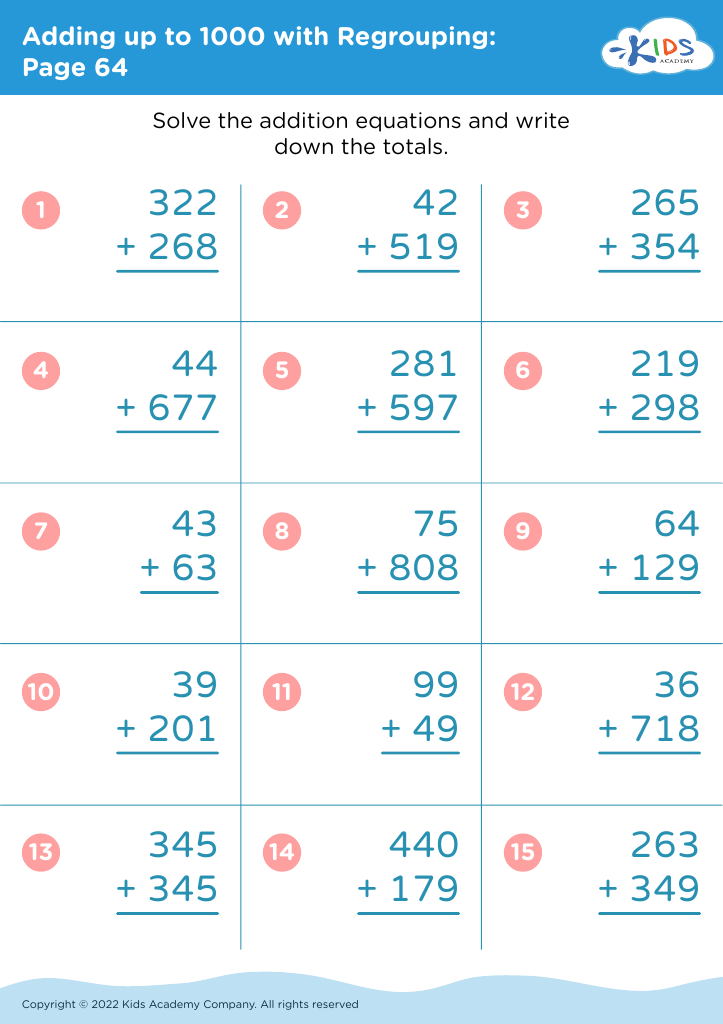
Enhance your child's mathematical skills with our "Addition Practice Adding up to 1000 with Regrouping" worksheets, perfect for ages 4-7. These worksheets are designed to build a strong foundation in addition by challenging young learners with problems that enhance their understanding of regrouping. The exercises progressively guide students through solving addition problems that culminate in a sum up to 1000, fostering confidence and competence in math. By practicing with these engaging and educational worksheets, children will develop critical thinking and problem-solving skills, setting them up for future success in mathematics. Start your child’s learning journey today!


Parents and teachers should be deeply invested in addition practice up to 1000 with regrouping for ages 4-7 because this foundational skill sets the stage for future math proficiency. During these early years, children are developing critical cognitive abilities and these mathematical exercises can significantly boost their number sense and logical thinking.
Regrouping – the process of carrying over numbers – is an essential concept that enhances their understanding of place value. Mastering this allows children to seamlessly transition to more advanced arithmetic operations such as subtraction, multiplication, and division. It also fosters problem-solving skills and resilience, as they learn to tackle complex problems step by step.
Children see math in everyday contexts, from counting change to measuring ingredients, which highlights its practical utility. Consistent practice with addition up to 1000 helps solidify these skills in a relatable manner. Teachers can gauge comprehension levels and tailor instructions effectively, fostering a positive learning environment.
Moreover, being proficient in basic math increases confidence and reduces math anxiety. For parents, involvement in their child’s learning journey strengthens parent-child bonds and contributes to better academic outcomes. In essence, dedicated practice in addition fosters numeracy, critical thinking, and a lifelong love for learning.