Math problem-solving Adding up to 1000 with Regrouping Worksheets for Ages 4-7
3 filtered results
-
From - To
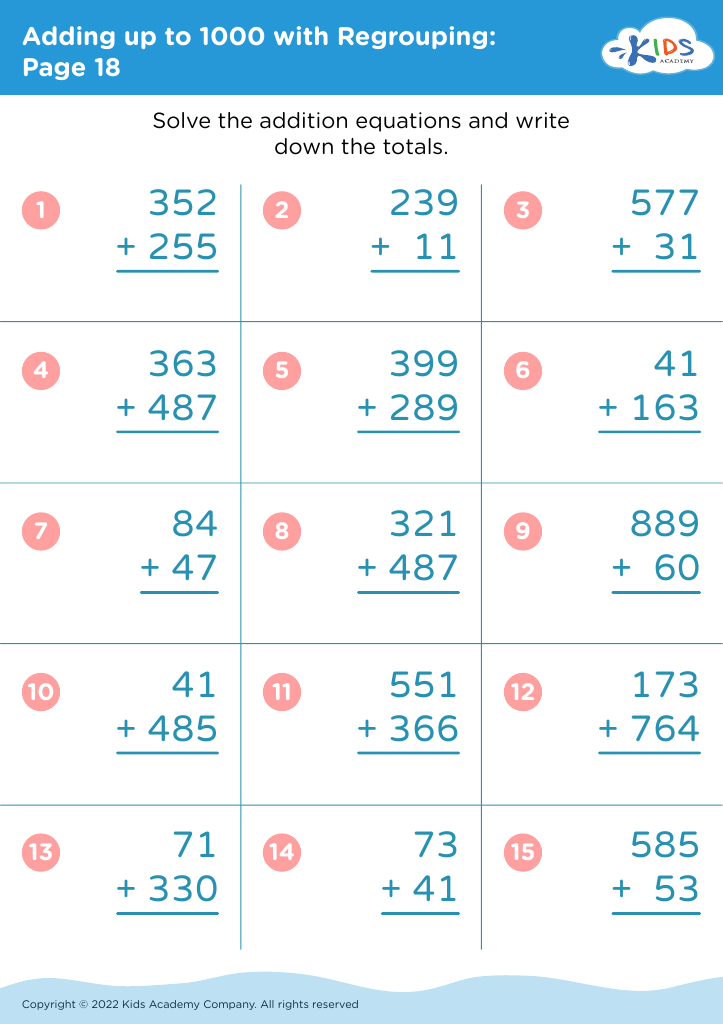
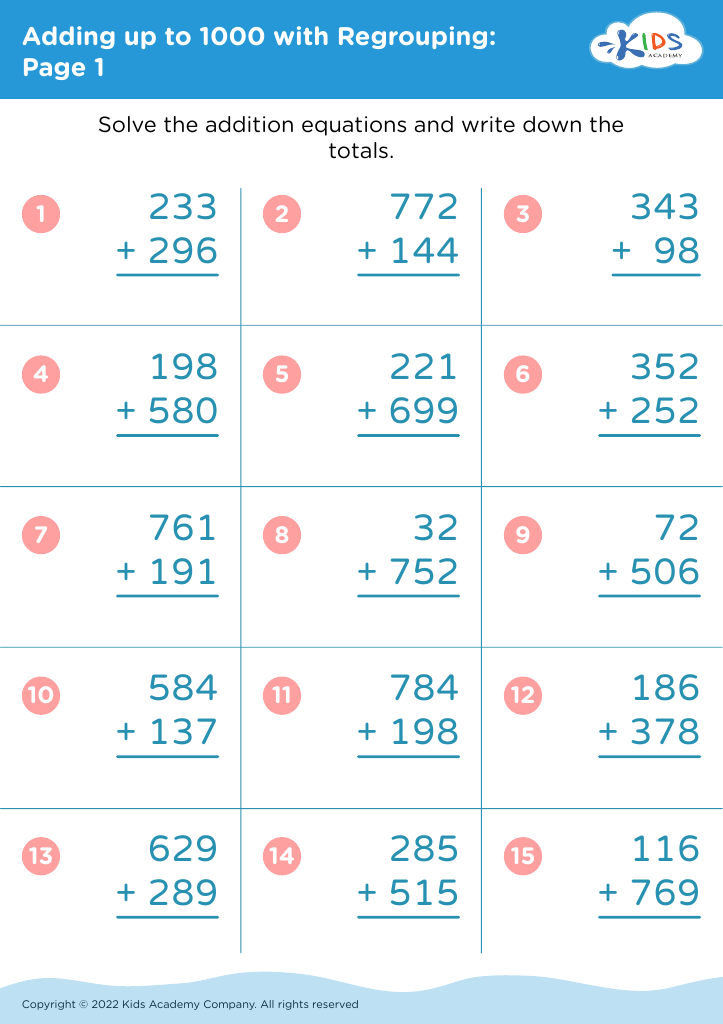
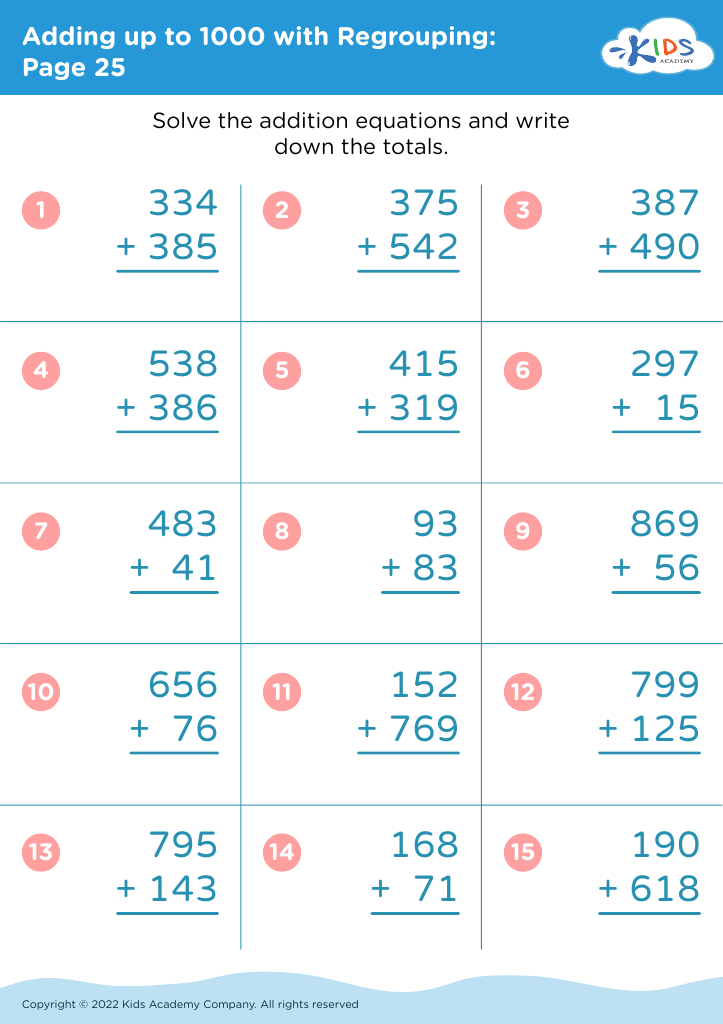
Enhance your child's math skills with our "Adding Up to 1000 with Regrouping Worksheets," tailored for ages 4-7. These engaging and interactive worksheets focus on problem-solving and building a strong foundation in mathematics. Kids will learn to add numbers up to 1000 using regrouping techniques, fostering critical thinking and refinement of their arithmetic skills. Each worksheet is designed to make learning fun, featuring colorful visuals and age-appropriate exercises that encourage kids to think creatively. Perfect for parents and educators, these resources ensure little learners gain confidence in math while mastering essential concepts. Download now to empower your child's journey in mathematics!


Parents and teachers should prioritize teaching math problem-solving skills, particularly concepts like adding up to 1000 with regrouping, for children ages 4-7, because these foundational skills play a crucial role in their overall cognitive development. Mastering basic addition, especially when regrouping is involved, enhances children's understanding of number relationships and promotes mathematical reasoning.
At this age, children are naturally curious and eager to learn, making it the perfect time to introduce more complex concepts. Engaging them in problem-solving activities improves critical thinking and nurturing their ability to tackle challenges, which are essential life skills. Additionally, developing a solid math foundation boosts their confidence, preparing them for more advanced math topics in the future.
Additionally, math skills positively impact other academic areas, such as science and economics, fostering a well-rounded education. Parents and teachers can collaborate to create a loving, supportive environment, encouraging a positive attitude toward math. Fun and interactive methods, including games and hands-on activities, can turn learning into an enjoyable experience, showing children that math is not only necessary but also fun. Hence, focusing on these early problem-solving experiences with regrouping ensures children are well-prepared for more complex mathematical concepts ahead.