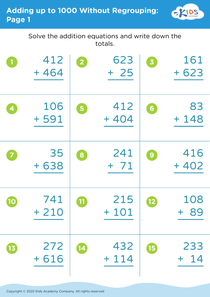
Problem-Solving Skills Adding up to 1000 with Regrouping Worksheets for Ages 4-7
5 filtered results
-
From - To
Enhance your child's problem-solving skills with our engaging "Adding up to 1000 with Regrouping Worksheets" tailored for ages 4-7. These worksheets offer an interactive way for young learners to master addition concepts and develop critical thinking abilities. With fun visual aids and step-by-step instructions, children will practice regrouping while building numerical fluency. As they solve various addition problems, they'll become confident in their math skills. Perfect for home or classroom use, our resources ensure that kids not only learn math effectively but also enjoy the process. Get started today and watch your child's confidence soar as they tackle these exciting challenges!
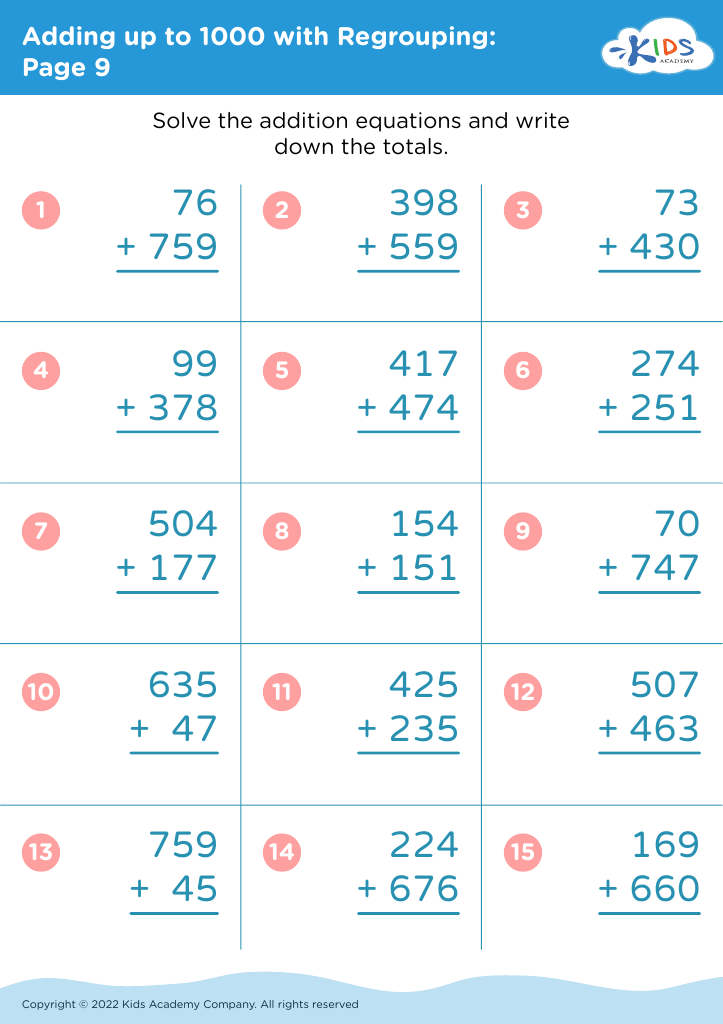
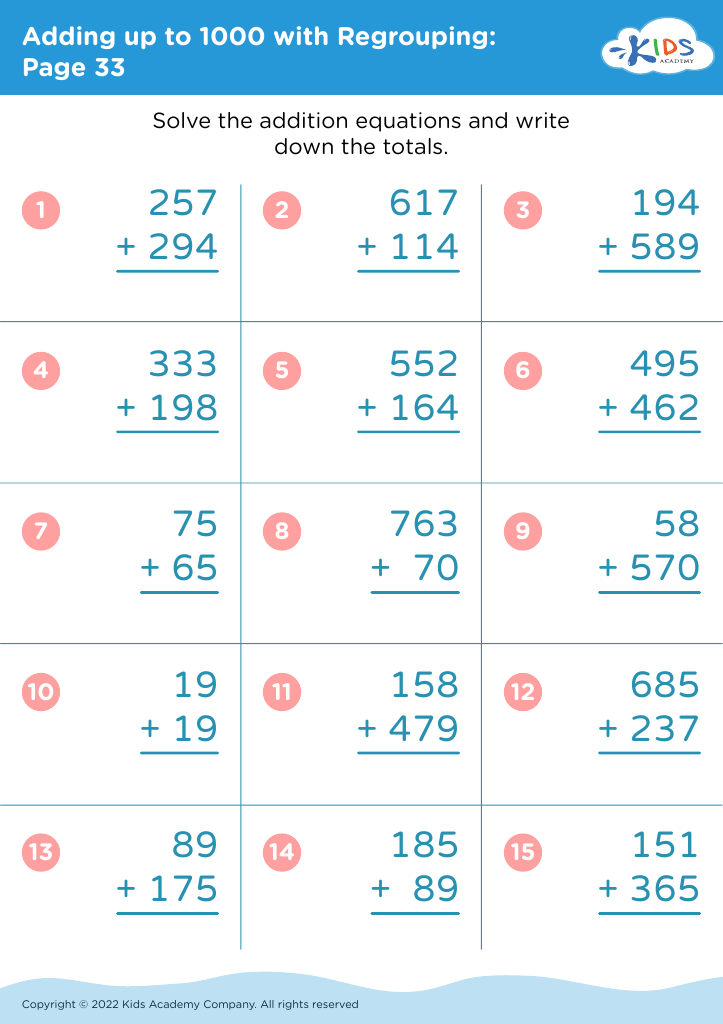
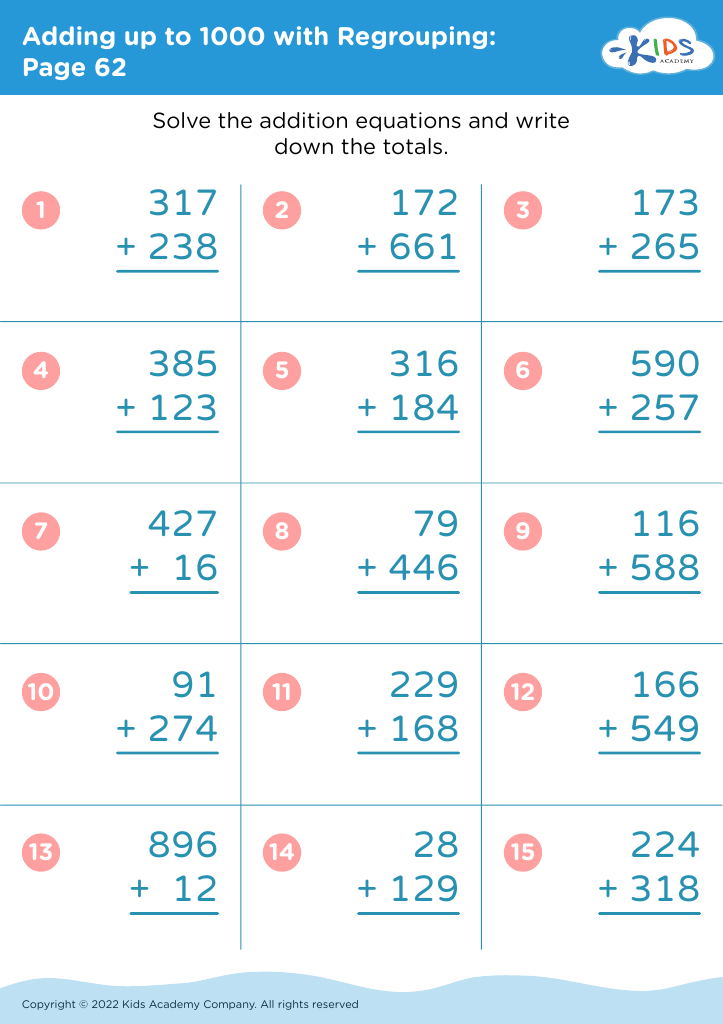
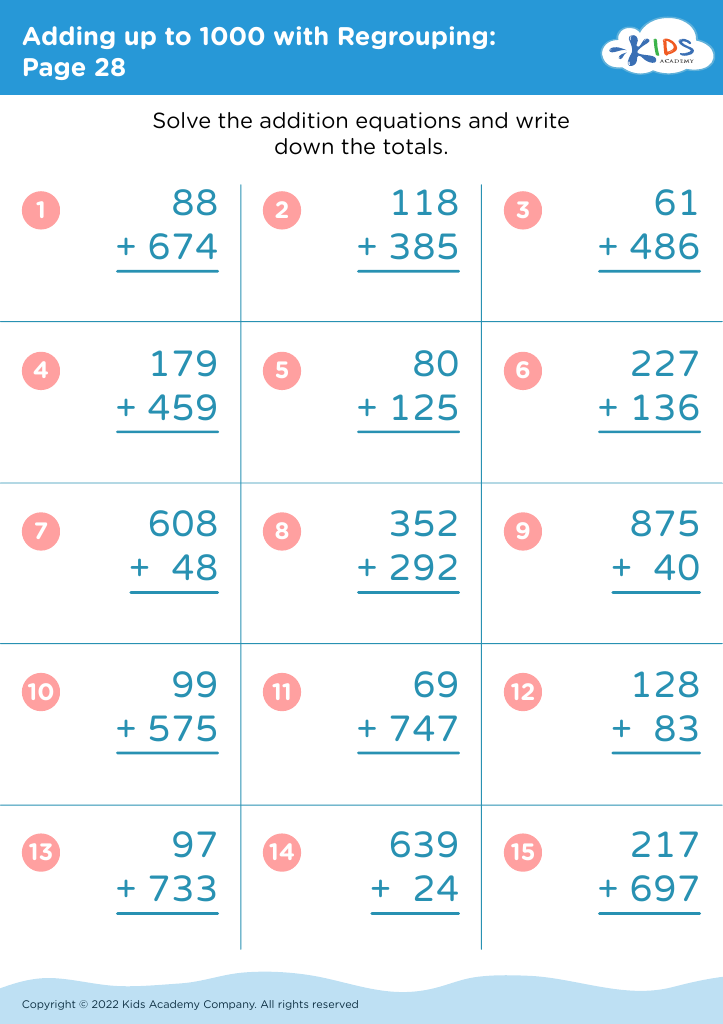
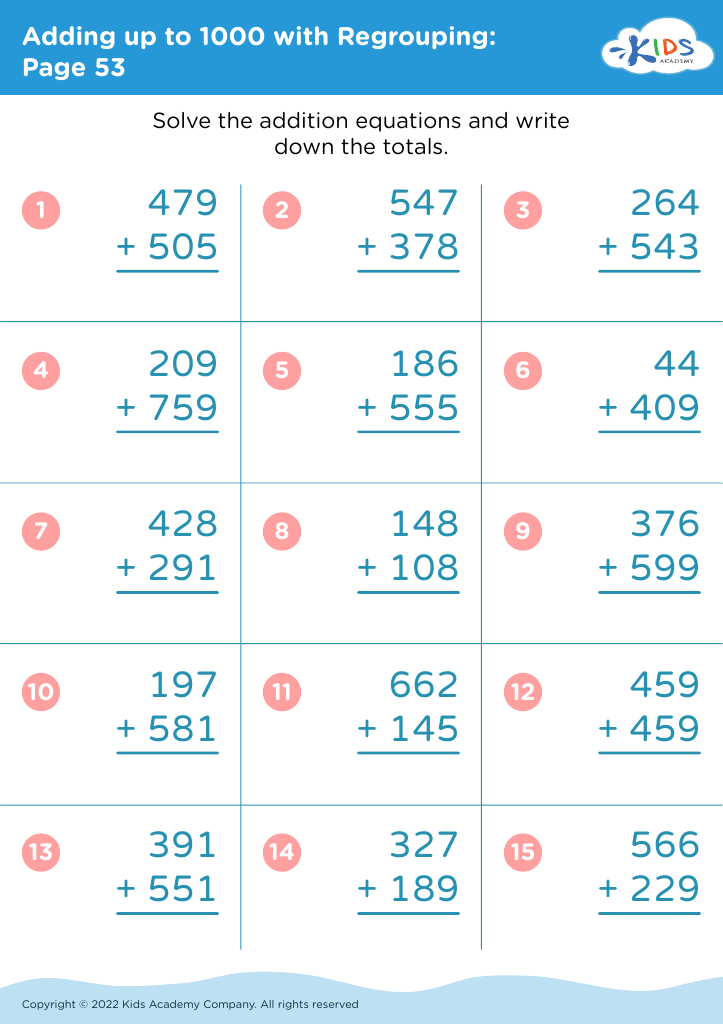


Problem-solving skills, particularly in mathematical concepts like adding up to 1,000 with regrouping, are crucial for children aged 4-7. At this foundation stage, children develop critical thinking, logical reasoning, and resilience—skills essential for navigating various aspects of life.
Encouraging young learners to tackle addition with regrouping helps them understand number relationships and promotes a sense of achievement as they work through challenges. This skill lays the groundwork for more complex mathematical tasks, enhancing both cognitive and analytic capabilities needed in later grades.
For parents and teachers, fostering these skills is both a partnership and an investment—creating a supportive environment where mistakes are viewed as learning opportunities builds confidence in young learners. Moreover, strong problem-solving skills foster independence and curiosity, encouraging children to explore further and understand the world around them.
Incorporating fun strategies, like games or visual aids, makes learning engaging and effective. This not only strengthens their conceptual understanding but also instills a love for learning. Ultimately, developing robust problem-solving skills at this early age is about equipping children with tools they will use throughout their educational journey and beyond.