Shape Recognition Adding up to 1000 with Regrouping Worksheets for Ages 4-7
6 filtered results
-
From - To
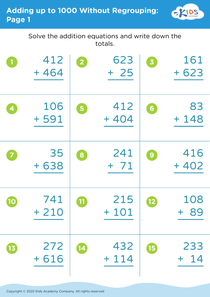
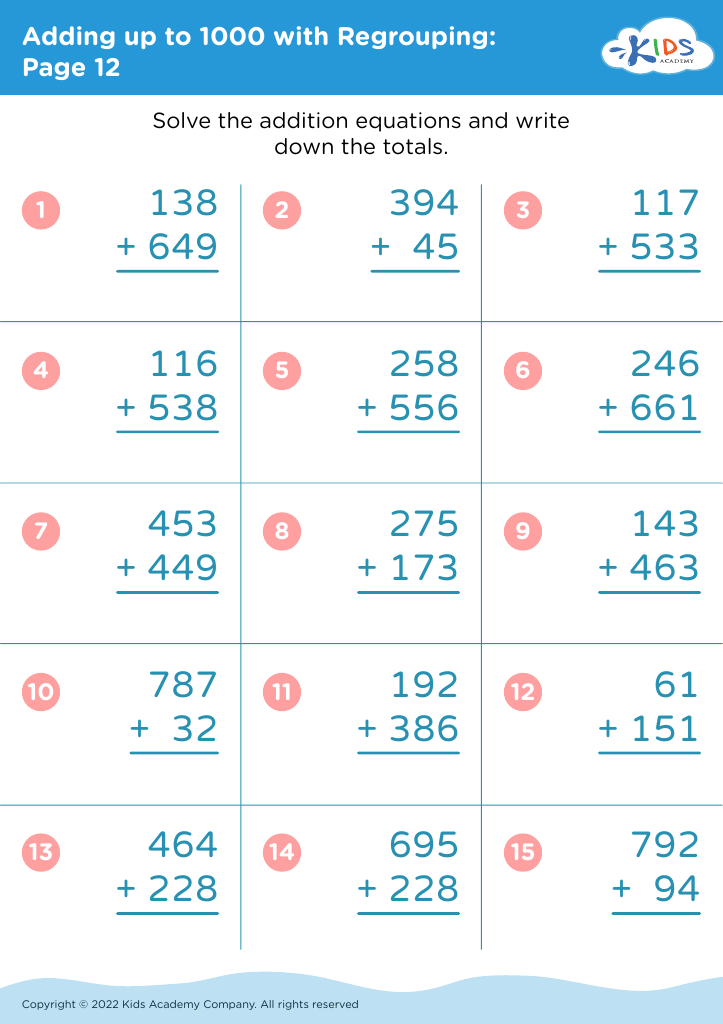
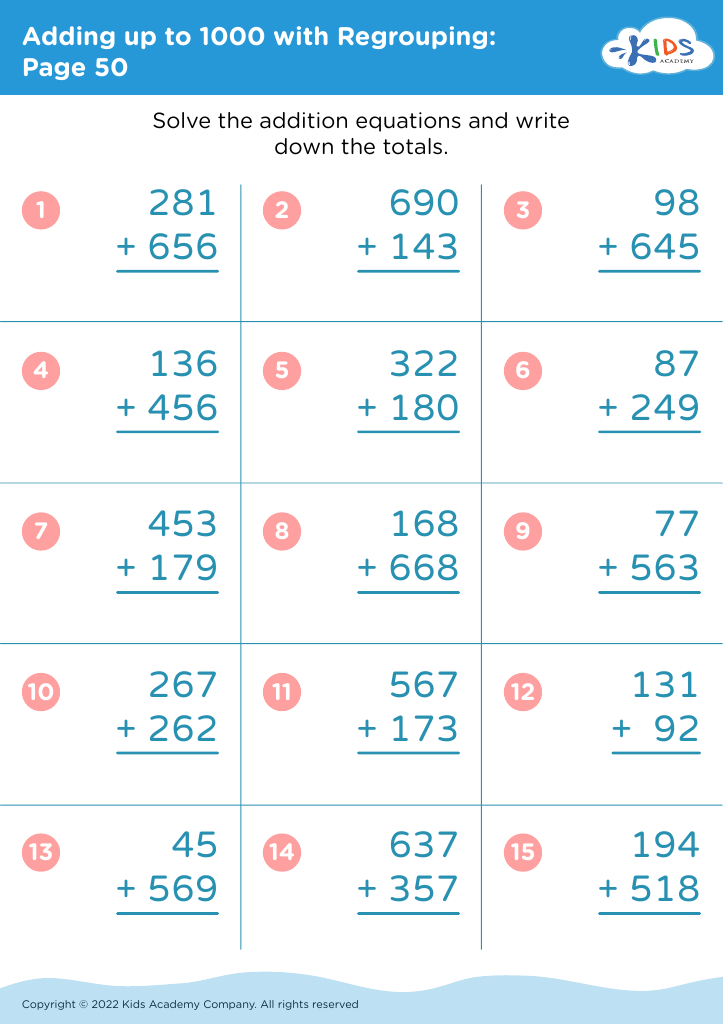
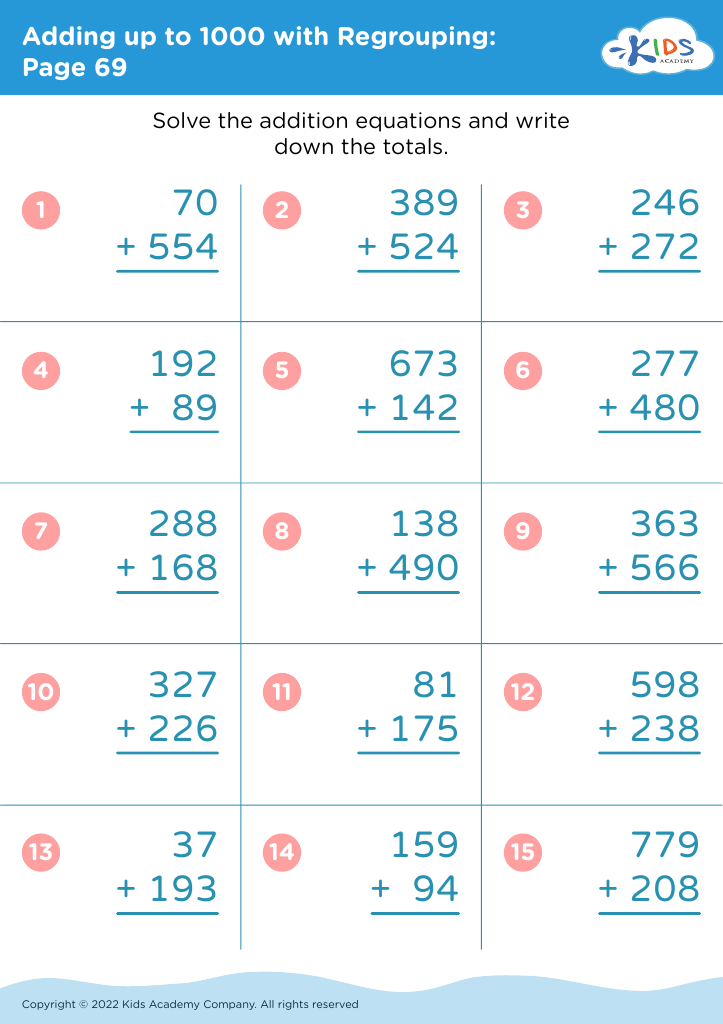
Enhance your child's math skills with our "Shape Recognition Adding up to 1000 with Regrouping Worksheets" designed for ages 4-7. These engaging worksheets combine essential shape recognition with the fundamental concept of addition, helping young learners practice regrouping while identifying various geometric figures. As students add numbers up to 1000, they will also reinforce their understanding of shapes like circles, squares, and triangles. Our colorful, interactive activities make learning fun and effective, ensuring children develop both mathematical proficiency and visual-spatial awareness. Perfect for classroom or at-home learning, these worksheets support early childhood development in a playful and engaging manner.
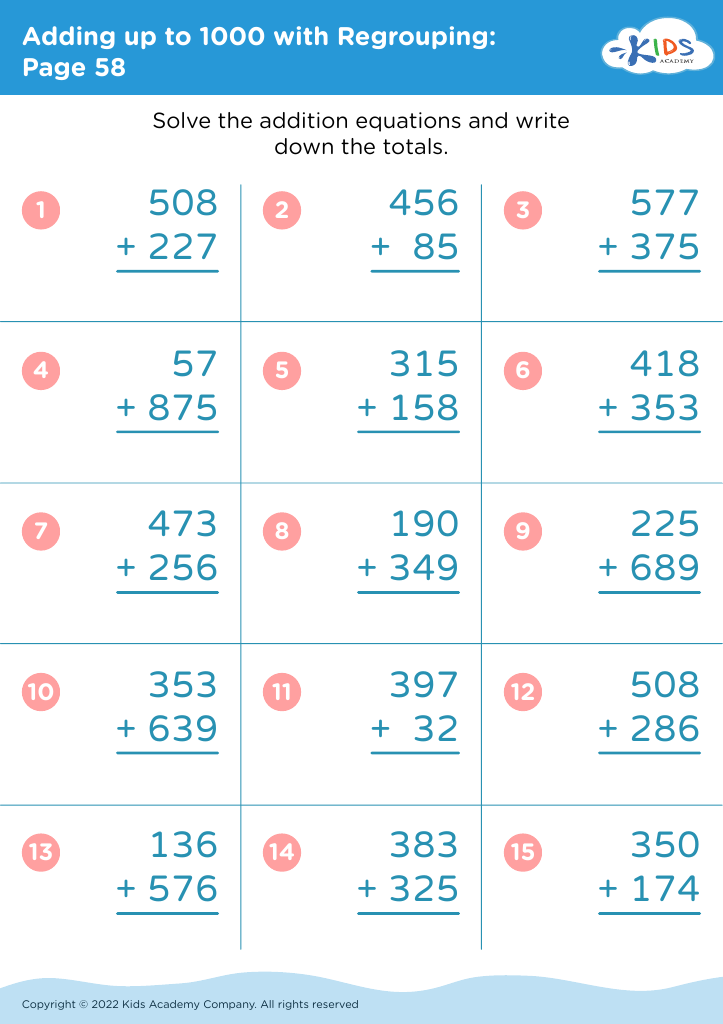
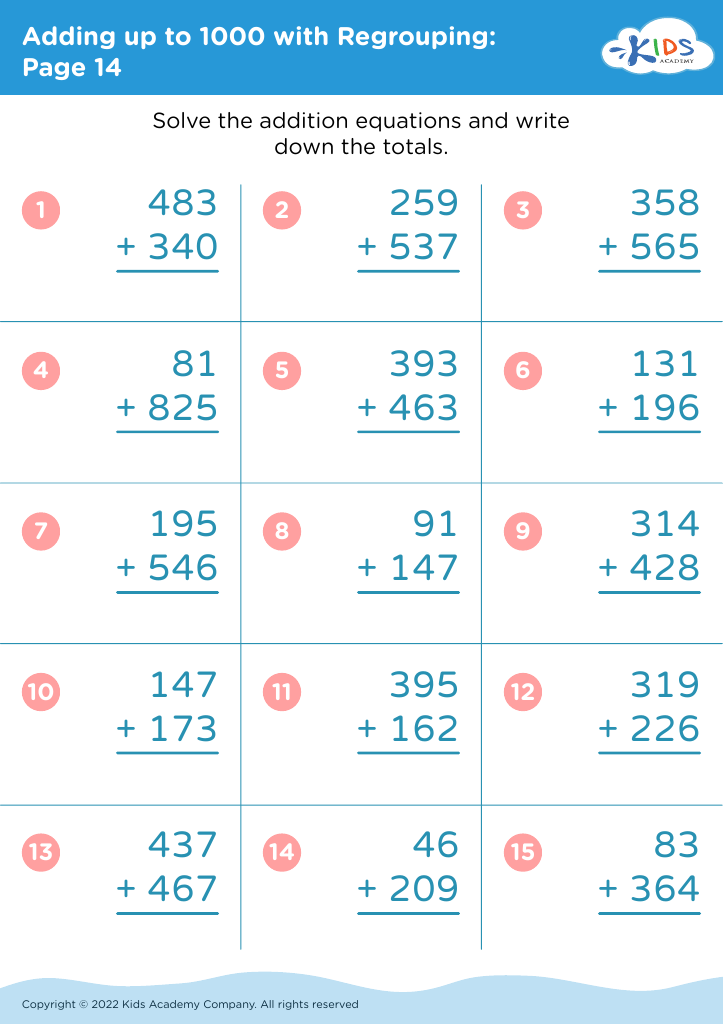
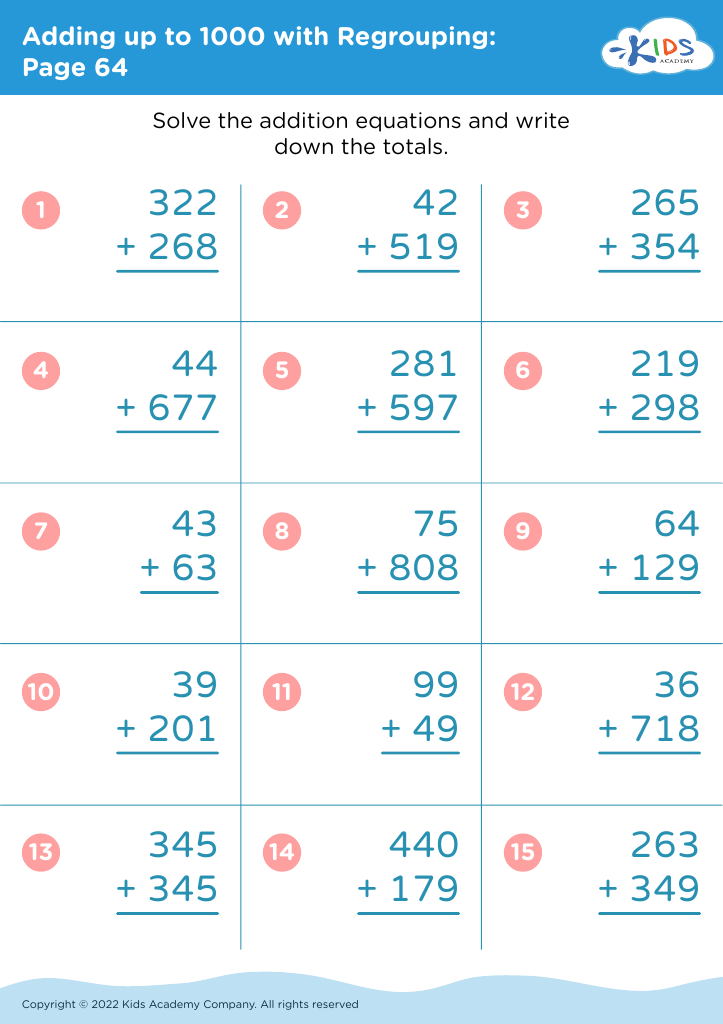


Shape recognition and the ability to add numbers to 1000 with regrouping are fundamental skills that lay the groundwork for children's mathematical understanding and overall cognitive development. For ages 4-7, these skills are essential for navigating the world around them and engaging with future academic challenges.
Shape recognition fosters spatial awareness, critical for problem-solving and creative thinking, as it helps children identify and classify the objects they encounter daily. This ability enhances their understanding of geometry and provides a foundation for more complex mathematical concepts in later grades.
Meanwhile, mastering addition with regrouping is crucial for building numerical fluency. Children learn how to break down numbers and effectively manage carrying over values, which is essential for their understanding of larger numbers and operations. This encourages them to approach challenges with confidence and resilience.
Moreover, developing these skills supports increased engagement in classroom activities and daily interactions. When teachers and parents show enthusiasm for these subjects, children are more likely to drop their fears and develop a positive attitude toward math and art. Ultimately, supportive environments that promote shape recognition and addition create enthusiastic learners who develop essential life skills like critical thinking, perseverance, and creativity.