Understanding fractions Adding up to 1000 with Regrouping Worksheets for Ages 4-7

Filters

18 filtered results

Clear all filters
Favorites
With answer key
Interactive

18 filtered results

Difficulty Level

Grade


Discover engaging and educational worksheets designed specifically for young learners aged 4-7 at Kids Academy. Our "Understanding Fractions: Adding up to 1000 with Regrouping Worksheets" make grasping the basics of fractions easier and more enjoyable. These colorful, printable worksheets help children comprehend complex math concepts through fun exercises and visually appealing graphics. Focused on nurturing foundational skills, these activities promote critical thinking and problem-solving abilities. An invaluable resource for parents and teachers, our worksheets ensure that children learn fractions in a structured, entertaining way, promoting a strong mathematical foundation for future learning.
Check out this FREE Trial Lesson on Adding up to 1000 with Regrouping for age 4-7!

Short and Long Vowel Sort

Favorites
With answer key
Interactive
  • 4-7
  • Understanding fractions
  • Adding up to 1000 with Regrouping
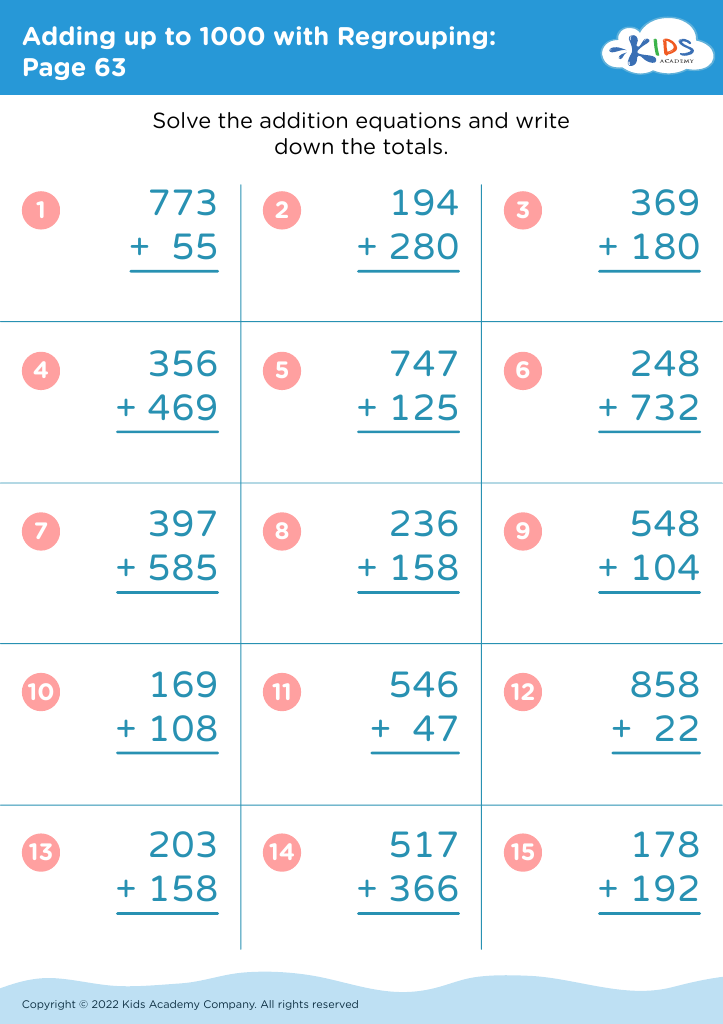
Adding up to 1000 with Regrouping: Page 63
Worksheet
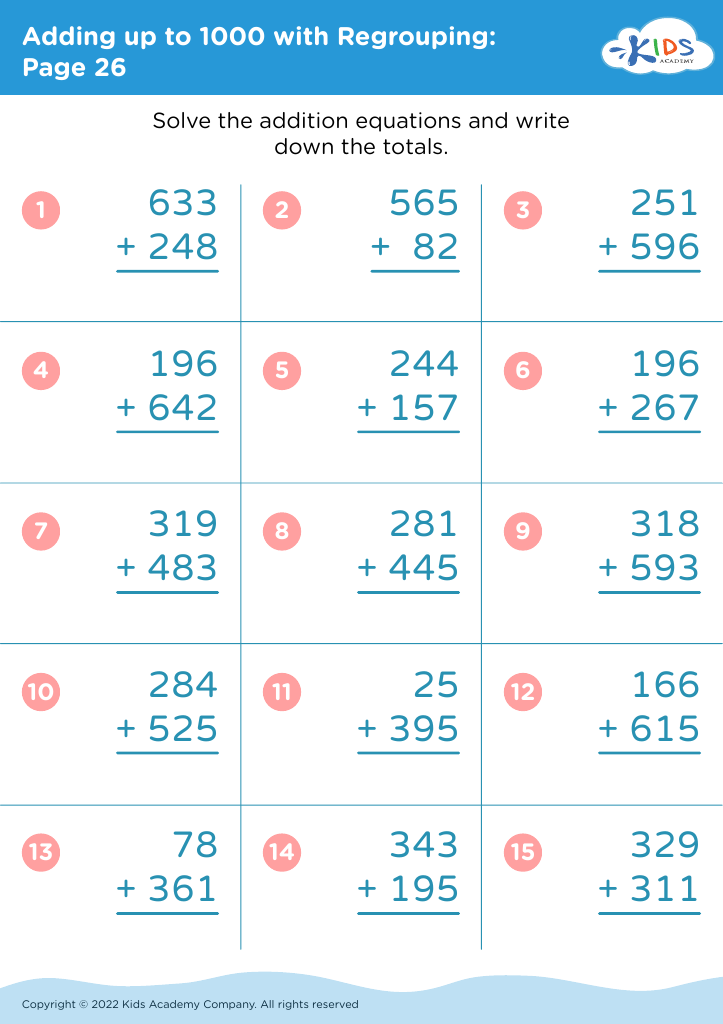
Adding up to 1000 with Regrouping: Page 26
Worksheet
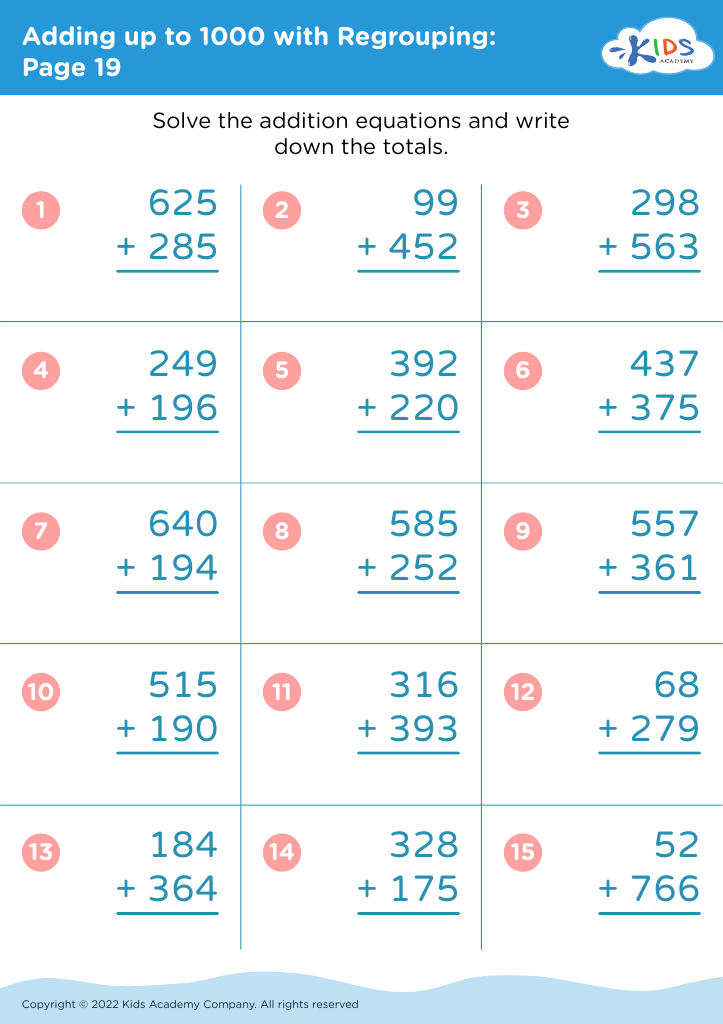
Adding up to 1000 with Regrouping: Page 19
Worksheet
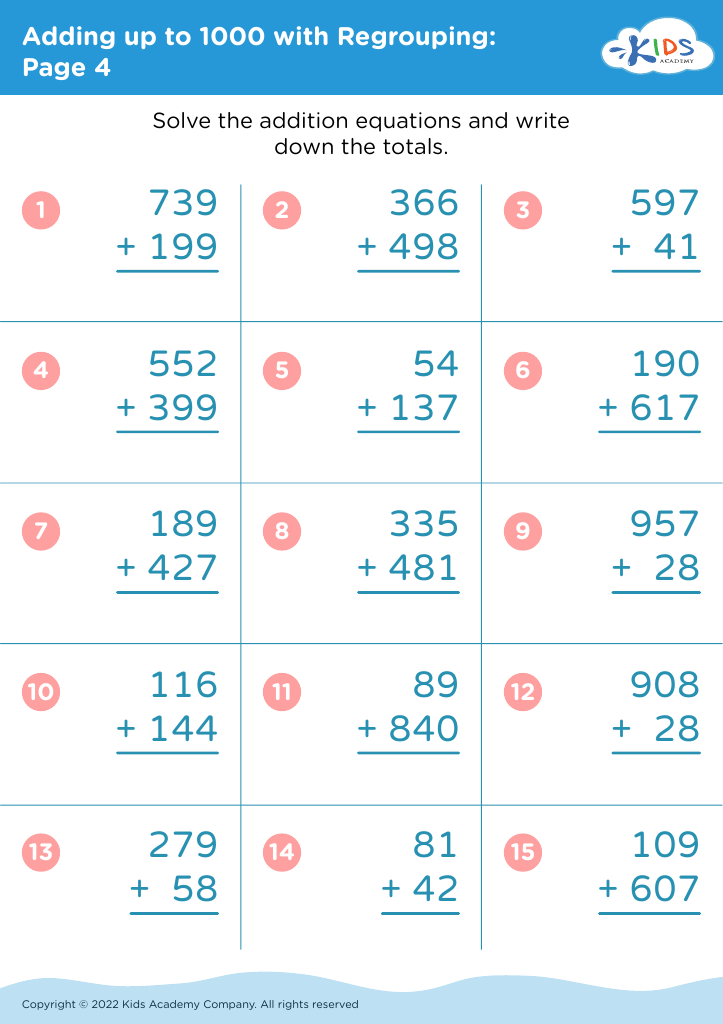
Adding up to 1000 with Regrouping: Page 4
Worksheet
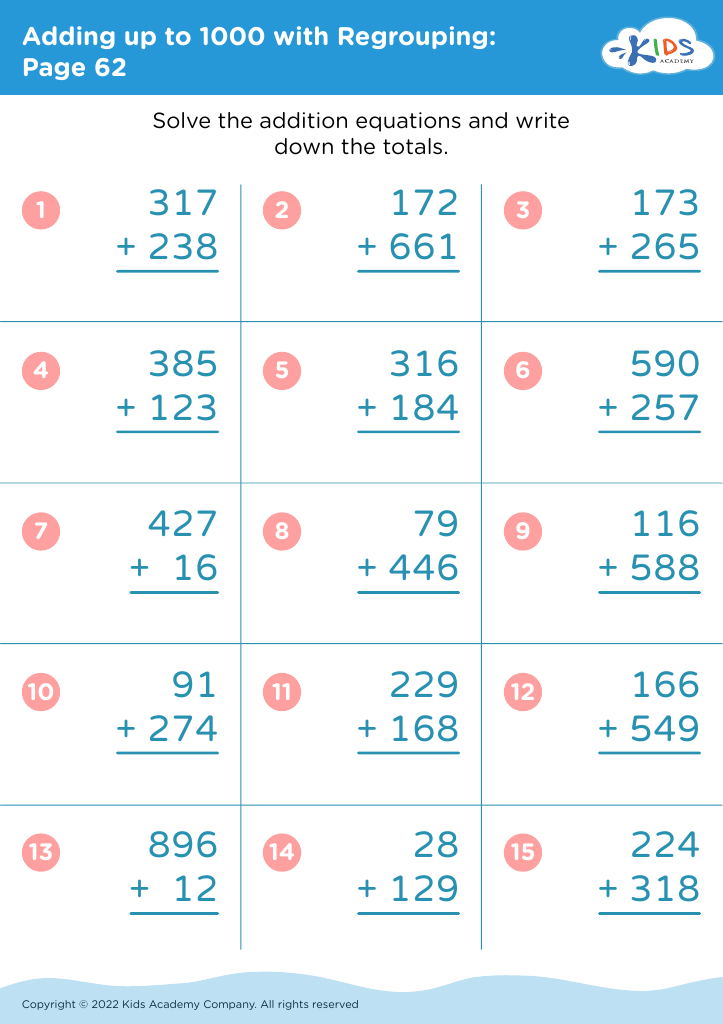
Adding up to 1000 with Regrouping: Page 62
Worksheet
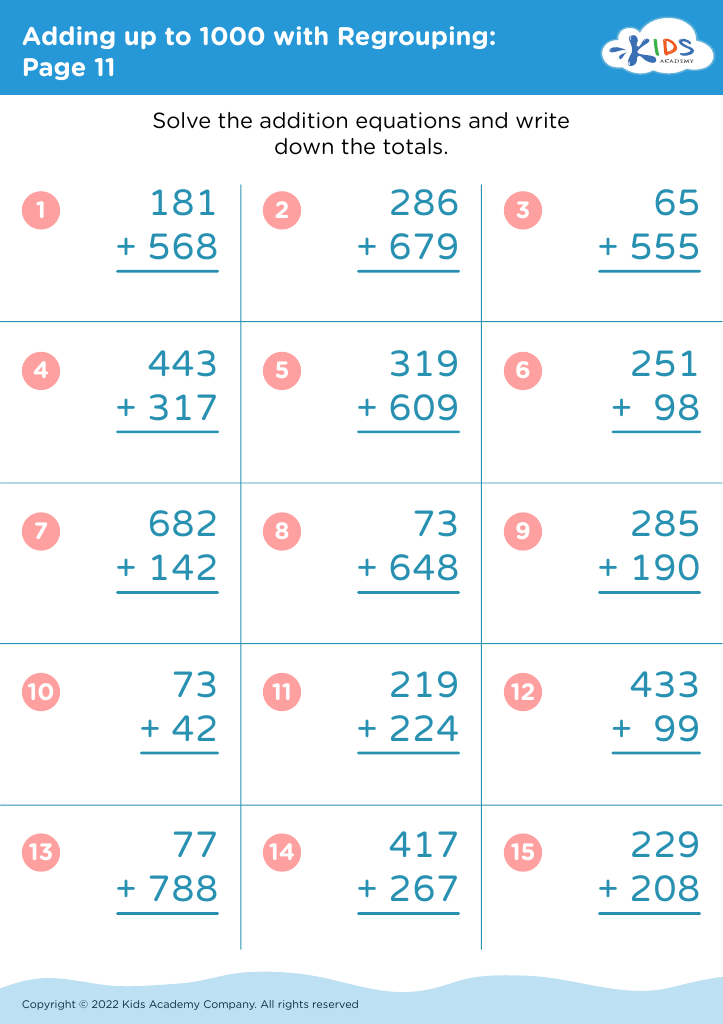
Adding up to 1000 with Regrouping: Page 11
Worksheet
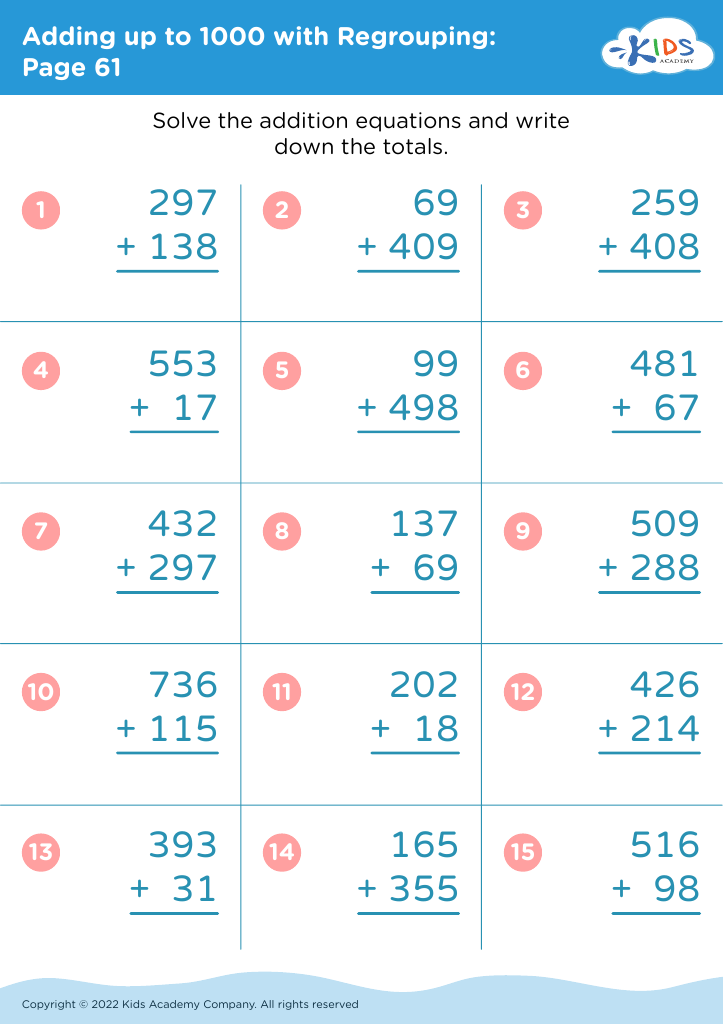
Adding up to 1000 with Regrouping: Page 61
Worksheet
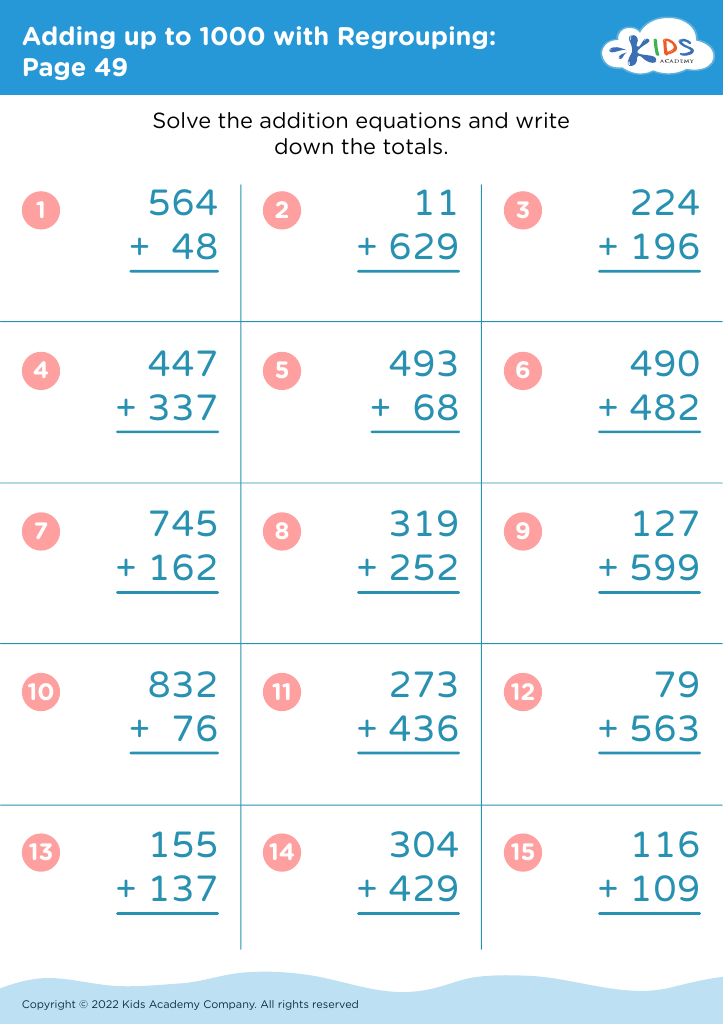
Adding up to 1000 with Regrouping: Page 49
Worksheet
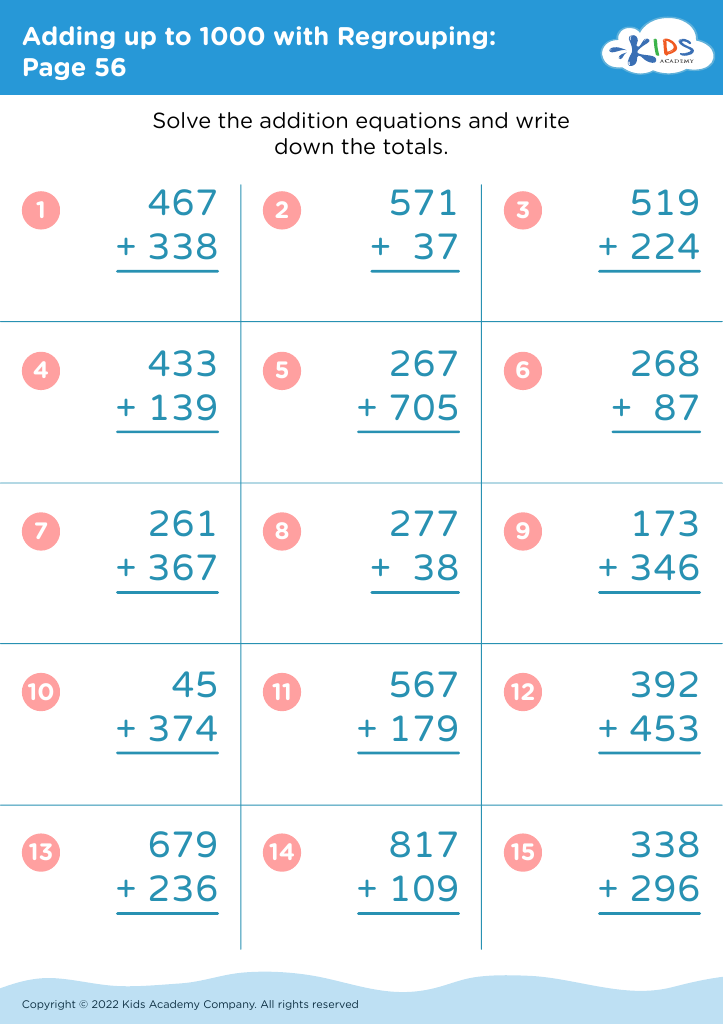
Adding up to 1000 with Regrouping: Page 56
Worksheet
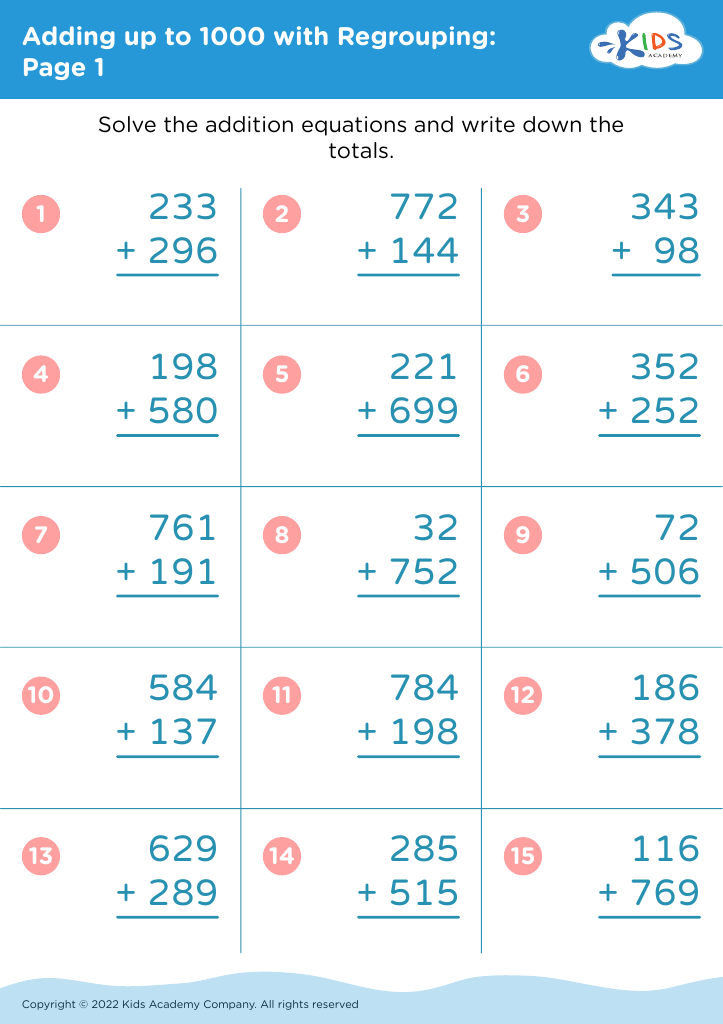
Adding up to 1000 with Regrouping: Page 1
Worksheet
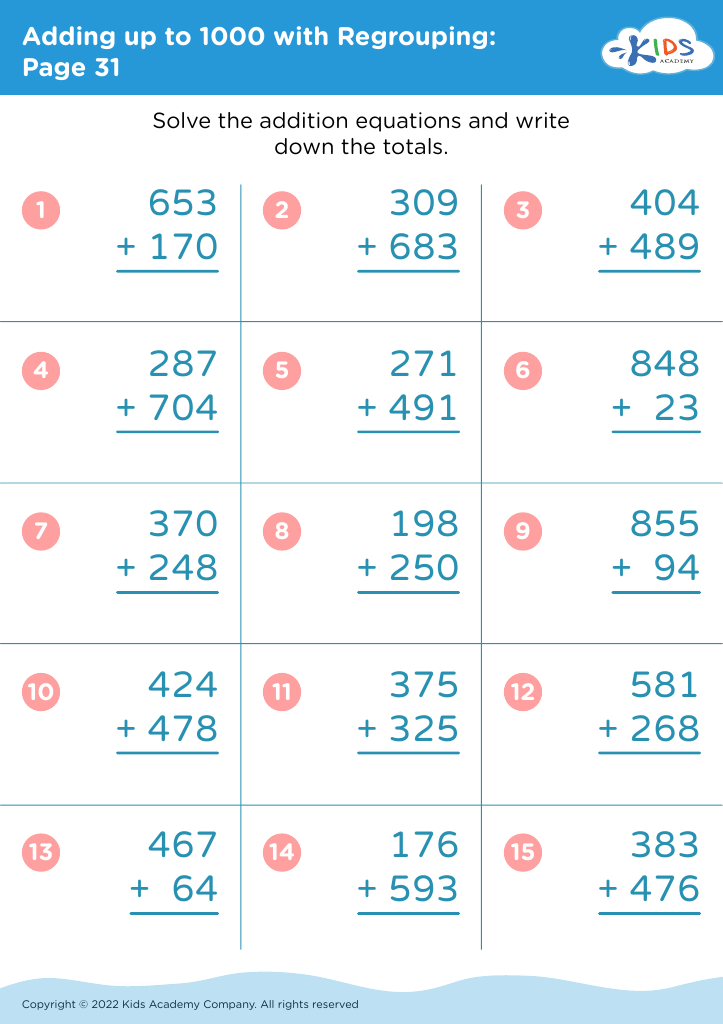
Adding up to 1000 with Regrouping: Page 31
Worksheet
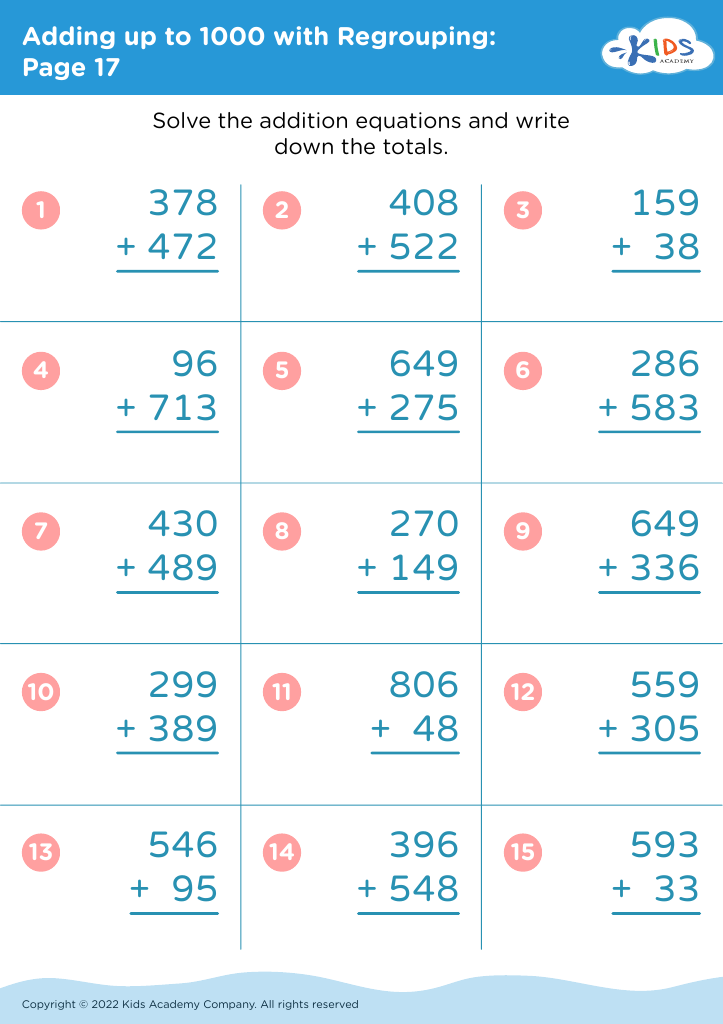
Adding up to 1000 with Regrouping: Page 17
Worksheet
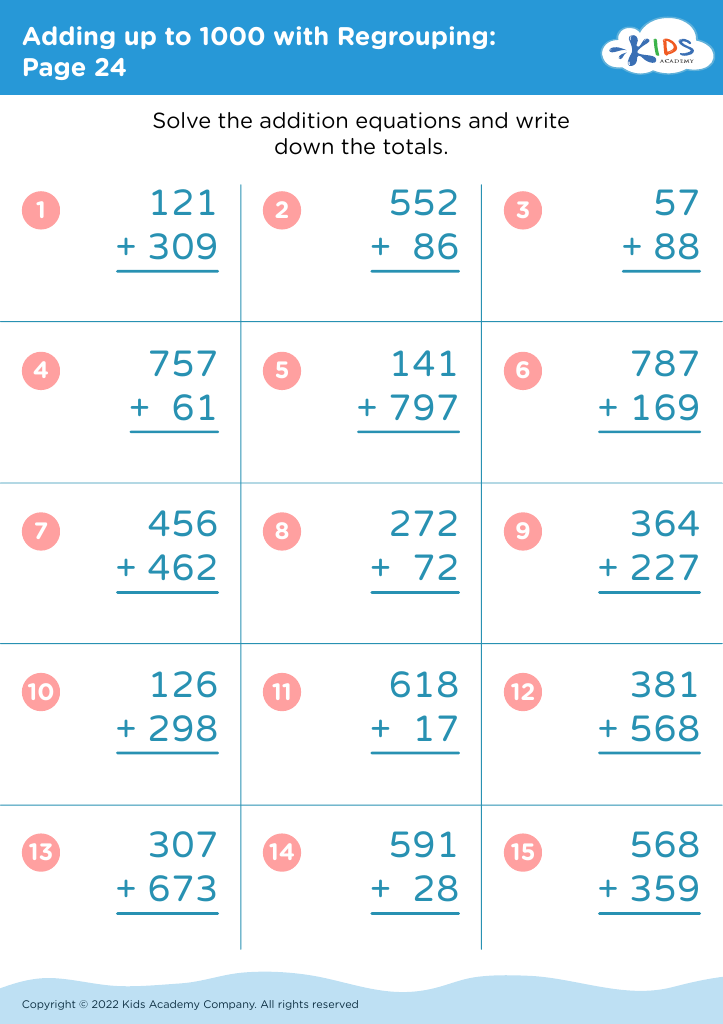
Adding up to 1000 with Regrouping: Page 24
Worksheet
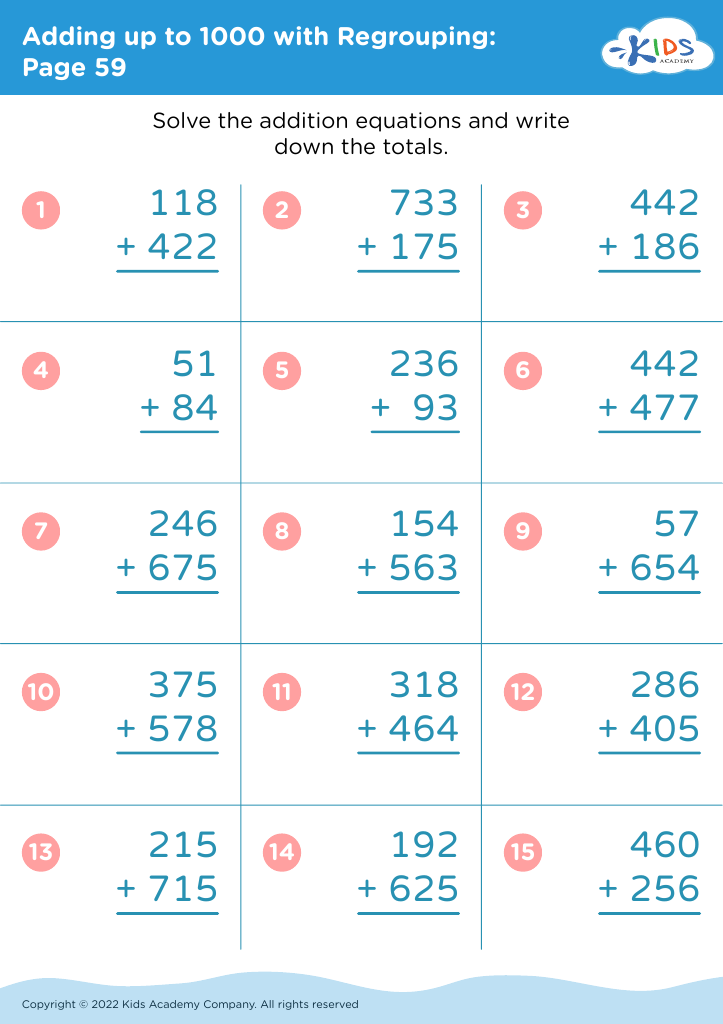
Adding up to 1000 with Regrouping: Page 59
Worksheet
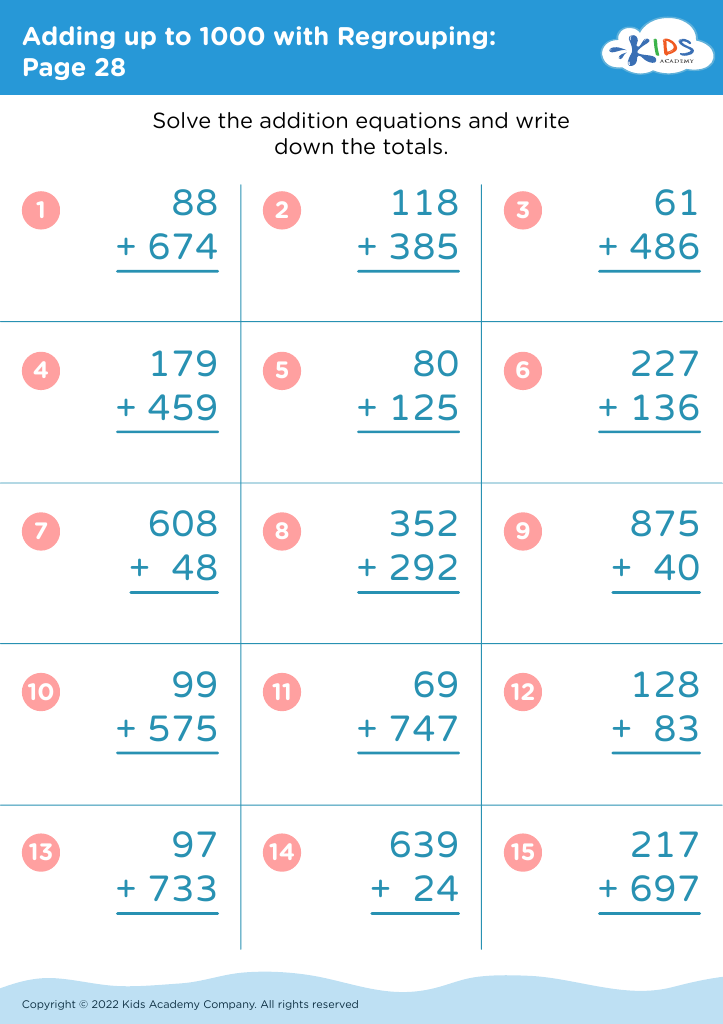
Adding up to 1000 with Regrouping: Page 28
Worksheet
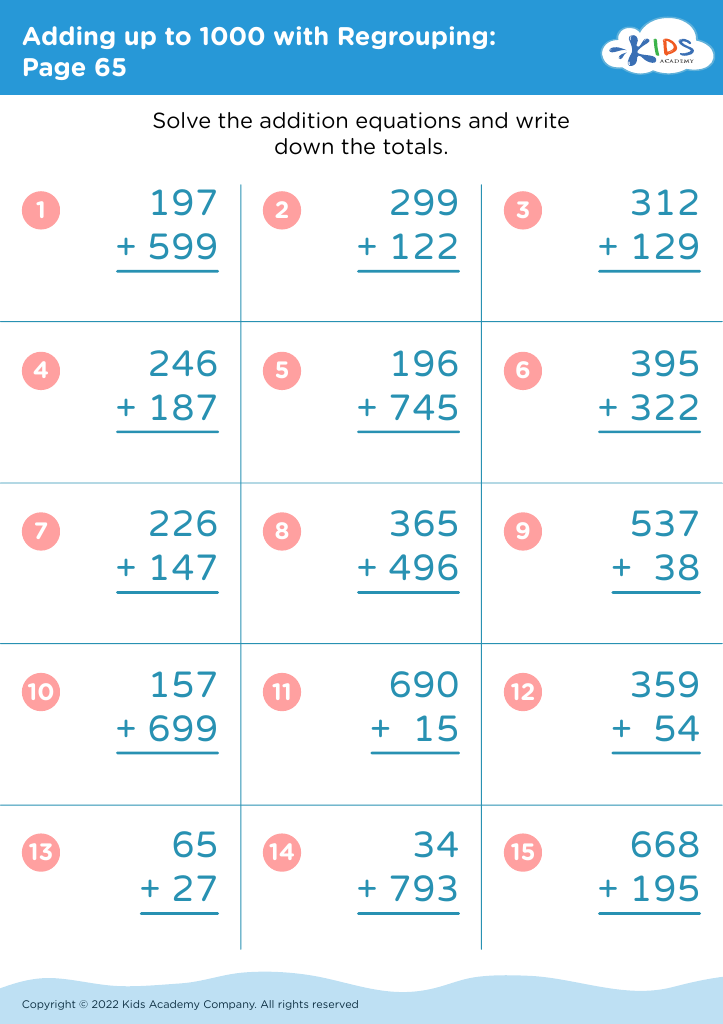
Adding up to 1000 with Regrouping: Page 65
Worksheet
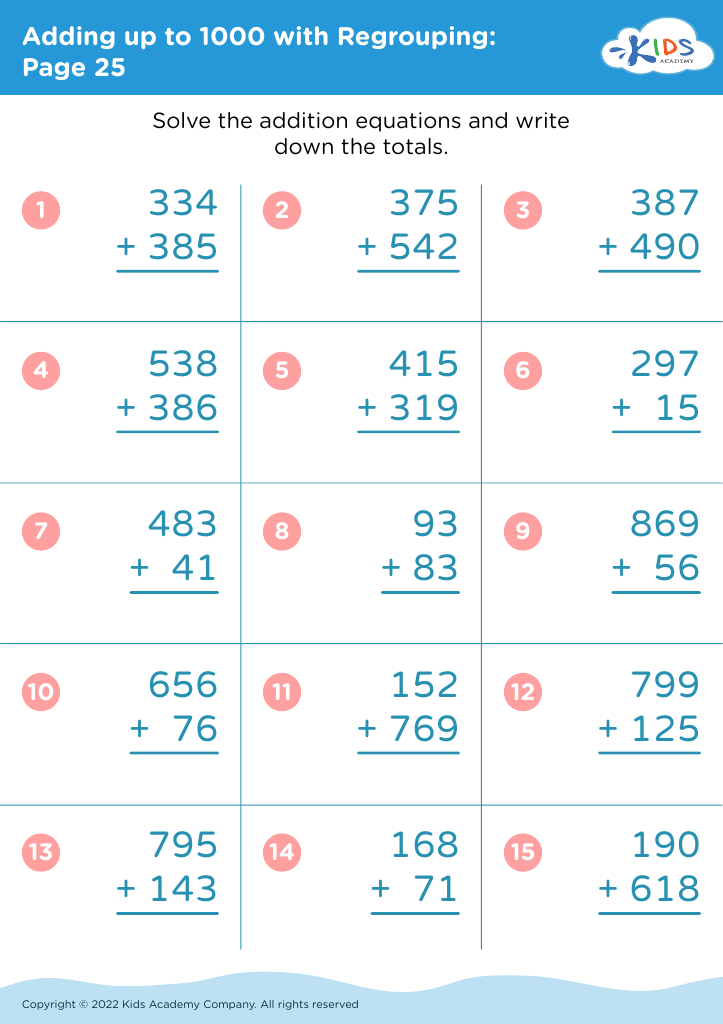
Adding up to 1000 with Regrouping: Page 25
Worksheet
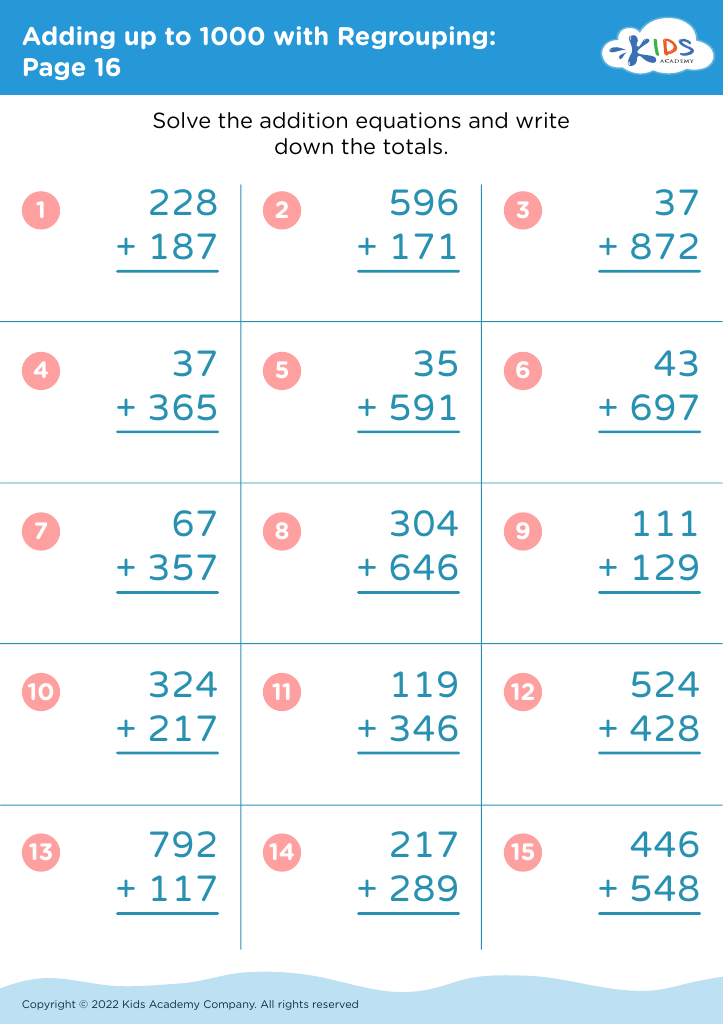
Adding up to 1000 with Regrouping: Page 16
Worksheet


Understanding fractions and addition are foundational math skills essential for young learners, even ages 4-7. Although the specific complexity of adding fractions with regrouping up to 1000 might seem advanced for this age group, ensuring early exposure builds foundational familiarity.

Introducing fractions helps children grasp the concept of parts of a whole, an integral element in everyday life and advanced math. When children understand fractions, they gain insights into equitable sharing, measurements in cooking, and time-telling on analogue clocks. Meanwhile, skills like adding large numbers with regrouping are crucial. They promote an understanding of place value and operational fluency, important for problem solving.

Using age-appropriate methods such as visual aids, hands-on activities with tangible objects, and simplicity, complex ideas can be taylored. Group activities using food (e.g., dividing a pizza) make fractions real, while number games showcase early adding.

Caring about math proficiency at a young age fosters confidence. This builds a positive attitude toward challenging subjects, a predictor of academic success. By integrating concepts in fun, relatable ways, parents and teachers ensure students aren't just numerically literate, but prepared for higher-level math and logical problem solving. Nurturing these skills early sets a strong educational trajectory.