Understanding Sequences Adding up to 1000 with Regrouping Worksheets for Ages 4-7
4 filtered results
-
From - To
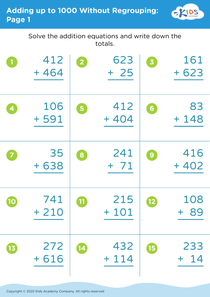
Explore our "Understanding Sequences Adding up to 1000 with Regrouping Worksheets" designed for young learners aged 4-7. Ideal for early math mastery, these engaging worksheets help children grasp the concept of sequences while enhancing their addition skills. Through playful exercises, students will learn about regrouping techniques, paving the way to confidently tackle sums that reach 1000. Our resources provide a fun, interactive approach to math, encouraging critical thinking and problem-solving abilities. These worksheets are perfect for teachers and parents looking to support their child’s early numeracy development. Start your child’s learning journey today and watch their confidence grow!
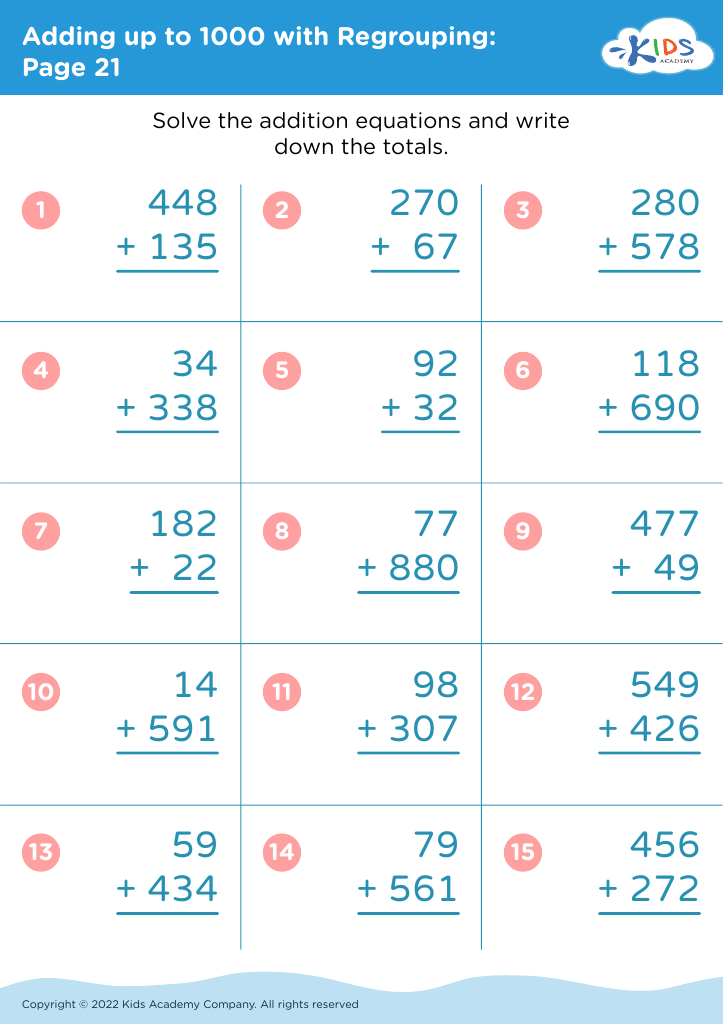
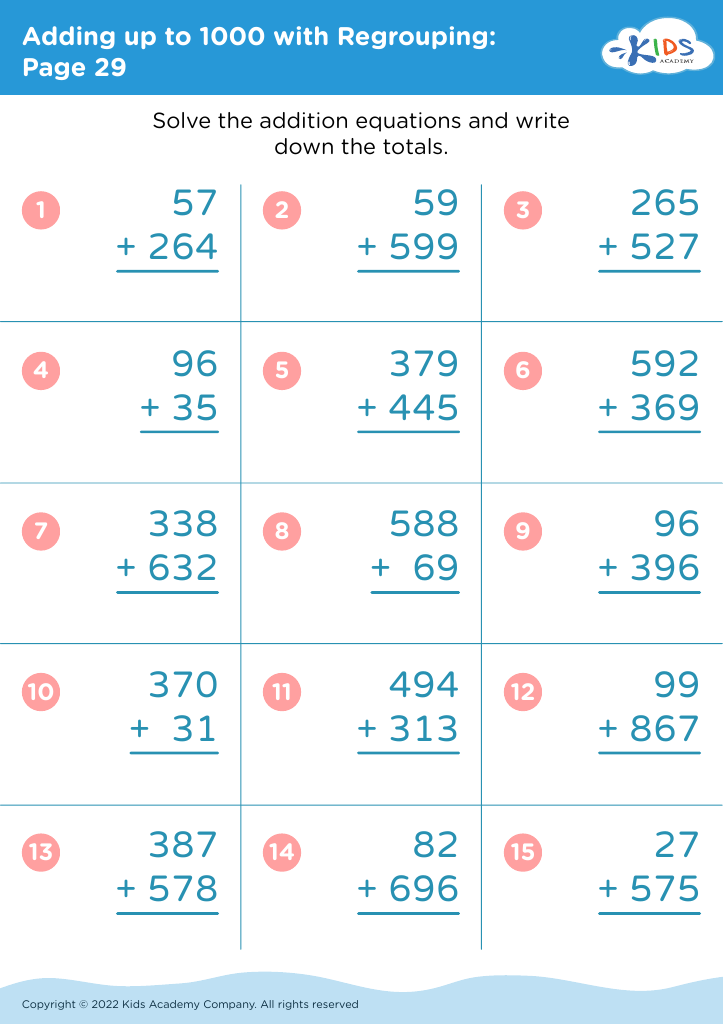
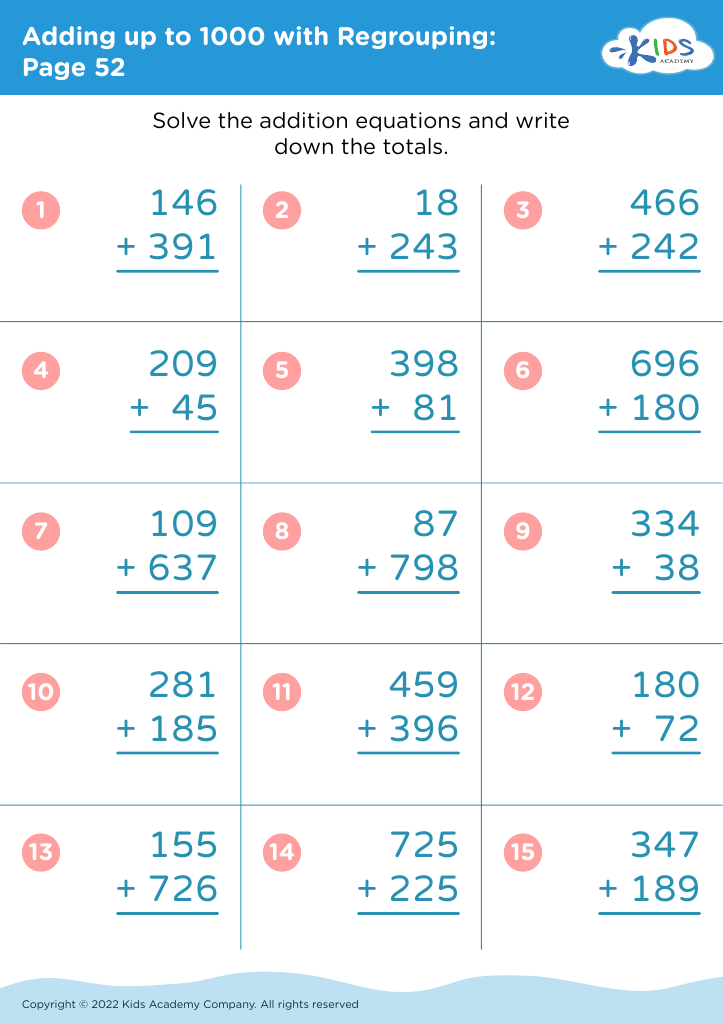
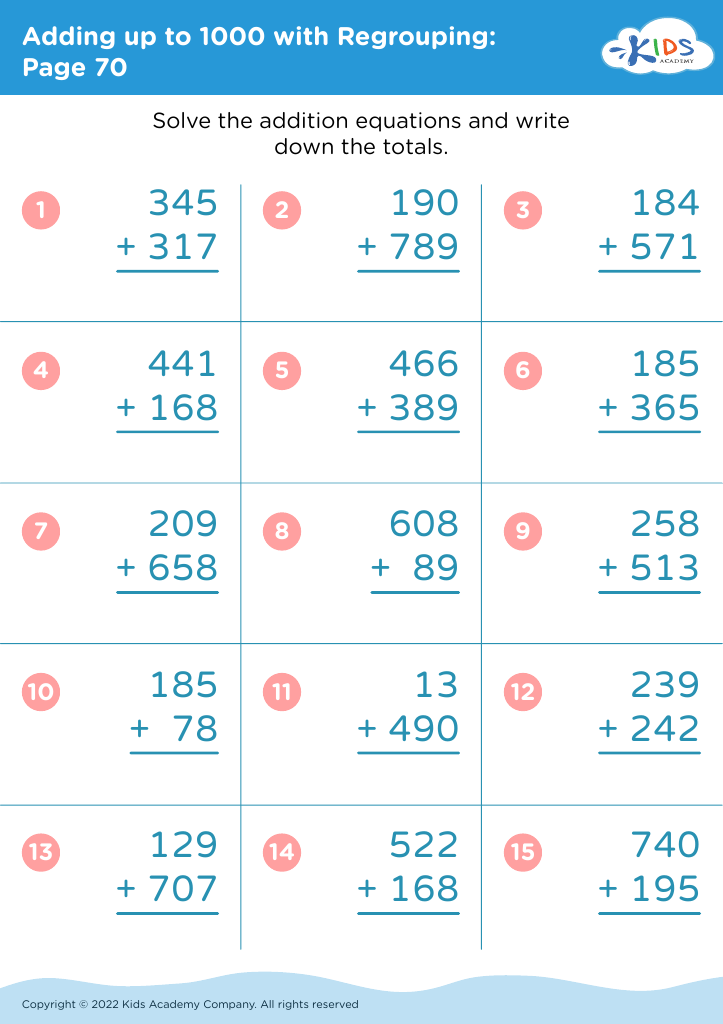


Understanding sequences and the process of adding up to 1000 with regrouping is crucial for children aged 4-7 as it lays a strong foundation for their future mathematical skills. During these formative years, children are beginning to grasp the concept of numbers and how they relate to one another. By introducing them to sequences, they learn the order of numbers and how to recognize patterns—skills that are essential for problem-solving and critical thinking.
Regrouping, in particular, helps children understand the concept of place value, which is a key component of arithmetic. As they learn to add larger numbers, regrouping teaches them how to break down numbers into manageable parts, facilitating their ability to handle more complex calculations in the future. This fosters a growth mindset, encouraging them to embrace challenges rather than shy away.
Furthermore, engaging with these concepts helps develop perseverance and attention to detail. Teachers and parents who emphasize the importance of understanding sequences and regrouping contribute to children’s mathematical fluency, confidence, and overall academic success. Building these skills early not only enhances their numerical abilities but also prepares them for real-world situations involving money, measurements, and beyond, making mathematics a practical and enjoyable part of their lives.