Comparing Fractions Adding up to 1000 Without Regrouping Worksheets for Ages 4-7
3 filtered results
-
From - To
Discover our engaging "Comparing Fractions Adding Up to 1000 Without Regrouping Worksheets" designed specifically for children aged 4-7. These worksheets provide young learners with valuable practice in understanding and comparing fractions, while also enhancing their addition skills up to 1000 without regrouping. Each worksheet is crafted to be fun and interactive, encouraging kids to explore fractions through colorful visuals and relatable scenarios. Perfect for home or classroom use, these exercises help build foundational mathematical concepts in a playful way. Foster a love for math and make learning enjoyable with our carefully designed resources!
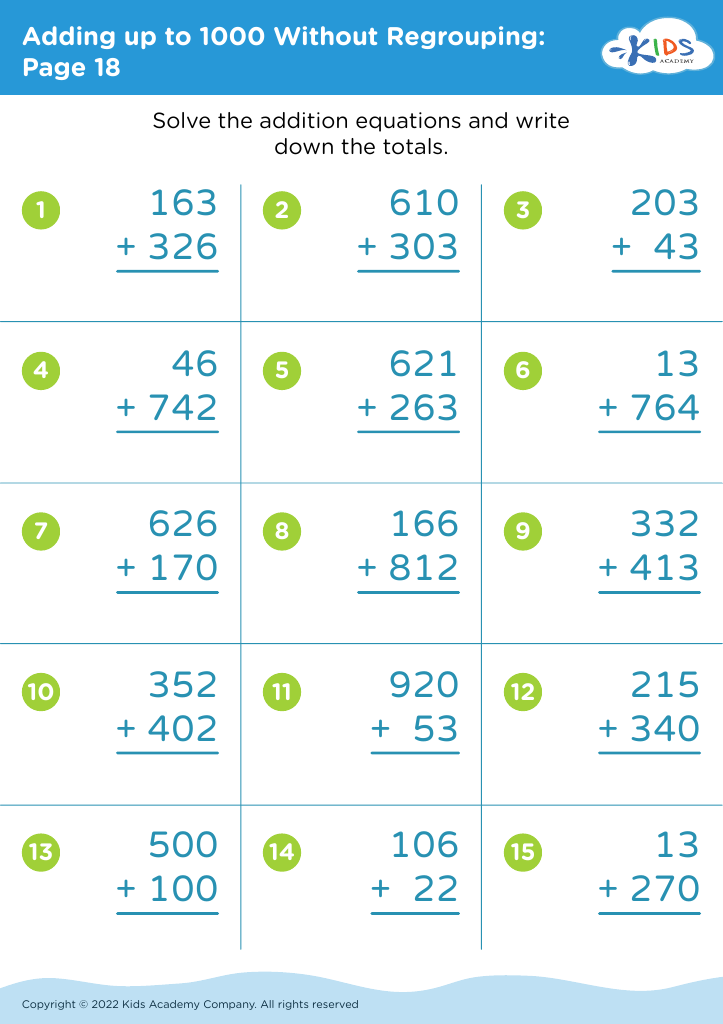
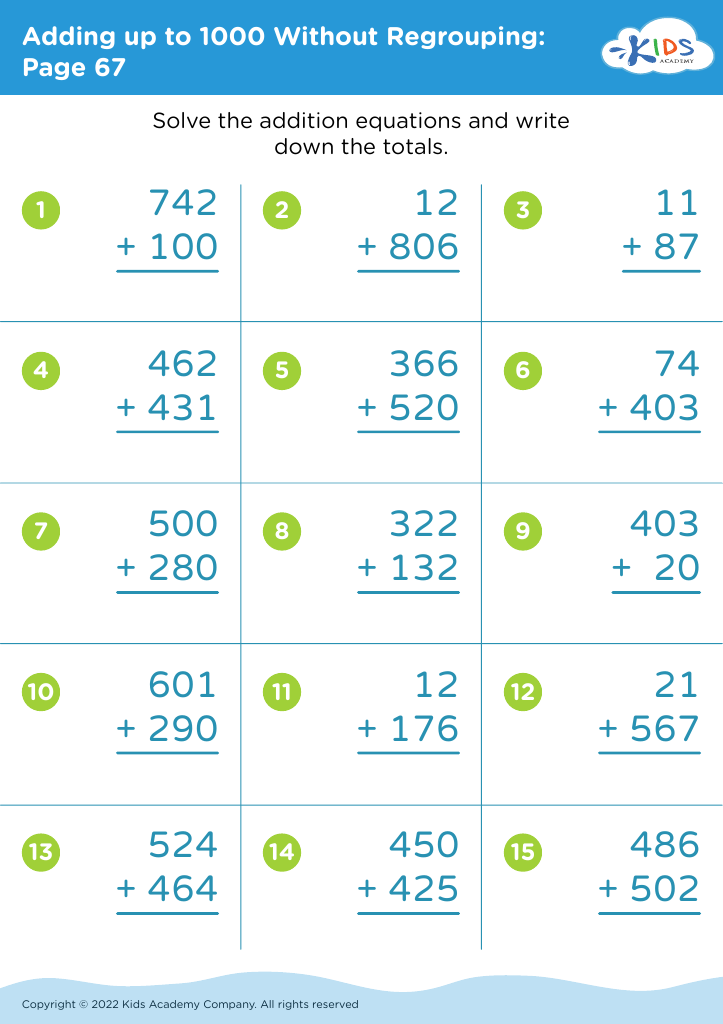
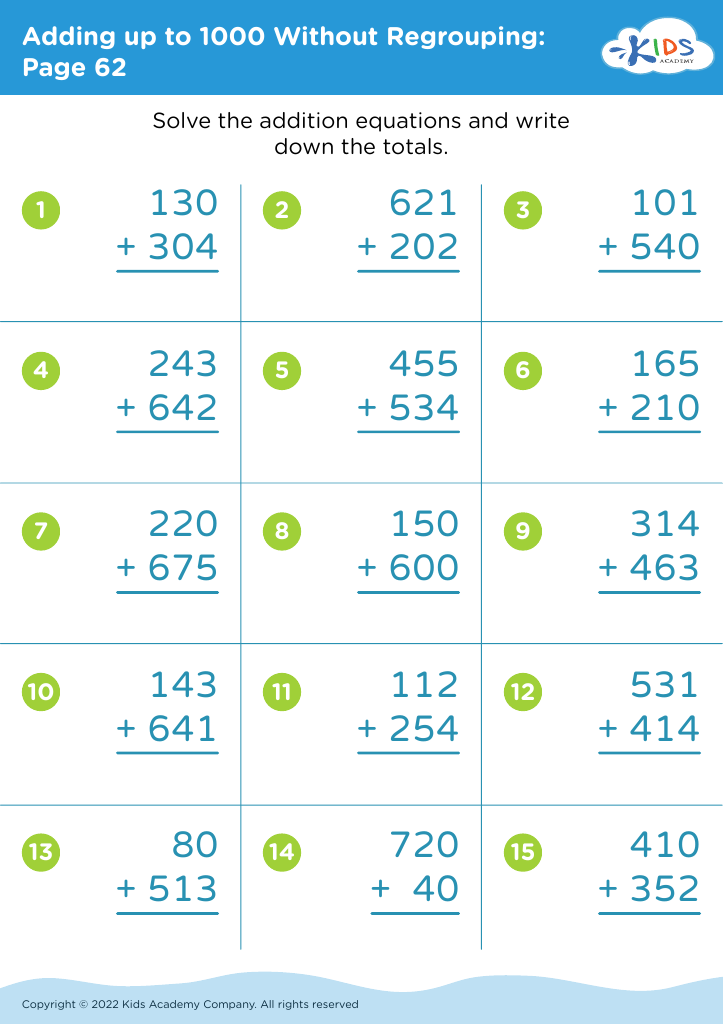


Understanding comparing fractions is crucial for young learners, particularly within the 4-7 age range, because it lays the foundational skills for problem-solving and critical thinking in mathematics. Fraction comparison develops a child's ability to make judicious decisions about sizes and quantities, which is essential in their daily lives, from sharing food to measuring ingredients during cooking activities with family.
For parents and teachers, teaching children to compare fractions with sums reaching up to 1000 without regrouping introduces them to the idea of part-to-whole relationships in a concrete way. This skill prepares them for more complex mathematical concepts later on, ensuring they are not left behind as concepts build upon one another.
Moreover, grasping fractions promotes numerical fluency, allowing children to actively participate in real-world problem-solving. It enhances communication skills too, as students learn to articulate their thought processes when discussing comparisons and differences. Engaging children in fun, hands-on activities focused on fraction comparison can spark an early interest in math, encouraging a lifelong appreciation for the subject. Ultimately, investing time in these foundational skills aids in fostering confident, capable individuals prepared for future academic success.