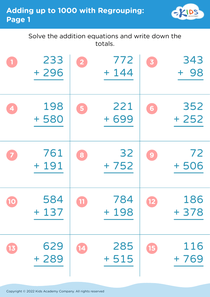
Fraction comparison Adding up to 1000 Without Regrouping Worksheets for Ages 4-7
4 filtered results
-
From - To
Introduce young learners to essential math skills with our "Fraction Comparison Adding up to 1000 Without Regrouping Worksheets" designed for ages 4-7. These educational resources help kids understand fractions and addition seamlessly, focusing on comparing fractions and adding numbers up to 1000 without needing to regroup. Engage your child’s curiosity with fun and interactive exercises that build a solid math foundation. Ideal for classroom and at-home learning, these printable worksheets are tailored to develop critical thinking and problem-solving abilities in early learners, ensuring math success from the start. Boost their confidence and mastery in math effortlessly!
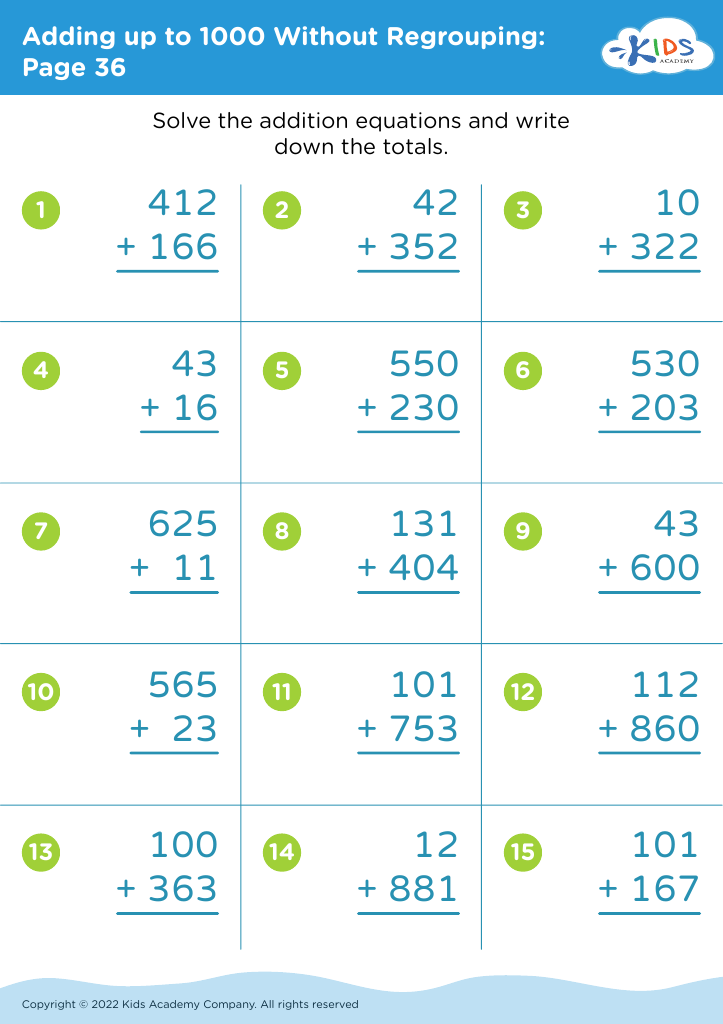
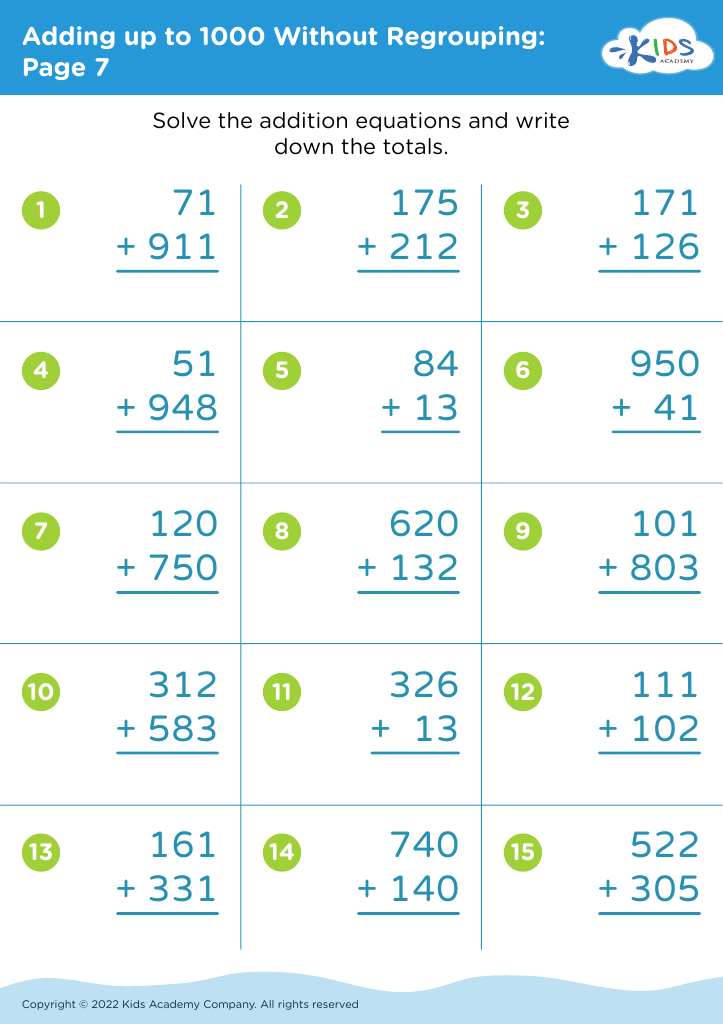
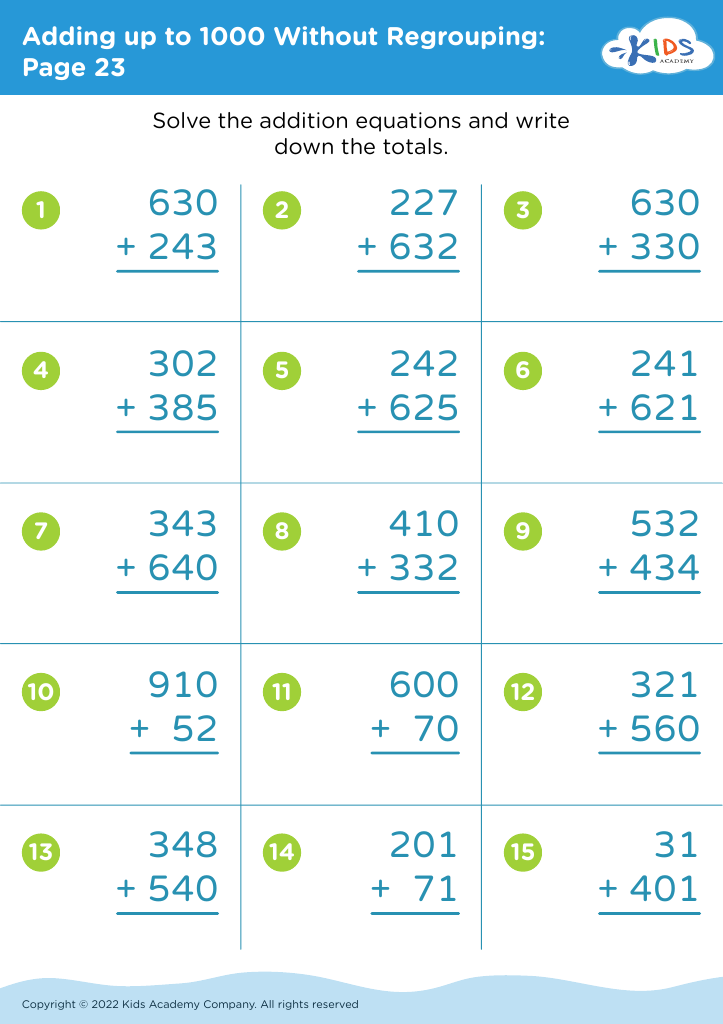
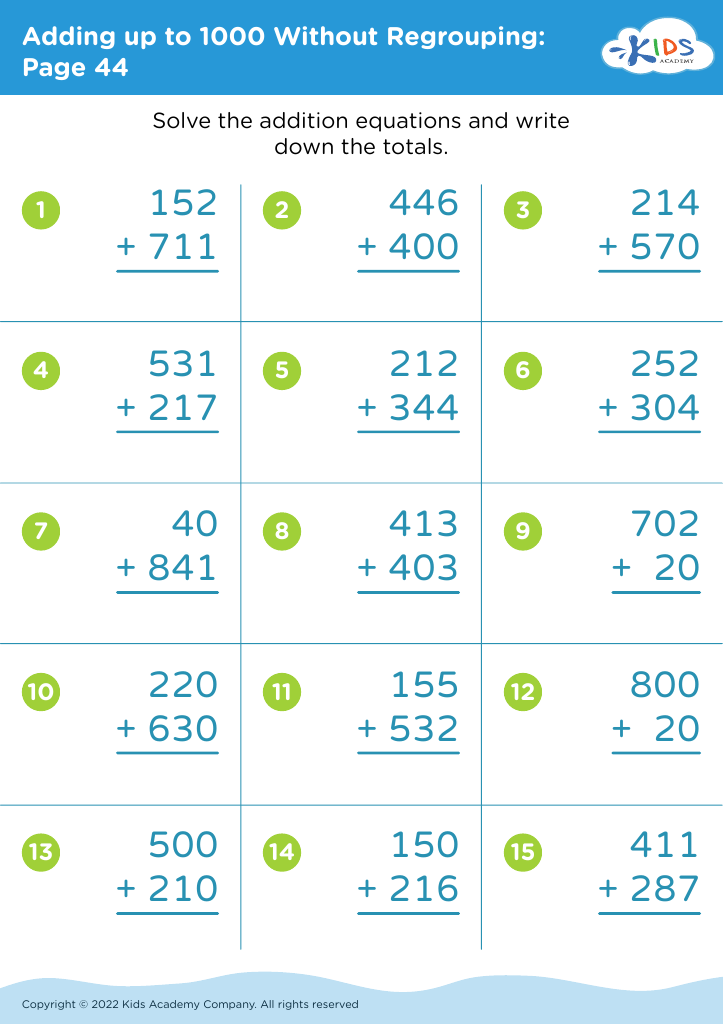


Understanding fractions, comparing them, and adding numbers without regrouping up to 1000 are foundational skills that significantly shape a child's numerical fluency and mathematical comprehension. For children ages 4-7, these skills contribute to cognitive development and build confidence in tackling more complex math problems in the future.
Comparing fractions equips children with the critical thinking skills necessary to gauge relative sizes and understand proportional relationships. This foundation is crucial for more advanced math concepts and real-life scenarios like measuring ingredients in a recipe.
Meanwhile, learning to add numbers without regrouping up to 1000 encourages straightforward calculation skills and enhances number sense, such as recognizing place values. It also provides an early, solid grasp on the base-10 system, which is the cornerstone of more complicated arithmetic operations.
Investing time in these areas makes the journey into higher mathematics smoother and less intimidating, while also fostering an early love for the subject. By supporting children in these key areas, parents and teachers ensure that young learners develop the essential skills needed for lifelong success in mathematics and problem-solving. This, in turn, sets the stage for academic achievement across various subjects and real-world contexts.