Reading comprehension Adding up to 1000 Without Regrouping Worksheets for Ages 4-7
4 filtered results
-
From - To
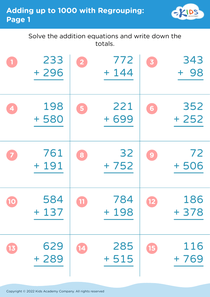
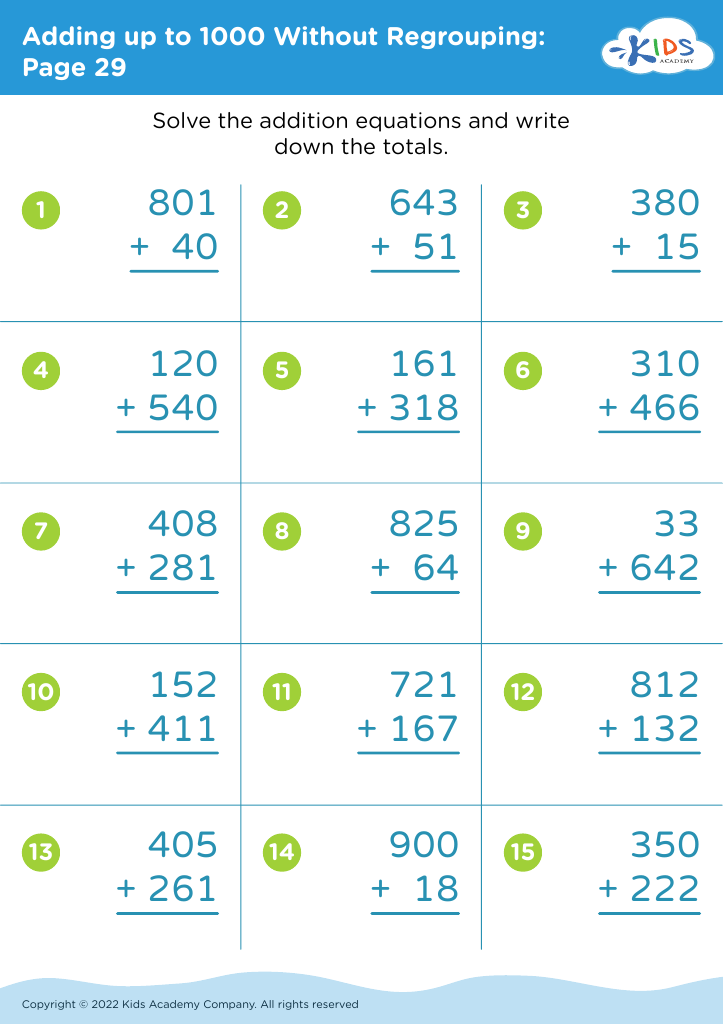
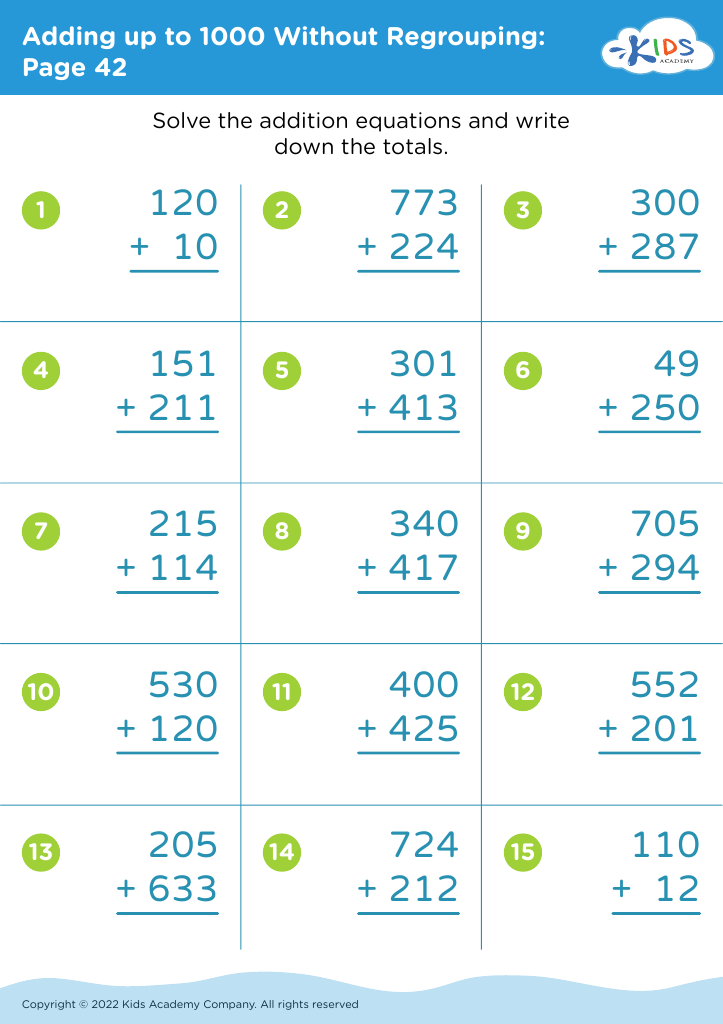
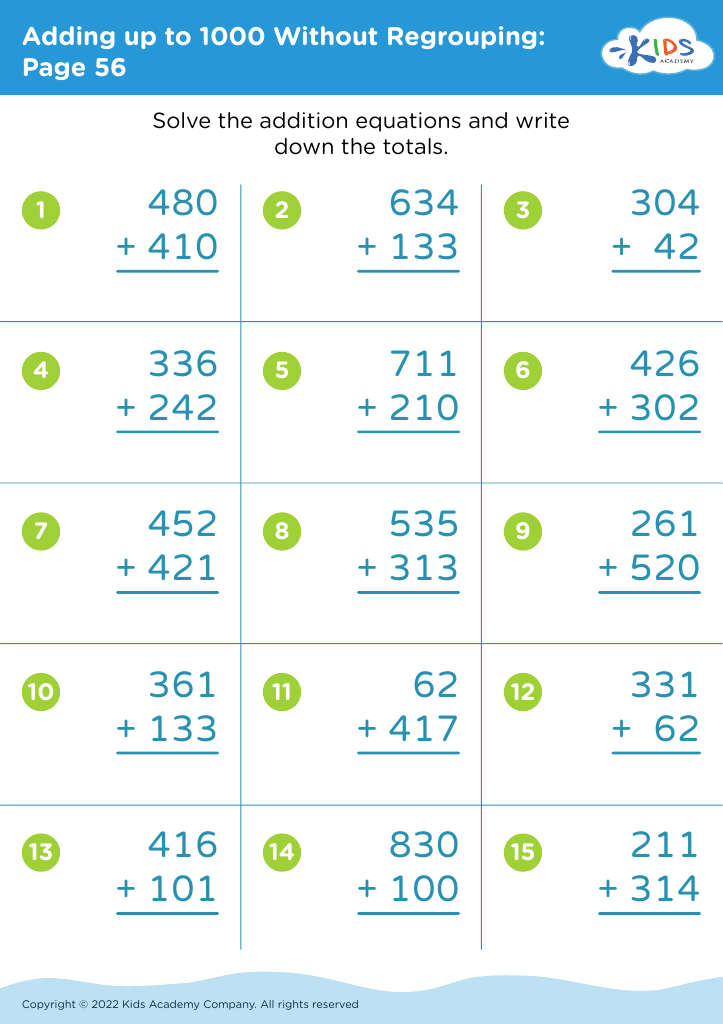
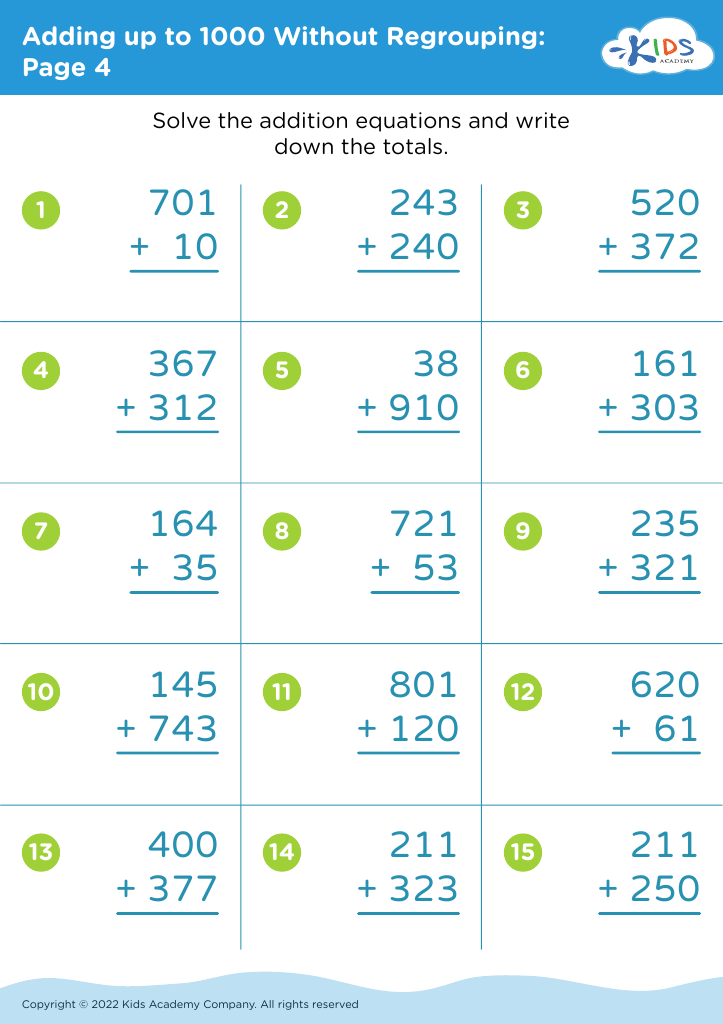
Explore our engaging "Reading Comprehension Adding Up to 1000 Without Regrouping Worksheets" designed specifically for ages 4-7. These worksheets integrate essential math skills with reading activities, promoting comprehension in a fun and interactive way. Children will practice adding numbers up to 1000 without regrouping, while also enhancing their literacy skills through relevant stories and questions. Our thoughtfully crafted exercises support young learners in mastering basic arithmetic and developing critical thinking and reading proficiency. Ideal for at-home learning or classroom use, these worksheets offer a comprehensive learning experience that prepares kids for future academic success. Start fostering a love for math and reading today!


Reading comprehension is a fundamental skill that lays the groundwork for all future learning. For children ages 4-7, developing strong reading comprehension skills is crucial as it not only enhances language acquisition but also fosters critical thinking, imagination, and the ability to connect with others through shared stories.
When combined with understanding mathematical concepts like "Adding up to 1000 Without Regrouping," reading comprehension takes on additional significance. As children learn to solve math problems, understanding directions, word problems, and math-related narratives aids their overall comprehension and analytical abilities. It empowers kids to grasp the context in which numbers operate, making math not just about figures but about solving real-life scenarios.
For parents and teachers, the symbiotic relationship between reading comprehension and math skills underscores the importance of integrating reading into all aspects of learning. Engaging with stories and activities that include mathematical themes can enrich a child's understanding, making learning more effective and enjoyable. Furthermore, supporting literacy and numeracy together ensures children develop a holistic approach to problem-solving – a skill crucial not only in academia but also in their daily lives. Thus, fostering both reading comprehension and mathematical understanding is essential for laying a strong educational foundation.