Alphabet Recognition Adding up to 1000 Worksheets for Ages 4-7
4 filtered results
-
From - To
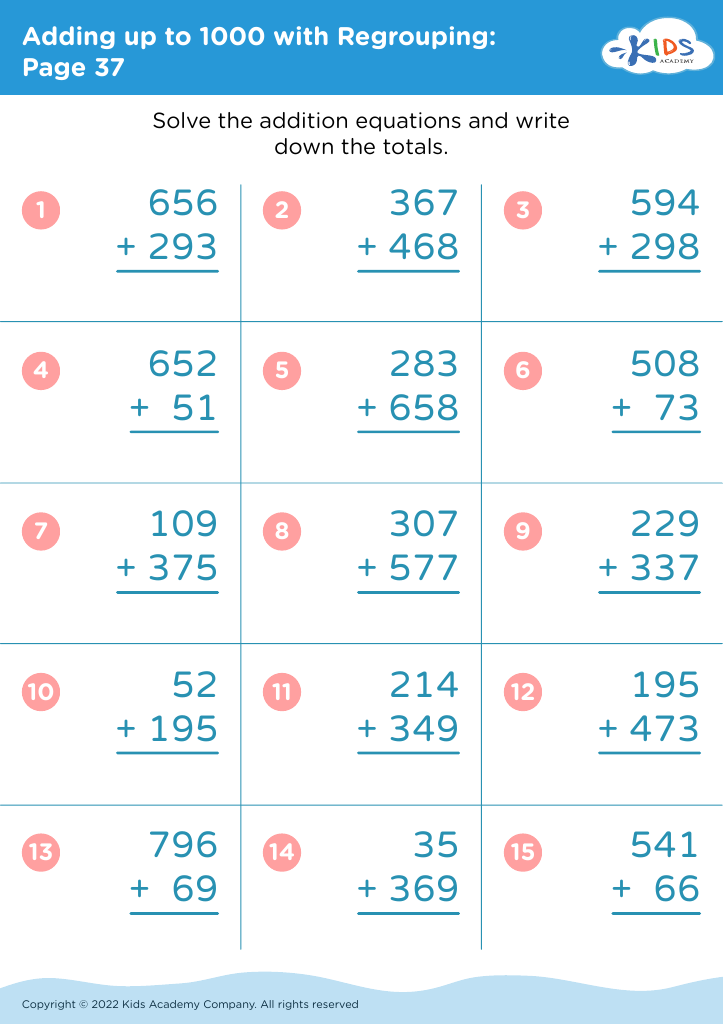
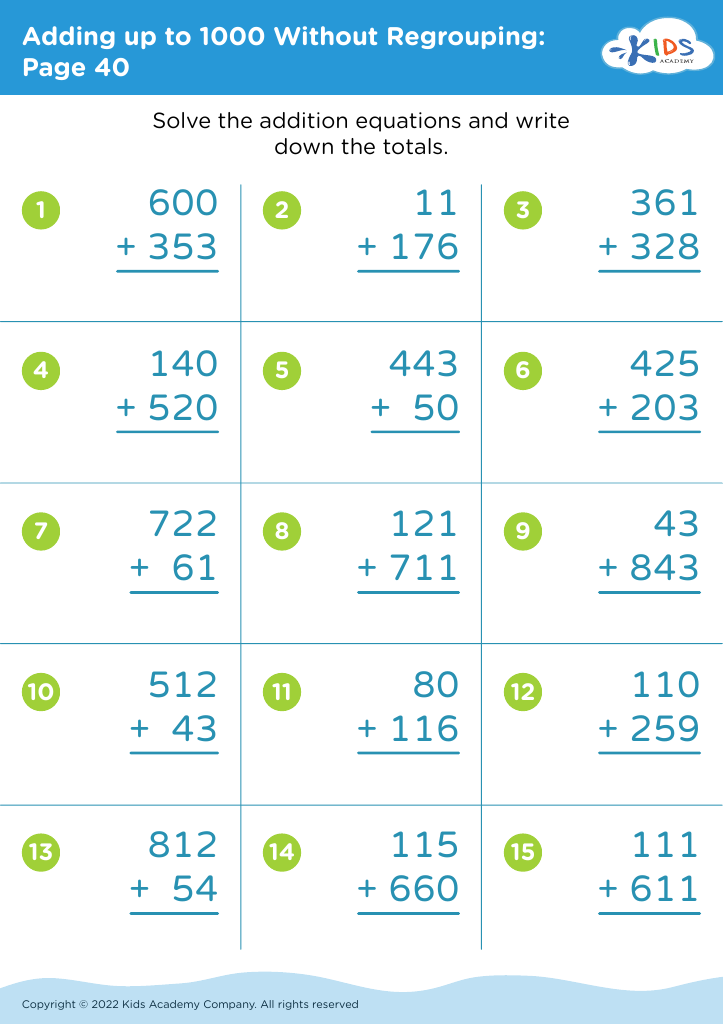
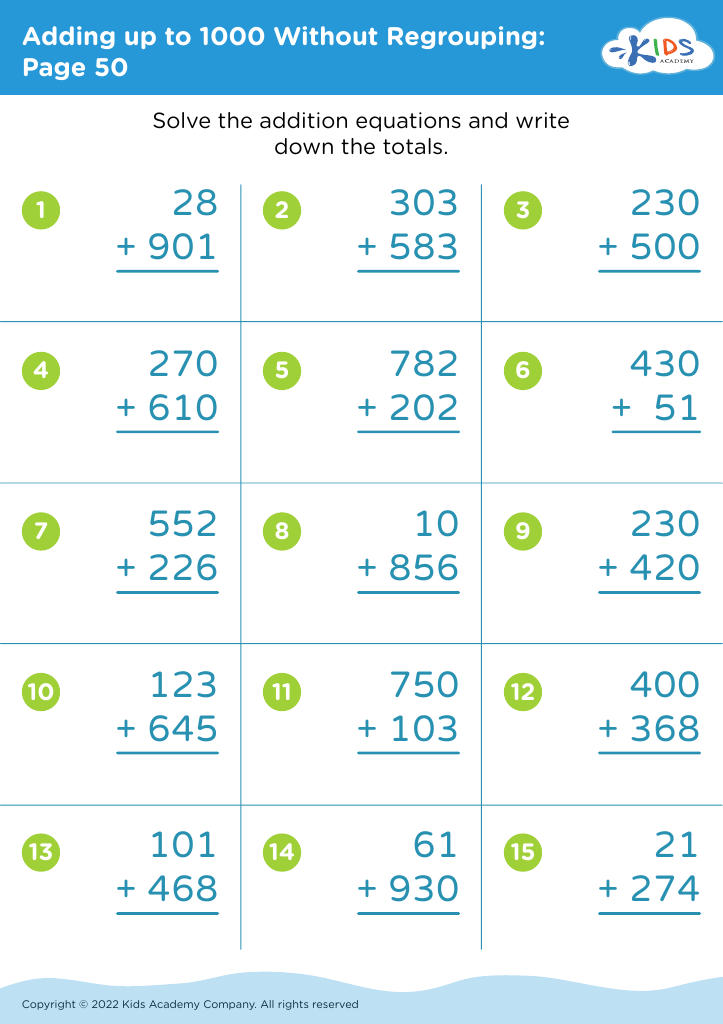
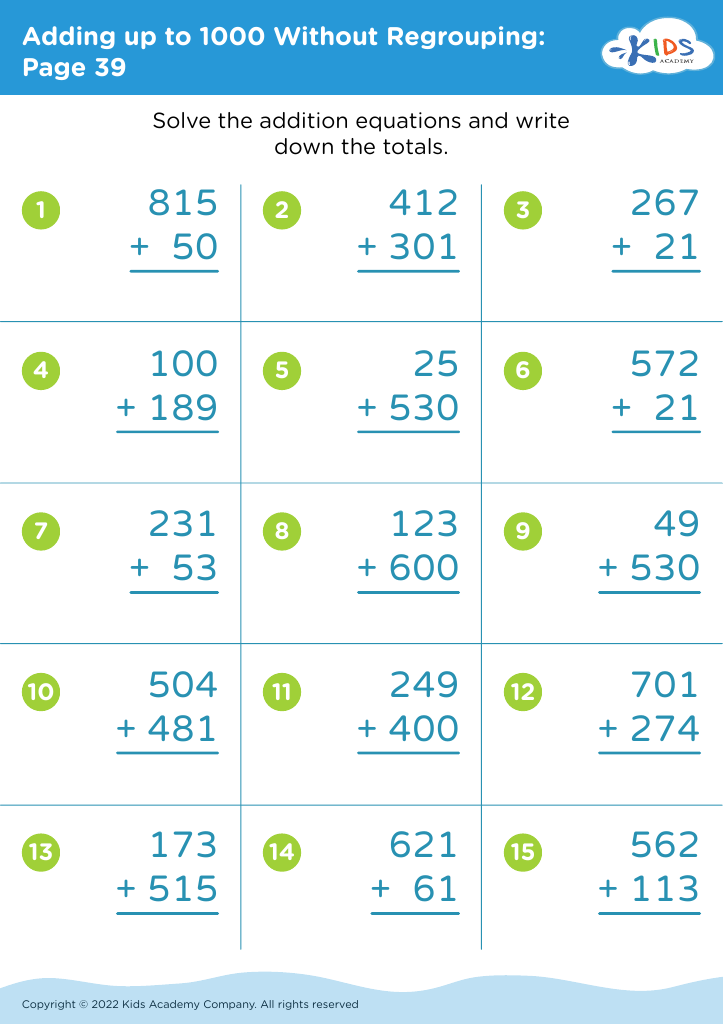
Introduce your child to the world of numbers and letters with our "Alphabet Recognition Adding up to 1000 Worksheets for Ages 4-7." Designed to blend foundational literacy and numeracy skills, these engaging worksheets help young learners to identify and recognize letters while also mastering basic math facts, adding up to 1000. Kids will enjoy colorful, interactive exercises that turn learning into fun, building confidence in both the alphabet and arithmetic. Perfect for early grades, these worksheets serve as an invaluable educational tool to ignite a love for learning and prepare your child for future academic success.



Parents and teachers should prioritize alphabet recognition for children aged 4-7 because it lays the fundamental groundwork for literacy and overall academic success. Recognizing letters and understanding their sounds are the building blocks for reading and writing. At this age, the brain is developmentally primed for acquiring language skills, and early exposure can foster curiosity, motivation, and confidence in learning. By familiarizing children with the alphabet, we equip them with the necessary tools to decode words, follow written instructions, and express their thoughts in writing.
While mastering numbers up to 1000 may seem ambitious for ages 4-7, introducing basic numerical concepts and gradually building them up is important. Early exposure to numbers enhances cognitive development by developing problem-solving skills, logical reasoning, pattern recognition, and a solid math foundation. This dual emphasis on letters and numbers supports a holistic approach to education, ensuring students are well-rounded and academically prepared as they advance to higher grades.
Additionally, early proficiency in alphabet and numerical recognition has been linked to better performance in future subjects, including math, science, and reading comprehension. These skills are essential for daily life and future employment, making early education in these areas crucial for long-term success. Encouraging curiosity about both letters and numbers fosters a lifelong love of learning and builds the competence and confidence needed for academic and life challenges.








